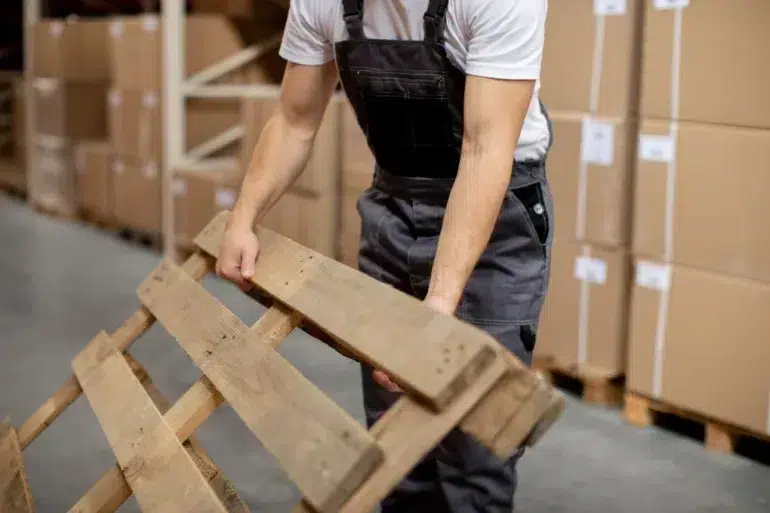
In the intricate dance of modern supply chains, few components are as ubiquitous yet often overlooked as the humble pallet. These flat transport structures form the very bedrock upon which goods move, from bustling manufacturing plants to busy retail shelves. When we talk about optimizing logistics, the conversation naturally gravitates towards efficiency, safety, and unwavering reliability. This is precisely where the significance of new pallets truly shines. They’re not just simple pieces of timber or plastic; they are critical enablers of seamless operations, ensuring products reach their destination intact and precisely on time.
For businesses sourcing quality pallets from trusted suppliers such as Palletwest, the focus is firmly on consistency, compliance, and long-term performance across every stage of the supply chain.
The role of these foundational elements extends far beyond mere transportation. They underpin sophisticated automated warehousing systems, facilitate smooth international trade, and help maintain product integrity across vast distances and diverse environments. Grasping their construction, benefits, and myriad applications is key to appreciating their indispensable nature in today’s dynamic commercial landscape. From small local enterprises to sprawling multinational corporations, the choice of pallet can profoundly influence operational costs, safety standards, and overall supply chain performance.
The bedrock of efficient supply chains: defining new pallets
So, what exactly constitutes a new pallet, and how do these fresh units differ from their used counterparts? Essentially, these virgin material platforms are manufactured from virgin materials typically timber, composite wood, or plastic having never been in circulation within a supply chain. They are produced to exacting specifications, guaranteeing uniformity in dimensions, load-bearing capacity, and overall structural integrity. This fresh start means they arrive without the wear and tear, contamination, or hidden structural weaknesses that can accumulate over multiple uses.
Their construction often adheres to stringent industry standards, such as the Australian standard (AS 4068-1993 for flat pallets), ensuring seamless compatibility across various handling equipment and storage systems. Whether crafted from robust hardwoods or durable recycled plastics, the overarching aim is to provide a consistent, utterly reliable platform for goods. This unwavering consistency is paramount for businesses that depend on automated systems and strict quality control, where even minor deviations in pallet condition can lead to costly disruptions and significant safety hazards.
Why consistency matters in pallet selection
The inherent consistency of freshly manufactured pallets offers a distinct advantage, particularly in environments where precision is non-negotiable. Picture a high-speed conveyor belt system in a bustling distribution centre, where thousands of items are sorted and moved daily. A slightly warped or damaged used pallet could easily snag, causing a costly jam or even damaging valuable goods. New, uniform pallets, on the other hand, provide a predictable and flawless interface for machinery, dramatically reducing the risk of operational hiccups.
Beyond automation, this consistency also plays a crucial role in storage and stacking. Pallets that are uniform in size and strength can be stacked higher and far more securely, optimizing warehouse space and preventing dangerous collapses. This reliability translates directly into enhanced safety for your workforce and superior protection for valuable inventory. For businesses prioritizing seamless operations and robust risk mitigation, investing in quality new pallets isn’t just a cost; it’s a strategic decision that yields significant returns.
Advantages of opting for new pallets in your operations
Choosing new pallets brings a wealth of benefits that directly impact your business’s bottom line and operational efficiency. One of the most compelling advantages is their pristine condition. They arrive free from dirt, contaminants, and structural damage, which is absolutely crucial for industries with stringent hygiene requirements, such as food and beverage, pharmaceuticals, or medical supplies. This inherent cleanliness helps prevent cross-contamination and ensures product integrity from its point of origin right through to its destination.
Beyond their pristine condition, these virgin material platforms offer superior durability and a significantly longer lifespan compared to their used counterparts. Built to precise specifications with fresh materials, they are engineered to withstand the rigours of repeated handling, transportation, and storage without compromising their structural integrity. This enhanced longevity means fewer replacements, reduced waste, and ultimately, lower overall costs in the long run. They truly represent a reliable investment in the efficiency and safety of your logistics operations.
Enhanced durability and safety features
The robust construction of new pallets directly contributes to improved workplace safety. Their uniform strength and consistent dimensions minimize the risk of splintering, collapsing, or snagging common hazards sadly associated with older, worn-out pallets. This significantly reduces the potential for workplace injuries and costly damage to goods, fostering a safer environment for everyone involved in the supply chain.
What’s more, the predictable performance of these pristine pallets is invaluable for heavy loads and high-stacking applications. When you know a pallet can reliably bear a certain weight without bowing or breaking, you gain the confidence to maximize storage density and transport capacity. This peace of mind allows businesses to operate more efficiently, secure in the knowledge that their inventory is safe and their operations are running smoothly, free from unexpected failures.
New pallets and their critical role in automated logistics
The ascent of automated warehouses and distribution centres has fundamentally reshaped modern logistics, and at the very heart of this transformation lie new pallets. These sophisticated systems including automated storage and retrieval systems (AS/RS), intricate conveyor belts, and precise robotic forklifts demand extreme precision and consistency from every single component they handle. Any deviation in pallet dimensions, weight, or structural integrity can swiftly lead to costly operational failures, frustrating downtime, and damaged goods.
Freshly manufactured pallets, produced to exacting standards, provide the uniform interface these advanced machines absolutely require. Their consistent size and unblemished surfaces ensure smooth, uninterrupted movement through automated lines, preventing jams and misalignments. This reliability isn’t merely a convenience; it’s a fundamental necessity for maintaining the high throughput and efficiency that automated logistics promises. Without the predictability offered by these quality-assured units, these sophisticated operations would quickly grind to a halt.
Used or damaged pallets, with their inherent inconsistencies in size, weight, and structural integrity, introduce variables that automated systems are simply not designed to accommodate. This can trigger sensor malfunctions, conveyor jams, robotic arm misalignments, and ultimately, costly operational downtime and potential damage to valuable goods. New pallets are, therefore, not just a preference but an absolute prerequisite for unlocking the full potential of modern automated logistics infrastructure.
The precision engineering behind these virgin material pallets ensures that every unit adheres to strict dimensional tolerances. This means consistent length, width, height, and deck board spacing all critical parameters for automated handling equipment.
For instance, AS/RS systems depend on exact pallet dimensions to correctly store and retrieve goods from high-density racking. Conveyor systems rely on flat, unbroken surfaces to prevent snagging and ensure smooth transit. Robotic forklifts require uniform weight distribution and stable structures to lift and place loads accurately without any risk of slippage or collapse. Any warping, splintering, or even slight variations in board thickness on a used pallet can easily trigger error states, demanding manual intervention a direct contradiction to the very goal of automation.
Moreover, these pristine platforms are typically manufactured from virgin materials, guaranteeing consistent material strength and integrity. Their uniform composition contributes to predictable performance, adhering reliably to international standards like ISO 6780 or regional standards such as GMA specifications, making them the undisputed default choice for global supply chains.
Enhanced Safety and Compliance
Beyond the impressive efficiencies of automation, new pallets play a crucial role in ensuring paramount workplace safety. Unlike used or repaired pallets, which can unfortunately harbour protruding nails, splinters, cracked boards, or uneven surfaces, freshly manufactured pallets are designed to be smooth and entirely free from such hazards. This significantly reduces the risk of injuries to personnel who handle them manually. Forklift operators also benefit immensely from the predictable stability of these quality platforms, drastically reducing the likelihood of load shifts or collapses that could endanger workers or damage expensive equipment.
The unwavering structural integrity of new pallets means they are far less prone to sudden failures under stress, a vital consideration when dealing with heavy or unstable loads where a pallet failure could have catastrophic consequences. Businesses can thus have complete confidence that their new pallets will perform exactly as expected, effectively mitigating risks associated with material handling.
What’s more, new pallets often come with essential certifications and treatments, ensuring robust compliance with international shipping regulations, such as ISPM 15 for wood packaging materials. This critical standard, specifically designed to prevent the spread of pests, is reliably met by new pallets from the outset, streamlining customs processes and preventing costly delays or rejections at international borders. This steadfast adherence to global standards adds yet another layer of predictability and reliability to complex supply chains.
Long-Term Value and Reduced Total Cost of Ownership
While new pallets represent an initial investment, their superior durability and extended lifespan consistently lead to a demonstrably lower total cost of ownership (TCO). Engineered to withstand repeated cycles of loading, transportation, and storage without significant degradation, they drastically reduce the need for frequent replacements. This not only cuts procurement costs but also minimizes the logistical burden of managing a fleet prone to failure. Their inherent robustness ensures fewer product damages and operational disruptions, safeguarding both valuable inventory and your brand’s hard-earned reputation. Beyond these immediate savings, the longevity of these reliable units contributes significantly to a more sustainable supply chain by reducing waste and simplifying future recycling or reconditioning, further cementing their exceptional long-term value.
In summary, new pallets are truly indispensable for modern, efficient, and secure supply chains. Their consistent quality and predictable performance underpin automation, enhance safety, and deliver lasting value, driving business success globally.