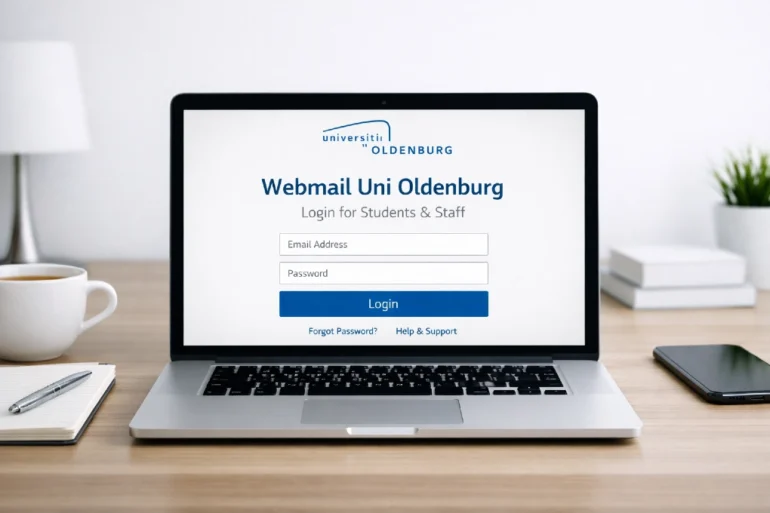
If you’ve just enrolled, started a new job at the university, or you simply haven’t logged in for a while, Webmail Uni Oldenburg can feel a little confusing at first. The good news is that once you know the right sign-in page, your username format, and what to do when two-factor authentication shows up, it becomes routine.
In this guide, I’ll walk you through Webmail Uni Oldenburg step by step in plain language, like I would if you were sitting next to me with a laptop open. You’ll learn how to log in via browser, what credentials you’ll need, how to reset your password safely, how to set up email in apps like Thunderbird or Outlook, and how to fix common issues that block access.
Whether you’re a student checking course updates or a staff member handling daily communication, Webmail Uni Oldenburg is one of those services you want to “just work” every time. Let’s make sure it does.
What is Webmail Uni Oldenburg?
Webmail Uni Oldenburg is the university’s browser-based way to access your official email account, plus related tools like calendar and contacts. In practice, many users access it through Outlook on the web, which runs directly in your browser without needing a separate mail program installed.
The benefit is simple: you can sign in from almost any device (computer, tablet, phone), and your mailbox stays synced because everything lives on the server.
Before you start: what you’ll need
To log into Webmail Uni Oldenburg smoothly, get these ready:
- Your university user ID (often shown in a format like four letters and four numbers, e.g.,
abcd1234) - Your university password (the same one tied to your user account)
- Second factor for login, if prompted (for example, a YubiKey or a code from an authentication app)
- A modern browser (Chrome, Edge, Firefox, Safari)
If you’re missing any of these, don’t worry. Later in this article, you’ll see exactly what to do.
Webmail Uni Oldenburg login in a browser (step-by-step)
Most users access Webmail Uni Oldenburg through Outlook on the web. The University of Oldenburg provides a browser entry point for signing in.
Step 1: Open the official webmail page
Use the university’s Outlook on the web sign-in entry (the university indicates using the browser address for Outlook on the web).
Tip: If you land on a page that looks like a central sign-in portal (CAS), that’s normal. It’s the university’s central authentication service that connects you to different services after you sign in.
Step 2: Enter your user ID and password
On the login page, enter:
- User ID in the format the university uses (example shown as
abcd1234) - Your password (your university password)
Double-check for small mistakes: caps lock, keyboard language, or extra spaces pasted at the end.
Step 3: Complete two-factor authentication (if required)
If your account is set up for second-factor login, you may be asked for:
- A YubiKey, or
- A numerical code from an authentication app
This step is there to protect your account from someone who might guess or steal a password. Once you complete it, you should land inside your mailbox.
Step 4: Confirm you’re in the right mailbox
When Webmail Uni Oldenburg loads successfully, you’ll typically see:
- Inbox and folders on the left
- Message list in the middle
- Reading pane on the right (depending on layout)
If you also see calendar and contacts options, that’s expected because Outlook on the web can provide mail, calendar, and address book access in one place.
Webmail Uni Oldenburg login for first-time users: what usually trips people up
If you’re logging in for the first time, these are the most common “wait, what?” moments:
You’re using the wrong username format
Many services accept an email address as the username, but university systems often want your user ID (like abcd1234). The university’s instructions specifically reference signing in with a user ID in that style.
If you keep trying your full email address and it fails, switch to your user ID.
Two-factor prompts appear unexpectedly
This surprises people, especially when they’re off campus or on a new laptop. But it’s standard for central authentication flows, and the university notes second-factor login options such as YubiKey or an app code.
Your browser blocks cookies or popups
Because Webmail Uni Oldenburg relies on centralized login and redirects, aggressive privacy settings can break the sign-in loop. If you keep getting sent back to the login screen:
- Allow cookies for the session
- Disable strict tracking protection temporarily
- Try a private/incognito window (sometimes it helps, sometimes it doesn’t)
Webmail Uni Oldenburg password reset: fastest safe method
Forgot your password? It happens, especially after a semester break.
The university provides a self-service password reset option via its “Forgotten password” function, with the key requirement that you must have stored a mobile phone number or another email address in account management.
Option A: Self-service reset
Use the university’s official “Forgotten password” function (the university points to the password reset portal) and follow the steps to verify yourself.
This is the best option when it’s available because it’s quick and you don’t have to wait for office hours.
Option B: In-person help (IT Advisory Service)
If self-service reset doesn’t work, the university notes that IT consulting/advisory services can generate a new password, but you must identify yourself in person with an official photo ID.
That identity check is annoying when you’re in a hurry, but it’s there for a good reason: it protects your mailbox and personal data.
Webmail Uni Oldenburg setup in email apps (IMAP/SMTP)
Browser webmail is convenient, but many people still prefer an email client like Thunderbird, Outlook, or a mobile mail app. For that, you usually need IMAP (incoming mail) and SMTP (outgoing mail).
The University of Oldenburg provides guidance for groupware/email client setup and includes the required server details such as IMAP and SMTP server addresses and ports.
Quick settings table (IMAP/SMTP)
Here’s a clear reference you can use when setting up Webmail Uni Oldenburg in an app:
| Setting | Value |
|---|---|
| Incoming server type | IMAP |
| IMAP server | imap.uni-oldenburg.de |
| IMAP port | 993 |
| IMAP encryption | SSL/TLS |
| Outgoing server type | SMTP |
| SMTP server | smtp.uni-oldenburg.de |
| SMTP port | 587 |
| SMTP encryption | STARTTLS |
| Username | Your user ID (example format: abcd1234) |
| Password | Your university password |
Example: setting up Webmail Uni Oldenburg in Thunderbird
The university’s Thunderbird setup instructions include:
- IMAP host: imap.uni-oldenburg.de
- IMAP port: 993
- SMTP host: smtp.uni-oldenburg.de
- SMTP port: 587
- Username format like abcd1234
If you’re doing this in Thunderbird, choose manual setup when prompted, paste in the values, and save.
What about Outlook on desktop?
Outlook desktop can be set up in different ways depending on institutional configuration, but the core idea is the same: you’ll need the right server settings (or an automatic configuration profile). When the app asks you for server information, this is why having the official IMAP/SMTP values matters.
Webmail Uni Oldenburg on mobile: easiest approach
If you mostly use email on your phone, you have two practical options:
- Use the mobile browser to open Webmail Uni Oldenburg and sign in (no app configuration needed).
- Set up IMAP/SMTP in your mail app using the official settings table above.
For many students, the browser method wins because it’s quick and doesn’t require tinkering. For staff and heavy email users, app setup is worth it for better notifications and offline access.
Webmail Uni Oldenburg troubleshooting: common problems and fixes
Even if you do everything right, there are a few classic errors that pop up with Webmail Uni Oldenburg. Here’s how to deal with them without losing an afternoon.
Problem 1: You keep getting sent back to the login screen
Possible causes:
- Browser cookies blocked
- Session expired mid-login
- You’re signed into another Microsoft account in the same browser profile
Quick fixes:
- Open a private/incognito window and log in again
- Clear cookies for the sign-in domain and retry
- Use a different browser temporarily
Problem 2: “Wrong password” but you’re sure it’s correct
This happens more than people admit.
Try this:
- Re-type manually (don’t paste)
- Check caps lock and keyboard layout
- If you recently changed your password, wait a few minutes and try again
If it still fails, use the official password reset path, which the university provides via its “Forgotten password” function.
Problem 3: Two-factor code doesn’t work
Common reasons:
- Your phone clock is off by a minute or two
- You’re entering a code from the wrong profile/account in the auth app
- A previous code expired
Fix:
- Generate a fresh code and enter it immediately
- Ensure your phone time is set to automatic
- If using a hardware token like a YubiKey, try another USB port or a different browser
The university indicates second-factor methods such as YubiKey or an authentication app code as part of login.
Problem 4: Your mail app connects but won’t send email
That’s usually SMTP configuration.
Checklist:
- SMTP server: smtp.uni-oldenburg.de
- Port: 587
- Encryption: STARTTLS
- Authentication: password required
- Username: your user ID (not necessarily your full email)
Fix those, and sending typically starts working again.
How to keep Webmail Uni Oldenburg secure (without overthinking it)
University email accounts are a favorite target for phishing because they’re tied to identity, schedules, and sometimes access to other systems. If someone takes over your account, they can impersonate you in a pretty convincing way.
A few habits make a big difference:
Use the official login flow and log out on shared devices
The university’s central authentication page explicitly reminds users to log out and close the browser when leaving password-protected areas.
If you ever log in on a library computer or a friend’s laptop, don’t just close the tab. Log out properly.
Watch for fake sender addresses and phishing tricks
Germany’s Federal Office for Information Security (BSI) publishes guidance on protective measures for dealing with fake email addresses and related scams.
Practical checks you can do in seconds:
- Hover over links before clicking
- Be suspicious of urgent “account will be disabled” messages
- Verify requests for passwords, payments, or login prompts
- When unsure, go directly to the official site instead of using the email link
Don’t reuse your university password elsewhere
If another site gets breached and you reused the same password, attackers will try it against your university account. This is one of the simplest ways accounts get compromised.
Real-world scenarios: how people actually use Webmail Uni Oldenburg
Scenario 1: Student checking timetable updates and course mail
You’re on your phone between lectures. You open Webmail Uni Oldenburg in the browser, sign in, and quickly search for your course name. Because it’s server-based webmail, your search results are accurate, even if you didn’t sync anything locally.
Scenario 2: Staff member using a desktop client plus webmail fallback
On your office PC, you set up Outlook or Thunderbird using the official IMAP/SMTP values. If the desktop client has an update issue or you’re working remotely, you still access Webmail Uni Oldenburg in the browser and keep going.
Scenario 3: Password forgotten before an important deadline
You try signing in, it fails, and you realize you forgot your password. You use the university’s self-service password reset option (assuming you have a phone number or backup email set in account management), update it, then log back into Webmail Uni Oldenburg.
Frequently asked questions about Webmail Uni Oldenburg
What is the official way to access Webmail Uni Oldenburg online?
The university documents signing into Outlook on the web through its official browser entry point and completing central authentication (including second factor where enabled).
Do I need a special app to use Webmail Uni Oldenburg?
No. Webmail Uni Oldenburg works in a browser, and you can also configure third-party email clients using official IMAP/SMTP settings if you prefer an app.
What if I can’t reset my password online?
The university notes that if self-service reset is not possible, IT advisory services can generate a new password in person after you identify yourself with an official photo ID.
Which server settings should I use for an email client?
The university provides IMAP server (imap.uni-oldenburg.de, port 993, SSL/TLS) and SMTP server (smtp.uni-oldenburg.de, port 587, STARTTLS) details for configuring email clients.
How can I reduce the risk of phishing in my university mailbox?
Follow official security guidance such as checking for fake sender addresses and being cautious with links and urgent requests, as described in BSI protective measures against spoofed sender addresses and related scams.
Conclusion
Once you know the basics, Webmail Uni Oldenburg is straightforward: open the official webmail entry, sign in with your user ID and password, complete the second factor if prompted, and you’re in. If you prefer using a mail app, the official IMAP/SMTP settings make it easy to connect your mailbox reliably. And if something breaks, it’s usually a cookie/session issue, a password mismatch, or an SMTP sending setting that needs one small correction.
The most important thing is consistency. Use the official login flow, reset your password through the university’s supported method when needed, and keep an eye out for suspicious messages. If you do that, Webmail Uni Oldenburg becomes one of those tools you barely think about because it just works.
In the background, your email client and webmail experience rely on an email protocol that keeps messages synced across devices, which is why correct server settings matter when you configure apps.