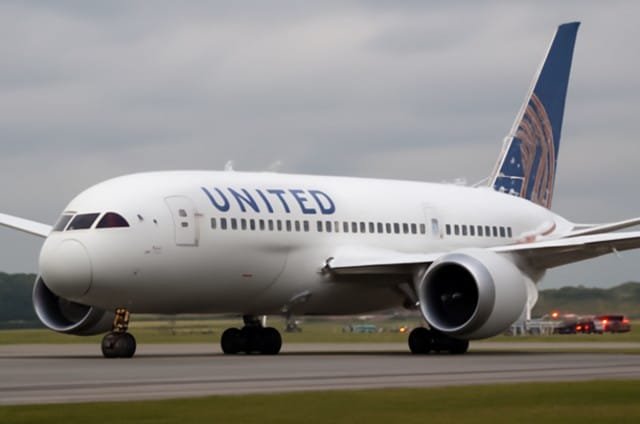
On May 27, 2025, United Airlines Flight UA770, a Boeing 787-9 Dreamliner, experienced an emergency diversion during its transatlantic journey from Barcelona El Prat Airport (BCN) to Chicago O’Hare International Airport (ORD). Approximately 90 minutes into the flight, the crew declared a general emergency by squawking 7700—the universal code indicating an in-flight emergency—and diverted to London Heathrow Airport (LHR) for a precautionary landing.
What Led to the Emergency Diversion?
The decision to divert was prompted by a technical anomaly detected mid-flight. While the specific issue has not been publicly disclosed, early reports suggest a potential cabin pressurization problem. Such issues can compromise passenger safety, making an emergency diversion a necessary precaution. The crew’s swift response and adherence to safety protocols ensured the well-being of all 257 passengers and 12 crew members on board.
The Role of Squawk 7700
Squawking 7700 is a critical component of aviation safety. When a pilot sets the aircraft’s transponder to this code, it alerts air traffic control to a general emergency, granting the flight priority handling and immediate clearance for landing. In the case of United Airlines Flight UA770, the activation of squawk 7700 facilitated coordinated efforts between air traffic control centers across Europe, ensuring a safe and efficient diversion to Heathrow.
The Diversion to London Heathrow
London Heathrow was selected for the emergency landing due to its proximity to the aircraft’s position and its capacity to handle wide-body aircraft emergencies. Upon arrival at Runway 27R at 4:55 PM BST, emergency services were on standby, though no injuries were reported. The aircraft was guided to gate B44, where passengers disembarked calmly.
Passenger Experience and Airline Response
Following the diversion, United Airlines promptly arranged for passenger accommodations, rebooking, and meal vouchers. The airline issued a statement confirming the “potential mechanical issue” and reiterated their commitment to passenger safety. Passengers expressed appreciation for the crew’s professionalism and the airline’s efficient handling of the situation.
Investigations and Safety Measures
The Federal Aviation Administration (FAA) and the European Union Aviation Safety Agency (EASA) are conducting investigations to determine the exact cause of the technical issue. Preliminary findings suggest that the aircraft’s advanced systems, including real-time health monitoring, alerted the crew to the anomaly, allowing for a timely and safe diversion. In response to the incident, United Airlines is reviewing its maintenance protocols and crew training programs to enhance safety measures.
Lessons Learned and Industry Implications
The emergency diversion of United Airlines Flight UA770 underscores the importance of robust safety systems, well-trained crews, and effective communication in ensuring passenger safety during in-flight emergencies. While diversions are rare, they serve as critical reminders of the aviation industry’s commitment to safety and the continuous improvement of operational procedures.
Conclusion
The United Airlines Flight UA770 emergency diversion on May 27, 2025, exemplifies the aviation industry’s dedication to passenger safety and operational excellence. Through swift action, coordinated efforts, and adherence to safety protocols, the crew and airline ensured a safe outcome for all involved. As investigations continue, the incident serves as a valuable case study for enhancing safety measures and preparedness in the face of unforeseen challenges.