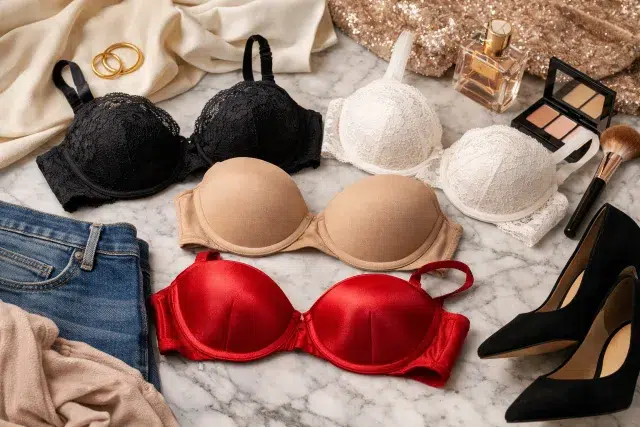
Let’s be honest: an underwire bra can either feel like your best-kept style secret or the first thing you want to take off the second you get home. Usually, the difference comes down to fit, shape, and styling, not the underwire itself.
And you’re not alone if you’ve struggled. Research and industry analysis consistently show that a large share of bra wearers end up in the wrong size, which is why underwires poke, bands ride up, straps dig in, and “support” turns into “stress.” One recent peer-reviewed analysis found 93% of women were wearing the wrong bra size in the sample studied. The good news is: once you understand how an underwire bra is supposed to sit on your body, it gets dramatically easier to shop, style, and stay comfortable.
This guide walks you through what underwire does, how to get the fit right, and how to match the right underwire styles to different outfits so you look smooth, lifted, and confident without feeling restricted.
What an Underwire Bra Actually Does (and Why It Helps)
An underwire is a supportive frame sewn into the bottom of the cups, designed to sit around the breast tissue, not on top of it. When it fits correctly, the wire helps:
- Lift the bust by supporting from underneath
- Shape the silhouette by defining the base of the breast
- Separate and center (useful under fitted tops)
- Take pressure off straps by letting the band and cups do the heavy lifting
The key detail most people miss is this: support is not mainly coming from straps. A well-fitted bra should get most of its support from the band, not your shoulders. Fit experts commonly cite that around 80% of support comes from the band when it’s sized correctly.
So if your underwire bra feels painful, don’t assume “underwire is bad.” Assume “this bra is not fitting the way it’s designed to.”
Underwire Bra Bra Fit Basics (Yes, Fit Comes First)
You might have seen this phrase in searches: underwire bra bra. People type it when they’re trying to find quick help on fit, sizing, and which bra to buy. So let’s answer it clearly: the “best” underwire bra is the one where the band anchors, the wire sits on your ribcage, and the cups fully contain tissue without gaps or spillage.
The 60-second underwire fit checklist
Use this the next time you try one on:
1) The center gore lies flat
That’s the little panel between the cups. It should rest against your sternum in most underwire styles (plunge can be a bit lighter, but it should not float far away).
2) The wire frames your breast tissue
The underwire should sit on your ribcage and trace the breast root. If it’s sitting on soft breast tissue at the sides or underneath, that’s often the source of poking and soreness.
3) The band is snug and level
It should be firm but not suffocating. Guidance for a firm band often suggests only about a couple fingers of ease and limited stretch.
4) Cups contain everything
No “double-boob” at the top, no side spillage, and no empty space. If you see gaping, you may need a different cup shape or size, not necessarily a smaller cup.
5) Straps stay put without digging
Straps should stabilize, not carry the weight.
A quick note on measuring at home
Measuring can help you get into the right neighborhood, but it’s not magic. Expert-led consumer guidance generally recommends measuring band and bust, then using fit checks and sister sizes to fine-tune.
If you measure and still feel uncomfortable, trust the fit signals on your body. A tape measure can’t tell you your breast shape, wire width needs, or how a particular brand runs.
Common Underwire Problems (and the Simple Fixes)
Here’s what most people experience, plus what it usually means.
“The underwire is poking my armpit”
Most likely causes:
- The wire is too tall or too wide for your shape
- The cup is too small, pushing tissue outward
- The band is too big, letting the bra slide around
Try:
- A plunge or balconette with lower side wings
- One cup size up, or a narrower-wire brand/style
- A firmer band (sometimes going down a band and up a cup in sister sizing)
“The wire sits on my breast tissue underneath”
Most likely causes:
- Band too big, bra drops down
- Cups too shallow for your projection
- You need a different style (full coverage vs demi, etc.)
Try:
- A firmer band
- A deeper cup style (often full coverage or certain plunge cuts)
- Always do a scoop-and-swoop adjustment when putting the bra on (many fit guides emphasize this technique).
“My straps are digging in”
Most likely causes:
- Band not doing enough support work
Try:
- Tighten the band fit first (not the straps)
- Look for wider straps only after band and cup are correct
Underwire Bra Styles Explained (So You Can Match Outfits Easily)
Different outfits need different necklines, coverage levels, and edge finishes. Here are the most useful underwire categories you’ll actually wear.
T-shirt underwire bra
Best for: smooth everyday looks, knits, fitted tops
Look for: seamless or lightly molded cups, smooth edges
Why it works: it disappears under clothes and gives a rounded shape.
Plunge underwire bra
Best for: V-necks, wrap tops, lower necklines
Look for: a lower center gore, angled cups
Why it works: it supports while staying hidden under a deeper neckline.
Balconette (balcony) underwire bra
Best for: square necklines, off-shoulder styles (with straps), dressy tops
Look for: wider-set straps, more horizontal cup line
Why it works: it lifts and creates a flattering upper shape without needing a full-coverage cup.
Full coverage underwire bra
Best for: long workdays, fuller busts, structured outfits
Look for: taller cup, side support panels, stable band
Why it works: it contains and supports with less “spillage risk.”
Strapless underwire bra
Best for: strapless tops, off-shoulder dresses
Look for: strong band grip, supportive side boning, secure underwire frame
Why it works: strapless support is mostly engineering. A good strapless underwire bra is built like scaffolding, in a good way.
Convertible underwire bra
Best for: versatility, travel packing
Look for: removable straps, multiple strap positions
Why it works: you can go classic, halter, crisscross, or one-shoulder without buying five separate bras.
Outfit Pairing Guide: Which Underwire Bra Works Best?
Here’s a practical table you can screenshot mentally and use when you’re getting dressed.
| Outfit type | Best underwire bra style | What to prioritize |
|---|---|---|
| White tee, fitted knit top | T-shirt underwire | Smooth cups, invisible edges |
| Deep V blouse | Plunge underwire | Low center, secure cups |
| Button-down shirt | Full coverage or lightly lined | No gaping, stable band |
| Square neckline top | Balconette | Lift, open neckline |
| Off-shoulder dress | Strapless underwire | Firm band, grip, side support |
| Satin slip dress | Seamless plunge or demi | Smooth finish, minimal seams |
| Blazer + camisole | Plunge or demi | Clean neckline, gentle lift |
| Backless top | Low-back solution (often special designs) | Adhesion or low-back band design |
| Travel day outfit | Convertible underwire | Comfort, flexibility, breathable fabric |
| Party dress | Plunge or strapless | Shape + security |
How to Choose the Right Underwire Bra for Your Breast Shape
Sizing is only half the story. Shape matters because two people can wear the same size and need completely different wires and cups.
If you’re fuller on top
You may need:
- Stretch lace top cups
- Slightly higher cup edge to prevent cutting in
Avoid:
- Very closed-off cup designs that create a “cut line” at the top
If you’re fuller on bottom
You may love:
- Balconette and certain demi cuts
- Cups that lift from below without excess fabric on top
If you’re wide-set
Look for:
- Side support panels
- Styles that encourage centering
Plunge can work beautifully here because it can bring the bust inward without a tall center gore.
If you’re close-set
Look for:
- Low gore plunge styles
- Narrower underwires in the center
If you have a projected shape
You’ll want:
- Deeper cups that don’t push tissue sideways
- Strong underwire structure with enough depth
A lot of “underwire pain” is actually “cup too shallow for projection.”
Comfort Upgrades That Make Underwire Bras Feel Better
If you like the shape of an underwire bra but hate the feeling, try these real-world fixes before you give up.
1) Start with the loosest hook
Most fit advice suggests starting a new bra on the loosest hook so you can tighten as the band relaxes with wear.
2) Rotate your bras
Wearing the same bra day after day breaks it down faster. Rotation helps elastic recover, which helps the band stay supportive longer.
3) Choose the right fabric for your day
- Hot weather: breathable mesh, lighter linings
- Long workday: stable band, soft cup lining, comfortable wire casing
- High movement: consider a supportive sports bra for workouts rather than relying on an everyday underwire
4) Don’t confuse “tight” with “supportive”
Support should feel secure, not punishing. If you feel restricted breathing normally, something’s off.
Underwire and Health: What’s True (and What’s Just Internet Noise)
A common rumor is that underwire bras cause serious illness, including breast cancer. Major cancer experts regularly address this as a myth: there’s no evidence that underwire bras cause breast cancer.
What is real is discomfort from poor fit. A bra that’s too tight, too small in the cup, or sitting on tissue can cause irritation, pressure marks, or soreness. So the goal is not to fear underwires. The goal is to fit them correctly and choose the right style for your body and your outfit.
Shopping Smarter: What to Check Before You Buy
When you’re trying on an underwire bra, don’t judge it in the first five seconds. Do a mini routine:
- Put it on and fasten on the loosest hook
- Scoop and place tissue into the cups
- Adjust straps last
- Move around: raise arms, sit, twist
- Re-check the wire position and band level
Also, remember that different brands and styles can fit differently even in the “same” size. That’s normal. The goal is consistency in how it feels and supports, not loyalty to one label on the tag.
FAQs People Actually Ask About Underwire Bras
How do I know if my underwire bra is the wrong size?
If the band rides up, cups gap or spill, the center gore floats, or the wire sits on breast tissue, it’s likely the wrong size or wrong shape for you. Measurement guides can help you start, but fit checks finish the job.
Why does my underwire bra hurt by the end of the day?
Usually because the bra shifts as you move, often due to a band that’s too loose or cups that don’t fully contain. When the band isn’t anchoring, the wire ends up digging.
Should an underwire touch my ribcage?
Yes. The wire should rest on the ribcage and frame the breast tissue. If it’s sitting on soft tissue, that’s when it tends to poke and feel sore.
Can I wear an underwire bra every day?
If it fits well and feels comfortable, yes. There’s no special rule saying you can’t. Comfort and fit are the deciding factors, not the presence of wire.
How often should I re-check my bra size?
Bodies change. Many mainstream fit experts suggest checking periodically, often around every 6 to 12 months or after major changes like weight shifts or pregnancy.
Conclusion: The “Right” Underwire Bra Makes Outfits Easier
A good underwire bra is less about hype and more about alignment: the band anchors, the cups contain, and the wire frames your breast tissue cleanly. When that happens, outfits sit better, necklines look intentional, and you stop spending your day adjusting straps or tugging at your top.
If you take only one idea from this guide, take this: underwire isn’t the enemy, poor fit is. Once you find a couple of dependable styles that match your wardrobe, getting dressed becomes simpler. You’ll know which bra to reach for with a tee, a blazer, a satin dress, or a square neckline, and you’ll feel supported without feeling trapped.
And if you want to go deeper into how modern support garments are designed and categorized, the history and basics are nicely summarized on this support garments page.