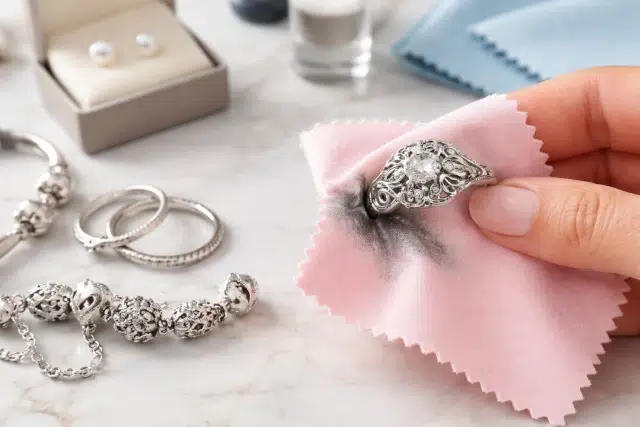
If you own even one piece of silver jewelry or a single old spoon from your family drawer, you’ve seen it happen. One day it looks bright and “new,” and the next it’s dull, gray, or slightly yellowed. The good news is you don’t need a sink full of chemicals to fix it. A Silver Polishing Cloth is one of the simplest, safest, and most satisfying tools for bringing silver back to life at home, especially for everyday tarnish and fingerprints.
Tarnish isn’t dirt, and it isn’t “rust.” It’s a thin layer that forms when silver reacts with sulfur containing gases in the air, creating silver sulfide on the surface. Conservation resources describe tarnish on pure silver as silver sulfide (Ag2S), and on sterling silver it can include copper sulfide too.
So if you’ve been putting off cleaning because it feels messy or risky, you’re in the right place. Let’s make it easy, quick, and safe.
What a Silver Polishing Cloth actually does (and why it works)
A Silver Polishing Cloth is usually a soft, lint free cloth that’s treated with gentle polishing agents. When you rub silver with it, you’re doing two things at once:
- Lifting off surface grime, skin oils, and light oxidation
- Removing a very thin layer of tarnish so the bright metal underneath shows again
Tarnish forms because silver has a strong vulnerability to sulfur exposure, and the film grows over time depending on humidity and pollutants. A polishing cloth handles that film gradually and with control, which is why it’s such a practical “do it at home” solution.
Polishing silver cloth vs liquid polish vs dips
A polishing silver cloth (and most silver polish cloth products) lets you target the exact area that needs help. Liquid polishes and dips can work, but they’re easier to overdo, and they’re not ideal for every item, especially pieces with delicate details or mixed materials.
Here’s the simple way to think about it:
- Silver Polishing Cloth: best for routine maintenance, jewelry, small items, quick shine
- Cream or liquid polish: good for heavier tarnish on larger items, but takes more care and cleanup
- Chemical dip: fast but blunt; can be risky for antiques, porous parts, or pieces with intentional patina
If you want “easy and reliable” without turning your kitchen into a cleaning lab, a Silver Polishing Cloth is usually the winner.
Why silver tarnishes in the first place
Tarnish happens when silver reacts with sulfur containing gases, most commonly hydrogen sulfide in trace amounts. The surface converts to silver sulfide, which looks darker and blocks reflectivity.
Sterling silver tarnishes too, and sometimes faster, because sterling is an alloy. That extra copper can react and contribute to the tarnish layer.
Common everyday tarnish triggers include:
- Humidity and air pollution
- Rubber, wool, felt, and some packaging materials (they can release sulfur compounds)
- Kitchen exposure (yes, eggs are a famous culprit because of sulfur)
The takeaway: tarnish is normal. It doesn’t mean your silver is ruined. It just means it needs a little surface care.
How to use a Silver Polishing Cloth at home (step by step)
This is the part people overcomplicate. Don’t.
Step 1: Start with clean, dry hands and a stable surface
Lay down a soft towel so your jewelry or silver item doesn’t slip. If it’s jewelry, close clasps so chains don’t tangle.
Step 2: Light wipe first
Use a gentle pass with the cloth to remove fingerprints and dust. You’ll often see an instant difference on lightly dull pieces.
Step 3: Focus on tarnished areas using small motions
Use short, controlled strokes. For jewelry, hold the piece steady and work section by section. If you’re using a treated silver polish cloth, you may see dark residue on the cloth. That’s normal, it’s the tarnish being removed.
Step 4: Buff to finish
Many cloths are two layer: one side “cleans” and the other “buffs.” If yours is single layer, just switch to a cleaner area of the cloth and buff gently until the shine pops.
Step 5: Do not rinse the item unless you used soap
With cloth polishing alone, rinsing is usually unnecessary. If you did pre clean with mild soapy water, rinse and dry completely before polishing again.
Quick reality check: if you polish aggressively every week, you’ll wear away more surface over time than you need to. A Silver Polishing Cloth works best as regular light maintenance, not as an intense scrub.
The best routine for jewelry: fast, safe, and realistic
Most people want clean silver jewelry that still looks “like silver,” not mirror bright at the cost of scratches. Here’s a routine that keeps things simple:
- Weekly: quick wipe with a Silver Polishing Cloth after wearing
- Monthly: wash with mild soap and warm water, dry fully, then polish
- As needed: spot polish heavier tarnish areas (like the inside of rings or the back of pendants)
Jewelry care guidance from gem experts emphasizes gentle approaches, like mild soap and soft cloth cleaning, and being careful around delicate stones.
If your jewelry has gemstones, read this first
A Silver Polishing Cloth is generally safe around most settings, but you should avoid grinding the cloth into prongs or porous stones. Some gems scratch easily, and treatments can be sensitive to harsh methods.
Use these habits:
- Polish the metal, not the stone
- Use a corner of the cloth for tight areas
- If the piece has soft gems (pearls, opals), skip heavy polishing and stick to gentle wiping
Silver polish cloth safety: what NOT to do
This is where people accidentally cause damage, not because they’re careless, but because they use “internet hacks” on everything.
Avoid these common mistakes:
- Don’t use toothpaste on silver. Many toothpastes contain abrasives that can scratch.
- Don’t use baking soda scrubs on jewelry unless you truly understand the abrasion risk.
- Don’t polish plated silver the same way you polish sterling, especially if the plating is thin.
If you’re unsure whether something is plated, look for markings like “925” or “sterling” on jewelry. Sterling is commonly 92.5% silver by weight.
Quick comparison table: which method should you use?
| Situation | Best choice | Why it fits |
|---|---|---|
| Light tarnish, everyday jewelry | Silver Polishing Cloth | Fast, controlled, low mess |
| Fingerprints and dullness after wearing | Silver Polishing Cloth | Removes oils and brightens quickly |
| Heavy tarnish on large flatware | Cream polish + soft cloth | More power, still controllable |
| Deep black tarnish in crevices | Combination approach | Pre clean plus targeted cloth finishing |
| Antique silver with intentional dark patina | Gentle spot use only | Preserve details and character |
For most home use, a Silver Polishing Cloth is the easiest starting point because it’s forgiving and doesn’t demand special setup.
Real world scenario: the 5 minute “before guests arrive” fix
Let’s say you’re wearing a silver chain you love, and you notice it looks tired in natural light. No time for soaking, no time for elaborate routines.
Do this:
- Lay a towel down
- Run the chain through the cloth, pinching lightly
- Focus on the clasp and the front section that sits on your collarbone
- Buff once more
That’s it. A good polishing silver cloth will bring back the reflective shine without leaving your hands smelling like chemicals or your sink full of residue.
How to prevent tarnish so you polish less
The easiest way to “clean silver” is to keep it from tarnishing too fast.
Storage rules that actually help
- Store silver in a dry place, away from humidity
- Keep it away from rubber bands, certain foams, and wool like felt liners (sulfur exposure matters)
- Use anti tarnish bags or strips for pieces you don’t wear often, especially if you live in a humid area
Museum and conservation guidance focuses heavily on environmental control because sulfur exposure drives tarnish formation.
The “wear it more” tip is real
Silver that’s worn and lightly wiped tends to stay brighter than silver that sits untouched in a box for months. Skin oils can be a problem, but regular gentle wiping with a Silver Polishing Cloth keeps the surface from building up a thick film.
Silver Polishing Cloth FAQs
Can a Silver Polishing Cloth remove heavy black tarnish?
Sometimes, but it depends on how thick the tarnish layer is. A Silver Polishing Cloth works best on light to moderate tarnish. For deep black tarnish, you may need a two step approach: gentle wash and dry first, then polish, and repeat over a couple sessions instead of pressing hard.
Is a silver polish cloth safe for sterling silver?
Yes, for normal use. Tarnish on sterling can include copper sulfide as well, and gentle polishing is a standard maintenance method.
Why does my cloth turn black?
That dark residue is normal. You’re seeing removed tarnish and oxidation products. It’s a sign the cloth is working.
Should I wash the polishing cloth?
If it’s a treated Silver Polishing Cloth, usually no. Washing can remove the active polishing agents. Follow the manufacturer instructions, but most people simply store it in a sealed bag and keep using it until it loses effectiveness.
How often should I polish silver at home?
For jewelry, a light wipe after wearing plus occasional deeper polishing is enough. If you’re polishing the same item constantly, step back and focus more on storage and prevention.
Choosing the right Silver Polishing Cloth (without overthinking it)
Not all cloths feel the same. Some are meant for quick shine, others are more “cleaning plus polishing.”
Look for:
- Soft, lint free feel (so you don’t create micro scratches)
- A cloth large enough to wrap around your item
- Two layer design if you want a clear “clean then buff” routine
- Clear labeling for use on silver and sterling silver
If you’re dealing with jewelry, choose a cloth that feels gentle enough for daily use. If you’re dealing with flatware or larger decor pieces, a slightly thicker cloth can be easier to hold and control.
The bottom line
A Silver Polishing Cloth is the easiest way to restore shine at home because it matches real life: quick cleanups, controlled polishing, and less mess. Tarnish forms when silver reacts with sulfur containing gases and turns into a thin surface layer like silver sulfide. That’s normal chemistry, not a sign that your jewelry is “bad.”
If you keep a polishing silver cloth in your drawer and use it lightly and consistently, you’ll spend less time “deep cleaning” and more time actually wearing your silver.
And if you ever need a simple mental model, remember this: tarnish is a surface film. You don’t need to fight it like a stain. You just need to lift it gently, then protect the surface so it comes back slower, kind of like keeping fingerprints off glass. If you want to dig deeper into the chemistry and everyday meaning of silver tarnish, it’s a surprisingly interesting rabbit hole.