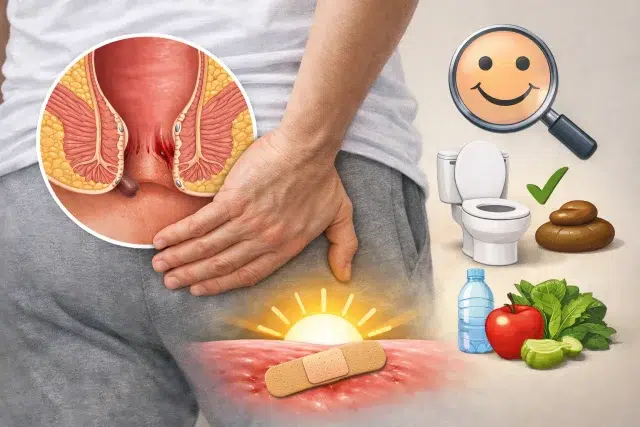
An anal fissure can make everyday life feel way harder than it should. When every bowel movement brings a sharp, burning pain, it’s normal to fixate on one question: is it finally getting better?
The good news is that your body usually gives clear signals when recovery is underway. The tricky part is that healing can be non linear. Some days you feel almost normal, and then one constipated stool sets you back. That’s why knowing the Signs A Fissure Is Healing matters. It helps you stay calm when you’re improving, and it helps you spot the red flags that mean something else might be going on.
Clinically, an anal fissure is a small tear in the lining of the anal canal. Many acute fissures heal with conservative care, and trusted health sources note that fissures often improve on their own, while persistent fissures have additional treatment options.
In this guide, you’ll learn the most reliable Signs A Fissure Is Healing, what a realistic recovery timeline looks like, and what symptoms deserve a quicker medical check.
What “healing” actually means with a fissure
Before we list the Signs A Fissure Is Healing, it helps to understand what’s happening in the tissue.
A fissure is more than a surface scratch. Pain triggers a reflex spasm in the internal anal sphincter. That spasm can reduce blood flow to the tear, which slows repair. Many treatments, from sitz baths to prescription ointments, aim to relax that muscle and improve blood supply so the tear can close. Clinical guidelines emphasize conservative measures like sitz baths and bulking agents as first line approaches.
Healing usually means:
- Less spasm and tension around the anus
- Better blood flow to the torn area
- The tear closing and becoming less sensitive
- Pain fading from “sharp and lingering” to “mild and brief” and then disappearing
That’s the foundation for recognizing the Signs A Fissure Is Healing.
Recovery timeline: what’s typical, and why it varies
People often panic because healing doesn’t happen overnight. Most fissures come and go and commonly last 1 to 2 weeks, but some take longer, and a fissure lasting more than about six weeks is often labeled chronic.
A practical way to think about the healing window:
- Early days: inflammation settles, stool passage becomes slightly less terrifying
- 1 to 2 weeks: pain after bowel movements shortens, bleeding becomes lighter or stops
- Up to 6 weeks: many acute fissures resolve fully
- Beyond 6 weeks: symptoms can still improve, but chronic fissures often need more structured treatment plans
So if your recovery feels slow, it may still be normal. The key is whether the Signs A Fissure Is Healing are showing up consistently over time.
The most reliable Signs A Fissure Is Healing
1) Pain is shorter, not just “less”
One of the clearest Signs A Fissure Is Healing is that pain doesn’t linger as long.
Early on, many people feel sharp pain during the bowel movement and burning that can last hours. When healing starts, pain tends to:
- Peak quickly
- Fade faster afterward
- Stop “echoing” for the rest of the day
You might still feel discomfort, but it becomes more like soreness than a knife like burn.
2) Fewer spasms or “clenching” feelings
That involuntary tightness is a big driver of fissure misery. When the internal sphincter relaxes more easily, you’ll notice:
- Less cramping after stool
- Fewer sudden jolts of pain when sitting or standing
- A general sense that the area isn’t constantly tense
This reduction in spasm is one of the most meaningful Signs A Fissure Is Healing because it supports better blood flow and tissue repair.
3) Bleeding becomes lighter, then stops
A fissure often causes bright red blood, usually on toilet paper or the surface of the stool. NHS and hospital leaflets commonly describe bleeding as a typical symptom.
When healing begins, bleeding often follows a pattern:
- Less frequent (not every bowel movement)
- Smaller amount (a smear rather than drops)
- Eventually none
Important nuance: a single episode of light bleeding doesn’t always mean you’re not healing. A hard stool can re irritate the area. The trend over weeks matters more than one day.
4) Itching may briefly increase, then settles
This surprises people. Mild itching can show up during the repair process as skin regenerates. Some clinical leaflets list itching and discharge among symptoms people notice.
So yes, itching can be one of the Signs A Fissure Is Healing, especially when pain and bleeding are clearly trending downward. If itching is intense, smelly discharge appears, or pain spikes, that’s a different story (we’ll cover red flags later).
5) Bowel movements become mentally “easier”
This is a real marker, and it doesn’t get talked about enough.
When you’re in the worst phase, you anticipate pain, you tense up, you delay going, and that can worsen constipation. As Signs A Fissure Is Healing appear, many people notice:
- Less dread before using the bathroom
- Less straining
- Less need to plan their day around “the next bowel movement”
That mental shift usually reflects a physical shift: less tissue sensitivity and less sphincter spasm.
6) Sitting and walking feel normal again
In early fissure days, sitting can feel like sitting on a bruise, and walking can trigger a sting.
A strong sign of improvement is when you can:
- Sit through a meal without constantly adjusting
- Walk without that “raw scrape” sensation
- Wear normal clothing without irritation
These are everyday Signs A Fissure Is Healing that people notice before the fissure is completely gone.
7) You need fewer pain workarounds
At first, many people rely on warm baths, ice packs, or carefully timed bathroom trips just to cope. When you’re healing, you may realize:
- You’re not thinking about the fissure constantly
- You’re not counting minutes since your last sitz bath
- You’re using fewer pain relievers (if you were using them)
When the fissure stops dominating your routine, that’s one of the most practical Signs A Fissure Is Healing.
8) The “after burn” changes character
The sensation often evolves in stages:
- Sharp pain during stool
- Burning afterward
- Tingling or mild soreness
- Occasional awareness only
That shift from intense burning to mild soreness is among the classic Signs A Fissure Is Healing.
9) Episodes of setback are smaller and recover faster
Healing doesn’t mean “no bad days.” It often means the bad days become less severe.
A helpful question:
If you have a harder stool today, does it trigger a major flare for a week, or a mild irritation for a day?
When setbacks shrink, it’s usually because the tear is smaller and the surrounding muscle isn’t spasming as aggressively. That pattern is a major part of the Signs A Fissure Is Healing.
A simple checklist: improving signs vs warning signs
Here’s a quick comparison you can use like a self check.
| What you notice | More consistent with Signs A Fissure Is Healing | More concerning |
|---|---|---|
| Pain pattern | Shorter pain after bowel movements | Pain lasting hours daily with no trend down |
| Bleeding | Lighter, less frequent, stopping | Heavy bleeding, dark stools, or bleeding unrelated to bowel movements |
| Spasm | Less tightness and cramping | Persistent spasm or escalating tightness |
| Discharge | None or minimal clear discharge | Pus, bad smell, fever, or increasing swelling |
| Overall trend | Gradual improvement over 1 to 6 weeks | No improvement after several weeks or repeated worsening |
NHS guidance emphasizes that fissures often get better, but if symptoms don’t settle, treatments and evaluation are available.
Why symptoms can improve… then suddenly feel worse
Many people see early Signs A Fissure Is Healing and then feel defeated when pain returns. This “two steps forward, one step back” pattern is common.
Common reasons include:
- A hard or large stool stretching the healing tissue
- Straining, even briefly
- Diarrhea (frequent wiping and irritation can inflame the area)
- Skipping hydration or fiber for a couple of days
- Stress, which can increase muscle tension and bowel habit disruption
A temporary flare does not automatically erase the Signs A Fissure Is Healing. What matters is whether your baseline keeps improving.
Signs A Fissure Is Healing after ointments or medical treatment
If you’re using prescribed treatment, you may want to know what “working” looks like.
Nitroglycerin and calcium channel blocker creams: what improvement can look like
Some topical medications aim to relax the sphincter and improve blood flow. Evidence summaries note that topical nitroglycerin has shown higher healing rates than placebo around the 8 week mark in studies, and calcium channel blockers can be similarly effective with fewer headaches.
Signs A Fissure Is Healing in this context often include:
- Less post bowel movement pain by week 1 to 2
- Less spasm over time
- Bleeding decreasing steadily
- A sense that stools “pass easier” because the muscle isn’t clamping down as hard
When botulinum toxin or procedures are used
For chronic fissures, some care plans include botulinum toxin injections or surgical approaches. Guidelines cover these options for cases that don’t respond to conservative measures.
In those cases, Signs A Fissure Is Healing can appear faster because the spasm is reduced more directly, but there can still be an adjustment period.
Common questions people ask (answered clearly)
How do I know if my fissure is healing or just “calm today”?
A calm day is good, but it’s the pattern that matters. The most trustworthy Signs A Fissure Is Healing show up as a trend: shorter pain, less spasm, and less bleeding across multiple bowel movements over several weeks.
Is itching a good sign?
It can be. Mild itching may happen during repair. If itching is paired with improving pain and bleeding, it can fit the Signs A Fissure Is Healing. If itching comes with foul discharge, swelling, or fever, it needs evaluation.
What if the bleeding stops but pain stays?
Bleeding can stop earlier than pain because nerve endings in that area are sensitive. Signs A Fissure Is Healing can still be present if pain is gradually shortening and spasms are less intense, even if discomfort lingers.
Can a fissure heal and come back?
Yes. Many resources describe fissures as coming and going, especially when constipation returns.
That’s why long term bowel habit stability matters for keeping the healing gains.
How common are fissures?
Anal fissures are considered common anorectal problems. Some clinical sources estimate incidence around 1.1 cases per 1,000 person years.
Regardless of the exact statistic you see, what matters is you’re not alone in this, and effective management pathways are well established.
When the signs are NOT reassuring
It’s just as important to know what does not fit the typical Signs A Fissure Is Healing.
Consider prompt medical review if you notice:
- Pain that is severe and not improving over time, especially beyond the usual healing window
- Bleeding that is heavy, persistent, or not linked to bowel movements
- A fissure that appears off to the side (lateral) or there are multiple tears, since atypical fissures can be linked with underlying conditions and may need a deeper evaluation
- Fever, chills, or worsening swelling (possible infection or abscess)
- Persistent discharge that is foul smelling
- Unexplained weight loss, ongoing diarrhea, or symptoms suggesting inflammatory bowel disease
These don’t mean something scary is guaranteed. They do mean the situation deserves a proper exam rather than guesswork at home.
Real life recovery scenarios
Scenario 1: the “it’s finally easing” week
A person has sharp pain after bowel movements for two weeks. In week three, pain still happens, but it fades in 10 to 15 minutes instead of hours. Bleeding goes from daily to once that week. Sitting becomes comfortable again.
That’s a classic cluster of Signs A Fissure Is Healing: shorter pain, less bleeding, more normal daily function.
Scenario 2: the “one bad stool” setback
A person feels better for several days, then has one hard bowel movement and sees a small streak of blood. Pain returns but settles within a day or two, and the next bowel movement is less painful.
This often still fits Signs A Fissure Is Healing because the setback is smaller and recovery is quicker.
Scenario 3: the “stuck in place” pattern
A person has the same level of severe pain and bleeding for six to eight weeks with no downward trend, plus constant spasm feelings.
That’s not the usual Signs A Fissure Is Healing pattern, and it aligns more with a chronic fissure path where structured medical treatment is often needed.
Practical ways people support healing (without overcomplicating it)
Because fissures are strongly tied to stool consistency and sphincter spasm, the most effective routines tend to be simple and consistent.
Common elements emphasized across medical guidance include:
- Warm sitz baths to relax the area
- Bulking agents like psyllium to make stools easier to pass
- Adequate hydration and fiber from diet to reduce straining
- Prescribed topical treatments when appropriate, aimed at improving blood flow and relaxing the sphincter
If you’re seeing Signs A Fissure Is Healing, these basics often play a big role in keeping progress steady.
Conclusion
Healing from a fissure is rarely a clean, straight line, but your body does give clues. The most trustworthy Signs A Fissure Is Healing are the ones you can track over time: pain that shortens, bleeding that fades, spasms that calm down, and daily life becoming normal again. If your trend is improving week by week, that’s encouraging, even if you still get the occasional flare.
If your symptoms are staying intense, not improving after several weeks, or feel atypical, it’s worth taking seriously and getting checked. The goal is not just to “push through,” but to make sure you’re on a path where the Signs A Fissure Is Healing keep stacking up instead of resetting.
For a quick medical overview of the condition, you can also read about anal fissure in a general reference format.