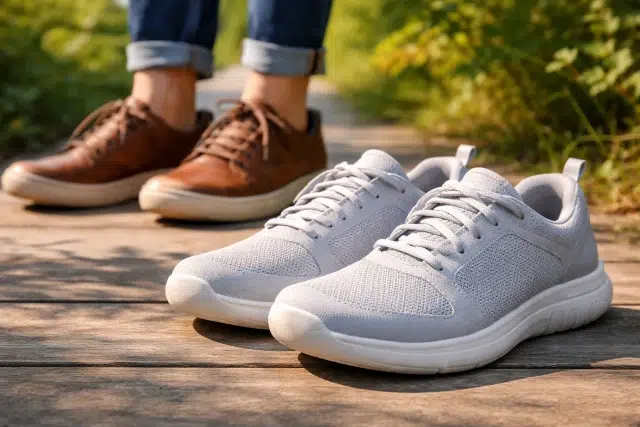
If your shoes feel “fine” in the morning but your toes start protesting by lunchtime, you’re not being dramatic. You’re getting a very normal signal: your feet want space. And for a lot of people, that space starts with one simple feature: shoes with wide toe box.
A wide toe box gives your toes room to spread naturally instead of being squeezed into a point. That matters more than most shoppers realize because toe compression can contribute to rubbing, blisters, numbness, and the kind of end-of-day foot fatigue that makes you want to kick your shoes off the second you get home. Foot pain itself is also common in adults, with research reporting prevalence estimates in the general population in the range of 13% to 36% depending on the study and how foot pain is defined and measured. That’s a big chunk of people walking around uncomfortable. (Source: BMC Musculoskeletal Disorders paper hosted by Springer Nature.)
In this guide, you’ll get a practical, 2026-updated list of “best picks” by use case (walking, standing all day, running, casual, minimalist, recovery), plus an easy way to tell if a shoe is truly wide in the toe box or just slapped with a “wide” label.
What exactly is a wide toe box?
The toe box is the front part of a shoe that surrounds your toes. A shoe can be “wide” overall (extra width through the midfoot) yet still taper sharply at the front. Shoes with wide toe box are shaped more like your foot: broader at the toes, not narrow and pointy.
A genuinely wide toe box typically allows:
- Your big toe to sit straighter instead of angling inward
- Your forefoot to splay slightly when you stand and walk
- Less friction on the pinky toe side (a common hotspot)
That last point is more important than it sounds. Friction plus pressure plus time is how many “small” irritations turn into chronic problems.
Why wide toe box comfort matters more in 2026
Two reasons: lifestyle and awareness.
First, more people are spending long hours on hard floors: offices, retail, hospitals, airports, warehouses, even home setups with less movement than we think. Second, there’s growing awareness that footwear fit is not just comfort, it’s function. When shoes crowd toes, it can increase pressure in the forefoot and aggravate conditions like bunions (hallux valgus). Research on footwear toe-box shape and pressure in people with hallux valgus highlights narrow-fitting footwear as a modifiable risk factor and investigates how toe box shape relates to medial forefoot pressure. (Source: Wiley Online Library.)
And if you already deal with persistent pain, remember chronic pain is common at a population level too. For example, CDC reporting for the U.S. estimated 24.3% of adults had chronic pain in 2023. (Different topic than foot pain specifically, but it’s part of the larger “pain is widespread” reality.) (Source: CDC NCHS Data Brief.)
Quick checklist: how to tell if a shoe really has a wide toe box
Before we get into the best picks, here’s a simple “try-on” test you can do in under a minute.
The toe wiggle test
With the shoe on and laced as you’d actually wear it:
- Can you wiggle all toes individually?
- Can you spread your toes slightly without the upper fighting back?
- Do you feel pressure on the sides of your big toe or pinky toe?
The thumb-width rule (easy and underrated)
Stand up in the shoes. Press your thumb across the top of the toe area.
- If the upper feels stretched tight over toe knuckles, the toe box is likely too shallow or narrow.
- If your toes feel like they’re stacked or overlapping, it’s not the right shape.
The “shape check” from above
Look down at the shoe. If the front narrows into a noticeable point, it’s probably not a wide toe box design even if it comes in wide sizing.
Best picks for all-day comfort in 2026 (by real-life use case)
These picks are based on reputable 2026 roundups that used expert input and product testing, plus shoe-lab measurement sites that publish toe box dimension comparisons. The goal here isn’t to hype a single “perfect shoe.” It’s to match the toe box style to what your day actually looks like.
1) Best overall for walking and daily errands
If you want a “do-most-things” shoe, look for a roomy toe box plus balanced cushioning.
Popular 2026-tested options include models highlighted by Verywell Fit’s updated “best wide-toe-box shoes” testing list and expert-backed criteria. (Source: Verywell Fit, updated January 2026.)
What to prioritize
- A flexible forefoot (to reduce that stiff, clunky feel)
- A stable heel counter (so you’re not sliding around)
- Breathable upper if you’re wearing them for hours
2) Best for standing all day (work shifts, teaching, events)
Standing is different from walking. You’ll feel pressure build under the heel and ball of foot, so cushioning and support matter, but the toe box still needs room so your forefoot isn’t constantly compressed.
NBC Select’s 2026 guide includes podiatrist-informed recommendations and emphasizes that wide toe box shoes can help with comfort and issues like bunions and corns. (Source: NBC Select, January 2026.)
What to prioritize
- More cushioning under the heel and forefoot than you think you need
- A secure midfoot fit so extra toe room doesn’t mean sloppy stability
- A removable insole if you use orthotics
3) Best for walking shoes with lab-measured wide toe boxes
If you want a more “measurement-driven” approach, RunRepeat publishes lab tests and toe box width measurements for walking shoes.
Their 2025–2026 era guide lists wide-toe-box walking picks across categories (overall, shock absorption, stability, rocker, barefoot style) based on lab measurements. (Source: RunRepeat wide-toe-box walking guide.)
This is useful if you’re tired of guessing and want a shortlist backed by consistent sizing methodology.
4) Best for running (roomy toes without losing lockdown)
Running shoes can be tricky: you want toe space up front but also a locked-in heel and midfoot so your foot doesn’t slide and cause blisters.
RunRepeat also publishes a “wide toebox running shoes” guide grounded in lab measurements and wear testing. (Source: RunRepeat wide-toebox running guide.)
What to prioritize
- Toe box width plus a stable platform
- Enough volume for toe swelling on longer runs
- A fit that doesn’t force you to over-tighten laces just to feel secure
5) Best for bunions and sensitive forefoot
If your big toe joint is irritated, wide toe boxes matter, but so do soft uppers and reduced rubbing.
People’s bunion-focused testing roundup highlights how bunion-friendly shoes often need a wide toe box, softer materials, and support to reduce pain. (Source: People.com testing roundup.)
Also, clinical research continues to investigate pressure reduction strategies for hallux valgus, including extra-width footwear and orthoses to reduce medial pressures. (Source: ScienceDirect article on pressure reduction in symptomatic hallux valgus.)
What to prioritize
- Stretchy upper materials (especially around the bunion area)
- Wide toe box plus enough depth
- Low irritation seams near the big toe joint
6) Best minimalist or “foot-shaped” option
Minimalist shoes often get wide toe boxes right because their design philosophy usually starts with natural foot shape. But they’re not for everyone immediately, especially if you’re used to thick cushioning.
NBC Select’s 2026 list includes “barefoot-style” options among wide toe box picks. (Source: NBC Select.)
What to prioritize
- Start gradually if you’re transitioning from highly cushioned shoes
- Look for flexible forefoot and a secure heel
- Pay attention to calf tightness in the first few weeks (common during transitions)
7) Best budget-friendly wide-toe comfort
Budget picks can be totally valid as long as you look for basic build quality: decent outsole traction, a stable heel, and an upper that doesn’t collapse sideways.
Better Homes & Gardens highlighted a budget wide-toe walking option with strong consumer feedback for long standing days, plus features like removable insoles and arch support. (Source: Better Homes & Gardens, January 2026.)
Comparison table: choose the right wide toe box shoe type
| Your main need | Toe box priority | Cushioning priority | Best fit tip |
|---|---|---|---|
| All-day walking | Medium to high | Medium | Ensure midfoot holds while toes have space |
| Standing all day | High | High | Avoid over-tight lacing; use heel lock lacing instead |
| Running | Medium to high | Medium to high | Size for toe swelling; test downhill fit |
| Bunions or toe irritation | High | Medium | Soft/stretch upper near big toe joint |
| Minimalist transition | High | Low to medium | Increase wear time slowly over 2–4 weeks |
| Casual everyday | Medium | Medium | Prioritize natural shape over “wide size” label |
How to get the sizing right (this is where most people mess up)
A wide toe box won’t help much if the length is wrong or your heel is sliding.
Practical sizing tips
- Try shoes later in the day. Feet swell, especially if you walk a lot.
- Stand up when you test fit. Seated fit is misleading.
- Leave a little space in front of the longest toe, but don’t let the heel float.
- If you need to crank down laces to feel stable, the shoe may be too wide in the midfoot even if the toe box feels great.
A quick “fit scenario” to make it real
Imagine you’re a teacher on your feet for six hours. In a narrow toe box, your toes gradually get pushed inward, and by the last class your forefoot feels hot and sore. In a wide toe box with a stable heel, you get the opposite: your toes relax, pressure is better distributed, and you finish the day tired, but not limping.
That’s the practical difference most people notice.
What to look for beyond the toe box (comfort is a full system)
A wide toe box is a great start, but all-day comfort usually comes from a few features working together:
- Upper material: Soft mesh or knit can reduce pressure points.
- Heel counter stability: Keeps your foot aligned so the toe room doesn’t become sloppy.
- Midsole cushioning and geometry: If you walk a lot, cushioning and a smooth transition matter.
- Outsole grip: Especially if you’re on smooth indoor floors.
- Removable insole: Helpful if you use orthotics or want to swap for a better insole.
If you want a quick credibility check when shopping, the American Podiatric Medical Association has a product database for items that earned its Seal program after review by podiatrists. (Source: APMA Seal database page.)
Common questions (FAQ)
Are shoes with wide toe box only for wide feet?
No. Many people with “normal width” feet still benefit because toes naturally spread when you stand and walk. A wider toe box can reduce rubbing and allow more natural movement.
Will a wide toe box fix bunions?
It won’t reverse a bunion, but it can reduce pressure and irritation, and may help slow worsening when combined with good fit and supportive footwear choices. Research and clinical guidance often emphasize avoiding narrow toe boxes for bunion comfort and pressure management.
Do I need to size up to get a wider toe box?
Not always. Some brands build a naturally wider toe shape into the design. Sizing up can create heel slip, which causes blisters. Prefer foot-shaped designs or wide-toe-box models first, then adjust size only if needed.
Are wide toe boxes good for running?
They can be, especially for longer runs when feet swell. The key is pairing toe room with secure midfoot and heel lockdown so you don’t slide.
What if wide toe boxes feel “too roomy”?
That usually means the shoe is wide through the midfoot, not just at the toes, or the volume is too high. Try a different model with a more secure midfoot, or use lacing techniques like heel lock lacing.
Conclusion: the comfort upgrade that actually lasts
The reason shoes with wide toe box keep trending isn’t hype. It’s basic anatomy meeting real life. When your toes have room, you often get less rubbing, less end-of-day soreness, and a more stable, natural stride. If you’re on your feet for long hours, that difference adds up quickly.
As you choose your next pair, think beyond “wide sizing” and focus on shape: roomy at the toes, stable at the heel, comfortable where your foot bears weight. Your human foot is built to spread, support, and move. The right toe box simply lets it do its job.