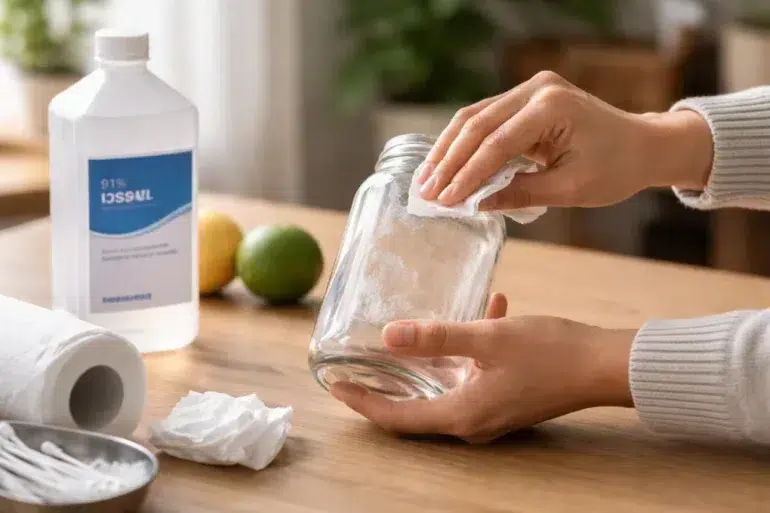
Dealing with leftover sticker residue can be frustrating. Whether it’s on glass jars, electronics, or furniture, that stubborn sticky layer just won’t budge. This is where Rubbing Alcohol for Sticker Residue becomes a simple and effective solution. It’s affordable, easy to use, and works on a variety of surfaces without causing damage when used correctly.
In this article, we’ll walk through how to remove sticky residue using rubbing alcohol, why it works so well, and how to apply it safely across different materials. If you’ve ever struggled with peeling labels or leftover adhesive, this will save you time and effort.
Why Rubbing Alcohol Works for Sticker Residue
The effectiveness of Rubbing Alcohol for Sticker Residue comes down to its chemical properties. Rubbing alcohol, also known as isopropyl alcohol, is a solvent. This means it can break down sticky substances like adhesives.
How It Breaks Down Adhesive
Sticker residue is typically made from pressure-sensitive adhesives. These adhesives stick due to their tacky composition. Rubbing alcohol works by:
- Dissolving the adhesive bonds
- Softening the sticky layer
- Making it easier to wipe away
Because it evaporates quickly, it also leaves minimal moisture behind, reducing the risk of surface damage.
Types of Surfaces You Can Clean
One of the biggest advantages of using Rubbing Alcohol for Sticker Residue is its versatility.
Safe Surfaces
You can use it on:
- Glass and mirrors
- Plastic containers
- Metal surfaces
- Ceramic items
- Sealed wood
Surfaces That Need Caution
Some materials require extra care:
- Painted surfaces
- Polished wood
- Certain electronics screens
Always test a small hidden area first to avoid discoloration or damage.
Step-by-Step Method to Remove Sticker Residue
Removing residue doesn’t require special tools. Here’s a simple process using Rubbing Alcohol for Sticker Residue.
What You’ll Need
- Rubbing alcohol (70% or higher)
- Cotton balls or soft cloth
- Plastic scraper or old card
- Warm water and mild soap
Cleaning Process
- Apply a small amount of rubbing alcohol to a cotton ball
- Press it onto the sticky residue for 30 to 60 seconds
- Gently rub the area in circular motions
- Use a plastic scraper if needed
- Wipe clean with a damp cloth
This method works quickly and avoids scratching the surface.
Best Techniques for Different Materials
Different surfaces respond differently, so it’s helpful to adjust your approach.
Glass and Windows
Glass is the easiest surface to clean.
- Apply alcohol directly
- Let it sit briefly
- Wipe with a microfiber cloth
The result is a clean, streak-free finish.
Plastic Items
Plastic can sometimes hold onto residue more stubbornly.
- Use gentle pressure
- Avoid excessive rubbing
- Repeat if needed
Electronics
When using Rubbing Alcohol for Sticker Residue on electronics:
- Never pour directly onto the device
- Apply to a cloth first
- Use minimal moisture
This reduces the risk of internal damage.
Wood Surfaces
For sealed wood:
- Dab lightly with alcohol
- Avoid soaking the surface
- Dry immediately
Unsealed wood should generally be avoided.
Common Mistakes to Avoid
Even though the process is simple, a few mistakes can cause problems.
What Not to Do
- Using too much alcohol on sensitive surfaces
- Scraping with sharp tools
- Skipping the patch test
- Letting alcohol sit too long
Being careful ensures the best results without damage.
Comparing Rubbing Alcohol With Other Methods
There are several ways to remove sticker residue, but how does rubbing alcohol compare?
Comparison Table
| Method | Effectiveness | Surface Safety | Ease of Use |
|---|---|---|---|
| Rubbing Alcohol | High | High | Easy |
| Vinegar | Medium | High | Easy |
| Oil (cooking oil) | Medium | Medium | Messy |
| Commercial removers | High | Varies | Moderate |
Rubbing Alcohol for Sticker Residue stands out because it balances effectiveness and safety.
Real-Life Example
Imagine removing a price sticker from a new glass jar. You peel off the label, but a sticky patch remains.
Instead of scrubbing endlessly, you apply rubbing alcohol. Within seconds, the adhesive softens, and a quick wipe removes it completely. No scratches, no residue, no hassle.
This is why so many people rely on this method.
Safety Tips When Using Rubbing Alcohol
While effective, rubbing alcohol should be used carefully.
Important Safety Guidelines
- Use in a well-ventilated area
- Keep away from open flames
- Store out of reach of children
- Avoid contact with eyes
These precautions ensure safe and effective use.
Alternative Uses Around the Home
Beyond removing stickers, rubbing alcohol has many practical uses.
Other Cleaning Applications
- Removing ink stains
- Disinfecting surfaces
- Cleaning keyboards and screens
- Eliminating grease spots
Its versatility makes it a staple in many households.
Why It’s Better Than Scraping Alone
Many people try to scrape off residue, but this often leads to scratches.
Using Rubbing Alcohol for Sticker Residue softens the adhesive first, making removal easier and safer. This reduces the need for force and protects your surfaces.
Environmental and Cost Benefits
Rubbing alcohol is both affordable and widely available.
Advantages
- Low cost compared to specialty cleaners
- Multipurpose usage
- Minimal waste
This makes it a practical choice for everyday cleaning tasks.
Understanding Adhesive Residue
To fully understand why this method works, it helps to know what sticker residue actually is.
Adhesives are designed to stick firmly but also be removable. However, factors like heat, age, and surface type can cause them to leave behind residue.
For more insight into how adhesives function, you can read about pressure-sensitive adhesives.
This explains why solvents like rubbing alcohol are so effective.
Frequently Asked Questions
Can rubbing alcohol damage surfaces
It’s generally safe, but always test a small area first, especially on delicate materials.
How long should I leave alcohol on residue
Usually 30 to 60 seconds is enough to loosen the adhesive.
Can I use hand sanitizer instead
Some hand sanitizers contain alcohol, but they may leave additional residue due to added ingredients.
What strength of alcohol works best
A concentration of 70% or higher is ideal for removing sticky residue.
Expert Tips for Best Results
If you want to get the most out of Rubbing Alcohol for Sticker Residue, keep these tips in mind:
- Use a microfiber cloth for better absorption
- Work in small sections
- Reapply alcohol if needed
- Finish with a clean wipe
These small details can make a big difference.
Conclusion
Sticky residue doesn’t have to be a headache. With the right approach, it can be removed quickly and safely. Rubbing Alcohol for Sticker Residue stands out as one of the simplest and most effective solutions available.
It works across multiple surfaces, requires minimal effort, and delivers consistent results. Whether you’re cleaning glass, plastic, or household items, this method offers a reliable way to restore surfaces without damage.
Once you try it, you’ll likely keep rubbing alcohol on hand for all kinds of cleaning tasks.