If you have a few old fluorescent tubes sitting in a closet, garage, or utility room, you are not alone. Most people keep them around because they are awkward to store, easy to break, and honestly, a little intimidating to deal with. But here’s the key thing to know: recycling tube fluorescents is not just a “nice-to-do” eco habit. It’s a practical safety move for your home, your trash handlers, and your local environment.
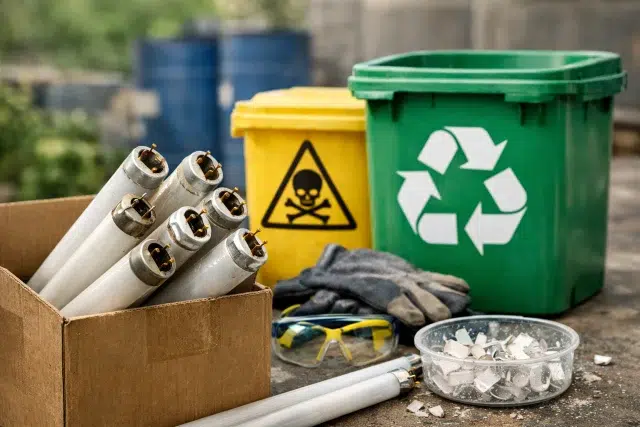
Tube fluorescents (including linear tubes, U-shaped tubes, and circular “circline” bulbs) often contain a small amount of mercury sealed inside the glass. When bulbs get tossed into household trash, they can break in bins, trucks, compactors, and landfills, releasing mercury and spreading glass and powder in places nobody wants it. That’s one of the main reasons the U.S. EPA encourages consumers to use local recycling options for mercury-containing bulbs instead of throwing them away.
This guide walks you through safe disposal rules every home should follow, with clear steps, real-life scenarios, and simple storage tips you can actually use.
What counts as “tube fluorescents” and why recycling matters
“Tube fluorescents” usually means linear fluorescent lamps: the long glass tubes found in kitchens, garages, basements, workshops, schools, and offices. But the same safe-handling mindset applies to other mercury-containing lamps too, like compact fluorescent lamps (CFLs), some specialty black lights, germicidal bulbs, and certain high-intensity discharge lamps.
The mercury question
Fluorescent lamps contain a small amount of mercury sealed inside the tube. The exact amount varies by bulb type and manufacturer, but the “small amount” is still important because mercury is toxic. EPA materials commonly cite CFLs at about 3 to 4 milligrams of mercury, which helps explain why careful cleanup and recycling guidance exists in the first place.
And here’s the everyday reality: when fluorescent lamps are thrown in the trash, they often break before they reach their final destination. EPA explains that breakage can happen in dumpsters, trash cans, compactors, and landfills or incinerators, and recycling helps prevent mercury release.
Safe disposal rules every home should follow
Let’s turn the “what should I do?” into a straightforward set of rules you can follow without overthinking it.
Rule 1: Do not put tube fluorescents in household trash unless your local rules clearly allow it
Some areas treat these bulbs as household hazardous waste or “universal waste” and strongly prefer or require proper collection or recycling options. For example, California classifies many mercury-containing lamps as universal waste and directs residents to take them to authorized collection or recycling programs rather than putting them in the trash.
Even outside California, EPA guidance is consistent: use local recycling options for mercury-containing bulbs instead of tossing them.
Practical takeaway: treat recycling as the default. If you are unsure, assume “do not trash” until you confirm locally.
Rule 2: Keep bulbs intact, and plan for “safe transport”
Most disposal problems happen before the bulb even gets to a drop-off site. The tube breaks in your hands, in the back seat, or while bouncing in the trunk.
Use these safe transport habits:
- Keep the bulb in its original packaging if you have it.
- If you do not, wrap it in thick paper or cardboard and tape it gently so it cannot slide out.
- Lay tubes flat in the vehicle, ideally on a level surface.
- Do not toss tubes into a pile of other recyclables, tools, or heavy items.
Rule 3: Store spent tubes like fragile glass, not like scrap
“Temporary storage” is often where accidents happen. A tube gets leaned against a wall, someone bumps it, and now you’re cleaning up glass and powder.
A safe home storage setup looks like this:
- A long cardboard box (original bulb box is perfect).
- A low-traffic corner (top shelf in a garage can work if it is stable).
- Clear labeling like: “Used fluorescent tubes, do not break.”
If you have kids or pets, treat the storage spot the same way you’d treat cleaning chemicals: out of reach, out of play areas.
Rule 4: If a tube breaks, follow mercury cleanup guidance (and do not improvise)
A broken fluorescent tube is not a “panic” situation, but it does require a proper cleanup. EPA has specific steps for cleaning up broken mercury-containing bulbs, including fluorescent tubes, and the goal is to reduce mercury vapor exposure and avoid spreading glass and powder.
Below, I’ll walk you through the practical home version of those steps.
What to do if a tube fluorescent breaks in your home
This is the moment most people worry about, so let’s make it simple.
Step 1: Clear the room and air it out
- Have people and pets leave the room.
- Open windows and doors to ventilate.
EPA’s cleanup guidance emphasizes ventilation and reducing exposure right away.
Step 2: Gather the right cleanup items
You do not need fancy gear, but you do need to avoid making things worse.
What to use:
- Stiff paper or cardboard (to scoop)
- Sticky tape (to pick up tiny shards and powder)
- Damp paper towels or disposable wipes
- A glass jar with metal lid, or a sealable plastic bag (double-bagging is smart)
- Disposable gloves if available
What to avoid:
- Vacuuming right away (it can spread particles and vapor)
- Sweeping aggressively with a broom on carpeting (it can push debris deeper)
EPA’s broken bulb guidance explains that cleanup steps differ by surface type and emphasizes careful collection.
Step 3: Carefully collect glass and powder
- Scoop larger pieces with cardboard.
- Use tape for small fragments.
- Wipe the area with damp paper towels last.
Put everything (glass, powder, tape, towels, gloves) into a sealed container or double-sealed bag.
Step 4: Dispose of cleanup materials the right way
Here is where local rules matter again. Treat the cleanup waste like the bulb itself: do not toss it casually. If your area has household hazardous waste (HHW) drop-off, that’s usually your best option. EPA encourages local recycling and proper disposal paths for mercury-containing bulbs.
Step 5: Extra caution for carpets and rugs
A broken tube on carpet is trickier because tiny particles can hide in fibers. EPA provides guidance for different surfaces, and the safest approach is to remove debris carefully, use tape, and avoid vacuuming immediately. If you must vacuum later, do it after thorough collection and ventilation, and consider changing or cleaning the vacuum bag or canister afterward based on the guidance you follow.
If you want one simple rule: do not rush the carpet cleanup. Slow is safer.
Where to recycle tube fluorescents (common options)
Recycling tube fluorescents usually comes down to a few practical routes. Which one is best depends on where you live and what services your city offers.
Option A: Household hazardous waste facilities and drop-off events
Many cities and counties run HHW programs specifically for items like mercury-containing lamps. This is often the easiest “correct” answer because the staff and procedures are designed for hazardous or special waste handling.
Option B: Retail take-back programs (where available)
Some hardware stores or local recycling centers accept tubes, but policies vary a lot. Call first, especially for long tubes, because some locations only accept CFLs.
Option C: Municipal recycling centers (special handling lanes)
Some public recycling centers have separate bins or staff intake for lamps. This is not the same as putting tubes in your curbside recycling bin. Curbside programs generally do not want glass tubes mixed with other recyclables.
Option D: Mail-back recycling services
If you live far from a drop-off site, mail-back programs can be a convenient alternative. You typically buy a kit, pack the bulbs according to instructions, and ship them to a recycler. It costs more, but it is practical for rural areas.
A quick comparison table for common household disposal choices
| Method | Safe for home? | Safe for workers and environment? | Best for |
|---|---|---|---|
| Household trash | Risky (breakage) | Often not recommended | Only if local rules explicitly allow |
| Curbside recycling bin | Usually not allowed | High breakage risk | Almost never the right choice |
| HHW facility/event | Yes | Yes | Most households |
| Authorized lamp recycler | Yes | Yes | Households with regular bulb replacements |
| Retail drop-off (varies) | Usually yes | Usually yes | When confirmed locally |
EPA explains that trash handling and compaction can break bulbs and release mercury, which is why recycling options are preferred.
The “universal waste” idea and what it means for regular people
You might hear tube fluorescents called “universal waste.” That term matters more for businesses, but it still helps households understand why these bulbs are treated differently.
At the federal level, EPA’s universal waste program includes categories like batteries, mercury-containing equipment, and lamps, and it creates a streamlined way to manage these widely generated hazardous wastes.
States can be stricter than federal rules. California, for example, clearly frames fluorescent lamps as universal waste and warns that improper disposal can lead to penalties.
For homeowners, the practical meaning is simple: these bulbs are not “regular trash.” Handle them carefully and route them to the right collection path.
How to make recycling tube fluorescents easy (so you actually do it)
Most people do not skip recycling because they do not care. They skip it because the process feels annoying. Here are a few ways to make it painless.
Create a tiny “lamp box” routine
Put a long box somewhere safe and make it the official spot for spent tubes. Once the box is full (or you have a few), schedule one drop-off run. One trip beats five separate trips.
Add it to your seasonal checklist
If you do spring cleaning or end-of-year decluttering, add “bulb drop-off” to that routine. It’s surprisingly satisfying to clear the stash.
Replace wisely to reduce future hassle
If you are still using lots of tube fluorescents, consider switching fixtures to LED tubes where appropriate. You get longer life and fewer disposal trips. Just make sure you follow manufacturer instructions for compatibility and safety when converting or retrofitting fixtures.
Common questions people ask (and clear answers)
Can I throw fluorescent tubes away if they are unbroken?
Sometimes local rules allow it, but EPA encourages using recycling options to prevent mercury release from breakage in trash handling.
If you do not know your local policy, treat recycling as the safe default.
How dangerous is a broken tube fluorescent?
Intact lamps pose low risk. The issue begins when a bulb breaks and releases mercury vapor and spreads glass and powder, which is why EPA provides specific cleanup steps.
Should I use a vacuum to clean up broken glass?
Not at first. Follow the careful collection method (cardboard, tape, damp wipes) and ventilate the area as EPA recommends.
What should I do with the cleanup debris?
Seal it and handle it like the bulb itself. When possible, route it through HHW or an approved recycling path, consistent with local guidance and EPA’s recycling preference.
Do fluorescent tubes really contain mercury?
Yes. Mercury-containing lamps include fluorescent bulbs (including tubes and CFLs), and EPA lists fluorescent tubes among the types that require the broken-bulb cleanup approach.
A realistic home scenario (what this looks like in real life)
Let’s say your garage shop light flickers and you decide to replace the tube. You pull the old one out and you do not have the original box. Here’s the “safe disposal” version that takes maybe two minutes:
- Wrap the tube in a piece of cardboard (even a cut-down shipping box works).
- Tape it lightly so it cannot slide out.
- Place it in your designated “lamp box” area where it will not get knocked over.
- When you have a few bulbs, take them to a HHW drop-off or a confirmed recycler.
That’s it. The safe version is not complicated, it’s just intentional.
Conclusion: Make recycling tube fluorescents your default, not your “later” task
Recycling tube fluorescents is one of those household chores that feels small until you think about the chain reaction: a tube breaks in the trash, mercury is released, glass spreads, and now workers and the environment deal with a problem that was completely avoidable. EPA’s guidance is clear that recycling helps prevent mercury release from breakage in trash handling, and it’s why local recycling options are encouraged over regular disposal.
If you remember only a few rules, make them these: keep tubes intact, store them safely, recycle through HHW or a confirmed recycler, and if a bulb breaks, follow proper cleanup steps with ventilation and careful collection. And when you are explaining this to a family member, you can keep it simple: treat fluorescent tubes like fragile glass that contains a tiny amount of hazardous material, because that’s exactly what they are.
In the bigger picture, proper disposal also supports global efforts to reduce mercury pollution. Even small household habits add up, especially when they prevent accidental releases of elemental mercury into shared spaces.