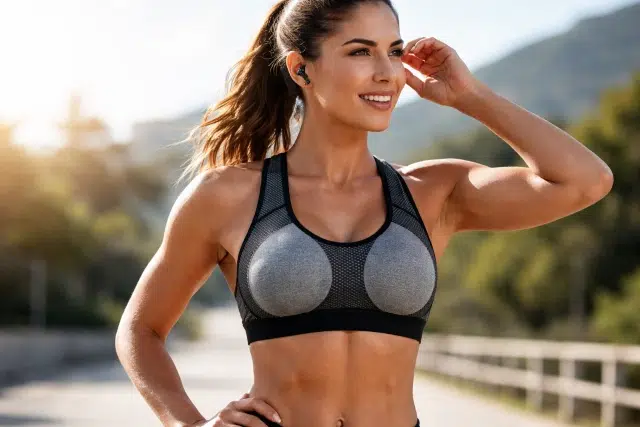
If you have ever finished a workout tugging at straps, adjusting bands, or wondering why your chest still feels “bouncy,” you are not alone. A racerback bra is often the quiet hero of sportswear because the strap shape changes how the bra sits on your shoulders and how stable you feel when you move. Whether you run, lift, play court sports, or do HIIT, the right racerback design can make training more comfortable, more confident, and honestly, more fun.
This guide breaks down what a racerback bra is, why athletes love it, how to choose the right support level, and how to avoid the common mistakes that lead to pain, chafing, or poor performance.
What is a racerback bra (and why athletes keep buying it)?
A racerback bra is built with straps that angle inward and meet between your shoulder blades, usually forming a Y or X shape. That geometry matters because it:
- Helps keep straps from sliding off your shoulders
- Frees up your shoulder joint and upper back for a bigger range of motion
- Distributes strap tension in a way that many people find more secure during sports
It is also a popular base for sports bras because the strap angle can improve stability during repeated movement (think running cadence, jump rope, burpees, tennis serves).
Comfort, support, and performance: why support is not just “nice to have”
A lot of people treat bras like a fashion detail. In sports, support is equipment. Breast movement can contribute to discomfort and pain, and pain is one of the biggest reasons people scale back activity. Research coverage in Frontiers reports that up to 72% of women experience breast pain while running.
Here is the practical takeaway: if your bra distracts you, it is costing you performance. And if it causes pain, it can reduce how often you even want to train.
What good support actually does during sport
Support is not only about “holding everything down.” A well-designed sports bra can reduce excessive movement and improve comfort. In a running study, the sports bra condition reduced vertical breast displacement by 56% compared with no bra, and 43% compared with an everyday bra.
That reduction is not just about comfort. The Frontiers write-up also highlights evidence that improved support can influence biomechanics and running efficiency, which is why athletes and sports scientists treat bra fit like real performance gear.
Racerback bra vs traditional strap sports bra
Both can work. The difference is what problem you are trying to solve.
Racerback is usually better if you:
- Have straps that constantly slip
- Do sports with lots of arm movement (boxing, CrossFit, basketball, volleyball, swimming dryland, climbing)
- Prefer a locked-in feel through the upper back
- Wear racerback tanks often and want straps hidden
Traditional straps can be better if you:
- Get neck or trap tension easily (some racerbacks concentrate tension higher)
- Want easier adjustability (some racerback designs are less adjustable)
- Have very sensitive shoulders and prefer a wider strap placement
The “best” option is the one that disappears while you train. You should be thinking about your sport, not your bra.
Support levels explained: low, medium, high impact
A racerback bra can be built for any impact level. What matters is structure, fabric, and how the bra manages motion.
Low impact (yoga, Pilates, walking, mobility)
You can prioritize comfort and breathability:
- Softer compression
- Light elastic
- Minimal seams
- Stretchy racerback with gentle hold
Medium impact (cycling, hiking, strength training, rowing)
You want stability without feeling restricted:
- Wider band
- Better strap anchor
- Moderate compression or light encapsulation
High impact (running, HIIT, court sports)
You need serious control:
- Strong underband and firm fabric
- Higher neckline for containment
- Encapsulation (separate cups) or hybrid encapsulation + compression
- Racerback that anchors movement without digging into skin
If you do multiple sports, it is completely normal to own more than one racerback bra. One “perfect” bra for everything is rare.
Compression vs encapsulation: the real difference you feel
You will see these terms everywhere, so let’s make them simple.
Compression
Compression bras press the breasts closer to the chest to reduce bounce. They can feel streamlined and secure, especially for smaller cup sizes or short workouts.
Encapsulation
Encapsulation bras use separate cups or shaped panels to support each breast individually. This tends to feel more natural, often more comfortable for longer sessions, and can reduce side-to-side motion better for many bodies.
Hybrid
Hybrid designs combine encapsulation structure with compression fabric. These are very common in high-impact racerback sports bras.
If you hate the “uniboob” feeling, you will probably prefer encapsulation or hybrid.
The fit checklist: how to know a racerback bra fits correctly
A racerback bra can be the right size and still fit wrong. Use this checklist in the mirror, then confirm with movement.
1) The band does most of the work
If the band is riding up, the bra is not anchored. Support collapses, straps dig in, and bounce increases. A stable band should feel snug but not painful.
2) Cups should contain, not squash or gape
- Spillage at the top or sides usually means the cups are too small
- Wrinkling or gaping can mean cups are too big or the shape is wrong for you
3) Straps should be secure, not the main support
If loosening straps makes the bra useless, your band is likely too loose or the bra is the wrong support level.
4) The racerback junction should sit flat
Where the straps meet should not feel like it is pulling your neck or climbing too high. If you feel neck pressure, try a different racerback geometry (more “mid-back” instead of “high-back”).
5) Movement test (do this in the fitting room)
Do:
- 10 jumping jacks
- A few high knees
- A deep squat and overhead reach
If you are constantly adjusting after that, keep looking.
A quick table: match sport type to racerback bra features
| Sport / Training Style | What Your Body Needs Most | Racerback Bra Features to Look For |
|---|---|---|
| Running / HIIT | Bounce control and containment | Firm band, high-impact rating, encapsulation or hybrid, higher neckline |
| Strength training | Stability without restricted breathing | Medium support, breathable fabric, stable band, flexible cups |
| Yoga / Pilates | Comfort and stretch | Light support, soft seams, flexible racerback, low-to-medium compression |
| Court sports | Multi-direction control | Wide band, strong side panels, secure racerback anchor |
| Hiking | All-day comfort | Moisture management, smooth seams, adjustable straps if possible |
Common racerback bra problems (and fixes that actually work)
Problem: Straps dig into traps or neck
This is usually not a “you” problem. It is a geometry problem.
Try:
- A lower-back racerback shape
- Wider straps
- Better band fit so straps are not carrying the load
Problem: Chafing near the armhole or underband
Chafing is often caused by sweat + friction + seams.
Try:
- Softer seam finishes
- A slightly longer line band (longline styles can help)
- Moisture-wicking fabric, and make sure the bra dries between uses
Problem: You feel “locked” and cannot breathe deeply
A sports bra can be too tight even if the cups feel fine. One study reported that increased rib-cage tightness in a sports bra can affect breathing patterns and running economy, reinforcing how important proper fit is, especially in the band.
If deep breathing feels restricted:
- Recheck band size
- Try a bra with a more adjustable closure
- Consider a different fabric with less rigid compression
Problem: You still bounce even in a “high impact” bra
High impact on the label does not always match your body or sport.
Try:
- Encapsulation or hybrid support
- A firmer underband
- A slightly higher neckline
- Sizing by both band and cup (rather than S, M, L only), when available
Comfort is also science: do not chase “zero movement” at all costs
It is tempting to buy the tightest bra and call it a day. But there is a balance. Research coverage from the University of Portsmouth suggests that while sports bras are essential for reducing breast pain, designs aimed at eliminating bounce completely could increase loading on the spine in simulation, which is a reminder that comfort and support should work together, not fight each other.
The goal is stable, comfortable control, not a painful clamp.
Fabric and construction details that matter more than marketing
When you shop for a racerback bra, marketing phrases are everywhere. Instead, look for these practical build features:
Supportive underband
- Wide elastic
- Strong recovery (springs back after stretching)
- Stays flat without rolling
Structured front panel
- Seamed cups can be more supportive than a single flat layer
- Inner slings or power mesh can reduce side motion
Breathable zones
- Mesh panels in high-sweat areas
- Fabric that does not stay soaked for hours
Quality stitching
If stitching looks rough, it will usually feel rough after 30 minutes of sweat.
Adjustable elements (when possible)
- Hook-and-eye closure can make fit easier
- Adjustable straps help dial comfort, especially if your torso length is not “average”
Real-world scenarios: which racerback bra makes sense?
Scenario 1: You run 3 times a week and do one HIIT class
You need at least one high-impact racerback bra for runs and HIIT. Look for encapsulation or hybrid support so you are not relying on compression alone. The running research showing large reductions in movement with sports bras is exactly why runners benefit most from proper support.
Scenario 2: You lift weights, and cardio is occasional
Medium support is often enough, especially if your sessions are mostly controlled movement. Prioritize comfort, range of motion, and a band that does not shift during bent-over rows or overhead presses.
Scenario 3: You play a sport with quick direction changes
Court sports and field sports need control in multiple directions. Choose a racerback bra with strong side panels and a stable band. You want containment when you cut, pivot, and jump.
How to care for a racerback sports bra so it keeps its support
A bra can fit perfectly, then slowly “die” because of heat, detergent, and rough washing.
Do this instead:
- Wash after sweaty workouts (sweat breaks down elastic over time)
- Use a gentle cycle and cold water when possible
- Skip fabric softener (it can coat fibers and reduce moisture-wicking)
- Air dry, or use very low heat if you must
If the band feels loose or the fabric feels permanently stretched, it is time to replace it. A racerback bra that no longer anchors is basically just a top.
Racerback bra FAQ (quick answers people actually search)
Is a racerback bra good for high-impact sports?
Yes, it can be, but only if the bra is built for high impact. Look for a firm band, strong fabric, and encapsulation or hybrid support rather than thin compression only.
Does a racerback bra stop straps from slipping?
Often, yes. The inward strap angle helps keep straps closer to your body, which can reduce slipping during movement.
Should a racerback bra feel tighter than a regular bra?
It may feel more secure, but it should not restrict breathing or cause pain. If deep breaths feel hard or you get pressure in the ribs, the band may be too tight.
Can a racerback bra improve performance?
Better support can reduce distraction and discomfort. Research coverage in Frontiers discusses links between improved support, biomechanics, and running efficiency, which is why serious runners pay attention to bra choice.
How do I know if I need encapsulation instead of compression?
If you feel squashed, get “uniboob,” experience side spillage, or still bounce during high impact, encapsulation or a hybrid design is usually worth trying.
Conclusion: the right racerback bra should disappear while you train
A good racerback bra is not about hype. It is about training without distractions. When the band anchors properly, the cups contain comfortably, and the straps sit in the right place, you stop thinking about your chest and start focusing on your sport. Research shows sports bras can significantly reduce breast movement during running, which helps explain why the right support can feel like an instant upgrade.
One last note: if you want a simple definition of the two-word phrase sports bra, it can help you understand why design features like racerback straps became so popular for athletic movement.