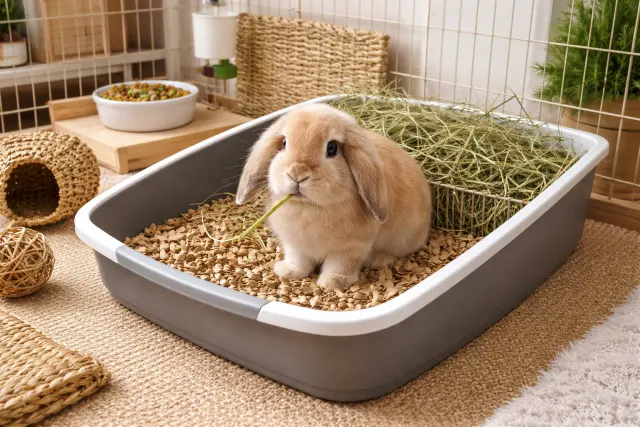
A Rabbit Litter Box can be the difference between a home that smells fresh and one that constantly feels like cleanup duty. The good news is that rabbits are naturally clean and many prefer to use the same few “bathroom corners” once they feel safe and the setup makes sense. If you get the placement right, choose a box that actually fits your rabbit’s body, and use bedding that’s safe and absorbent, litter habits often become surprisingly easy to maintain.
This guide covers the full setup from zero to “this is working,” including where to put the box, what size to buy, what bedding to use (and what to avoid), plus the small details that make rabbits stick to the habit.
Why rabbits usually take to a litter box faster than people expect
Rabbits often pick a couple of favorite potty spots on their own, typically corners. That’s why litter training is less about “teaching a trick” and more about placing the Rabbit Litter Box exactly where your rabbit already wants to go. PetMD notes that rabbits are clean animals and typically choose a few bathroom areas, often corners, which is what you use to your advantage when training.
There’s another helpful behavior too: many rabbits like to eat hay while they use the bathroom. Multiple rabbit welfare and veterinary sources mention that placing hay in or near the litter box supports litter habits.
Rabbit Litter Box placement: where it should go for fast success
Placement matters more than most people think. A perfect box in the wrong location becomes “decor.” A basic box in the right location becomes a habit.
Start with your rabbit’s chosen corner
If your rabbit already pees in one corner, that’s your starting point. Place the litter box right there. The House Rabbit Society advises placing the litter box off to the side of the rabbit’s space and often in the corner, where the rabbit can still feel secure.
Make it easy to reach (especially early on)
In the beginning, convenience wins. If the box is far away, rabbits may not bother. If your rabbit has access to multiple rooms, add more boxes temporarily. House Rabbit Society specifically notes that if a rabbit has free-roam of several rooms, it helps to place a litter box in each room.
Keep it calm, not chaotic
Avoid putting the box:
- right next to a loud washer or dryer
- in a high-traffic hallway
- in a spot where other pets ambush the rabbit
Rabbits prefer feeling safe when they potty. If they feel exposed or startled, some will avoid the box or start choosing “safer” corners.
Quick placement checklist
If you want a fast “yes or no” test for your location, your litter box spot should be:
- easy for the rabbit to reach within seconds
- near the rabbit’s resting area (but not inside food bowls)
- predictable and consistent (don’t move it daily)
- positioned so your rabbit can see around while using it
Rabbit Litter Box size: how big is “big enough”?
One of the most common reasons a rabbit uses the box “kind of” is that the box is too small. Rabbits need room to hop in, turn around, and sit comfortably without their rear end hanging over the edge.
The simple rule that works for most rabbits
Choose a Rabbit Litter Box that is at least:
- long enough for your rabbit to sit fully inside
- wide enough for a comfortable turn
- tall enough to prevent urine from going over the side
Many experienced rabbit rescues recommend using a large cat litter pan rather than tiny corner boxes, because rabbits produce a lot of waste and need space.
Side height matters (especially for “high pee” rabbits)
Some rabbits lift their tail and can pee over low sides. Indiana House Rabbit Society notes that higher sides help keep litter and waste in, and that rabbits can pee right over the edge if the sides aren’t high enough.
If your rabbit is older or has mobility issues, you can still solve this by using:
- a high-sided box with a low entry cutout, or
- a storage bin style litter box with a doorway cutout
Size guide by rabbit type
Here’s a practical sizing guide (not perfect science, but very usable):
| Rabbit type | Suggested box size | Notes |
|---|---|---|
| Small dwarf breeds | Medium cat litter pan | Avoid tiny corner trays, they fill too fast |
| Medium rabbits | Large cat litter pan | Best all-around choice |
| Large breeds | Extra-large pan or low storage bin | Better turning room, fewer accidents |
| Senior/disabled | Large pan with low entry | Comfort and easy access matter most |
Bedding and litter: what to put inside a Rabbit Litter Box
This is where many new owners get stuck, because pet stores sell a lot of “small animal bedding” that’s not ideal for rabbits.
The safest, most common rabbit litter options
A good litter for a Rabbit Litter Box should be:
- absorbent
- low-dust (rabbits have sensitive respiratory systems)
- non-clumping
- unscented
- safe if a small amount is accidentally ingested
Many rabbit care resources recommend paper-based litter, aspen shavings, and certain pellet litters as common safe options.
Litters to avoid in a Rabbit Litter Box
Some bedding types can irritate a rabbit’s respiratory system or pose other health risks.
The House Rabbit Society warns about softwood shavings like pine and cedar due to aromatic compounds called phenols, noting concerns including effects on liver enzymes and potential health risks.
Also avoid:
- clumping cat litter (can be dangerous if eaten)
- heavily scented litters (respiratory irritation)
- very dusty materials
Best bedding choices by lifestyle
Different households want different outcomes. Here’s a simple match-up:
- For best odor control: paper pellets or wood stove pellets (safe type), plus regular cleaning
- For low tracking: larger pellets over loose shavings
- For sensitive noses: low-dust paper-based litter
- For diggers: heavier pellets plus a grate or hay layer on top (some rabbits love this, some hate it)
The “hay + litter box” setup that makes training easier
A lot of rabbits naturally combine “snack time” with “bathroom time,” and you can use that to your advantage.
Wisconsin House Rabbit Society notes that hay in the litter pan (or a hay rack above it) reinforces good litter habits.
Anti-Cruelty also notes that placing timothy hay in the litter box reinforces the rabbit’s instinct to use it because eating and eliminating often occur together.
Simple hay setup options
Pick one that matches your rabbit’s personality:
Option A: Hay pile in one end of the box
- Put hay in the front half, litter in the bottom
- Many rabbits sit and eat, and potty toward the back
Option B: Hay rack directly above the box
- Keeps hay cleaner
- Encourages “hop in the box to eat”
Option C: Hay stuffed in a corner near the box
- Helpful if your rabbit hates hay inside the box
- Still keeps “hay spot” near “bathroom spot”
How much litter to use (and why more is not always better)
With rabbits, you usually don’t need a deep litter layer like you might for a cat.
A practical starting point:
- 1 to 2 inches of litter on the bottom
- a generous layer of hay on top or placed above the box
Too much litter can:
- raise the rabbit higher, increasing the chance of peeing over the edge
- waste litter
- encourage digging
Indiana House Rabbit Society mentions that as litter absorbs and swells, it can fill the box and raise the rabbit up, which can contribute to accidents over the edge.
A clean, realistic Rabbit Litter Box routine (daily and weekly)
Rabbits produce a lot of waste. A clean routine is what keeps the litter box working and keeps your home from smelling like ammonia.
Daily (2 minutes)
- remove visibly soiled hay
- scoop the wet area if you use scoopable litter
- top up hay
- quick sniff test
Every 2 to 4 days (typical for one rabbit)
- dump and refresh litter fully (frequency varies by rabbit and litter type)
- wipe the box if needed
Weekly (or as needed)
- wash the box with warm soapy water
- rinse thoroughly
- dry before adding fresh litter
Some rabbit care sources also emphasize that urine odor can be ammonia-heavy and that consistent litter maintenance reduces lingering smells.
Common setup mistakes (and quick fixes)
Mistake 1: The box is too small
Fix: upgrade to a large cat pan or storage bin style box.
Mistake 2: The box is in the wrong spot
Fix: move it to the corner your rabbit already uses. Rabbits usually tell you where the box should be.
Mistake 3: No hay connection
Fix: add hay in the box or mount a hay rack above it. Multiple rabbit organizations highlight hay as a training helper.
Mistake 4: Unsafe bedding
Fix: switch to paper-based or other rabbit-safe litter and avoid aromatic softwood shavings like cedar and pine, which House Rabbit Society warns about.
Mistake 5: Expecting perfection on day one
Fix: start with a smaller space, then expand gradually. Wisconsin House Rabbit Society describes a gradual expansion approach when training in a new home.
Rabbit Litter Box setup for special situations
Multiple rabbits sharing a space
- Provide at least 2 boxes in different spots
- Use larger pans because shared boxes fill quickly
- Observe if one rabbit “guards” the box
Free-roam rabbits in multiple rooms
House Rabbit Society suggests adding boxes per room so rabbits have quick access.
Rabbits that dig and fling litter
- use heavier pellet litter
- add a hay layer over litter
- consider a box with a higher back and sides
Rabbits that pee over the edge
- increase side height (storage bin boxes help)
- keep litter depth moderate
- ensure the rabbit can fully fit inside comfortably
FAQs
Should I use a corner Rabbit Litter Box?
Corner boxes can work for tiny spaces, but many rabbits outgrow them quickly or struggle with aim. A larger rectangular pan is often more reliable for long-term success.
Is it okay if my rabbit eats hay from the litter box?
Yes, many rabbits prefer it, and rabbit organizations specifically recommend hay in or above the litter box to reinforce good habits.
Why does my Rabbit Litter Box smell so strong sometimes?
Rabbit urine can smell ammonia-like, especially if the box is overdue for a change or if hay is sitting wet. A consistent routine and an absorbent litter are usually the biggest difference.
Conclusion: a Rabbit Litter Box is all about smart setup, not constant effort
A Rabbit Litter Box works best when it matches rabbit logic: a comfortable corner, a roomy box, safe absorbent litter, and hay nearby so your rabbit wants to hop in. Once those pieces click, most households find the mess shrinks fast and the routine feels simple instead of endless.
When your setup is right, you’re not “fighting” your rabbit’s instincts. You’re using them. And that’s exactly what makes litter habits stick long term for a pet rabbit.