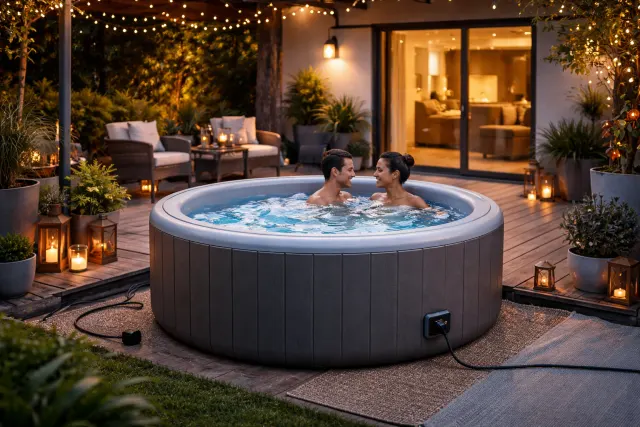
If you have ever wanted a hot tub but got stuck on the usual roadblocks (big electrical work, big commitment, big price tag), you are exactly who Plug And Play Hot Tubs are made for.
They are the “unbox, place, fill, plug in” version of the hot tub world. No trenching, no complicated wiring plan, no waiting on three different contractors to coordinate schedules. In many cases, you can go from delivery to your first soak the same day, and the only tool you might touch is a garden hose.
But let’s keep it real. Plug and play does not mean “zero planning.” The smart move is knowing what these tubs do brilliantly, where they have limits, and how to set one up safely so you get the relaxing spa experience without nuisance trips, slow heat ups, or surprise energy bills.
This guide walks you through the whole thing like a friend who has already made the mistakes, learned the shortcuts, and wants you to enjoy the fun part: stepping into warm water while the rest of the world can wait.
What “plug and play” actually means
A plug and play hot tubs is typically designed to run on standard household power. In most cases, that means a 120V connection and a simple plug-in setup, rather than a hardwired 240V installation.
In plain terms: it is a self-contained spa you can use without adding a dedicated 240V line in advance.
That one difference changes everything:
- Setup gets fast because you are not scheduling electrical work first.
- Placement becomes flexible because you are not locked to a single hardwired spot.
- Upfront cost can drop because you may avoid major electrical and site prep expenses.
There are still safety requirements (we will cover those), but the barrier to entry is much lower.
Why Plug And Play Hot Tubs have become a “smart home” level upgrade
A smart home upgrade is not just about apps and voice control. It is about lifestyle improvements that feel effortless once they are in place.
A plug and play hot tubs hits that sweet spot because it offers:
1) Immediate daily value
You do not have to “plan a spa day.” You can soak for 15 minutes after work, loosen tight shoulders, and sleep better the same night. Warm water immersion can help with muscle relaxation and stress, and buoyancy reduces joint load.
2) Lower friction ownership
A big part of why people never buy a traditional hot tub is the install complexity. Plug and play models remove a chunk of that friction, which makes the decision easier and the follow-through faster.
3) Flexible living
Renting? Moving in a year? Not ready to commit to a permanent backyard build? Plug and play hot tubs are often far easier to relocate than a hardwired, permanently sited spa.
4) “Small luxury” energy
A hot tub is one of those upgrades that makes ordinary evenings feel like a vacation. You do not need a full remodel to feel a big lifestyle lift.
Plug and play vs traditional hot tubs: the honest comparison
Here’s the simple tradeoff: plug and play hot tubs win on convenience, while many traditional 240V tubs win on raw performance.
Quick comparison table
| Feature | Plug and Play Hot Tubs (typically 120V) | Traditional Hot Tubs (typically 240V hardwired) |
|---|---|---|
| Installation | Often minutes to hours | Often requires electrician and planning |
| Heating speed | Slower | Faster |
| Jet power | Usually lighter to moderate | Often stronger, more consistent |
| Electrical needs | Standard outlet (with proper protection) | Dedicated circuit and disconnect per code |
| Flexibility | Easier to relocate | Usually stays put |
| Typical daily energy use | Often in the lower end of typical ranges | Often higher, depending on features and use |
Even on energy, it is not a simple “120V is always cheaper.” Voltage affects how the tub heats and runs pumps, and real-world consumption depends heavily on insulation, ambient temperature, how often you open the cover, and the temperature you maintain.
What you can realistically expect from performance
This is where expectations make or break satisfaction.
Heating time
A 120V heater generally has less wattage available than a 240V system, which often means slower heat-up, especially in cold weather or if you start from cold water.
If you are the kind of person who wants to keep the tub “always ready,” plug and play works well. If you want to fill it Friday night and use it hot two hours later, a 240V setup often fits that use style better.
Jets and “heater vs jets” behavior
Many plug and play hot tubs are designed so that when jets are running at full blast, the heater may cycle differently than in a 240V tub. The practical takeaway is simple: you might notice a gradual temperature drop during a long, jet-heavy session in winter. That is normal for many 120V designs.
Best-fit scenarios
Plug and play tends to shine for:
- Solo soaks and couples
- Smaller families
- People who soak more frequently but for moderate session lengths
- Folks who want convenience over maximum horsepower
The 10-minute setup mindset (with the safety steps that matter)
Yes, you can set it up quickly, but do it like someone who wants to enjoy the tub for years, not like someone speed-running a YouTube unboxing.
Step 1: Choose a stable, level base
Your tub needs a level surface that can support a lot of weight.
Water is heavy, and when you add the tub shell plus people, the total load becomes serious. A common mistake is placing it on a surface that looks fine dry but shifts slightly over time.
Good options usually include:
- Reinforced concrete pad
- Properly built deck rated for the load
- Prefab spa pad designed for hot tub weight
- Compacted, well-prepared paver base
Step 2: Confirm the electrical setup before you fill
This is the part people rush, then regret.
At minimum, you want:
- A properly protected outlet (commonly GFCI protection is used for shock safety)
- A safe routing plan for the cord (no pinch points, no trip hazards, no puddle zones)
- Enough capacity on the circuit so you are not popping breakers every time you use it
Electrical requirements and placement rules vary by jurisdiction, but safety guidance for spas and hot tubs emphasizes protection against shock hazards, and standards like UL 1563 exist specifically to address safety for electric spas.
For code-specific installs, Article 680 is commonly referenced in the U.S. for pools and spas, and guidance documents summarizing those requirements highlight items like GFCI protection and disconnecting means depending on the installation type.
Step 3: Fill, then power on
Most manufacturers want the tub filled to the correct level before turning it on, because pumps and heaters should not run dry.
Then you:
- Prime as instructed (some models need a quick bleed of air)
- Set your target temperature
- Put the cover on and let it do the heating work
Step 4: Water balance on day one
Plug and play hot tubs are still real hot tubs. The water chemistry matters.
A simple starter routine:
- Test water (strips are fine to start)
- Balance pH and alkalinity
- Add sanitizer as directed for your system
Poorly maintained hot tubs can spread germs and cause illnesses, and health authorities emphasize basics like proper disinfectant levels and safe hygiene habits.
Energy use and running costs: what most buyers want to know
Let’s talk money, because “easy setup” feels less exciting if your utility bill jumps and you did not expect it.
Hot tub electricity use depends on climate, insulation, usage habits, and temperature settings. Many guides and energy-focused sources describe typical hot tub consumption in ranges and point out that cold weather can increase costs significantly.
Typical consumption ranges
Many consumer energy explanations put average hot tub usage in a broad range, often measured in kilowatt-hours per day, with heating being the biggest driver.
What matters more than the exact number is how you control the big levers:
- Keep the cover on whenever you are not soaking
- Use a well-fitted, insulated cover
- Shelter the tub from wind if possible
- Maintain water temperature consistently if you use it often
A simple cost estimator you can do in your head
If you know your electricity rate (per kWh), and you have a reasonable daily usage estimate, you can estimate monthly cost:
Daily kWh × 30 × your rate = approximate monthly operating cost
For example, if your tub averages 4 kWh/day and your rate is $0.15/kWh:
4 × 30 × 0.15 = $18/month
Real life varies, but this framework keeps you grounded.
Pro tip that saves real money
Wind is sneaky. A tub that is technically “outdoors” but tucked into a protected corner often costs less to run than a tub sitting fully exposed to breezes. Some energy guides specifically call out how ambient temperature and wind exposure change heater run time.
Water care made simple for busy people
The fastest way to stop using a hot tub is to make it complicated.
Here is a clean, low-drama routine:
2 minutes after each soak
- Leave the cover open for a few minutes to let vapors escape (helps protect the underside of the cover)
- If your system uses sanitizer dosing after use, do it consistently
2 times per week
- Test water
- Adjust pH and sanitizer if needed
Weekly
- Rinse filters (more often if you use it heavily)
- Wipe the waterline to prevent buildup
Every 3 to 4 months (typical)
- Drain and refill, depending on use and water quality
Health authorities emphasize that hot tubs need proper disinfectant residuals and pH control to prevent bacteria growth and illness risk.
Safety and comfort: what experienced owners actually do
A hot tub should feel like recovery, not like a stunt.
Temperature and session length
Many medical and health sources recommend keeping water temperature at or below 104°F (40°C) and limiting soak time, often around 15 minutes, especially if you are not acclimated.
Common-sense comfort rules that owners swear by:
- Hydrate before and after
- Exit if you feel dizzy, headachey, or overheated
- Keep sessions shorter when the water is hotter
- Be cautious with alcohol, because heat can amplify dehydration and lightheadedness
Clean water is not optional
If you want the hot tub experience without the “hot tub rash” horror stories, chemistry and filtration are your best friends.
Public health guidance notes that germs can spread through hot tub water and highlights protective habits like not swallowing water and maintaining proper sanitation.
Buying checklist: how to pick the right plug and play model
Not all plug and play tubs are built the same. Before you buy, look at these factors like a practical person, not just someone who got excited by the bubbles.
1) Size and seating style
Ask yourself how you actually soak.
- Do you want lounge seating, or upright seats?
- Are you mostly solo, a couple, or a small group?
- Do you want a compact footprint or room to stretch?
2) Insulation quality
Insulation is comfort and cost control. Better insulation usually means:
- Faster heat retention
- Lower heater workload
- Better winter performance
3) Filter access and maintenance friendliness
If changing or rinsing filters is annoying, you will procrastinate. Make sure it is easy.
4) Cover quality
A solid cover does more than keep leaves out. It is a major piece of the energy equation.
5) Warranty and parts availability
This is where “cheap” can become expensive.
A good warranty and accessible parts network matter more than most first-time buyers realize.
6) Safety listings and standards
Look for safety compliance indicators. UL’s work around UL 1563 is directly connected to electric spa safety considerations.
Real-world scenarios: is plug and play the right move for you?
Scenario A: The “I want it this weekend” homeowner
You have a patio, a nearby protected outlet, and you want something that feels like a major upgrade without a major project.
Plug and play makes a ton of sense here.
Scenario B: The renter or frequent mover
You want spa relaxation, but you do not want permanent changes to the property.
Plug and play is one of the few hot tub options that can be realistic, as long as your lease and placement rules allow it.
Scenario C: The “I want maximum jet power” shopper
If your dream is intense hydro-massage jets and fast recovery-style sessions regardless of outdoor temperature, you may be happier with a 240V hardwired tub, even if install takes longer.
Scenario D: The “I want lower install costs” planner
Traditional hot tub installs can vary widely depending on site prep and electrical work. Cost guides show big ranges once you include electrical and preparation work.
If you can avoid major electrical upgrades, plug and play can reduce that barrier, though you still want to budget for a proper base and good water care.
Common questions people ask before buying
Can I use an extension cord?
Most manufacturers strongly discourage it because it increases risk and can cause voltage drop, nuisance tripping, or overheating. The safest answer is: plan the location so you do not need one, and follow the manufacturer instructions and local electrical rules.
Will it trip my breaker?
It can, if the circuit is already loaded or the outlet is not properly protected or sized. The best experiences happen when the tub has a dedicated circuit or a lightly loaded one.
Is it safe in winter?
Yes, if the tub is designed for outdoor use, has strong insulation, and you maintain water temperature with the cover on. Winter performance is where insulation and cover quality really separate models.
How soon can I use it after setup?
You can often use it as soon as it reaches temperature and water chemistry is balanced. Heating time depends on starting water temperature, ambient conditions, and the tub’s heater capacity.
Practical upgrades that make plug and play ownership feel premium
If you want your tub to feel like a true smart-home style luxury, these small moves matter:
- Weather protection: a simple privacy screen or pergola reduces wind exposure and improves comfort
- Better steps: stable steps make frequent use easier and safer
- Towel station: a hook and a small bench nearby turns soaking into a ritual instead of a scramble
- Lighting: soft outdoor lighting makes nighttime sessions feel intentional
None of this is required, but it is the difference between “we use it sometimes” and “we use it constantly.”
Conclusion: the real appeal of Plug And Play Hot Tubs
The best thing about Plug And Play Hot Tubs are that they make relaxation feel doable. You are not signing up for a complicated construction project. You are choosing a realistic, quick-to-set-up upgrade that can turn an average evening into something restorative.
If you pick the right model, place it on a solid base, respect basic electrical safety, and keep the water clean, plug and play hot tubs can deliver the core hot tub experience with far less hassle than most people expect.
And if you like the idea that wellness should be convenient, not complicated, this is one of those upgrades that fits modern life perfectly, right alongside the other small comforts that make home feel like home.
In the bigger picture of hydrotherapy history, warm-water soaking has been around for a long time for a reason. It works, it feels good, and it tends to bring people back to it again and again.