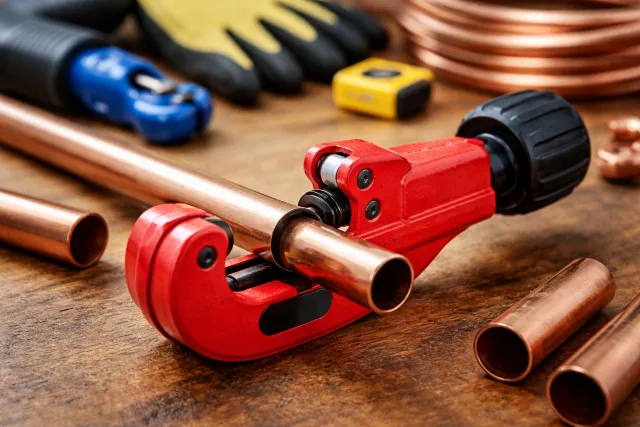
If you have ever tried to connect a new shut off valve, replace a faucet line, or shorten a piece of copper for a small repair, you already know the truth: the cut matters. A slightly crooked edge can turn a simple DIY job into a leak hunt. That’s why Pipe Tube Cutters are one of those tools you buy once and wonder how you ever managed without. They’re quick, controlled, and built to leave a cleaner cut than many “grab whatever is in the garage” options.
In this guide, you’ll learn which cutter styles work best for common home materials, what features actually make cutting easier, and how to get that smooth, professional looking finish without overthinking it.
What a pipe tube cutter actually does (and why it’s better than rushing with a saw)
Most home projects fail at the connection points, not because the fitting is bad, but because the prep was sloppy. A good cutter helps you do three things consistently:
- Make a straighter cut with less effort
- Reduce rough edges that can interfere with fittings
- Work in tight spaces where a saw is awkward
Rotary style cutters use a cutting wheel that scores the pipe as you spin it around, tightening slightly as you go. That controlled scoring is why cutters are widely associated with cleaner, more precise cuts compared to quick sawing methods (and why so many plumbing and HVAC folks keep one in arm’s reach).
Pipe Tube Cutters for home use: the main types you’ll see
There isn’t one of the “best” pipe tube cutters for everything, because homes use different materials: copper under sinks, PVC in drains, sometimes stainless braided lines, and in some regions even thin wall steel or conduit. The goal is to match the tool to the material and the space you’re working in.
Quick comparison table
| Cutter type | Best for | Why homeowners like it | Watch-outs |
|---|---|---|---|
| Mini rotary cutter | Copper tube in tight spaces | Fits behind toilets, under sinks | Slower on thicker tubing |
| Standard rotary cutter | Copper, aluminum, thin wall metal tube | Clean cuts with control | Needs room to rotate |
| Ratcheting PVC cutter (shear style) | PVC, CPVC, PEX | Fast one-handed cuts | Not for metal, blade maintenance matters |
| Close-quarters / offset cutter | Tight spots on copper | Works where standard cutters cannot rotate | Limited size range |
| Hinged / heavy-duty cutter | Larger pipe or tougher metals | More leverage and stability | Overkill for most small home jobs |
(If you’re cutting multiple materials at home, many people end up with two tools: one rotary cutter for copper tube, and one ratcheting shear for plastics.)
What “best” means for home projects: the features that save time
Marketing loves big claims, but in real use, a few small details make the difference between “smooth job” and “why is this taking so long?”
1) Capacity range that fits your most common sizes
Most home plumbing work is around common diameters (especially for copper supply lines and PVC drains). Your cutter’s minimum and maximum size matters more than it sounds, because the wrong range leads to wobbling, uneven scoring, or simply not fitting around the pipe.
2) A strong, easy-to-turn tightening knob
If you’ve ever tightened a cheap cutter and felt it bind, you know the frustration. A good knob turns smoothly even when your hands are wet, and it lets you tighten in small increments so the wheel doesn’t crush or deform softer tube.
3) Stable rollers and a quality cutting wheel
Rotary cutters rely on the wheel and rollers staying aligned. Better alignment reduces the chance of the wheel wandering and creating a slightly angled cut that fights your fitting later. Industrial selection guides emphasize matching tool design to material and thickness for consistent results.
4) Built-in reamer (nice) vs dedicated deburring tool (nicer)
Some cutters include a fold-out reamer, which is convenient. But for frequent work, a separate deburring tool often feels faster and more precise. Deburring is not “extra,” it’s part of doing the cut correctly, especially on copper tube used for soldering or compression fittings.
Best options by situation (real home scenarios)
Instead of throwing a random list at you, here’s how to choose the best option based on what you’re actually doing at home.
Under-sink copper repairs (tight space, small tube)
If you’re cutting a small copper supply line under a vanity or behind a toilet, a mini rotary cutter is usually the hero. You don’t need brute force. You need a tool that can rotate even when the wall is inches away.
Best fit:
- Mini rotary cutter (for tight clearance)
- Close-quarters cutter if rotation space is extremely limited
Installing a new shut-off valve or fixture line (clean cut matters)
For a new shut-off valve, a clean, square cut helps the fitting seat correctly. A standard rotary cutter gives you control and a neat edge so you’re not fighting the joint.
Best fit:
- Standard rotary cutter with a comfortable tightening knob
- Add a deburring tool for the inside edge
Cutting PVC drain pipe (speed and clean edges)
For PVC, many homeowners prefer a ratcheting shear because it’s fast and doesn’t require you to spin around the pipe. It can be especially handy when you’re trimming multiple pieces for a drain layout.
Best fit:
- Ratcheting PVC cutter (shear style)
Tip: on thicker PVC, make sure the blade is sharp and the pipe is supported, so the cut doesn’t wander.
Quick HVAC or appliance tubing jobs
If you occasionally cut thin tubing for appliances, small repairs, or light HVAC work, a standard rotary cutter that handles thinner tube cleanly is usually enough. HVAC training resources commonly stress proper prep like deburring because burrs can affect flow and create turbulence.
How to use Pipe Tube Cutters for a clean, fast cut (without crushing the pipe)
This is the simple method that works for most rotary cutters on copper tube and similar materials:
- Measure and mark your cut
Use a marker or tape line. A clear mark keeps you from “adjusting mid-cut,” which is how uneven edges happen. - Seat the cutter on the mark
Make sure the cutting wheel is centered exactly where you want the cut, and the rollers sit evenly on the tube. - Tighten until it grips, not until it bites hard
You want firm contact. Over-tightening at the start can flatten softer tube. - Rotate around the tube
Keep the rotation steady. If it feels jerky, back off and check alignment. - Tighten slightly and rotate again
Small tightening steps are the secret. Let the wheel do the work. - Finish the cut, then deburr
Remove the inner burr and lightly clean the outer edge.
For plastics with a ratcheting cutter:
- Support the pipe
- Keep the blade square
- Squeeze in controlled bites rather than trying to “snap” through quickly
The step most DIYers skip: deburring and why it matters
A cut can look clean on the outside and still hide a sharp ridge inside. That ridge can interfere with fitment, reduce flow, or create turbulence in lines, depending on the application. HVAC guidance on copper tubing prep highlights that deburring helps reduce turbulence and improves the quality of the finished work.
Here’s what deburring helps with:
- Better fitting seating
- Cleaner soldering prep
- Less turbulence inside lines
- Safer handling (fewer razor edges)
If your cutter has a fold-out reamer, use it gently. If you’re doing more than one cut, a dedicated deburring tool is often faster.
Safety: the boring part that prevents the painful part
Cutting tools and freshly cut edges are a common source of hand injuries. Safety resources consistently highlight that sharp edges can cause lacerations and puncture injuries, especially when people rush or handle cut material carelessly.
A workplace laceration brief that references National Safety Council and OSHA cost data notes that lacerations are a major category of hand injuries and can lead to lost work days and significant costs, which should tell you how common and serious “small cuts” can become.
At home, keep it practical:
- Wear gloves if you’re handling freshly cut metal
- Do not steady a pipe with your fingers near the cutting wheel or blade path
- Clamp or brace longer pieces so they do not twist while you cut
- Keep tools in good condition, because unsafe hand tools should not be used in the first place (that principle is also reflected in OSHA’s hand tool safety requirements for workplaces).
Common problems and quick fixes
“My cutter is making an angled cut”
Usually one of these:
- The rollers are not seated evenly
- You tightened too aggressively at the start
- You’re rotating at an angle instead of square to the tube
Fix: loosen, re-seat, tighten lightly, and rotate with steady pressure.
“It’s taking forever to cut”
Common causes:
- Dull cutting wheel or blade
- You’re tightening too little between rotations
- You’re using the wrong cutter for the material thickness
Fix: replace the wheel if it’s worn, tighten in small increments, and confirm the cutter is rated for that pipe material and thickness.
“The pipe looks crushed”
That typically means over-tightening. Copper tube can deform if you crank down too hard early.
Fix: tighten only until the wheel bites, then tighten gradually as you rotate.
Maintenance that keeps cuts clean
A cutter can last a long time if you treat it like a precision tool, not a disposable gadget.
- Wipe off grime and moisture after use
- Add a tiny amount of lubricant to the screw mechanism if it feels gritty
- Replace cutting wheels and blades when they dull (dull tools force you to apply more pressure, which increases slipping and injury risk)
- Store it where the wheel will not get knocked around by heavier tools
FAQ: quick answers people actually search for
Are pipe cutters better than a hacksaw for home plumbing?
For many common home plumbing tasks, cutters tend to produce cleaner, more controlled cuts with less mess, especially on copper tube and similar materials, which can make fittings easier to install.
Can I use the same cutter for copper and PVC?
Usually, no. Rotary cutters are common for copper tube, while shear style cutters are designed for plastics. Selection guides stress matching the tool to the material for best results.
Do I really need to deburr after cutting?
If you want clean fitting seating and better flow characteristics, deburring is a smart step. Technical guidance for copper tubing prep highlights that burr removal reduces turbulence and supports better workmanship.
Conclusion
For most DIY home repairs, the best results come from choosing the cutter style that matches your material and your workspace. Once you get the feel for gradual tightening, steady rotation, and quick deburring, Pipe Tube Cutters turn “messy and slow” into “clean and done.” In the long run, that clean cut saves time because your fittings seat better, your joints behave the way they should, and you spend less energy fixing avoidable leaks.
If you want a deeper background on how a tubing cutter works and why it’s designed to cut so cleanly, it’s worth a quick read before your next project.