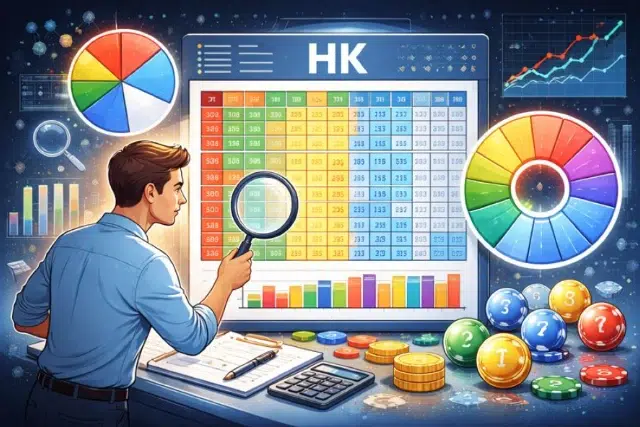
If you’ve ever searched for Paito Warna HK, chances are you saw a colorful grid that looks like a strange mix of spreadsheet + art project. Some people treat it like a “map” of Hong Kong lottery history. Others see it as a quick way to spot trends without digging through endless numbers.
Either way, Paito Warna HK has become popular because it turns raw draw results into something easier to read — especially for people who like looking for number clusters, streaks, or repeat patterns.
But here’s the thing: it’s still based on past outcomes, and lottery draws are designed to be random. The chart may help you organize information, but it doesn’t guarantee prediction.
What Is Paito Warna HK?
Paito Warna HK is a color-coded historical data chart for Hong Kong lottery results. Instead of listing results in plain text, it assigns colors to numbers and displays them in a grid format to help users quickly scan for patterns.
It’s basically a “visual memory” tool. The idea is simple:
- Numbers = data
- Colors = faster recognition
- Grid layout = easier pattern spotting
If you’ve also heard the term Paito HK, that’s closely related.
Paito HK vs Paito Warna HK
- Paito HK often refers to the general charting style for HK results.
- Paito Warna HK is the same concept, but explicitly emphasizes the color coding (“warna” means “color”).
So yes, they’re usually used interchangeably in practice, but the “warna” version is typically more visual and color-driven.
Why Do People Use Paito Warna HK?
People like it because it makes long data sets feel manageable.
Instead of seeing “01, 17, 33…” in a list, users can visually scan:
- Which numbers appear frequently
- Which numbers haven’t appeared for a while
- Whether certain ranges cluster together
- If certain colors dominate over time
This is basically data visualization, the same reason graphs exist in business.
That said, there’s also a psychological side to it, and we’ll talk about that later — because sometimes humans see patterns even when randomness is doing its thing.
How Paito Warna HK Works (Behind the Colors)
The core structure is usually:
- A grid/table with results by date/draw
- Numbers placed in their positions
- Colors assigned based on a system (varies by chart creator)
Common Color-Coding Methods
Most Paito Warna HK charts color numbers by:
✅ Number groups (1–9, 10–19, etc.)
✅ Odd vs even
✅ Specific sets like “hot numbers” / “cold numbers”
✅ Mark Six color categories (red, blue, green balls) depending on context
Some creators use very detailed categories; others keep it simple.
How to Read a Paito HK Chart (Step-by-Step)
If you’re new, here’s a simple way to approach Paito HK charts without getting overwhelmed.
Step 1: Identify the Layout
Most charts are arranged by:
- Rows = dates/draws
- Columns = numbers or number positions
- Color blocks = assigned categories
Before you try interpreting patterns, just understand how the chart is organized.
Step 2: Scan for Repeats
Repeating blocks of the same color across a short window can indicate:
- repeated number ranges
- clustering in certain categories
- streak-like appearances
Important: it doesn’t mean future outcomes will match it. It simply reveals what happened.
Step 3: Check “Hot” and “Cold” Zones
Many people use terms like:
- Hot numbers: appeared frequently in recent draws
- Cold numbers: haven’t appeared in a while
This is a common way people interpret any lottery dataset.
However, randomness doesn’t “owe” you a cold number next.
This is where gambler psychology kicks in.
Patterns and Trends: What’s Real vs What’s a Trap?
Here’s where things get interesting.
Humans are wired to find patterns. It’s how we survived as a species. The problem is… we also find patterns in random sequences.
That’s why in gambling psychology, there are well-known biases such as:
- Gambler’s fallacy (“this number is overdue”)
- Hot hand fallacy (“this number is on a streak so it’ll continue”)
- Illusion of control (“my strategy affects random outcomes”)
Modern research still confirms how powerful these biases are in betting behavior.
So yes, Paito Warna HK helps visualize history, but the danger is believing the visualization makes prediction scientifically reliable.
Why “Overdue Numbers” Don’t Work the Way People Think
One of the most common beliefs is:
“If a number hasn’t appeared in a while, it must appear soon.”
That’s gambler’s fallacy.
In a truly random system, each new draw is independent — meaning:
- previous outcomes do not change future probability
- “cold” doesn’t mean “due”
- “hot” doesn’t mean “guaranteed again”
Researchers describe gambler’s fallacy as a mistaken belief that random sequences “balance out” in the short run.
The Math Reality: HK Lottery Odds
If we’re talking about Hong Kong’s Mark Six style game (a common reference point in HK lottery discussions), the odds are brutal.
For example:
- Jackpot odds: 1 in 13,983,816
- Overall chance to win any prize: 1 in 54
So even if you study charts daily, the numbers remain stacked heavily against consistent wins.
This doesn’t mean people can’t enjoy the activity — but it’s important to understand what’s actually happening.
How to Use Paito Warna HK Responsibly (And Smartly)
If you’re going to use Paito Warna HK or Paito HK, the healthiest way is to treat it like:
✅ a visual tool for reviewing history
❌ not a guaranteed prediction engine
Here are some practical, real-world tips.
1) Use It for Data Organization, Not “Certainty”
A chart can help you:
- track frequency
- highlight repeated ranges
- compare different time periods
But it can’t promise what’s next.
2) Focus on Long-Term Patterns, Not Tiny Streaks
Short streaks are super common in randomness.
If you want to analyze, look at:
- 50 draws
- 100 draws
- 200 draws
Small sample sizes are where most false patterns appear.
3) Combine with Probability Awareness
This is the part many people skip.
Before believing any pattern, remind yourself:
- every combination has near-equal probability
- trends can appear naturally in random sequences
- “pattern” is not the same as “predictor”
4) Set a Strict Budget
This is not just advice—it’s harm prevention.
The World Health Organization estimates around 1.2% of adults globally have gambling disorder, and gambling harms extend far beyond the person gambling.
So budget rules matter. A lot.
How Someone Might Interpret Paito Warna HK
Let’s say a user checks the last 20 draws and notices:
- a cluster of numbers in the 20–29 range
- repeated appearances of a certain color block
- fewer low numbers (1–9)
A typical interpretation might be:
- “mid-range numbers are trending”
- “low numbers are cold”
- “this color category might return”
A more rational interpretation would be:
- “this happened recently”
- “it might look like a trend”
- “but randomness can cluster naturally”
- “I should not assume it will repeat”
This mindset is the difference between using Paito HK as a tool and using it as a fantasy prediction system.
Common Mistakes People Make with Paito HK Charts
Mistake #1: Treating Color Patterns Like a Formula
Colors make data feel more meaningful, but they’re just labels.
Mistake #2: Cherry-Picking
People often remember when a pattern “worked” and forget the 50 times it didn’t.
That’s confirmation bias.
Mistake #3: Overreacting to Short-Term Trends
Randomness creates streaks naturally.
Mistake #4: Believing “Balance” Must Happen
This is the gambler’s fallacy again.
A number can be missing for a long time and still be normal.
Is There Any “Best Strategy” for Paito Warna HK?
If we’re being honest (and human about it):
there’s no strategy that turns a random draw into predictable results.
But there are better ways to approach it:
✅ If you like studying numbers, focus on structure and tracking
✅ If you play for fun, keep it light and budgeted
✅ If you find yourself chasing losses, stop and seek support
Some research shows gambling-related cognitive biases are stronger among problematic gamblers, reinforcing why awareness matters.
FAQ: Quick Answers
What is Paito Warna HK?
Paito Warna HK is a color-coded chart that displays historical Hong Kong lottery numbers in a grid format to help people visually track patterns and trends.
Is Paito HK accurate for predicting results?
It can help you analyze history, but it cannot predict future draws reliably because lottery outcomes are random and independent.
Why do people use colors in Paito Warna HK?
Colors make it easier to spot repeats, clusters, and categories (like number ranges or odd/even), allowing faster scanning of large datasets.
Are “hot numbers” and “cold numbers” real?
They are real in the sense that you can measure frequency. But they don’t increase the probability of appearing next — thinking they do is linked to gambler’s fallacy.
What are the odds of winning HK Mark Six jackpot?
The jackpot odds are approximately 1 in 13,983,816, and the odds of winning any prize tier are around 1 in 54.
Responsible Use: A Quick Note
Gambling-related harm is a serious public health topic. The WHO notes harms can affect not just gamblers, but families and communities too.
So if you use Paito charts, do it carefully:
- never chase losses
- treat it as entertainment
- set firm spending limits
If it stops being fun, it’s time to step away.
Conclusion: Paito Warna HK as a Tool, Not a Crystal Ball
At its core, Paito Warna HK is a visual way to organize and interpret historical lottery results. It’s popular because it turns a wall of numbers into something your brain can scan faster.
And to be fair — if you enjoy patterns, that can be fun.
But the key takeaway is this:
✅ Paito HK charts help you understand what happened.
❌ They don’t guarantee what will happen next.
Lottery draws remain random, and believing you’ve “decoded” them is often driven by cognitive biases like gambler’s fallacy.
If you treat Paito Warna HK as a visualization tool — and play responsibly — it can be an interesting way to explore number history without falling into the trap of false certainty.