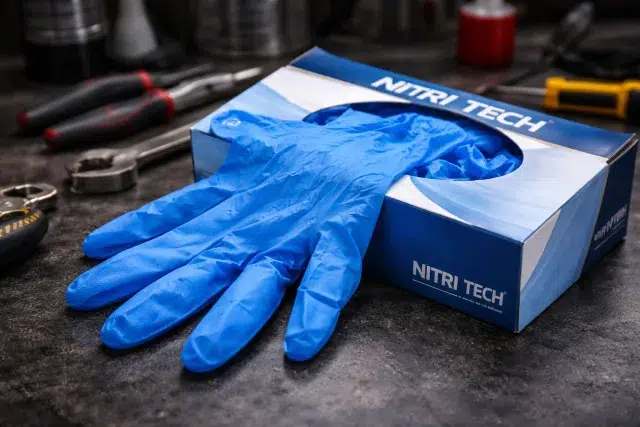
If you’ve been shopping for hand protection lately, you’ve probably noticed how messy the glove market can feel. Every box promises “industrial strength,” “exam grade,” or “chemical resistant,” and somehow they all claim to be the best value.
So where do Nitri Tech Gloves fit into this? In 2026, they’re showing up in more places because “Nitri Tech” is used across a couple of popular nitrile glove lines. The ones people most often mean are:
- Nitri Tech III style chemical-resistant, reusable nitrile gauntlets (common in janitorial and industrial settings).
- NitriTech Ultra style disposable, exam-grade nitrile gloves (common in food handling, labs, and general protection).
This review breaks down what you’re actually getting, who they’re best for, what to watch out for, and whether they’re worth your money this year.
What “Nitri Tech Gloves” usually refers to in 2026
“Nitri Tech” is not always one single glove with one single spec sheet. It’s more like a label you’ll see attached to different nitrile glove products depending on the seller and the use case.
In real-world buying, it usually splits into two categories:
1) Reusable chemical-resistant gloves (Nitri Tech III type)
Nitri Tech Gloves are the thicker, longer gloves you’d wear for chemicals, degreasers, strong detergents, and wet work. A common example is a flock-lined nitrile gauntlet with a grip pattern and formal chemical + mechanical standards listed.
2) Disposable nitrile exam gloves (NitriTech Ultra type)
These are the single-use gloves people want for food prep, cleaning, light industrial work, labs, clinics, and general barrier protection. A common example lists 6 mil thickness, 12-inch length, powder-free, non-sterile, and a 1.5 AQL rating for medical-device class use.
If you’re deciding whether they’re “worth it,” the smartest approach is to pick the category first, because the value of a thick reusable chemical glove is judged totally differently than a disposable exam glove.
Quick definition (so we’re on the same page)
Nitri Tech Gloves are nitrile-based protective gloves sold under “Nitri Tech” branding, typically designed for either single-use barrier protection (disposable exam gloves) or higher-risk wet and chemical tasks (reusable chemical-resistant gloves).
Why nitrile gloves are still the go-to choice in 2026
Nitrile keeps winning for one big reason: it’s the most practical “middle ground” material for a lot of people.
- It avoids natural rubber latex allergy risk, which is still a real workplace issue. OSHA estimates 8–12% of healthcare workers are latex sensitive.
- Nitrile tends to do well on puncture resistance compared to latex in research settings, which matters if you handle sharp edges, tools, or rough materials.
- It’s widely used across medical and non-medical settings, but standards and labeling matter (more on that below).
The catch: “nitrile” alone doesn’t guarantee a great glove. Thickness, fit, grip texture, and quality control are what separate “fine for quick cleanup” from “reliable for real work.”
Nitri Tech Gloves product breakdown (features that matter)
Let’s look at the two common Nitri Tech categories and what stands out.
Nitri Tech Gloves for chemical work (Nitri Tech III type)
These are the gloves you buy when you’re tired of thin disposables ripping the moment you touch something rough or wet.
Commonly listed features include:
- Chemical resistance rating (for example, Type A under EN ISO 374-1 for protection against at least 6 chemicals).
- Protection against microorganisms (EN ISO 374-5 including bacteria, fungi, and viruses on some models).
- Mechanical protection standard (EN 388 rating is often shown on listings).
- Food contact compliance is sometimes listed for users in kitchens, food manufacturing, or processing.
- Palm thickness can be listed in millimeters (one example shows 0.38 mm palm thickness).
- Comfort upgrades like flock lining to reduce sweat and make gloves easier to remove.
- Grip patterns (diamond grip is a common design).
Where they shine (real scenarios)
These are “worth it” when you’re doing tasks like:
- Cleaning bathrooms and kitchens with strong detergents
- Degreasing equipment
- Handling oily parts
- Washing dishes at volume (especially in food service)
- Wet industrial work where you need a longer cuff and better durability
If that’s your daily reality, a reusable nitrile chemical glove can be cheaper over time than burning through boxes of disposables.
What to watch out for
Even tough chemical gloves can cause skin issues for some people. At least one product page includes a caution that the glove may contain accelerator chemicals that can trigger type IV skin irritation in sensitized individuals.
If you’re prone to glove-related dermatitis, it’s worth paying attention to “accelerator-free” options when available, regardless of brand.
Nitri Tech Gloves for single-use work (NitriTech Ultra type)
Disposable “Nitri Tech” options are more about consistency and convenience. The features you’ll care about most are printed right on the product listing:
- Material: 100% nitrile
- Thickness: example listing shows 6 mil
- Length: example listing shows 12 inches
- Powder-free, non-sterile, ambidextrous
- AQL rating: example listing shows 1.5 AQL and “Class 1 Medical Device”
- Food applications compliance: example listing references compliance with 21 CFR food-related parts
- Surface texture: micro-textured finish for grip
Where they shine (real scenarios)
These are a good buy for:
- Food prep and food processing (especially when you need grip and fast changes)
- Lab work and sanitization tasks
- Light-to-medium industrial work (assembly, parts handling)
- Clinics and dental settings that want exam-grade labeling
The “6 mil” question: is thicker always better?
Not always. Thickness is a tradeoff between durability and dexterity. Many buyers land in the 4–6 mil range for general use because it’s usually thick enough to resist casual tears while still letting your fingers do fine work. Thickness charts and guidance commonly explain that different “mil” ranges fit different industries and tasks.
If you do delicate work (electronics, intricate assembly, fine lab handling), you might prefer slightly thinner gloves. If you’re tearing gloves constantly, you might need thicker, or you might need better fit and better grip rather than just more thickness.
Comparison table: Which Nitri Tech style is the better buy?
| Feature | Chemical-resistant Nitri Tech (Nitri Tech III type) | Disposable Nitri Tech (NitriTech Ultra type) |
|---|---|---|
| Best for | Chemicals, wet work, durability | Fast changes, hygiene, general barrier |
| Reusable? | Yes | No |
| Thickness | Listed in mm on some models (example 0.38 mm palm) | Listed in mil (example 6 mil) |
| Grip | Diamond pattern commonly listed | Micro-textured finish commonly listed |
| Standards | EN ISO 374-1, EN ISO 374-5, EN 388 listed on some models | AQL listed (example 1.5), exam-grade labeling |
| Food contact | Often listed on chemical gloves too | Often listed with 21 CFR references |
| Comfort | Flock lining on some chemical gloves | Comfort depends heavily on fit and formulation |
Are Nitri Tech Gloves actually “worth it” in 2026?
They’re worth it if your definition of “worth it” matches what they’re built for.
They’re worth buying if:
- You want a known thickness and length (like 6 mil and 12-inch) for predictable performance.
- You need chemical and mechanical standards clearly listed because you work with harsher substances.
- You’re replacing latex because allergy sensitivity is a concern in your workplace.
They might not be worth it if:
- You only need gloves for super light tasks (quick dusting, dry handling) where cheaper thin nitrile works fine
- You’re buying based on the name alone and not checking thickness, AQL (for disposable), or EN ratings (for chemical gloves)
- You expect “one glove to do everything” (it rarely does)
Common buying mistakes (and how to avoid them)
Mistake 1: Choosing by “exam grade” when you actually need chemical resistance
Exam-grade disposable gloves are great for hygiene and barrier protection, but chemical resistance is a different game. If you’re dealing with strong cleaners or solvents regularly, you want the chemical standard and a glove designed for that category.
Mistake 2: Ignoring AQL and quality language
If you’re buying disposable gloves for tasks where leaks matter, AQL is one of the few numbers that gives you a sense of quality control. Some disposable Nitri Tech listings clearly state AQL (example: 1.5 AQL).
Mistake 3: Thinking gloves replace hand hygiene
Gloves are protective equipment, not a substitute for good hygiene. WHO has been blunt about this: glove use does not replace hand hygiene, and changing gloves at the right moments matters.
In practice, this means: if you wear gloves all day and touch everything, you can still spread contamination. Gloves help when used correctly, not when used forever.
Who should buy Nitri Tech Gloves? A simple match guide
Buy the chemical-resistant Nitri Tech style if you are:
- Janitorial and cleaning staff using strong detergents daily
- Maintenance teams handling oils, grime, wet equipment
- Light industrial workers doing repetitive wet handling
- Food operations that need durability plus food-contact suitability (where listed)
Buy the disposable Nitri Tech style if you are:
- Food prep, food processing, catering, or kitchen teams
- Labs, sanitization, assembly, or general-use environments where you change gloves often
- Clinics and dental environments that want exam-grade nitrile with a stated AQL
Frequently asked questions about Nitri Tech Gloves
Are Nitri Tech Gloves medical grade?
Some disposable products sold under NitriTech branding are marketed as exam grade and may list AQL values (for example, 1.5 AQL) and medical-device class language.
Always verify the exact box or listing you’re buying, because “Nitri Tech” can refer to multiple product lines.
Are Nitri Tech Gloves good for food handling?
Many disposable nitrile gloves are marketed for food applications, and at least one NitriTech listing notes compliance with food-related 21 CFR parts.
Some reusable chemical-resistant nitrile gloves also list food-contact testing or compliance.
Are they better than latex?
For many people, nitrile is the more practical choice because latex sensitivity is still common in healthcare workplaces, and nitrile has strong puncture-resistance performance in research comparisons.
That said, some users still prefer latex for maximum tactile feel. The “best” material depends on your task and sensitivity.
How long do Nitri Tech chemical gloves last?
Reusable chemical gloves last based on exposure, cleaning practices, and abrasion. If you’re using harsh chemicals daily, inspect them often and replace at the first signs of cracking, thinning, or tacky spots. Standards and chemical guides are there for a reason.
What thickness should I choose?
For disposable nitrile gloves, thickness ranges are often used as a simple guide for matching tasks to durability needs, and charts commonly break down which mil ranges fit which industries.
If you’re ripping gloves a lot, go thicker or improve fit and grip. If you’re struggling with dexterity, go thinner.
Final verdict: Are Nitri Tech Gloves worth buying in 2026?
Yes, Nitri Tech Gloves are worth buying in 2026 if you buy the right “Nitri Tech” for the right job.
If you need a durable, longer, chemical-resistant glove with clear European protection standards, the Nitri Tech III style is the kind of glove that earns its place in your kit.
If you need a consistent disposable glove with a stated thickness, length, and an AQL number you can actually point to, the NitriTech Ultra style makes sense for food, lab, and general barrier work.
The name matters less than the specs. Check thickness, check ratings, and match the glove to the mess you’re dealing with.
And one last note that’s easy to forget: even the best glove is part of a system. Use it alongside proper hygiene practices, because gloves are not a replacement for clean hands.
In the end, Nitri Tech Gloves are a smart buy for most people because nitrile is a reliable synthetic rubber option that balances durability, comfort, and allergen avoidance when you pick the correct model for your work.