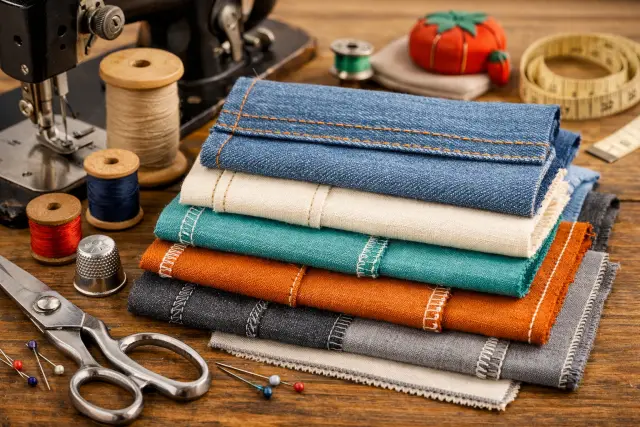
If you have ever pulled on a shirt and felt a side seam “pop,” you already understand the quiet power of seams. A seam is not just the line that holds fabric together. It is the structure that decides whether a garment feels smooth or scratchy, whether it drapes well or twists, and whether it survives a year of wear or frays after two washes.
In German sewing and garment circles, you will often see the word Nahttypen, which simply means “types of seams.” But in practice, Nahttypen is a whole decision system: which seam construction fits your fabric, your purpose, your machine, and the kind of stress that area of the garment will face. And once you start noticing seams, you see them everywhere: on denim, on silk blouses, on sportswear, on home textiles, even on luggage.
This guide breaks Nahttypen down in a practical, real world way. You will learn the main seam categories used in industrial and home sewing, the most common seam constructions you will actually use, and how to choose the right one without overthinking it. We will also touch on how seam strength is measured in testing standards, so you understand what “strong seam” really means.
What “Nahttypen” really means in sewing
At the simplest level, Nahttypen refers to seam constructions, meaning how fabric layers are arranged and stitched. But there are two overlapping ways people use the term:
- Everyday sewing language
“Plain seam,” “French seam,” “flat felled seam,” “overlocked seam,” and so on. - Industry classification language
Manufacturing and quality teams often classify seams by standardized seam classes. A widely used reference is ISO 4916, which focuses on seam types and terminology, and explains that a seam specification becomes meaningful when you also state the stitch type (from ISO stitch terminology).
Think of it like this: the seam type is the “geometry” of the fabric layers, and the stitch type is the “thread structure” used to lock those layers together. Both matter.
Why seam type matters more than most beginners think
Seams are where garments fail first. Not always because the fabric is weak, but because the seam choice does not match the fabric behavior or the stress in that area.
Research on seam performance consistently points to the same theme: seam quality depends on variables like fabric properties, stitch density, thread choice, and seam construction, and weak seams can cause failure and reduce product reliability.
Even in home sewing, choosing a better seam type can solve problems you might blame on your machine:
- Wavy knit hems and stretched seams
- Fraying edges inside the garment
- Bulky side seams that feel uncomfortable
- Seams that twist after washing
- Puckering on lightweight fabrics
The good news: once you understand a handful of Nahttypen, your results improve fast.
The big seam families (Nahttypen classes) used in industry
Industrial seam classification can get detailed, but the big picture is helpful because it explains why some seams behave the way they do. ISO-based seam classification organizes seams by how fabric layers are positioned and joined, and it emphasizes that seam identification is about configuration and components, then you add stitch type to complete the spec.
You do not need to memorize codes to sew well, but you do want to recognize these families:
1) Superimposed seams (layers stacked and stitched)
Two or more layers sit on top of each other, then are stitched. This is the “default” world of most garment seams.
Common everyday examples:
- Plain seam
- French seam (a variation that encloses edges)
- Double stitched seam
2) Lapped seams (layers overlap, then are stitched)
One layer overlaps the other, which can create strength and a flatter finish depending on construction. Coats (a major thread and components brand) describes lapped seams as layers lapped with edges overlaid, joined with rows of stitches.
Common everyday examples:
- Flat felled seam (a well known lapped style used on denim)
- Mock flat felled seam
3) Bound seams and edge finishing seams
These focus on finishing raw edges using binding, tape, or overedge stitching.
Common everyday examples:
- Bias bound seam
- Hong Kong finish
- Overlocked (serged) edge finish
4) Seams formed by joining edges directly
Used in special cases like butted seams (common in leather work, some technical applications), or when bulk must be minimized.
In home sewing, you will mainly live in the first three groups.
The most common Nahttypen you will actually use (with when and why)
Let’s get hands on. Below are the seam types you are most likely to sew, see, or choose between.
Plain seam (the everyday workhorse)
What it is: Two fabric pieces right sides together, stitched, then pressed open or to one side.
Where it shines:
- Woven fabrics for shirts, skirts, simple dresses
- Any place where bulk must stay low
Watch-outs:
- Raw edges fray on many woven fabrics unless finished
- Not ideal for sheer fabrics without finishing
Quick technique notes:
- Pressing changes everything. A plain seam that is pressed well looks professional.
- Finishing options: zigzag, pinking, overlock, or binding.
French seam (clean inside finish for light fabrics)
What it is: A seam sewn in two passes that encloses raw edges inside, leaving a tidy interior.
Where it shines:
- Sheer fabrics (chiffon, organza)
- Lightweight cotton, rayon
- Blouses and lingerie style garments
Watch-outs:
- Adds a little bulk, so it is not great for heavy fabric
- Curves can be tricky unless clipped carefully
French seams often feel “high end” because the inside looks as clean as the outside, without needing a serger.
Flat felled seam (strong, durable, iconic)
What it is: Fabric layers are overlapped and stitched so the raw edges are enclosed, often with visible topstitching.
Where it shines:
- Denim, workwear, shirts, durable side seams
- Areas that get tugged: inseams, side seams, shoulder seams in some garments
Watch-outs:
- Takes time
- Can feel bulky on thick fabrics if allowances are not trimmed well
Many sewists first notice flat felled seams on jeans. They are strong and neat because the edges are enclosed and the seam is reinforced by multiple rows of stitching.
Overlocked or serged seam (fast, common in modern clothing)
What it is: A seam sewn and edge-finished using an overlock machine, or simulated with overedge stitches.
Where it shines:
- Knit garments
- Fast finishing for woven seams
- Stretchy seams when paired with stretch-friendly stitches
Coats notes that superimposed seams can be sewn using different stitch types including lockstitch or chain stitch, and overedge stitch classes can also be involved depending on the finish and requirement.
Watch-outs:
- Not every serged seam is automatically strong. Stitch density, thread, and fabric matter.
- Some fabrics can wave or stretch if handled aggressively.
Bound seam (bias tape or binding for clean edges)
What it is: Raw edges are wrapped with binding, often bias tape.
Where it shines:
- Unlined jackets
- Bags and home décor
- Fabrics that fray aggressively
Watch-outs:
- Adds bulk
- Needs careful pressing and even stitching
A bound finish can turn a simple garment into something that looks boutique, especially on unlined pieces.
Welt seam and topstitched seams (decorative plus functional)
What it is: A seam pressed to one side and topstitched, or constructed with a slight overlap for a crisp finish.
Where it shines:
- Jackets, coats, structured garments
- Style lines and design emphasis
Watch-outs:
- Shows every wobble in stitching, so go slow
- Thread choice becomes visible design
Double stitched seam (simple reinforcement)
What it is: A plain seam with a second row of stitching, often parallel.
Where it shines:
- Areas under stress
- Lightweight fabrics that still need reinforcement
Watch-outs:
- Can look homemade if spacing is uneven
- Needs consistent seam allowance
A practical seam selection cheat sheet
Here is a quick table to choose Nahttypen by fabric and use case.
| Fabric or Use Case | Seam type that fits well | Why it works |
|---|---|---|
| Sheer or delicate fabric | French seam | Encloses raw edges, clean finish |
| Denim, heavy cotton, workwear | Flat felled seam | Very durable, enclosed edges |
| Knit T-shirts and activewear | Serged seam or stretch-friendly seam | Handles stretch and recovery |
| Unlined jackets, visible inside | Bound seams, Hong Kong finish | Clean interior appearance |
| Fast construction on wovens | Plain seam + edge finish | Efficient and flexible |
| Curved areas (armholes, princess seams) | Plain seam + proper finish | French seams can fight tight curves |
This table is not about “best” seams. It is about seams that behave predictably for that situation.
Seam strength, seam efficiency, and what testing standards actually measure
People casually say “this seam is strong,” but strength has a meaning in textile testing.
A major standard used for woven seam performance is ASTM D1683, which is designed to determine sewn seam strength and seam efficiency, and it recognizes that results vary by fabric and seam assembly.
In plain language:
- Seam strength is how much force the sewn seam can take before failure.
- Seam efficiency compares seam strength to the strength of the fabric itself. If the fabric tears before the seam breaks, that is a different kind of “failure” than the thread snapping.
Seam failure can happen in a few common ways:
- Thread break (thread snaps under load)
- Fabric rupture (fabric tears next to the seam)
- Yarn slippage or seam slippage (fabric yarns pull apart near the seam, opening gaps)
Even if you never run lab tests, understanding failure modes helps you troubleshoot your own projects.
Real world seam problems and what usually causes them
Seam puckering
That wrinkly, bumpy look along a seam is not random. Research often links puckering to interactions among fabric properties, stitch density, and sewing conditions.
Common causes:
- Stitch length too short for the fabric
- Thread tension too tight
- Fabric feeding unevenly (especially on slippery cloth)
- Differential feed not adjusted on knits (serger)
Seam twisting
A side seam that spirals around the body often comes from:
- Fabric grain not aligned during cutting
- Knit fabric torque
- Inconsistent seam allowance or stretching one layer while sewing
Fraying inside the garment
This is usually not a “bad sewing” issue, it is simply the wrong Nahttypen for a fabric that frays. A plain seam on loosely woven linen without edge finishing will fray. It is predictable.
Bulk and ridge lines
Bulky seams show through, feel uncomfortable, and can distort shape. Typical culprits:
- Heavy seam finishes on thick fabric
- Allowances not graded (trimmed in layers)
- French seams used where they add too much bulk
Nahttypen for knit fabrics (the stretch reality check)
Knits behave differently. They stretch, recover, and often curl on edges. If you use a rigid seam on a high-stretch knit, the seam can snap even if the fabric is fine.
What usually works well:
- Serged seams designed for stretch
- Stretch stitches on a sewing machine
- Reinforcement tape in shoulder seams where stretching is unwanted
Also, seam finish is often built into the seam itself in knit sewing. Many knit garments use a seam that joins and finishes in one pass, which is why overlock machines are everywhere in knit production.
The role of stitch type (because seam type is only half the story)
This guide is focused on Nahttypen, but it is worth saying out loud: two garments can have the “same seam type” and perform completely differently because the stitch type changed.
ISO guidance makes a similar point: the seam designation alone is not complete without the stitch type designation, and when multiple stitch types are used, the order matters.
In everyday terms:
- A plain seam sewn with a basic lockstitch behaves differently than one sewn with a chain stitch.
- Overedge stitching can prevent fraying, but it does not magically fix a weak seam allowance.
- Stitch density (stitches per inch or per cm) can increase strength up to a point, but too dense can weaken some fabrics by perforation.
Step-by-step: how to choose the right seam type in 60 seconds
When you are staring at your fabric and your pattern, run this quick checklist.
1) What is the fabric doing?
- Is it fraying easily?
- Is it stretchy?
- Is it thick and bulky?
- Is it sheer and likely to show seam finishes?
2) Where is the seam located?
- High stress: crotch seams, armholes, side seams on fitted garments
- Low stress: some decorative panels, facings
- Visible inside: unlined jackets, rolled cuffs, sheer garments
3) What finish do you want inside?
- Clean and enclosed
- Fast and functional
- Decorative and intentional
4) What equipment do you actually have?
- Straight stitch machine only
- Zigzag capability
- Overlock machine
- Coverstitch machine
Then pick the Nahttypen that matches those answers.
Common questions people ask about Nahttypen
What is the strongest seam type for clothing?
Strength depends on fabric, stitch type, and construction, but seams with enclosed edges and reinforcement, such as flat felled seams, are widely used in high-stress garments like denim and workwear for a reason. Testing standards like ASTM D1683 exist because “strong” needs to be measured in a repeatable way, not guessed.
Which seam type looks the neatest inside a garment?
French seams and bound seams are both known for clean interiors. French seams fully enclose the raw edge without extra finishing steps, while binding can create a polished look in unlined garments.
Are serged seams always stretchy?
Serged seams are commonly used for knit stretch, but stretch also depends on stitch formation, thread choice, and how the seam is constructed. In other words, a serged seam can be stretchy, but it is not guaranteed by the machine alone.
Why do seams pucker even when my fabric looks smooth?
Puckering often comes from a mismatch between fabric behavior and sewing settings, including stitch density and tension. Studies on seam performance discuss how sewing parameters and fabric properties influence seam strength and appearance.
A quick mini case scenario (so it feels less theoretical)
Imagine two people sewing the same simple cotton shirt.
- Person A uses a plain seam and finishes raw edges with a quick zigzag. The shirt looks good, but after repeated washes, the inside edges fuzz up and the seam allowance starts to look messy on stress points.
- Person B uses a flat felled seam on the side seams and a clean finish on the armhole seams. The inside looks tidy, stress areas are reinforced, and the shirt keeps its shape longer.
Neither person is “more talented.” The difference is Nahttypen decisions.
Conclusion: Nahttypen is the hidden design choice that upgrades everything
Once you learn the main Nahttypen, sewing becomes less mysterious. You stop blaming your machine for every issue and start looking at the real cause: fabric behavior, seam geometry, and stitch structure working together.
A plain seam is still a great seam when it is pressed and finished appropriately. A French seam can make lightweight fabrics feel luxurious. A flat felled seam can turn an everyday garment into something that takes serious wear. And if you ever want to go deeper, standards like ISO 4916 and testing methods like ASTM D1683 explain why seams are classified and measured the way they are.
In the end, Nahttypen is not about sewing “fancy.” It is about building the right structure for the job, so your seams look better, feel better, and last longer. If you keep one idea in mind, make it this: the seam is part of the design, not an afterthought, right down to the seam allowance you choose and how you finish it.