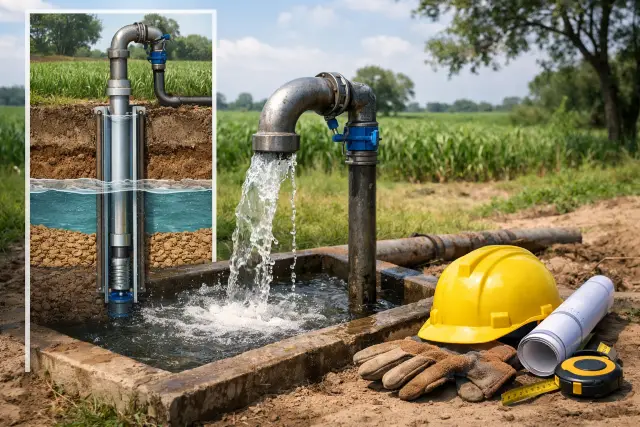
A mature tube well is one of those “set it and forget it” water solutions people rely on for years, sometimes decades, once it’s built correctly. You see them on farms, in rural homes, at construction sites, and even in small communities where municipal water is unreliable. But here’s the catch: a tube well that runs smoothly for a long time usually isn’t “lucky” it’s properly designed, properly sealed, and properly maintained. In this guide, I’ll walk you through how a mature tube well works, the core installation steps, and the safety tips that protect both your water and the people using it.
Category: Home Improvement
What is a mature tube well?
A tube well is a drilled borehole fitted with a pipe (casing) and usually a screen that allows groundwater to enter the well while keeping sand and fine material out. When people say “mature,” they typically mean the well is established and stable: it has been developed, the surrounding formation has settled, water flow is consistent, and the system has proven performance over time.
Think of it like this:
- A newly drilled well is still “finding its rhythm.”
- A mature tube well has stabilized yield, clearer water after development, and predictable pump behavior.
That doesn’t mean it’s maintenance-free. It means it’s doing what it was built to do, consistently.
How a mature tube well works (simple explanation)
A mature tube well works by tapping an underground water-bearing layer and drawing water up using a pump. Most of the time, the water enters through a screened section of the casing (or through openings and filter media), then flows upward through the rising main to your tank, irrigation line, or plumbing system.
Here’s the flow in plain terms:
- Rainfall and surface water infiltrate the ground and recharge groundwater systems over time.
- Water collects in permeable layers (sand, gravel, fractured rock).
- The well intersects that layer.
- When the pump runs, it creates a pressure drop inside the well.
- Groundwater moves through the formation into the screen area, then up to the surface.
A well that’s properly sealed also prevents dirty surface water from simply short-cutting into the borehole, which is one of the biggest hidden risks in poorly built wells. Guidance from well-construction standards emphasizes sealing and surface protection to reduce contamination pathways.
The main components of a tube well (and why they matter)
A mature tube well is basically a system, not just a hole in the ground. These are the parts that decide whether you get clean, steady water or constant headaches.
1) Borehole
The drilled hole itself. Diameter and depth depend on geology, demand, and pump size.
2) Well casing
A tube-shaped structure that supports the borehole and protects the water column. It helps keep loose soil out and, with grout/seal, reduces contamination entry.
Common casing materials:
- PVC (common in many regions)
- Steel (often used in deeper or tougher formations)
- Stainless steel (specialized, corrosion-resistant use cases)
3) Well screen (where water enters)
Screens are placed opposite the water-bearing zone to allow water in and keep sediment out. Design choices (slot size, length, placement) affect yield, sand pumping, and long-term performance.
4) Gravel pack (filter pack)
In many sandy formations, a gravel pack is placed around the screen to filter fine sand and improve flow.
5) Annular seal (grout and bentonite)
This is the “security system” of your well. The seal helps block surface contamination and prevents water from mixing between different layers (aquifers) in a way that can drag contaminants into cleaner zones.
6) Wellhead and sanitary cap
A tight, sealed well cap prevents insects, small animals, and surface runoff from entering from the top. Extension guidance highlights sanitary caps as a common missing feature in private wells and a practical upgrade for protection.
7) Pump and rising main
Usually a submersible pump in modern tube wells. The pump pushes water up through a pipe (rising main) to your system.
Installation basics: what actually happens on-site
A lot of people imagine tube well installation as “drill, drop pipe, start pumping.” Real installation has more steps for a reason.
Step 1: Site selection and safe placement
Before drilling, a good driller thinks about contamination sources and practical access.
Basic placement goals:
- Higher ground when possible (reduces flood/runoff risk)
- Away from septic tanks, soak pits, drains, chemical storage, livestock areas
- Accessible for rig, repairs, and electrical safety
Formal well standards place strong emphasis on locating wells with respect to contamination sources and designing surface protection features.
Step 2: Drilling the borehole
Common drilling methods vary by geology (rotary, percussion, etc.). The driller logs soil layers and identifies the best water-bearing zones.
What you want from this stage:
- A depth that matches your demand and the local groundwater conditions
- A diameter that matches casing and pump needs
- Clean drilling practices to reduce introduced contamination
Step 3: Installing casing and screen
After drilling:
- Casing goes in to support the borehole.
- Screen sections are placed opposite water-bearing layers.
- Solid casing sections isolate non-water-bearing or vulnerable zones.
Modern guidance describes installing casing/screens and filling the annulus with gravel pack plus cement or bentonite seals to prevent leakage and contamination pathways.
Step 4: Gravel pack placement (when needed)
In sandy formations, gravel pack placement is done carefully to avoid bridging (where gravel hangs up and leaves gaps). A well-built pack supports screen performance and reduces sand pumping.
Step 5: Sealing the annular space
This is where a well becomes “protected” instead of “exposed.” Sealing the upper annular space is a core element of water well standards because it blocks surface water and shallow contaminated water from running down along the casing.
Step 6: Well development (the step people underestimate)
Well development removes fine particles from around the screen, improves flow pathways, and reduces turbidity. It’s a big reason a tube well becomes “mature” in performance.
Signs development was done well:
- Water clears faster after pumping starts
- Less sand discharge
- Stable drawdown behavior (water level drop during pumping is predictable)
Step 7: Disinfection and initial water testing
After construction, many authorities recommend disinfection and then bacteriological sampling to confirm the well is safe.
How to tell if your tube well is truly “mature” (and not just “old”)
A mature tube well shows stability, not just age.
Practical signs:
- Consistent yield (flow rate doesn’t suddenly drop for no reason)
- Minimal sand pumping
- Clearer water after short flushing
- Pump doesn’t frequently trip or overheat
- Water test results are stable over time
If the well is “old” but water quality is drifting, sand is increasing, or the pump keeps struggling, that’s not maturity. That’s deterioration.
Key safety tips for mature tube wells
Safety isn’t just about installation day. Mature wells have risks that show up slowly: contamination pathways, electrical hazards, mechanical failures, and chemical exposure.
1) Water quality safety: test routinely, even if it looks clean
Clear water can still carry bacteria, nitrate, or dissolved metals. The CDC recommends testing well water at least once each year for total coliform bacteria, nitrates, total dissolved solids, and pH.
Why this matters in real life:
- A cracked cap or poor surface drainage can introduce bacteria.
- Agricultural runoff can raise nitrate levels without changing taste.
- Corrosion can change metal levels gradually.
Public health data also shows private well users face measurable contamination risk. For example, CDC notes that about 1 in 8 U.S. residents use private wells and reports that about 1 in 5 sampled private wells had at least one chemical at levels that could affect health.
2) Protect the wellhead like it’s part of your kitchen
This is where contamination prevention becomes practical, not theoretical.
Wellhead checklist:
- Use a sanitary well cap (tight seal, screened vent)
- Ensure the casing extends above ground level where appropriate
- Slope the concrete apron away from the well so water runs away
- Keep the area clean (no fertilizers, pesticides, fuel storage nearby)
Sanitary caps and grout seals are repeatedly emphasized as important features to keep surface contamination out.
3) Electrical safety: tube wells and electricity are a dangerous mix
Many tube well accidents happen because people treat pump wiring casually.
Core electrical safety rules:
- Use proper earthing/grounding and correct wire gauge
- Install a good-quality breaker and overload protection
- Keep control panels sheltered from rain and splash
- Never touch wet wiring or open panels with wet hands
- If you see repeated tripping, don’t bypass it, diagnose it
If your system uses a submersible pump, the motor is underwater but your wiring, control box, and earthing are not. Treat them like high-risk components.
4) Mechanical safety: pressure, lifting, and moving parts
Tube wells can produce high pressure. Sudden valve changes can cause water hammer and pipe damage. Also, pump retrieval is physically risky.
Safer habits:
- Open/close valves gradually
- Use proper lifting tools if the pump needs pulling
- Keep children away from the wellhead and panel area
- Don’t stand over open casing (falls happen)
5) Chemical handling: disinfectants and cleaning agents
When disinfecting or cleaning a well, chemicals can burn skin, irritate lungs, or react with other substances. Public health guidance warns that working on a well after emergencies can be hazardous and is often best handled by qualified well or pump contractors.
If disinfection is performed, follow credible instructions and keep people away from treated water until flushing and testing confirm safety.
Common problems in mature tube wells (and what usually causes them)
A mature tube well failing is rarely random. It’s often one of these patterns.
Problem 1: Reduced flow rate
Likely causes:
- Screen clogging (biofouling, mineral scaling)
- Aquifer drawdown or seasonal groundwater decline
- Pump wear (impeller erosion)
- Sand intrusion clogging the system
Problem 2: Sand in water
Likely causes:
- Screen damage or wrong slot size
- Gravel pack failure or migration
- Overpumping (too high pump capacity for formation)
Problem 3: Water smells bad or changes taste
Likely causes:
- Bacterial contamination
- Sulfur-related issues in certain formations
- Surface contamination entering due to poor wellhead seal
Test first, guess later. Annual testing guidance exists because sensory checks aren’t enough, especially for nitrate and bacteria.
Problem 4: Pump overheating or tripping
Likely causes:
- Low water level leading to poor cooling
- Voltage drop, wiring issues, weak capacitor
- Mechanical binding or worn bearings
- Incorrect pump sizing
Practical maintenance checklist (simple, realistic)
A mature tube well stays mature if you treat it like equipment, not magic.
Monthly quick check (10 minutes)
- Look for leaks at joints and valves
- Listen for unusual pump noise
- Check if the control panel feels unusually hot
- Inspect well cap and surrounding area for standing water
Every 6 to 12 months
- Test water quality (at least the basics)
- Inspect and clean wellhead area
- Confirm drainage slopes away from casing
- Check earthing/grounding integrity
CDC and EPA both emphasize routine testing and protective practices for private wells.
After flooding, heavy rains, or nearby construction
- Treat the well as potentially contaminated
- Consider disinfection and retesting based on local guidance
- Inspect for cracks in apron and cap sealing
Emergency guidance notes that suspected contamination after disasters should be handled carefully, with safety in mind.
Cost overview: what people usually pay for (and what changes the price)
Costs vary wildly by region and geology, but it helps to understand the cost drivers so you can compare quotes intelligently.
Big cost factors:
- Depth and diameter
- Formation type (rock vs sand)
- Screen and casing material quality
- Gravel pack and sealing requirements
- Pump capacity and brand
- Power source (grid, generator, solar)
- Water testing and disinfection
Typical cost components table (planning view)
| Component | What it includes | Why it matters |
|---|---|---|
| Drilling | Rig time, borehole creation | Depth and geology drive cost most |
| Casing and screen | Pipes, joints, screen sections | Strongly affects lifespan and sand control |
| Gravel pack and sealing | Filter pack, cement/bentonite seal | Protection against contamination and cross-flow |
| Pump and controls | Submersible pump, panel, protection | Reliability and electrical safety |
| Development and disinfection | Cleaning, flushing, chlorination | Improves yield, reduces turbidity, lowers risk |
| Water testing | Lab test for bacteria and chemicals | Confirms safety, not just appearance |
FAQs about mature tube wells
How long does a tube well last?
If properly constructed and protected, tube wells can serve for many years, but lifespan depends on water chemistry, screen/casing quality, pump maintenance, and whether the well is protected from contamination. Strong casing and proper sealing are widely recognized as key durability and protection factors.
Is deeper always better?
Not always. Deeper wells can reduce some contamination risks, but depth alone doesn’t guarantee safe water. Proper sealing, wellhead protection, and regular testing still matter.
Why does my mature tube well suddenly give less water in summer?
Seasonal groundwater changes are common, especially in high-demand periods. Overpumping can also worsen sand issues or screen clogging. If the drop is new and persistent, inspect pump health and consider professional evaluation.
Do I really need a sanitary cap if the well is already “fine”?
A well can look fine until one rainy season, one insect nest, or one surface runoff event changes everything. Sanitary caps are a practical barrier and are frequently recommended in sanitary construction guidance.
Conclusion: keep your mature tube well reliable and safe
A mature tube well is a dependable water source when it’s built with the right casing and screen, protected with proper sealing, and treated like a system you maintain, not a hole you hope for. If you take only a few actions from this guide, make them these: protect the wellhead, avoid shortcuts with electrical work, and test your water on a schedule. Those habits are what keep a mature well producing steady water and help protect the underground groundwater aquifer.