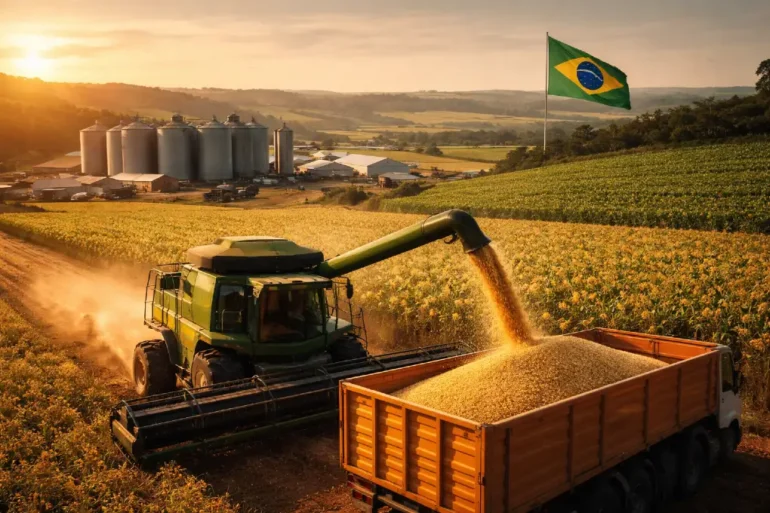
Brazil is a country that thinks big, and agriculture is where that “big” becomes impossible to ignore. When people search for Maior Fazenda Do Brasil, they’re usually imagining endless pasture, long internal roads, and a production system that feels closer to an industry than a traditional farm. And honestly, that picture is not far off.
In the last decade, Brazil’s agribusiness machine has become one of the world’s most influential food engines, from soybeans and corn to beef and cotton. According to CEPEA’s agribusiness GDP tracking, agribusiness represented an estimated 23.2% of Brazil’s GDP in 2024, which is a huge share for any major economy.
So what does the Maior Fazenda Do Brasil look like in real life, how does it operate, and why does it matter beyond Brazil’s borders? Let’s step inside the world of mega-farms, using real examples, real numbers, and the behind-the-scenes systems that make “largest” possible.
What “Maior Fazenda Do Brasil” Really Means (And Why It’s Not One Simple Answer)
Here’s the part most articles skip: “largest farm” can mean different things depending on what you measure.
When someone says Maior Fazenda Do Brasil, they might be referring to:
- Largest area (hectares or square kilometers)
- Largest cattle herd
- Largest full-cycle livestock operation (breeding to finishing)
- Largest integrated production system (grain, forage, water, logistics, housing, staff)
That’s why you’ll see more than one name in credible reporting.
For example:
- Some reports highlight Fazenda Roncador (in Querência, Mato Grosso) as exceeding 153,000 hectares, depending on ownership structure and time period.
- A widely covered livestock “giant” is Fazenda Nova Piratininga, often cited around 135,000 hectares with a massive internal logistics network and large-scale cattle operations.
In this article, we’ll use the phrase Maior Fazenda Do Brasil the way most readers mean it: the most impressive, large-scale farm operation that combines massive land, cattle, infrastructure, and industrial-level management, while also acknowledging that “largest” can vary by metric.
Inside the Maior Fazenda Do Brasil: A Real Look at Scale
If you’ve never seen the logistics of a mega-farm, here’s a simple mental image. Picture a property with its own road system, airstrip access, water storage structures, feeding systems, staff housing, and internal transport planning that resembles a small municipality more than a rural business.
In Brazilian agricultural media coverage, Nova Piratininga is described with more than 970 km of internal roads and infrastructure designed to keep production moving even through dry seasons.
When people search for Maior Fazenda Do Brasil, this is the kind of scale they’re trying to understand.
Snapshot Table: What Mega-Farm Scale Usually Includes
| Mega-farm element | What it does in practice | Why it matters |
|---|---|---|
| Internal road network | Moves feed, cattle, staff, and supplies | Reduces downtime, improves efficiency |
| Water storage and distribution | Keeps herds and forage systems stable | Helps during drought and heat stress |
| Feed and forage production | Silage, hay, grain planning | Cuts reliance on outside purchases |
| Herd management tech | Tracking, breeding, health monitoring | Lowers losses, improves productivity |
| Multi-site operations | Divides land into functional “zones” | Makes supervision and planning realistic |
That is the operational “skeleton” behind the Maior Fazenda Do Brasil concept.
How the Maior Fazenda Do Brasil Runs Like a Company, Not a Farm
A mega-farm doesn’t survive on land size alone. Land is expensive to manage, and big mistakes get painfully expensive when you’re dealing with thousands of animals, long distances, and seasonal risk.
The key difference is management style.
A modern Maior Fazenda Do Brasil type of operation tends to behave like a corporation with departments, routines, and performance indicators. You’ll typically find:
1) Logistics and Planning As a Daily Discipline
On a small farm, you can “figure it out” in the morning. On a mega-farm, improvisation becomes a cost center.
Internal road networks, like the one described at Nova Piratininga, are not just a curiosity. They are a business tool that makes daily movement possible at scale.
2) Feed Strategy That Protects the Herd in Dry Months
Brazil has regions where the dry season can pressure pasture and weight gain. Large full-cycle cattle operations often rely on carefully planned forage production and feed reserves to avoid production collapse.
This is one reason people call operations like Nova Piratininga “industrial livestock”: feeding and weight targets are managed with precision at scale.
3) Genetics and Reproductive Efficiency
Bigger herds do not automatically mean better results. Mega-farms put serious money into genetics and fertility systems because even small percentage improvements become huge numbers across tens of thousands of head.
Nova Piratininga describes a focus on breeding improvements and productivity outcomes, which fits the modern mega-farm model.
Why Brazil’s Agribusiness Boom Makes Mega-Farms Even More Important
A big reason the Maior Fazenda Do Brasil idea gets so much attention is that it sits at the center of Brazil’s global role as a food supplier.
Brazil’s Agribusiness Weight in the Economy
CEPEA estimates agribusiness accounted for 23.2% of Brazil’s GDP in 2024. That’s not a niche sector. That’s a national engine.
Mega-farms benefit from (and reinforce) this reality because they can:
- Produce at scale
- Invest in technology
- Negotiate better logistics and input costs
- Maintain more consistent output in difficult seasons
The Soy Factor: The Fuel Behind the System
Even if the farm you’re thinking about is cattle-focused, soy is part of the story because soy and corn supply feed chains, export revenue, and infrastructure expansion.
A 2024/2025 outlook cited in a Brazil-focused report expects a record soybean harvest of about 168 million tonnes and notes the long-term growth from 23 million tonnes (1993) to 152 million tonnes (2023).
When global demand pushes soy expansion, it also pushes investment in roads, storage, ports, and services. Mega-farms tend to be early adopters and heavy users of that improved ecosystem.
Technology in the Maior Fazenda Do Brasil: What “Modern” Actually Looks Like
When people hear “technology on farms,” they sometimes imagine just drones and tractors. Mega-farm tech is broader and often more practical than flashy.
Here’s what matters most in a Maior Fazenda Do Brasil style operation:
Precision Herd Monitoring
At large scale, you cannot rely on memory and manual checks. Herd monitoring often includes:
- Health and vaccination tracking
- Breeding and calving records
- Weight gain monitoring (spot checks or routine measurement)
- Pasture rotation plans tied to herd needs
Climate and Water Risk Management
Large farms frequently build systems that make them more resilient:
- Water storage areas and distribution planning
- Drought feeding strategies (silage, hay, grain)
- Grazing rotations designed to avoid pasture collapse
Nova Piratininga is reported as having substantial infrastructure, including internal logistics and water-related structures that support full functioning.
Data-Driven Decision Making
Mega-farms increasingly manage by targets:
- Cost per kilogram gained
- Pregnancy rates
- Mortality and loss rates
- Feed conversion outcomes (where relevant)
- Land use efficiency by zone
That’s why the Maior Fazenda Do Brasil isn’t only about size. It’s about turning size into predictable output.
People and Jobs: The Human Side of Mega-Farms
It’s easy to talk about hectares and cattle and forget that a massive farm needs people. Brazil’s agribusiness labor market is actively monitored through CNA and CEPEA publications, reflecting how significant the sector is for employment and economic structure.
On mega-farms, jobs often include:
- Veterinary and animal health teams
- Machinery and maintenance staff
- Logistics coordinators
- Field and pasture managers
- Administrative and finance staff
- Housing, food, and internal services teams (in some cases)
And because mega-farms operate like large organizations, training and standard operating procedures become more common than on smaller properties.
Sustainability Questions: What the World Wants to Know About the Maior Fazenda Do Brasil
Let’s be real: whenever mega-farms are mentioned, sustainability comes up fast.
Deforestation and Supply Chain Pressure
Brazil’s global soy leadership has also brought global scrutiny, especially related to Amazon-linked deforestation risks and supply chain rules. Recent reporting has highlighted debates around the Amazon Soy Moratorium and deforestation outcomes tied to enforcement and market incentives.
This matters for a Maior Fazenda Do Brasil narrative because:
- Mega-farms are visible
- They influence supply chains
- They are often tied to export expectations, audits, and buyer requirements
What Responsible Mega-Farm Operations Tend to Do
Not every large farm is the same, but in general, farms aiming for long-term export access focus on:
- Documented land compliance
- Traceability initiatives (especially in cattle supply chains)
- Water and soil management plans
- More efficient feeding and pasture systems to reduce pressure for expansion
Sustainability is not just “PR” anymore. It affects market access.
Real-World Example Scenario: A Drought Season Test
Imagine you’re managing a cattle operation in a region facing a harsh dry season. A small farm might reduce herd size or buy expensive feed.
A mega-farm approach usually looks different:
- Forecast the dry season and calculate feed needs early
- Build forage reserves (silage and hay) when conditions are favorable
- Use internal logistics to move feed efficiently across zones
- Maintain weight gain targets as much as possible
- Protect breeding outcomes by avoiding nutritional stress
This is why the Maior Fazenda Do Brasil type of operation is often described as “precision at scale.” The bigger the system, the more planning becomes survival.
Common Questions People Ask About Maior Fazenda Do Brasil
Is there one official “largest farm” in Brazil?
Not always. The “largest” label can change depending on whether you measure land area, herd size, or whether land is counted under one management structure. Reports commonly cite properties like Fazenda Roncador for very large area figures and Nova Piratininga for extremely large livestock operations and infrastructure.
Where are Brazil’s mega-farms usually located?
Large properties are often found in states with extensive agricultural frontiers and cattle tradition, including parts of Mato Grosso and Goiás, among others, depending on the farm.
How many cattle can a mega-farm handle?
Some large operations are reported in the range of tens of thousands of head. Nova Piratininga is described in sources as operating at a very large herd scale, with references around 120,000 head in some coverage.
Why do mega-farms matter to global food markets?
Because Brazil is a leading producer and exporter in several commodities, changes in Brazilian output can affect global prices and supply stability. Soy production trends and record harvest expectations are part of that story.
What Smaller Farms Can Learn From the Maior Fazenda Do Brasil (Without Copying the Size)
You don’t need 135,000 hectares to borrow the mindset.
Here are practical takeaways inspired by the Maior Fazenda Do Brasil model:
- Plan feed like a budget. Calculate needs early, build reserves, reduce surprise costs.
- Track a few key metrics. Pregnancy rate, mortality, weight gain, feed costs.
- Improve logistics on a smaller scale. Better gates, better routes, better storage placement.
- Standardize routines. Vaccination schedules and pasture rotation rules reduce mistakes.
- Invest where bottlenecks hurt most. Water access, forage storage, and basic recordkeeping usually pay back faster than flashy gear.
That’s how “big farm thinking” becomes useful for real people running normal-sized operations.
Conclusion: Why Maior Fazenda Do Brasil Is More Than a Curiosity
The phrase Maior Fazenda Do Brasil grabs attention because it represents something uniquely modern about agriculture: scale plus systems. Brazil’s mega-farms are not just large pieces of land. They are organized production engines built to withstand seasonal risk, manage thousands of moving parts, and deliver consistent output into a global market that demands both volume and accountability.
And while the name of the “largest” can vary depending on what you measure, the lesson stays the same. Brazil’s agribusiness boom is powered by farms that treat logistics, data, people, and risk planning as seriously as they treat pasture and rainfall.
If you want a quick foundation on the bigger picture of how modern farm business connects to markets and industry, a good starting point is agribusiness basics.