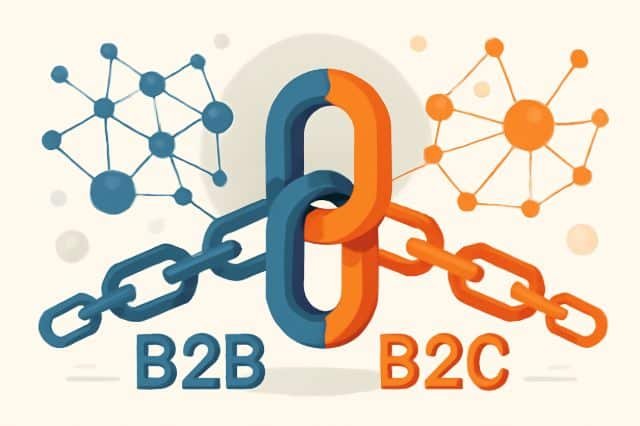
Link building is one of the essential components to achieve a perfect SEO score for your website. Whether you need B2B or B2C white hat link-building services, some basic elements will always be crucial for link-building success. For example, prioritizing quality over quantity is a must when it comes to long-term link-building success. While some basic strategies like this are similar for both B2B and B2C link building, there are some key features of link-building campaigns unique to each type. Let us explore the unique characteristics of B2B and B2C link-building strategies.
How B2B and B2C link building works
It is obvious that no link-building strategy can depend solely on the act of randomly asking website owners of websites for backlinks. There has to be a consistent effort to show how both parties may benefit from the link-building campaign. It is also essential to ensure that link building takes place within the niche, so that the website can expand its target audience by publishing relevant information. Based on the target audience and the consumers or businesses they are reaching out to, both B2B and B2C businesses will have to approach relevant sites for link building. Let us explore the different strategies of link building incorporated by these two types of businesses –
B2B link building strategies –
- Setting up blogs with relevant content: B2B businesses are mainly composed of vendors, board members and stakeholders. These members will definitely browse through the websites of the business to find out all about its expertise in the niche. They have to set up a blog because that is where the exchange of high-value information will take place via links with other websites. For high-quality links, it is always important to ensure the website is publishing high-value and up-to-date information that is worth referencing on other niche-based content elsewhere on the internet.
- Educational aspect: The aim of a B2B link-building strategy remains to put together educational prospects for the audience. Hence, while link building, relevant sites with educational content are to be emphasized.
- Incorporation of keywords: Link building for a B2B business involves the incorporation of keywords from every level of the buyer’s journey. This is done to reduce the time taken for making decisions, and complete the cycle of their purchase at the earliest.
- Media diversification: For B2B businesses, marketing via diverse media is very important. Influencer outreach, infographics, eBooks and guest posting – all of these efforts together generate highly valuable links so that audiences of every possible channel get to interact with the business.
B2C link building strategies –
- Optimization on social media: For B2C companies, optimizing links for all the primary social media platforms like Facebook, Twitter, and Instagram is important. Facebook holds a more important position for customer interaction for B2C companies, as it allows them to give the audience a taste of the company culture and create trust for the brand.
- Call-to-action: Link building for B2C companies also has to incorporate some amount of a clickbait approach, as there is huge competition from alternative brands. In such a competitive market, transactions can happen within minutes in the B2C scene. Links have to incorporate more calls to action so that no time is lost.
- Product reviews: In a B2C business, product reviews often work like a charm so that businesses can gather a good number of backlinks. Thus, the link-building agencies usually have to reach out to websites that are able to provide them with authentic backlinks with genuine product reviews or even paid ones. This process allows the website to validate the name of the brand as well.
- Strategic guest blogging: B2C link building is all about getting the target consumers to trust in the authenticity and unique selling point of the brand. For this, strategic guest blogging can be very useful. Guest blogs by reputed experts in the niche allow B2C companies to boost their visibility online. Guest blogs are known to generate an average of 97% more inbound links and 55% more visitors on the website. Hence, a great number of links can be built for B2C businesses with the help of strategic guest blogging by writers who already own blogs with high niche authority.
Conclusion
Link-building services form a strong pillar of the entire SEO strategy for both B2B and B2C businesses. However, some key differences exist between the two when it comes to approach, channels and purpose. While for B2B businesses, a diversification of media and high-value content is a key area, for B2C businesses, the aim is to create greater consumer trust and popularize brand image.