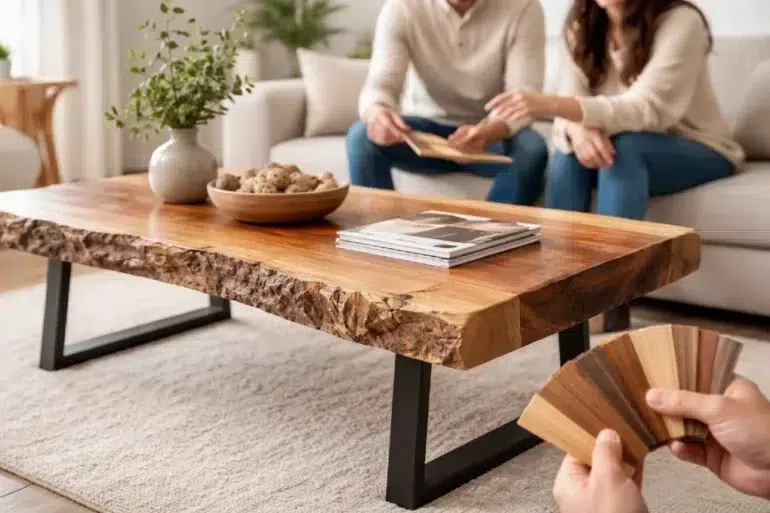
A Live Edge Coffee Table can completely change the feel of a living room. It brings in warmth, texture, and that one thing many modern spaces are missing, character. Unlike factory-perfect furniture, a Live Edge Coffee Table keeps the natural shape of the wood visible, so every piece feels a little more personal and a lot less predictable.
That is exactly why choosing the right Live Edge Coffee Table matters. The wrong size can make a room feel cramped. The wrong wood can clash with your flooring. The wrong finish can turn a beautiful centerpiece into a high-maintenance purchase. If you want a table that looks stunning and actually works for daily life, you need more than good taste. You need a smart buying process.
In this article, you will learn how to choose the best Live Edge Coffee Table for your layout, style, budget, and lifestyle, with practical tips you can use before you buy.
What Is a Live Edge Coffee Table?
A Live Edge Coffee Table is made from a slab or section of wood that preserves the tree’s natural outer line rather than cutting every side into a perfectly straight edge. That organic outline is what gives the piece its distinctive look. Knots, grain shifts, subtle curves, and natural imperfections are part of the appeal.
This style works because it feels both raw and refined at the same time. In a minimalist room, a Live Edge Coffee Table adds softness and visual movement. In a rustic room, it feels right at home. In an industrial or contemporary setting, it can become the focal point that prevents the space from looking too cold.
If you already love the look of a Live Edge Dining Table, the same design logic applies here. You are bringing natural material into the room in a way that feels sculptural rather than overly polished.
Why Homeowners Love a Live Edge Coffee Table
There are plenty of coffee tables on the market, but a Live Edge Coffee Table stands out for a few reasons:
- No two pieces are exactly alike
- Natural wood grain gives the room warmth
- It fits rustic, modern, farmhouse, industrial, and transitional interiors
- It often looks more premium than mass-produced alternatives
- It can age beautifully when cared for properly
People are also paying more attention to sustainable wood sourcing. The Forest Stewardship Council notes that FSC-certified timber helps buyers choose wood from responsibly managed forests, which is worth checking when shopping for any solid wood furniture.
Start With the Size of Your Living Room
The first mistake many buyers make is choosing a Live Edge Coffee Table based only on appearance. The table may look amazing online, but if the proportions are off, the whole room feels awkward.
Before buying, measure these three things:
- The width of your sofa
- The distance between your seating pieces
- The open walking space around the seating area
A coffee table should feel visually connected to the sofa, not tiny and lost or oversized and dominant. A common rule is to choose a table around two-thirds the length of your sofa. Designers and furniture sizing guides also commonly recommend leaving about 12 to 18 inches between the sofa and coffee table for comfortable reach and movement.
That means if you have a long sectional, a very small Live Edge Coffee Table may disappear in the room. On the other hand, if you live in an apartment or have a compact seating area, a large slab table can make the room feel crowded fast.
Quick Sizing Table
| Sofa Size | Ideal Coffee Table Length | Recommended Shape |
|---|---|---|
| 60 to 72 inches | 36 to 42 inches | Oval, round, or compact rectangle |
| 72 to 84 inches | 42 to 48 inches | Rectangle or soft organic shape |
| 84 to 96 inches | 48 to 54 inches | Rectangle or wide freeform slab |
| Sectional seating | Depends on open floor area | Round, square, or nested option |
When in doubt, mark the table size on your floor with painter’s tape. It sounds simple, but it instantly shows whether your future Live Edge Coffee Table fits the room or overwhelms it.
Choose the Right Height for Comfort
A beautiful Live Edge Coffee Table still has to function well. If it sits too high, it feels awkward. If it sits too low, it becomes inconvenient for everyday use.
The standard recommendation is to choose a coffee table that is the same height as your sofa seat or about 1 to 2 inches lower. Many common coffee tables fall in the 14 to 18 inch range, depending on the sofa.
That small difference matters more than people think. A table at the right height makes it easier to set down drinks, reach for a book, or rest your feet without strain.
Here is a simple way to check:
- Measure from the floor to the top of your sofa cushion
- Look for a Live Edge Coffee Table at the same height or slightly lower
- Consider the thickness of the slab, especially if the tabletop is extra chunky
A thick walnut slab on metal legs can look sleek in photos, but if the slab itself is several inches thick, the total height may be more than you expect.
Think About Shape, Not Just Style
One of the best things about a Live Edge Coffee Table is that shape can be more expressive than standard furniture. Some pieces are nearly rectangular. Others have dramatic curves and asymmetry.
The best shape depends on how you use the room.
Rectangular live edge tables
These work best in front of standard sofas and larger sectionals. They provide more surface area and tend to feel balanced in long seating zones.
Round or oval options
These are ideal in smaller spaces or homes with children because they soften circulation paths and reduce sharp corners.
Freeform slab designs
These feel artistic and one of a kind. They work especially well in modern or eclectic interiors where the table is meant to be a statement piece.
If your room already has strong lines, such as a square sofa, angular rug, or boxy media unit, a softer Live Edge Coffee Table shape can add visual relief. If the room already has lots of curves, a cleaner slab outline may look more grounded.
Pick a Wood Species That Matches Your Lifestyle
Not all wood looks or performs the same. The species used in a Live Edge Coffee Table affects color, grain pattern, durability, and price.
Here are some popular choices:
Walnut
Walnut is a favorite for a high-end Live Edge Coffee Table because it has rich brown tones and elegant grain. It looks refined and works beautifully in modern interiors.
Oak
Oak is strong, timeless, and versatile. It often suits farmhouse, Scandinavian, and transitional rooms.
Maple
Maple has a lighter, cleaner appearance. It is a smart choice if you want a fresh, airy look.
Acacia
Acacia is bold, dramatic, and often more budget-friendly than walnut. It can be an excellent choice for buyers who want a striking Live Edge Coffee Table without entering luxury pricing.
Suar or monkeypod
These woods are popular in statement slab furniture because of their wide cuts and beautiful grain contrast.
Wood choice also matters because solid wood responds to moisture. The USDA Forest Products Laboratory and Oregon State University both note that wood can shrink and swell as moisture conditions change, which is one reason quality drying and finishing matter so much in slab furniture.
So if you are buying a Live Edge Coffee Table, ask whether the slab was kiln-dried and how it was sealed. That question alone can save you from future cracking, warping, or finish issues.
Check the Base Carefully
When people shop for a Live Edge Coffee Table, they usually focus on the wood top first. That makes sense. It is the star of the piece. But the base matters just as much.
A great base should do three things:
- Support the slab properly
- Match the room’s design style
- Leave enough legroom and visual openness
Common base styles
Metal legs
Best for modern, industrial, and minimalist interiors. Black powder-coated steel is especially popular.
Wood pedestal base
Creates a softer, more cohesive look and works well in warm, natural interiors.
Hairpin legs
These can look stylish, but on a heavy slab they may feel too light visually unless the top is modest in size.
Trestle or sculptural bases
Ideal when you want the table to feel custom or architectural.
The bigger and heavier the slab, the more attention you should pay to balance and structural support. A Live Edge Coffee Table should feel stable from every angle, not like a beautiful top perched on a weak frame.
Match the Table to Your Existing Decor
A Live Edge Coffee Table does not need a room full of rustic decor to work. In fact, it often looks best when mixed with contrasting materials.
Here is how to make it fit naturally:
For modern living rooms
Pair a Live Edge Coffee Table with neutral upholstery, matte black accents, and simple lighting. Let the grain provide the visual drama.
For farmhouse interiors
Look for oak or reclaimed wood tones with a warm finish. Linen, woven textures, and soft earth colors work well here.
For industrial spaces
Choose a darker wood slab with a strong steel base. Brick, concrete, and leather make a natural pairing.
For minimalist homes
Pick a slimmer Live Edge Coffee Table with a cleaner silhouette. Avoid overdecorating it. One tray, one book stack, and one sculptural object may be enough.
For eclectic rooms
This is where a highly expressive slab can shine. A piece with visible knots, butterfly joinery, or unusual contour can become the anchor that ties varied styles together.
If your room already includes a Live Edge Dining Table, keep the tones related but not identical. Matching too closely can feel staged. Coordinating rather than duplicating usually looks more collected and natural.
Consider Your Daily Use
This part matters more than trends.
Ask yourself how your Live Edge Coffee Table will actually be used on a normal week.
Will it hold:
- Coffee mugs every morning
- Remote controls and chargers
- Books and magazines
- Board games
- Kids’ snacks
- Decorative styling only
If your answer is “all of the above,” then beauty alone is not enough. You need a finish that can handle regular life.
Look for:
- A sealed surface that resists water rings
- Rounded or eased edges if children are around
- A slab thickness that feels substantial but not bulky
- Storage options if clutter control matters
A very raw-looking Live Edge Coffee Table may be beautiful in a showroom, but a better-sealed surface is often the smarter choice for real households.
How to Spot Quality Before You Buy
A high-quality Live Edge Coffee Table does not just look good in photos. It shows good craftsmanship up close.
Here is what to inspect:
- Kiln-dried wood: Helps reduce future movement
- Stable base attachment: No wobble, rocking, or weak joinery
- Smooth finish: Natural texture is fine, but the table should not feel splintery
- Balanced slab: The piece should sit properly without visual or structural awkwardness
- Filled cracks done well: Resin or butterfly joints can be beautiful when executed cleanly
- Consistent finish coverage: Especially around edges and underside
If you are shopping online, ask for close-up images of the grain, underside, edge profile, and base connection. A trustworthy seller should have no issue showing those details.
Best Live Edge Coffee Table Choices by Room Type
Sometimes it helps to picture the right table by scenario.
Small apartment living room
Choose a compact oval Live Edge Coffee Table with slimmer legs and a lighter wood tone. It keeps the space feeling open.
Family room with sectional
Go for a longer rectangular Live Edge Coffee Table with a durable finish and enough surface area for everyday use.
Formal sitting room
A walnut Live Edge Coffee Table with a sculptural base creates an elegant focal point.
Open-plan home
Choose a table that visually connects your seating area to the rest of the space. If there is a nearby Live Edge Dining Table, echo the natural wood feel without copying the exact shape.
Common Buying Mistakes to Avoid
A lot of people fall in love with the concept of a Live Edge Coffee Table and rush the purchase. That usually leads to regret.
Avoid these common mistakes:
- Buying based only on photos
- Ignoring the thickness of the slab
- Choosing a table that is too tall
- Forgetting to measure sofa clearance
- Picking a finish that cannot handle daily wear
- Matching every wood tone in the room too closely
- Overlooking how the base affects stability
The best Live Edge Coffee Table is not always the wildest slab or the most expensive one. It is the piece that fits your room, your habits, and your long-term style.
How to Care for a Live Edge Coffee Table
A Live Edge Coffee Table is not difficult to maintain, but it does need thoughtful care.
Keep it looking its best with these habits:
- Wipe spills quickly
- Use coasters for hot and cold drinks
- Dust with a soft dry or slightly damp cloth
- Avoid harsh chemical cleaners
- Keep it away from direct heat sources
- Maintain stable indoor humidity when possible
That last point matters because wood continues to react to its environment over time. Moisture changes can affect performance and appearance if the piece is poorly made or exposed to extremes.
FAQs About Choosing a Live Edge Coffee Table
Is a Live Edge Coffee Table good for small living rooms?
Yes, as long as you choose the right size and shape. Oval or compact slab designs usually work better than oversized rectangles in tight layouts.
What is the best wood for a Live Edge Coffee Table?
There is no single best option for everyone. Walnut is premium and elegant, oak is versatile, maple feels lighter, and acacia often gives you bold grain at a more approachable price.
Should a Live Edge Coffee Table match other wood furniture?
It should coordinate, not match perfectly. Similar undertones usually look better than identical finishes across every piece.
Is a Live Edge Coffee Table durable enough for everyday use?
Yes, if it is made from properly dried solid wood, finished well, and paired with a stable base. Ask about sealing, construction, and care before buying.
Can a Live Edge Coffee Table work in a modern room?
Absolutely. In many modern interiors, it becomes the natural element that keeps the room from feeling flat or overly manufactured.
Final Thoughts
Choosing the right Live Edge Coffee Table is really about balance. You want a piece that feels organic but still intentional, striking but still practical, unique but still easy to live with. Start with your room dimensions, measure carefully, think about how you actually use your living space, and pay close attention to wood quality, finish, and base construction.
When you get those details right, a Live Edge Coffee Table becomes more than a surface for drinks and decor. It becomes the piece that gives your living room depth, warmth, and personality. And if you already appreciate the craftsmanship behind a Live Edge Dining Table, bringing that same natural design language into your seating area can make your whole home feel more connected.
In the end, the best Live Edge Coffee Table is the one that fits your daily life as beautifully as it fits your style. If you love furniture that celebrates natural form, the live edge style offers exactly that kind of timeless character.