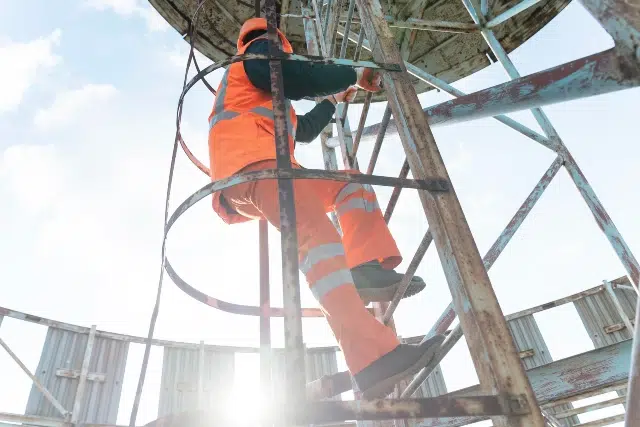
Industrial environments are built for productivity. But behind every busy warehouse, refinery, construction site, or manufacturing plant, there’s one constant concern: safety.
Falls remain one of the leading causes of serious workplace injuries and fatalities worldwide. According to the U.S. Bureau of Labor Statistics, falls to a lower level accounted for hundreds of fatal work injuries each year, particularly in construction and industrial sectors. OSHA consistently ranks fall protection among its most cited safety violations.
The reality is simple. Without proper industrial safety and fall protection solutions, even routine tasks can turn dangerous in seconds. The good news? Most fall-related incidents are preventable with the right systems, training, and safety culture in place.
Let’s break it down in a practical, no-nonsense way.
Why Fall Protection Matters in Industrial Settings
If you’ve ever walked through a plant mezzanine or climbed a fixed ladder in a warehouse, you know how easy it is to overlook the risk. Everything feels stable — until it isn’t.
Industrial workplaces often include:
- Elevated platforms
- Mezzanines and catwalks
- Roof access areas
- Loading docks
- Maintenance ladders
- Scaffolding systems
Even a fall from 6 feet can cause serious injury. In heavy industrial settings, where machinery and sharp materials are common, the consequences can be even worse.
OSHA requires employers to guard every open-sided floor or platform where workers could fall. That’s not just a regulation — it’s a life-saving principle.
Core Components of Industrial Fall Protection Systems
A strong fall protection strategy isn’t one single piece of equipment. It’s a layered approach.
Here’s how it typically works.
1. Passive Fall Protection (First Line of Defense)
Passive systems don’t require active worker participation. They’re built into the structure.
Examples include:
- Guardrails
- Safety gates
- Handrails
- Toeboards
- Safety netting
These solutions are powerful because they remove human error from the equation.
For example, toeboards are usually installed at the base of guardrail systems to prevent tools, debris, or materials from falling onto workers below. Small detail — major impact.
Benefits of passive systems:
- No specialized training required
- Constant protection
- Low maintenance
- Cost-effective long-term
If you can eliminate a fall hazard through engineering controls, that’s always the smartest move.
2. Active Fall Protection Systems
When passive protection isn’t feasible — such as during maintenance work at height — active systems come into play.
These include:
- Full-body harnesses
- Lanyards and shock absorbers
- Self-retracting lifelines (SRLs)
- Horizontal lifeline systems
- Anchor points
Unlike guardrails, these systems rely on workers using them correctly. That means training is essential.
According to the National Safety Council (NSC), proper safety training significantly reduces workplace injury rates.
3. Fall Arrest vs. Fall Restraint: What’s the Difference?
This is a common question.
| Feature | Fall Arrest | Fall Restraint |
|---|---|---|
| Purpose | Stops a fall after it happens | Prevents the fall from occurring |
| Worker Movement | Allows access to edge | Restricts access to edge |
| Risk Level | Higher | Lower |
| Best Use | Maintenance, repair | Routine tasks near edges |
Whenever possible, restraint systems are safer because they prevent exposure to fall hazards entirely.
Designing a Comprehensive Fall Protection Plan
You can’t just install a guardrail and call it a day.
An effective plan includes:
- Hazard identification
- Risk assessment
- Engineering controls
- Administrative controls
- Personal protective equipment (PPE)
- Training and documentation
Step 1: Conduct a Thorough Risk Assessment
Walk through your facility with a fresh set of eyes.
Ask:
- Where are workers exposed to heights?
- Are there unprotected edges?
- Are ladders being used correctly?
- Is equipment compliant with OSHA or EU standards?
Document everything.
Step 2: Apply the Hierarchy of Controls
Safety professionals follow a structured approach:
- Eliminate the hazard
- Substitute safer methods
- Engineering controls
- Administrative controls
- PPE (last resort)
The best fall protection is removing the need to work at height entirely.
Common Fall Hazards in Industrial Environments
Here’s what we frequently see:
- Unprotected mezzanines
- Improperly secured ladders
- Damaged guardrails
- Open roof hatches
- Slippery surfaces
- Inadequate lighting
Small oversight. Big consequences.
A missing safety gate at a ladder opening can expose dozens of workers daily.
Case Example: Mezzanine Safety Upgrade
Let’s imagine a distribution center with elevated storage platforms.
Problem:
Workers retrieving inventory were exposed to open edges and ladder access points.
Solution:
- Installed compliant guardrail systems
- Added self-closing safety gates
- Integrated toeboards to prevent falling objects
- Conducted employee training sessions
Result:
- Reduced near-miss reports by 60% within six months
- Improved OSHA inspection outcomes
- Boosted employee confidence
That’s what practical industrial safety looks like.
Training: The Most Overlooked Safety Investment
You can buy the best equipment on the market. But if workers don’t understand:
- Proper harness fit
- Anchor point requirements
- Weight capacity limits
- Rescue procedures
… the system fails.
OSHA 1926 Subpart M outlines fall protection training requirements. Employers must ensure workers recognize fall hazards and understand correct procedures.
Training should include:
- Hands-on demonstrations
- Rescue simulations
- Equipment inspection protocols
- Annual refresher courses
Safety isn’t a one-time seminar. It’s ongoing.
Equipment Inspection and Maintenance
Even the strongest safety system degrades over time.
Regular inspections should check:
- Corrosion
- Loose bolts
- Frayed harness straps
- Cracked anchor welds
- Damaged lifelines
Document inspections weekly or monthly depending on risk exposure.
A neglected harness can fail when it’s needed most.
Industrial Safety Standards and Compliance
Depending on your location, regulations vary.
In the U.S.:
- OSHA 29 CFR 1910 (General Industry)
- OSHA 29 CFR 1926 (Construction)
In Europe:
- EN 13374 (Temporary edge protection systems)
- EN 795 (Anchor devices)
Compliance is not just about avoiding fines. It’s about preventing life-changing injuries.
Emerging Technologies in Fall Protection
Industrial safety is evolving.
New innovations include:
- Smart harnesses with fall detection sensors
- IoT-enabled anchor systems
- Wearable safety monitoring devices
- Drone-assisted roof inspections
Technology adds another layer of protection, especially in high-risk environments.
Frequently Asked Questions (FAQ)
What is the minimum height for fall protection?
OSHA requires fall protection at:
- 4 feet in general industry
- 6 feet in construction
- 8 feet in longshoring
Always verify local regulations.
What is the safest type of fall protection?
Passive systems like guardrails are generally safest because they do not rely on worker behavior.
How often should fall protection equipment be inspected?
- Before each use (by worker)
- Annually (by competent person)
- After any fall incident
What are the three types of fall protection?
- Fall prevention
- Fall restraint
- Fall arrest
Practical Recommendations for Industrial Facilities
If you manage or operate an industrial site, here’s a straightforward roadmap:
- Audit all elevated areas
- Replace temporary fixes with engineered systems
- Standardize guardrail systems
- Install compliant ladder safety gates
- Document inspections digitally
- Provide annual certified training
If you’re looking for deeper safety optimization strategies, you can explore additional insights at growthpulse.eu, where industrial risk management and operational efficiency are discussed in more detail.
Final Thoughts: Building a Culture of Safety
Industrial safety isn’t just about compliance checklists.
It’s about culture.
When leadership prioritizes fall protection, workers notice. When safety meetings feel meaningful instead of routine, behavior changes. When equipment is maintained properly, confidence grows.
Falls are preventable. But prevention requires intentional design, smart engineering, proper training, and consistent follow-through.
The best industrial safety and fall protection solutions combine:
- Smart infrastructure
- Reliable equipment
- Clear procedures
- Ongoing education
- Accountability at every level
Protecting workers at every level isn’t just a slogan. It’s a responsibility.
And when done right, it saves lives.