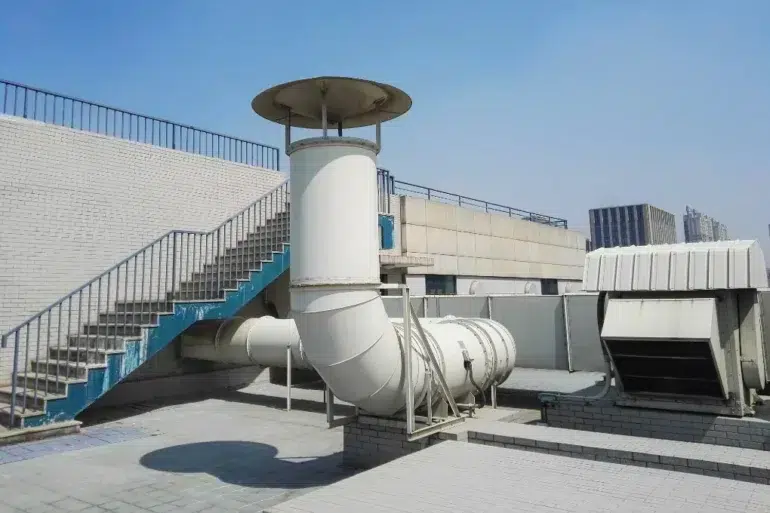
Walk into any serious manufacturing facility and you’ll notice something right away — the air isn’t something they leave to chance. Between chemical reactions, heat processes, and raw material handling, airborne pollutants are constantly being generated.
That’s where wet scrubber systems come into play. And more importantly, the filtration components inside them are what really determine whether the system performs… or just exists on paper.
In many setups, integrating a well-designed absorber tower isn’t just a technical upgrade—it’s what turns a basic scrubber into a system that actually handles real industrial loads without constant issues.
Understanding Wet Scrubber Filtration (Without the Textbook Feel)
At its core, a wet scrubber is pretty straightforward. Contaminated air passes through a liquid medium, and that interaction pulls pollutants out of the gas stream.
But in real-world conditions, things are rarely that simple.
Industrial exhaust isn’t uniform. It can be hot, corrosive, particle-heavy, or chemically reactive—all at once. That’s why the filtration side of a wet scrubber system needs to be engineered with a clear understanding of the process it’s dealing with.
These filters are not generic components. They’re built to:
- Handle continuous high-volume airflow
- Resist corrosion from aggressive chemicals
- Capture both fine particulates and gas-phase pollutants
- Maintain efficiency over long operating cycles
When any one of those fails, performance drops quickly.
Why Filtration Quality Makes or Breaks the System
A lot of facilities invest in scrubbers but underestimate the importance of the filtration elements inside. That usually shows up later as maintenance headaches or compliance issues.
Here’s what strong filtration actually changes:
Consistent Emission Control
You’re not just hitting targets once—you’re maintaining them over time.
Less Downtime
Clogging, corrosion, and inefficiencies don’t build up as quickly.
Better Process Stability
Airflow and pressure remain predictable, which keeps the entire system balanced.
Lower Long-Term Costs
Fewer replacements. Less energy waste. Fewer emergency fixes.
In short, better filters don’t just clean air—they stabilize operations.
Where the Absorber Tower Fits In
If you’ve worked around wet scrubbers, you already know this: contact time is everything.
An absorber tower increases the surface area and interaction time between the gas and the scrubbing liquid. That might sound like a small improvement, but in practice, it’s a major performance shift.
What it does in real terms:
- Gives gases more time to dissolve or react
- Improves removal of acidic and soluble pollutants
- Handles fluctuating loads more effectively
- Reduces the chance of partially treated emissions
In high-demand industrial environments, skipping this component often leads to underperformance—especially when dealing with gases like SO₂ or HCl.
Types of Filtration Approaches You’ll Actually See in Industry
Not every system looks the same, and for good reason. Different industries demand different filtration strategies.
Packed Bed Systems
These are common in chemical processing. The packing material creates a large surface area, allowing better gas-liquid interaction.
They’re especially effective when you’re dealing with gas absorption rather than just particulate removal.
Mesh Pads (Mist Eliminators)
These sit later in the system and deal with something many overlook—moisture carryover.
Without them, you’re pushing droplets (and contaminants) back into the air stream.
Venturi-Based Systems
These are more aggressive. High-velocity airflow breaks the liquid into very fine droplets, which makes them effective for capturing tiny particles.
They do require more energy, but when fine particulate removal is critical, they’re hard to beat.
A Practical Example (Because Specs Only Tell Half the Story)
One manufacturing facility we worked with had a recurring issue: emissions were technically within limits… but only under ideal conditions.
During peak production, everything slipped.
After evaluating the system, the problem wasn’t the scrubber itself—it was the filtration setup and lack of proper gas-liquid interaction.
What Changed:
- Upgraded internal filter media
- Improved liquid distribution
- Added an absorber tower
What Happened Next:
- Emissions stabilized across all load conditions
- Maintenance intervals increased significantly
- Operators stopped needing constant manual adjustments
That’s the difference between a system that “works” and one that actually performs.
Common Problems (And Why They Keep Happening)
Even well-designed systems run into trouble if certain basics are ignored.
Clogging
Usually caused by poor-quality filter media or high particulate loads without proper pre-treatment.
Corrosion
If materials aren’t matched to the chemicals in use, degradation happens fast.
Uneven Liquid Distribution
This creates dead zones where filtration simply doesn’t happen effectively.
Energy Inefficiency
Often tied to pressure drop issues or poorly optimized airflow paths.
Most of these problems aren’t sudden—they build up over time.
What to Look for When Choosing Filtration Components
If you’re in the process of selecting or upgrading, don’t just look at specs on paper.
Think about how the system behaves after six months of operation.
A few things worth paying attention to:
- Material compatibility with your specific pollutants
- Ease of maintenance (because it will need maintenance)
- Pressure drop characteristics
- Performance under variable loads
A system that works perfectly in controlled conditions but struggles during production peaks isn’t doing its job.
Quick Answers to Common Questions
What exactly do wet scrubber filters remove?
They capture both particulate matter and gas-phase pollutants, depending on the system design.
Are all wet scrubber filters the same?
Not even close. Design, materials, and configuration vary widely depending on the application.
How important is system design compared to the filter itself?
They go hand in hand. Even the best filter won’t perform well in a poorly designed system.
Is an absorber tower always necessary?
Not always—but in high-load or chemically complex environments, it often makes a noticeable difference.
Where Industrial Air Filtration Is Heading
There’s a shift happening in how facilities approach air purification.
It’s no longer just about compliance—it’s about efficiency and predictability.
More systems now include:
- Real-time monitoring
- Smarter flow control
- Modular designs for easier upgrades
- Materials built for longer service life
The goal isn’t just cleaner air. It’s fewer surprises.
Conclusion
Industrial air purification isn’t something you set up once and forget. It’s part of the operational backbone.
Wet scrubbers, when paired with the right filtration components, can handle extremely demanding environments. But the difference between average performance and reliable performance usually comes down to the details—material choice, system design, and components like the absorber tower.
If the system is designed thoughtfully, it doesn’t just meet standards—it runs smoothly, consistently, and without constant intervention.
And in an industrial setting, that’s what really matters.