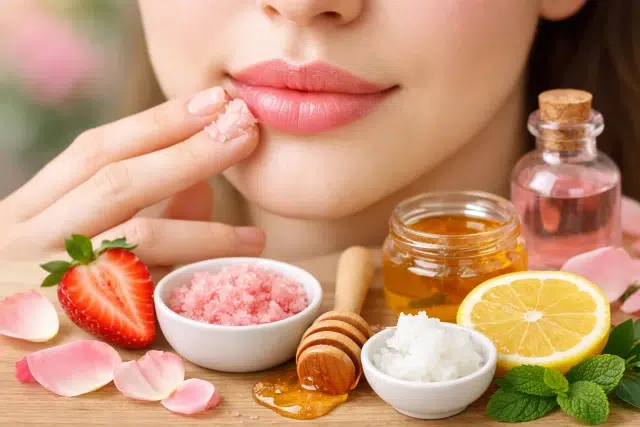
If you’ve been searching for how to get pink lips naturally, you’re not alone. Lips can look darker, duller, or patchy for lots of everyday reasons, and most of them have nothing to do with “beauty flaws.” Sun exposure, dehydration, smoking, lip licking, harsh toothpaste flavors, and even the way you exfoliate can slowly change the look of your lips over time.
The good news is that you can often bring back a healthier, naturally pink look with simple home care. Not miracles, not overnight “hacks,” and definitely not painful scrubbing. Just consistent habits and a few safe remedies that support hydration, gentle exfoliation, and protection.
This guide covers 11 safe home remedies plus a practical routine, common mistakes, and a clear “when to see a professional” checklist.
First, what “pink lips” really means (and why lips darken)
Your lips don’t have the same protective layers as the rest of your skin. The outer layer is thinner, they lose moisture quickly, and they’re exposed to sun and irritants all day. When the lip barrier gets stressed, the body may respond with inflammation, dryness, and sometimes extra pigment over time.
Common reasons lips look darker or less pink include:
- UV exposure: The American Academy of Dermatology specifically recommends SPF 30+ on lips and reapplying about every two hours when outdoors.
- Smoking or heat irritation: Tobacco-related irritation can be linked to increased pigmentation in oral tissues, including lips, and clinical literature discusses smoker-related oral pigmentation.
- Chronic lip licking: “Lip licker’s dermatitis” is a real condition caused by repeated saliva contact irritating the skin around the lips.
- Irritant or allergic contact reactions: Lip dermatitis can be triggered by products like lip balms, lipsticks, toothpaste, and mouthwash, and by habits like biting or licking.
- Friction and over-exfoliation: Too much rubbing can cause inflammation, which can lead to uneven tone.
Before you jump into remedies, it helps to set expectations: if your lips are naturally more pigmented (very common, especially in deeper skin tones), the goal is usually “healthier and more even-toned” rather than a totally different lip color.
How to get pink lips naturally: what actually works at home
How to get pink lips, here’s what home remedies can realistically do:
- Smooth away dead skin so lips look brighter
- Improve hydration so lips reflect light better (they look healthier)
- Calm irritation so tone evens out
- Prevent further darkening by protecting the barrier and using SPF
And here’s what they cannot do:
- Instantly remove deep, long-standing pigmentation
- Replace medical evaluation when darkening is sudden, patchy, or changing rapidly
Now let’s get into the 11 safe home remedies that help most people when used consistently.
The 11 safe home remedies that actually work
1) Honey overnight mask (simple and underrated)
Honey is a classic because it’s soothing and helps trap moisture. Think of it like a protective “seal” for dryness.
How to use
- Apply a thin layer of plain honey before bed.
- Leave it on for 15 to 30 minutes, or overnight if comfortable.
- Rinse with lukewarm water in the morning.
Best for: chapped, flaky lips that look dull rather than truly hyperpigmented.
2) Aloe vera gel for irritation and dryness
Aloe feels cooling and can help when lips look darker due to irritation or mild inflammation.
How to use
- Use pure aloe vera gel (as simple as possible).
- Apply a small amount 1 to 2 times daily.
- Follow with a bland, fragrance-free balm to lock it in.
Best for: lips that sting, feel tight, or peel easily.
3) Glycerin at night for deep hydration
Glycerin is a humectant, meaning it pulls water into the skin and helps lips look plumper and healthier.
How to use
- Dab a tiny amount of vegetable glycerin on lips.
- Top with petroleum jelly to prevent moisture loss.
- Do this nightly for 1 to 2 weeks.
Best for: chronic dryness and “grayish” looking lips from dehydration.
4) Petroleum jelly barrier repair (the boring hero)
If you only do one thing, do this. Petroleum jelly is one of the most reliable barrier protectors for dry lips.
How to use
- Apply a thin layer after brushing, after meals, and before bed.
- Keep one at your desk and one in your bag.
Best for: dryness, cracking, and preventing irritation cycles that lead to uneven tone.
5) Soft toothbrush exfoliation (once or twice a week max)
Exfoliation helps, but only if it’s gentle. Harsh scrubs can backfire by causing irritation.
How to use
- After a shower, use a soft toothbrush and lightly buff lips for 10 to 15 seconds.
- Immediately apply a thick balm.
Best for: flaky buildup that makes lips look darker.
Avoid: doing this daily. Overdoing exfoliation can trigger irritation and uneven pigmentation.
6) Oatmeal paste scrub (gentle, not gritty)
Oatmeal is a softer option than sugar scrubs and feels kinder on sensitive lips.
How to use
- Mix finely ground oats with water or milk to form a paste.
- Massage gently for 15 to 20 seconds.
- Rinse and apply balm right away.
Best for: sensitive lips that don’t tolerate gritty scrubs.
7) Coconut oil or olive oil massage (micro-circulation boost)
A simple oil massage improves softness and gives a naturally healthier look. This is not “whitening,” it’s hydration plus gentle care.
How to use
- Warm a drop between fingertips.
- Massage lips for 30 seconds.
- Wipe excess and apply balm if needed.
Best for: rough texture, dryness, and dullness.
8) Cucumber juice dab (cooling and hydrating)
Cucumber is mostly water and can feel soothing when lips are dry or irritated.
How to use
- Rub a chilled cucumber slice on lips for 1 to 2 minutes.
- Let it sit, then apply balm.
Best for: temporary freshness and hydration, especially in hot weather.
9) Milk or yogurt dab (gentle “softening” step)
Milk and yogurt contain lactic acid in small amounts. On lips, the goal is gentle softening rather than active peeling.
How to use
- Dip cotton in cold milk or plain yogurt.
- Dab on lips for 2 to 3 minutes.
- Rinse and moisturize.
Best for: mild dullness and dryness.
10) Green tea compress (calming and habit-friendly)
If your lips are irritated from weather, products, or frequent licking, calming steps help more than aggressive “brightening.”
How to use
- Brew green tea, cool it.
- Press the cool tea bag on lips for 2 to 3 minutes.
- Apply balm afterward.
Best for: stressed lips, especially during winter or allergy season.
11) The “SPF lip balm” remedy (the one that prevents relapse)
People skip this, then wonder why the darkness returns. UV exposure can keep lips looking darker and drier. The AAD recommends a lip balm or lipstick with SPF 30 or higher, and reapplying about every two hours while outdoors.
How to use
- Apply SPF lip balm every morning.
- Reapply during the day when outside.
Best for: everyone, especially if you spend time outdoors, drive a lot, or sit near windows.
A simple weekly plan (so you actually stick to it)
Here’s a realistic schedule that doesn’t overdo anything.
| Day | Morning | Night |
|---|---|---|
| Mon | SPF lip balm | Honey mask + balm |
| Tue | SPF lip balm | Glycerin + petroleum jelly |
| Wed | SPF lip balm | Aloe + balm |
| Thu | SPF lip balm | Oil massage + balm |
| Fri | SPF lip balm | Honey mask + balm |
| Sat | SPF lip balm | Gentle exfoliation + thick balm |
| Sun | SPF lip balm | Green tea compress + balm |
Consistency beats intensity. If your lips feel sore, tight, or more sensitive, scale back exfoliation and focus on barrier repair.
Small habits that make a big difference (and stop darkening)
Stop the “lip licking loop”
Lip licker’s dermatitis happens when saliva repeatedly irritates the lips and surrounding skin. It’s a cycle: dryness leads to licking, and licking leads to more irritation and dryness.
A practical trick: every time you feel the urge to lick, apply balm instead.
Check your toothpaste and mouthwash
Mint, cinnamon flavoring, whitening agents, and strong detergents can irritate some people. If you notice your lips sting after brushing, try a gentler toothpaste for two weeks and see if it improves.
Don’t over-exfoliate
If your lips are darker from irritation, scrubbing makes it worse. Use gentle exfoliation no more than 1 to 2 times weekly and moisturize immediately afterward.
Treat lip dermatitis seriously
“Eczema on the lips” (lip dermatitis) can be triggered by allergens and irritants in products or habits like licking and biting.
If you have redness, scaling, cracking, or burning that doesn’t calm down, focus on bland moisturizers and remove potential triggers.
If you smoke, expect slower progress
Clinical literature describes oral pigmentation linked to tobacco irritation, and smoking is commonly discussed as a contributor to oral mucosal pigmentation changes.
Even if you do everything else perfectly, ongoing smoke and heat exposure can keep lips looking darker.
Common questions people ask (FAQ)
How long does it take to see results?
For dryness-related dullness, many people notice improvement in 7 to 14 days with consistent moisturizing and SPF. For longer-term pigmentation, it can take several weeks to a few months, depending on triggers like sun exposure, irritation, or smoking.
Is lemon safe for lips?
It’s popular online, but for many people it’s too acidic and can irritate lips, especially if there are tiny cracks. Irritation can worsen uneven tone, so it’s not a great “safe home remedy” choice for most.
Are sugar scrubs good for pink lips?
They can be, but only gently and only occasionally. A gritty scrub plus hard rubbing can create micro-irritation. If you like scrubs, consider oatmeal instead, and always moisturize afterward.
Why do my lips look darker even though I drink water?
Hydration helps, but lips also need a topical barrier. The lips lose moisture quickly, and without a balm, they can stay dry and dull.
When should I see a dermatologist or dentist?
Get checked if you notice:
- A new dark spot that grows or changes
- Patchy or uneven pigment that appears suddenly
- Persistent cracking, bleeding, or pain
- Darkening linked to a new medication or product
- Any lesion that doesn’t improve after 2 to 3 weeks of gentle care
Oral and lip pigmentation can have many causes, and some pigmented lesions need proper evaluation.
A realistic “pink lips naturally” routine you can follow daily
If you want the most effective, low-effort approach, do this:
Morning
- Rinse lips with water (no scrubbing).
- Apply a hydrating balm.
- Apply SPF 30+ lip balm and keep it with you.
Daytime
- Reapply balm after meals.
- If you’re outdoors, reapply SPF lip balm regularly.
Night
- If lips are flaky, use a warm washcloth (press, don’t rub).
- Apply honey or glycerin.
- Seal with petroleum jelly.
This routine works because it protects the lip barrier, reduces irritation, and prevents UV-driven darkening.
Conclusion
If you’re working on how to get pink lips naturally, think in terms of lip health first. When the barrier is hydrated, protected, and not constantly irritated, your natural lip tone tends to look more even and more “pink” on its own. Start with the basics: repair with petroleum jelly, calm irritation, exfoliate gently once or twice a week, and make SPF lip balm a daily habit. Then use 1 to 2 remedies consistently instead of trying all 11 at once.
And if your lip color changes suddenly, becomes patchy, or comes with persistent irritation, it’s worth getting it checked. Many pigment changes are harmless, but it’s always better to be sure, especially when oral tissues are involved. In the last few weeks of your routine, stay focused on protection and barrier repair, because that’s what helps keep melanin pigment from being triggered by irritation and sun exposure in the first place: melanin pigment.