Key Takeaways
- Always confirm your appliance’s model number before buying replacement parts.
- Compare OEM and aftermarket parts to choose based on quality, price, and compatibility.
- Commit to regular appliance maintenance to avoid frequent breakdowns.
Home appliances play a vital role in our daily lives. When a microwave, refrigerator, or washing machine malfunctions, it disrupts the entire household routine. Selecting the correct replacement parts is key to restoring functionality, saving money, and extending the life of your appliances. Before making any purchase, it is essential to understand your options, learn where to source dependable parts, and know how replacement choices can impact long-term maintenance. For Samsung appliance owners, Samsungparts is a trusted source for genuine parts designed for a perfect fit and reliable performance.
Well-maintained appliances not only perform better but are also more energy efficient, resulting in fewer breakdowns and significant cost savings over time. Taking a thoughtful, informed approach to appliance repair empowers you to guide your household toward efficient operation for years to come.
Identifying the Right Replacement Part
Choosing the right component for your appliance begins with identifying exactly what needs to be replaced. Start by finding the model number on the door, under the lid, or on the back panel. For example, refrigerator model numbers are often located inside the main compartment or behind crisper drawers. This information is crucial when searching for compatible parts because even small differences between models can affect fit and function.
Your owner’s manual will usually have a list of replaceable parts and their part numbers. Taking a photo of the faulty part or comparing it directly with online images can also help confirm that you are selecting the right replacement. If you have difficulty finding model information, sites such as Consumer Reports can help you locate part numbers and model specifics for all major brands.
OEM vs. Aftermarket Parts
Replacement parts typically come in two forms: Original Equipment Manufacturer (OEM) parts and aftermarket parts. OEM parts are made by the appliance’s manufacturer and guarantee the highest level of compatibility. Purchasing OEM parts ensures a precise fit and performance that matches the original specification. This is especially important for appliances that require tightly integrated components, such as familiar washers or ovens.
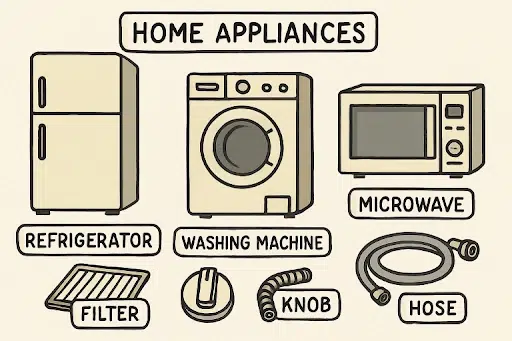
Aftermarket parts, while often more affordable, are manufactured by third-party companies. Quality can vary between brands. Some third-party parts work as well as, or better than, OEM parts. However, it’s important to carefully check that aftermarket parts are fully compatible with your specific model. Read reviews from trusted sources and check forums for user experiences before buying to avoid issues with poor fit or quality.
Where to Purchase Replacement Parts
You have several options for sourcing appliance replacement parts. Each has distinct advantages depending on your preferences for price, convenience, and expert support:
- Manufacturer Websites: Purchasing directly from the manufacturer ensures you receive genuine, precisely matching parts for your model.
- Authorized Dealers and Local Repair Shops: These sources offer expert advice and often carry parts for common brands and models. They can also help you verify compatibility.
- Major Online Retailers: E-commerce sites such as Amazon or Home Depot provide vast selections, often at competitive prices. Be sure to check the seller’s ratings and verify the part numbers against your appliance model to avoid compatibility issues.
- Brand-Specific Platforms: If you are seeking specialized or unique components, using authorized options such as Samsung Parts ensures authenticity and support specific to your appliance.
Ensuring Compatibility and Quality
Nothing is more frustrating than realizing a replacement part does not fit after it arrives. To prevent this, always cross-reference the make, model, and part number carefully before making a purchase. Select reputable brands recognized for high-quality materials and manufacturing standards to guarantee durability.
Customer reviews, expert opinions, and consumer guides, such as those in Consumer Reports, can provide valuable insights into the reliability and value of both OEM and aftermarket parts. When possible, consult an appliance repair professional or seek advice at a specialized appliance parts store for further reassurance.
Installation: DIY or Professional Help?
The decision between DIY installation and professional repair often depends on your technical skill and the complexity of the job. Swapping out basic components such as shelves, knobs, or simple filters can usually be done with everyday tools and minimal expertise. However, tasks involving electrical wiring, gas lines, or intricate electronics should be left to licensed technicians to ensure safety and warranty compliance.
If you’re unsure about a repair, resources like the Consumer Reports website provide comprehensive step-by-step guides for many common appliance problems, helping you gauge when to call in a professional.
Maintaining Your Appliances
Proper maintenance is the best way to reduce repair frequency and prolong the operational life of your appliances. This includes routine filter cleaning, inspection of hoses and seals for damage, and adherence to the manufacturer’s care guidelines. Regularly defrosting freezers, descaling washing machines, and unclogging dryer vents help reduce wear and maximize energy efficiency, reducing the risk of unexpected breakdowns.
Environmental Considerations
In addition to saving money, repairing and maintaining appliances has a positive impact on the environment. By extending the lifespan of your equipment, you help reduce landfill waste and conserve the resources and energy necessary to produce new appliances. For a sustainable household, prioritize repair and good maintenance practices whenever possible.
With careful selection and consistent maintenance of replacement parts, your home appliances can remain reliable, efficient, and environmentally friendly for years to come, ensuring a stress-free, cost-effective household.