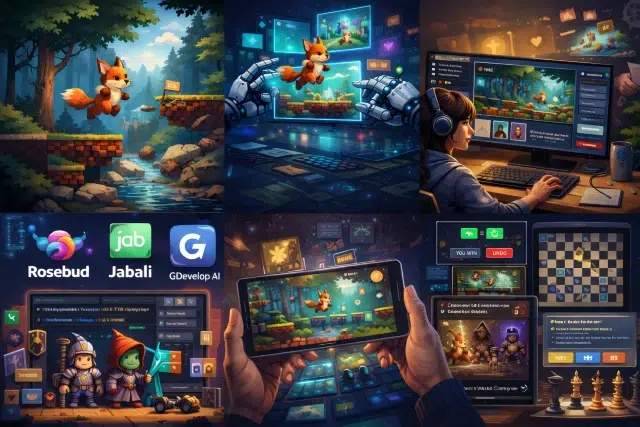
Casual gaming used to be simple. It meant a quick round of cards, a basic puzzle, or a few minutes spent stacking falling blocks. The mechanics were static, the opponents were predictable, and the experience was identical for everyone. That era is fading fast.
Artificial Intelligence (AI) has quietly moved from the background of high-budget console titles into the browser windows and mobile apps we use every day. AI games are reshaping how we interact with digital entertainment, making casual experiences smarter, more responsive, and significantly more engaging.
This shift isn’t just about better graphics or smarter opponents. It is about accessibility and personalization. AI is actively lowering the barrier to entry, ensuring that finding a game, understanding the rules, and enjoying a session with friends is smoother than ever before. Whether you are looking for online free games to pass the time like stickman anchor or a way to connect with a distant friend, the technology running the show has evolved.
The Basics of AI in Casual Games
When most people hear “AI in gaming,” they think of sci-fi robots or unbeatable computer opponents. However, in the realm of casual online gaming, AI acts more like a dungeon master or a concierge. It works behind the scenes to tailor the experience to the player.
Intelligent Matchmaking
One of the most significant frustrations in online gaming is the skill gap. New players often find themselves crushed by veterans, while experienced players get bored with easy wins. AI solves this through intelligent matchmaking.
Rather than just pairing players randomly, modern algorithms analyze behavior, reaction times, and win rates. They create lobbies where everyone has a fair shot at winning. This is crucial when you want to play with friends online who might have different skill levels. The AI can adjust handicaps or game parameters in real-time to keep the playing field level, ensuring the social experience remains fun rather than competitive to the point of frustration.
Dynamic Difficulty Adjustment
Have you ever played a game that felt like it was reading your mind? If you failed a level three times, suddenly the fourth try felt slightly easier. That is Dynamic Difficulty Adjustment (DDA). AI monitors your performance and subtly tweaks the game’s rules — slowing down enemies, increasing power-up drop rates, or offering hints — to keep you in the “flow state.” It ensures the game remains challenging enough to be interesting, but not so hard that you quit.
The Rise of AI-Powered Online Free Games
The best part of this technological revolution is that it doesn’t require expensive hardware. The processing power for these AI systems often lives in the cloud, meaning sophisticated gaming experiences are available as online games no download required.
Text-Based Adventures and Narrative
The text adventure genre has seen a massive resurgence thanks to Large Language Models (LLMs). Unlike old games that relied on pre-written scripts, new AI games generate stories on the fly. You can type anything — “I try to bribe the dragon with a sandwich” — and the AI understands the context, generates a plausible reaction, and continues the story. These viral games offer infinite replayability because no two playthroughs are ever the same.
Procedural Puzzle Generation
Casual puzzle games are also benefiting from AI. instead of a developer manually designing 100 levels, an AI can generate thousands of unique puzzles based on specific rules of logic and difficulty. This ensures that content never runs out. For players who love logic puzzles or word games, this means a daily supply of fresh challenges that are generated instantly within their web browser.
Creative Collaboration
Some of the most popular casual games involve creativity, such as drawing or guessing games. AI is now participating as a player. You might draw a scribble, and the AI attempts to guess what it is, or the AI might generate an image based on a prompt for you to describe. These interactions bridge the gap between human creativity and machine interpretation, leading to hilarious and viral results.
Social Aspects: AI on Social Gaming Platforms
Gaming is inherently social, and AI is enhancing how we connect. The goal of social gaming platforms is to reduce friction — to get you from “bored” to “playing with friends” as quickly as possible.
Bot-Assisted Multiplayer
Empty lobbies kill games. If you want to play a multiplayer card game but only two other people are online, the wait can be excruciating. AI fills these gaps with bots that behave like humans. Advanced bots can mimic human reaction times and even make “human” mistakes, making the game feel populated and lively until more real players join. This ensures that online games no download are always ready to play, 24/7.
Enhanced Communication and Moderation
Toxic behavior is the quickest way to ruin a casual gaming session. AI creates safer social spaces by monitoring chat in real-time. Natural Language Processing (NLP) can detect bullying, harassment, or offensive language faster and more accurately than human moderators. This allows platforms to maintain a friendly, welcoming atmosphere where people feel comfortable chatting and connecting.
Furthermore, AI is breaking down language barriers. Real-time translation tools in game chat allow a player in Brazil to coordinate with a player in Japan seamlessly. The AI translates the strategic intent, not just the words, making global social gaming a reality.
Challenges and the Future of AI in Viral Games
While the integration of AI into casual gaming offers immense benefits, it is not without hurdles. As these games become smarter, developers and players face new questions regarding ethics and quality.
The Authenticity Problem
As bots become indistinguishable from humans, players may begin to wonder who they are actually playing against. If you think you are outsmarting a human opponent, but it turns out to be an algorithm designed to let you win, the victory feels hollow. Transparency will be key. Platforms will need to be clear about when players are engaging with AI versus real people to maintain trust.
Data Privacy
AI learns from data. To provide personalized experiences, games need to track play styles, chat patterns, and preferences. Ensuring this data is used responsibly and securely is paramount. Players need assurance that their casual gaming habits aren’t being exploited for invasive advertising or data brokering.
The Future: Endless Personalized Content
Looking ahead, the future of AI games is hyper-personalization. We are moving toward a world where a game can build itself around you. Imagine a platformer that analyzes your reflexes and builds a level specifically designed to challenge your specific weak points, or a narrative game that incorporates your real-world interests into the plot.
We will likely see a surge in “co-creation” games, where players and AI work together to build game worlds. You might describe a rule set or a visual style, and the AI builds the game code instantly, allowing you to share your creation with friends in seconds.
A Smarter Way to Play
The revolution in casual online gaming is quiet, but it is changing everything. By removing technical barriers and smoothing out the social friction of multiplayer experiences, AI is making gaming more human, oddly enough. It allows us to connect faster, play fairer, and access infinite content without needing a high-end console.
Whether you are looking for a quick distraction or a way to hang out with friends virtually, the new wave of AI-enhanced titles offers something unique. The next time you load up a browser game, take a moment to notice the seamless matchmaking or the clever level design. You aren’t just playing a game; you are interacting with a system designed to make fun accessible to everyone.