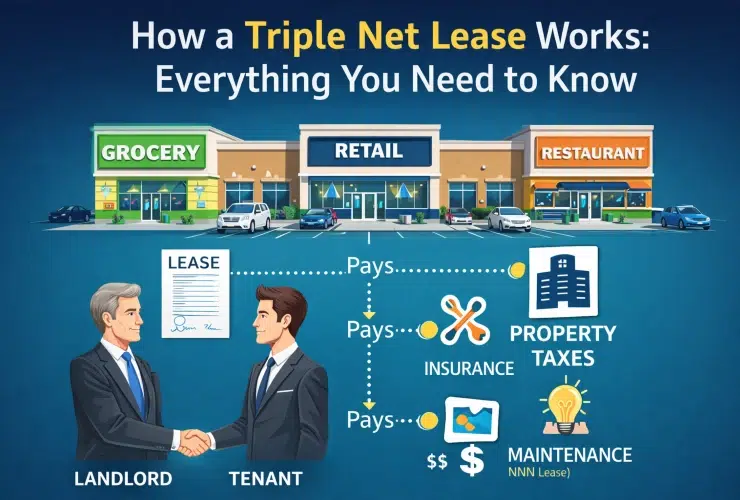
A Triple Net Lease is one of the most common and investor-friendly lease structures in commercial real estate. If you’ve ever looked into owning or leasing retail, office, or industrial property, you’ve likely come across the term NNN lease.
In simple terms, a Triple Net Lease shifts most property-related expenses from the landlord to the tenant. This structure can create predictable income for property owners and long-term stability for tenants — but it’s not without trade-offs.
In this comprehensive guide, you’ll learn exactly how a Triple Net Lease works, what costs are involved, real-world examples, advantages and disadvantages, and whether it’s the right fit for your investment or business strategy.
What Is a Triple Net Lease (NNN Lease)?
A Triple Net Lease (NNN) is a commercial lease agreement where the tenant is responsible for three major expense categories, in addition to base rent:
- Property Taxes
- Property Insurance
- Maintenance and Repairs
These three expenses are commonly referred to as the “nets,” which is where the term Triple Net comes from.
Triple Net Lease Definition (Featured Snippet Ready)
A Triple Net Lease is a commercial lease in which the tenant pays rent plus property taxes, insurance, and maintenance costs, significantly reducing the landlord’s financial responsibilities.
How a Triple Net Lease Works (Step-by-Step)
Understanding how a Triple Net Lease works is easiest when broken down into its core components.
1. Base Rent
The tenant pays a fixed base rent to the landlord, usually quoted on a per-square-foot, per-year basis.
- Example: $25 per square foot annually
- 4,000 sq. ft. property = $100,000/year base rent
2. Property Taxes (First “Net”)
The tenant pays all real estate taxes assessed on the property, either directly to the municipality or reimbursed to the landlord.
- Taxes often increase over time
- Leases typically include clauses addressing reassessment risk
3. Insurance (Second “Net”)
Tenants cover the cost of insuring the building, including:
- Property insurance
- Liability insurance
- Sometimes business interruption insurance
4. Maintenance & Repairs (Third “Net”)
This includes ongoing and long-term maintenance such as:
- Roof repairs
- HVAC systems
- Parking lots
- Structural components (depending on lease terms)
Key Insight: In many NNN leases, landlords have minimal day-to-day responsibilities once the lease is signed.
Triple Net Lease vs Other Commercial Lease Types
| Lease Type | Tenant Pays | Landlord Pays |
|---|---|---|
| Gross Lease | Rent only | Taxes, insurance, maintenance |
| Modified Gross Lease | Rent + some expenses | Shared costs |
| Double Net Lease (NN) | Rent + taxes + insurance | Maintenance |
| Triple Net Lease (NNN) | Rent + taxes + insurance + maintenance | Very little |
Compared to other lease structures, the Triple Net Lease places the greatest financial responsibility on the tenant.
Common Triple Net Lease Property Types
Triple Net Leases are most commonly used for properties occupied by single tenants, especially in retail and industrial sectors.
Typical NNN Properties Include:
- Fast food restaurants (McDonald’s, Chick-fil-A)
- Drugstores (CVS, Walgreens)
- Banks
- Dollar stores
- Auto parts stores
- Industrial warehouses
These tenants often prefer NNN leases because they want full control over the property and long-term occupancy.
Advantages of a Triple Net Lease for Landlords
For property owners, the Triple Net Lease is highly attractive — especially for passive investors.
Key Benefits:
- Predictable Cash Flow
Minimal expense variability improves income stability. - Low Management Responsibility
Tenants handle most operational issues. - Inflation Protection
Taxes and insurance increases are passed through to tenants. - Long-Term Leases
Many NNN leases last 10–25 years with built-in rent escalations. - Strong Resale Value
NNN properties with credit tenants are highly liquid investment assets.
According to CBRE, single-tenant NNN properties are among the most traded assets in U.S. commercial real estate due to their stability.
Disadvantages of a Triple Net Lease for Landlords
Despite its benefits, a Triple Net Lease is not risk-free.
Potential Downsides:
- Tenant Default Risk
If the tenant fails, re-tenanting can be costly. - Limited Upside
Rent increases are often capped or fixed. - Property Condition Risk
Poor tenant maintenance can impact long-term value. - Market Dependency
Single-tenant properties rely heavily on tenant creditworthiness.
Advantages of a Triple Net Lease for Tenants
From a tenant’s perspective, Triple Net Leases offer control and predictability.
Why Tenants Choose NNN Leases:
- Full operational control of the property
- Long-term occupancy security
- Customization flexibility
- Stable rental costs over time
For national brands, this structure aligns well with standardized operations.
Disadvantages of a Triple Net Lease for Tenants
Tenants must carefully evaluate the true cost of a Triple Net Lease.
Tenant Risks Include:
- Unexpected maintenance expenses
- Rising property taxes
- Insurance premium increases
- Long-term financial commitment
Tip: Tenants should always conduct property condition assessments before signing an NNN lease.
Real-World Triple Net Lease Example
Example Scenario:
- Tenant: National coffee chain
- Property Size: 3,200 sq. ft.
- Base Rent: $30/sq. ft. = $96,000/year
- Property Taxes: $12,000/year
- Insurance: $4,000/year
- Maintenance: $8,000/year
Total Annual Cost to Tenant:
👉 $120,000
Landlord Net Income:
👉 $96,000 (before financing)
This illustrates why Triple Net Leases are often described as “mailbox money” for investors.
Triple Net Lease Cap Rates Explained
A capitalization rate (cap rate) measures investment return.
- Lower cap rate = lower risk, higher price
- Higher cap rate = higher risk, lower price
NNN properties leased to strong tenants often trade at 4%–6% cap rates, according to Marcus & Millichap market reports.
What to Look for in a Triple Net Lease Investment
If you’re evaluating a Triple Net Lease property, focus on these factors:
Investor Checklist:
- Tenant credit rating
- Lease length and renewal options
- Rent escalation clauses
- Property location and visibility
- Remaining useful life of major systems
Triple Net Lease FAQs
Is a Triple Net Lease good for beginners?
Yes, many beginner investors prefer Triple Net Leases due to low management responsibilities, but due diligence is critical.
Who pays for the roof in a Triple Net Lease?
Typically the tenant pays, but this depends on lease language. Always review responsibility clauses.
Are Triple Net Leases negotiable?
Yes. Maintenance scope, rent escalations, and expense caps are often negotiable.
What does NNN mean in real estate?
NNN stands for Triple Net, referring to taxes, insurance, and maintenance paid by the tenant.
Conclusion: Is a Triple Net Lease Right for You?
A Triple Net Lease offers a powerful combination of predictable income, reduced landlord responsibility, and long-term stability. For investors seeking passive income and tenants seeking control, NNN leases can be a win-win — when structured correctly.
However, success with a Triple Net Lease depends on tenant quality, lease terms, and property fundamentals. Whether you’re investing or leasing, understanding how a Triple Net Lease works is essential before signing on the dotted line.
If approached strategically, a Triple Net Lease can be one of the most efficient tools in commercial real estate investing.