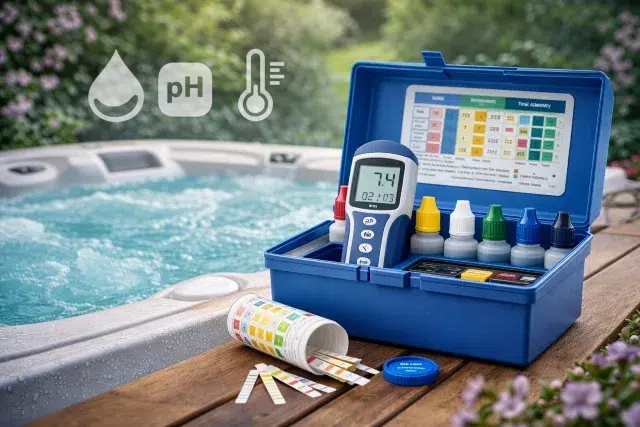
Owning a hot tub is supposed to feel like a mini vacation in your backyard, not a part time chemistry class. But here’s the truth: if you don’t test your water, you’re basically guessing, and guessing leads to cloudy water, irritated skin, damaged equipment, and occasionally some pretty nasty germs.
That’s why a Hot Tub Water Tester Kit is the first tool every new spa owner should buy and actually use. In this beginner’s guide, I’ll walk you through what a Hot Tub Water Tester Kit measures, how to use it without overthinking, what “good” numbers look like, and how to fix common water problems fast.
Why testing hot tub water matters more than most beginners think
Hot tubs are not like pools. They’re smaller, hotter, and get a lot more “bather load” in a tight space. Warm water also makes sanitizers break down faster, which can give bacteria a better chance to multiply if your levels drift. Health guidance for hot tubs often calls out maintaining proper sanitizer and pH because low disinfectant is a major contributor to illness risk.
And it’s not just theory. CDC surveillance reports show outbreaks linked to treated recreational water venues (including hot tubs and spas). For 2015 to 2019 alone, CDC reported 208 outbreaks associated with treated recreational water, with pathogens like Cryptosporidium and Legionella among the causes.
A Hot Tub Water Tester Kit is basically your early warning system. It helps you catch small imbalances before they turn into a full drain and refill situation.
What a Hot Tub Water Tester Kit actually tests
A good Hot Tub Water Tester Kit usually checks a mix of “sanitation” and “balance” readings. Sanitation keeps water safe. Balance keeps water comfortable and protects your spa parts.
Here are the most common parameters:
- Sanitizer level (chlorine or bromine)
- pH
- Total alkalinity
- Calcium hardness
- Sometimes: cyanuric acid, total chlorine, salt, phosphates, or metals
The beginner friendly cheat sheet: ideal target ranges
Different brands and hot tubs vary a bit, but these ranges are widely used and align with major public health guidance for residential pools and hot tubs.
CDC recommends:
- pH: 7.0 to 7.8
- Free chlorine: at least 1 ppm in pools and at least 3 ppm in hot tubs
CDC also notes not to use cyanuric acid in hot tubs/spas because it can reduce chlorine’s effectiveness in this high temperature environment.
Here’s a practical table you can save or screenshot.
| What you test | What it does | Common “good” range | If it’s too low | If it’s too high |
|---|---|---|---|---|
| Free chlorine (or bromine) | Kills germs and prevents biofilm | Chlorine: 3 ppm minimum (hot tubs) | Germ risk, cloudy water, odor | Irritation, fading swimsuits, harsh smell |
| pH | Comfort + sanitizer effectiveness | 7.0 to 7.8 | Stinging eyes, corrosion | Scale, cloudy water, weaker sanitation |
| Total alkalinity | Buffers pH so it doesn’t swing | Often targeted around 80 to 120 ppm | pH bounce, corrosion risk | pH hard to adjust, scale risk |
| Calcium hardness | Prevents foaming, protects surfaces | Often targeted around 150 to 250 ppm | Foaming, corrosion | Scale, cloudy water, crusty ring |
For alkalinity guidance, the Pool & Hot Tub Alliance discusses how total alkalinity buffers pH and helps prevent scaling or etching when kept within recommended ranges.
Types of Hot Tub Water Tester Kit options (and how to choose)
Not every Hot Tub Water Tester Kit fits every person. Some people love precision. Some want speed. The right choice is the one you’ll actually use.
1) Test strips (fastest and easiest)
Test strips are the most beginner friendly Hot Tub Water Tester Kit option. Dip, shake once, wait, compare colors.
Pros:
- Cheap and quick
- Great for daily or every other day checks
- Easy to store
Cons:
- Less precise than drop titration
- Colors can be misread in bad lighting
- Strips can degrade if the bottle is left open or stored in humidity
If you’re using strips, follow a consistent routine: same dipping time, same water depth, same wait time, and check colors in daylight when possible. Many reputable spa brands publish similar strip reading steps.
2) Liquid drop test kits (more accurate, still doable)
A drop based Hot Tub Water Tester Kit uses reagents and color changes. It takes longer than strips, but you get tighter accuracy and more control when troubleshooting.
Best for:
- Anyone who hates guessing
- People battling recurring cloudy water or scale
- Homes with heavy hot tub use
3) Digital photometers (premium convenience)
Digital readers can be very accurate, but they cost more and require clean sample handling. If you go digital, buy from a known pool/spa testing brand and follow the calibration and storage rules like your results depend on it, because they do.
How to use a Hot Tub Water Tester Kit correctly (without overthinking)
Most “bad readings” are really “bad testing.”
Use this simple routine.
Step 1: Take the sample from the right spot
- Run the jets 2 to 5 minutes to mix the water
- Take water from elbow depth, away from the filter return
Step 2: Test at the right time
Avoid testing:
- Right after adding chemicals
- Right after a big soak session
- Right after shocking
If you did add chemicals, give the tub time to circulate. If you shocked heavily, readings may look weird for a while.
Step 3: Follow the kit timing exactly
With any Hot Tub Water Tester Kit, timing matters.
- Strips: match the color at the time listed on the bottle
- Drops: count drops carefully and swirl consistently
- Digital: use clean vials and avoid fingerprints on the reading window
Step 4: Log results for 2 weeks
This is the “secret weapon” most beginners skip. When you log results, patterns jump out:
- pH climbing every day means alkalinity is probably high
- sanitizer dropping fast usually means high bather load or not enough baseline dosing
- foam hints at low calcium hardness or buildup from lotions
You can use a notes app. No fancy spreadsheet required.
The easiest beginner plan for testing frequency
Here’s a realistic schedule that keeps your water stable without making hot tub care your personality.
- Before most soaks: quick sanitizer + pH check (strips)
- 2 to 3 times per week: full strip panel (sanitizer, pH, alkalinity, hardness)
- Weekly: confirm strip readings with a drop based Hot Tub Water Tester Kit if you have one, especially alkalinity and hardness
- After parties or heavy use: test the next morning
CDC’s public pool and hot tub operational guidance emphasizes regular testing of disinfectant and pH, and notes heavier use requires more frequent checks.
What to do when your numbers are off (common fixes that actually work)
Let’s make this practical. Below are the most common “new hot tub owner” situations and what a Hot Tub Water Tester Kit will typically show.
Scenario 1: Cloudy water that won’t clear
Common causes:
- Low sanitizer
- High pH or high alkalinity
- Dirty filter
- Too many dissolved solids from heavy use
Quick fix checklist:
- Test sanitizer and pH first using your Hot Tub Water Tester Kit
- Bring sanitizer back into range
- Clean the filter
- Shock if needed (follow your sanitizer system instructions)
- Re test after circulation
Scenario 2: Strong “chlorine smell” but readings show low chlorine
This surprises people. A strong smell often means chloramines (combined chlorine) rather than healthy free chlorine. In plain English: the chlorine is “used up.”
Typical fix:
- Shock the water to break up combined chlorine
- Improve filtration and bather hygiene
- Re test with your Hot Tub Water Tester Kit after circulation
Scenario 3: Itchy skin or irritated eyes
Common causes:
- pH out of range
- sanitizer too high
- buildup from lotions, detergents, or poor rinsing
Fix:
- Use the Hot Tub Water Tester Kit to confirm pH and sanitizer
- Adjust gradually, not with giant chemical dumps
- If the water is old and stubborn, a drain and refill is sometimes the real answer
Scenario 4: Hot tub rash anxiety (yes, it’s a thing)
“Hot tub rash” is commonly linked to Pseudomonas aeruginosa and is more likely when disinfectant and pH are not properly maintained. CDC specifically recommends checking disinfectant level and pH (including with test strips) and keeping hot tubs at at least 3 ppm chlorine with pH in the recommended range.
If you’re renting a cabin or using a hotel hot tub, you can still use a travel size Hot Tub Water Tester Kit strip pack to check quickly.
A simple order of operations for balancing water (the part everyone messes up)
If you adjust things in the wrong order, you’ll feel like your water is “fighting you.” Use this order and you’ll save money and frustration.
- Total alkalinity first
- pH second
- Calcium hardness third
- Sanitizer last, then maintain daily
Why? Total alkalinity acts like a pH stabilizer. If it’s off, pH tends to swing. Industry guidance explains alkalinity’s role as a buffer that helps prevent pH from moving too quickly.
What should a beginner look for when buying a Hot Tub Water Tester Kit?
If you’re shopping for your first Hot Tub Water Tester Kit, here’s what matters most.
Must have tests
- Chlorine or bromine (whichever you use)
- pH
- Total alkalinity
- Calcium hardness
Nice to have tests
- Total chlorine (helpful for combined chlorine clues)
- Cyanuric acid (mostly for pools, not ideal for hot tubs per CDC guidance)
- Metals (if you’re on well water)
- Salt (if you run a salt system)
Packaging details that make life easier
- Clear instructions with pictures
- A bold, easy color chart
- Refill availability
- A bottle or case that actually seals
And one very human tip: buy two types if you can.
- Strips for quick checks
- A drop based Hot Tub Water Tester Kit for weekly accuracy and troubleshooting
Beginner mistakes that quietly ruin hot tub water
These are common, and fixing them makes everything easier.
- Testing right after adding chemicals (results lie)
- Leaving test strips open (humidity destroys them)
- Chasing pH daily without fixing alkalinity
- Ignoring calcium hardness until scale appears
- Assuming clear water equals safe water
- Not cleaning the filter and blaming chemicals instead
Quick FAQ for real life hot tub ownership
How often should I use a Hot Tub Water Tester Kit?
For most homes, a Hot Tub Water Tester Kit should be used for quick sanitizer and pH checks before regular soaking, and a fuller panel 2 to 3 times per week. Heavier use means more frequent testing.
What’s the most important reading in a Hot Tub Water Tester Kit?
Sanitizer level is the big one because it directly relates to germ control. CDC specifically highlights minimum free chlorine targets for hot tubs.
Can I rely on test strips only?
You can, especially as a beginner, but it helps to confirm occasionally with a drop based Hot Tub Water Tester Kit, particularly if you’re fighting cloudy water, scale, or frequent pH swings.
Why does my sanitizer drop so fast?
Hot tubs run hot, and warm water accelerates sanitizer loss. Add real world factors like sweat, lotions, and multiple bathers, and you can burn through chlorine or bromine quickly. That’s why frequent checks with a Hot Tub Water Tester Kit matter.
Do I really need to test alkalinity and calcium hardness?
Yes, because these protect your equipment and keep pH from acting weird. Total alkalinity is widely described as the buffer that helps stabilize pH.
A quick real world example: the “Friday night crowd” problem
Let’s say you keep your hot tub perfect all week. Then Friday hits: four people, drinks, longer soak time, lots of jets, and nobody showered first.
Saturday morning, your Hot Tub Water Tester Kit might show:
- Sanitizer low or near zero
- pH climbed
- Water slightly cloudy
That doesn’t mean you “failed.” It means your tub reacted exactly like hot water reacts to heavy use. The fix is simple: test, dose sanitizer properly, circulate, clean the filter if needed, and re test.
People who keep spa water consistently clear aren’t lucky. They’re just the ones who check the numbers before the water complains.
Conclusion: the easiest way to keep spa water safe is to stop guessing
A Hot Tub Water Tester Kit turns hot tub care into something calm and predictable. You test, you make small adjustments, and you enjoy clean water that feels good on your skin and stays gentle on your equipment.
If you remember only one thing, make it this: keep your sanitizer and pH in range, and test often enough that you catch problems early. Public health guidance for hot tubs centers on maintaining disinfectant and pH for good reason.
Once you build the habit, water care stops feeling like work. It becomes a two minute routine that protects your spa, your time, and the people soaking with you.
In the long run, understanding basic water chemistry makes your results from a Hot Tub Water Tester Kit feel less like random numbers and more like a simple dashboard you can control.