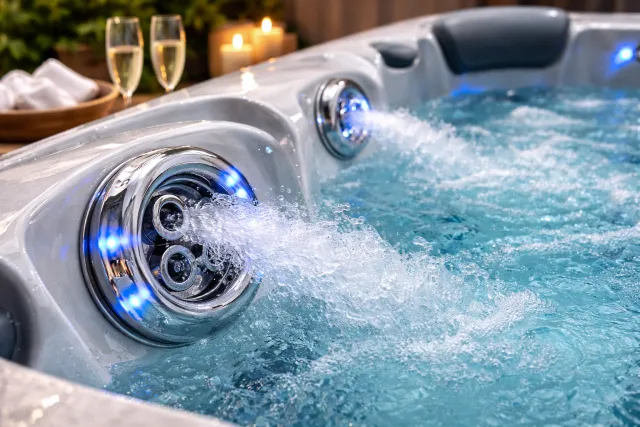
If your spa feels “meh” lately, there’s a good chance the hot tub nozzle is part of the story. That small piece inside the jet is what shapes the water stream, affects pressure, and helps create that satisfying massage effect. When the nozzle is the wrong size, partially clogged, or just poorly designed for how you like to soak, you’ll notice it fast: weak jets, uneven flow, extra noise, or a stream that hits the wrong spot.
This guide walks you through what a hot tub nozzle does, how to choose the right one, and how to get better jet performance without wasting money on mismatched parts. We’ll keep it practical, with plain-English tips you can actually use.
What Is a Hot Tub Nozzle (and Why It Matters)?
A hot tub nozzle is the component that directs and shapes water exiting a jet. Depending on the design, it can create a focused stream, a wider fan pattern, a rotating pulse, or a gentler “softer” flow. In many spas, the nozzle is part of a jet insert assembly, but buyers often refer to the nozzle itself when replacing worn pieces or upgrading jet feel.
Here’s what the right nozzle can change in real life:
- Massage feel: pinpoint vs broad coverage
- Perceived pressure: sharper stream can feel stronger even at the same pump output
- Water and air mix: affects bubbles and “bite” of the jet
- Noise and turbulence: wrong fit can whistle, chatter, or vibrate
- Maintenance needs: some shapes clog faster in hard water environments
And if you use your hot tub to unwind after workouts or long workdays, getting nozzle choice right can turn “nice” into “I didn’t know it could feel this good.”
How Hot Tub Jets and Nozzles Work Together
A hot tub jet system is basically a loop: water gets pulled through filtration, heated, pushed by a pump, then returned through jets. The nozzle is the “exit design” that converts that flow into a specific sensation.
A big part of the experience comes from how water pulls in air (in air-mix jets). Many spa jets rely on a pressure difference to draw air into the stream, creating more bubbles and a punchier feel. If your air is not mixing well, your jets can feel flat even when the pump is fine. Some common causes of weak performance include restricted flow (dirty filter), closed valves, air control issues, or worn jet components.
Signs You Need a New Hot Tub Nozzle
Sometimes nozzles fail dramatically. More often, performance fades slowly and you just get used to it. Watch for these red flags:
- Jets feel weaker even with a clean filter and normal water level
- Stream is uneven, sprays sideways, or has “dead spots”
- Nozzle rattles, spins inconsistently, or keeps popping out
- You see cracks, warping, or discoloration on the nozzle face
- Scaling builds up quickly around jets (common in hard water)
- Air mixing suddenly drops, even when the air control is open
If you suspect water chemistry is part of the issue, it’s worth checking basic targets. CDC guidance for hot tubs includes maintaining disinfectant and pH levels in safe ranges (for example, chlorine at least 3 ppm, bromine 4 to 8 ppm, pH 7.0 to 7.8). Poorly balanced water can speed up wear and buildup on jet parts.
Hot Tub Nozzle Types and What They Feel Like
Not all nozzles are meant to “hit hard.” Some are designed for relaxation, some for deep tissue style pressure, and some for a mix.
Directional (Adjustable) Nozzles
You can aim these. Great for shoulders, lower back, and calves.
Best for:
- People who want control over where the stream hits
- Mixed households where everyone likes different jet angles
Rotating Nozzles
These create a moving stream, often in a circle or oscillating pattern. The sensation is less “needle-like” and more like a kneading motion.
Best for:
- Upper back tension
- People who hate a constant hard point of pressure
Pulsating Nozzles
These alternate pressure in a rhythmic pattern. Some feel like “thumping,” some feel like gentle wave pressure.
Best for:
- Relaxation soaks
- People sensitive to constant high pressure
Micro or Multi-Port Nozzles
Instead of one opening, they have several small outlets. They feel more diffuse and are often used in lounge seats or areas intended for longer sessions.
Best for:
- Longer soaks without “overworking” one muscle group
- People who prefer a softer massage
The Buyer’s Checklist: How to Choose the Right Hot Tub Nozzle
This is where most buyers get stuck. The nozzle looks simple, but compatibility is everything.
1) Match the Brand and Jet Series First
Hot tub parts are rarely universal. Many nozzles are designed for specific jet bodies and inserts. Even a small difference in tabs, thread style, or depth can prevent it from locking properly.
Practical move:
- Find your spa’s make, model, and year
- Identify the jet type or part number on the existing insert
- Compare photos of the back side (not just the front face)
2) Get the Size Right (Face Diameter and Insert Depth)
A nozzle can “look right” but sit too deep or too shallow. That affects sealing and flow.
Measure:
- Face diameter (outer visible ring)
- Depth from face to back (how far it extends into the jet)
- Locking tab style or threads (if present)
3) Choose a Flow Pattern That Matches Your Goal
Ask yourself one honest question: are you chasing stronger pressure, or a better massage feel?
- If you want stronger, sharper pressure, directional single-stream styles often feel strongest.
- If you want less harshness, multi-port or rotating styles are usually more comfortable for long sessions.
4) Consider Water Chemistry and Scaling Risk
Hard water and high calcium can form scale on surfaces and in openings, gradually restricting flow. Industry guidance commonly places spa calcium hardness targets lower than pools (often around 150 to 250 ppm for spas) to reduce issues while still protecting equipment.
If you live in a hard-water area, avoid designs with extremely tiny openings unless you’re disciplined about cleaning and water balance.
5) Look for Certifications and Quality Signals
For safety and performance in pool and spa equipment, NSF testing and certification programs exist for products evaluated against recognized criteria (NSF/ANSI/CAN 50). Not every replacement part will be certified, but being aware of standards helps you avoid the cheapest mystery plastics that warp quickly.
Hot Tub Nozzle Materials: What Holds Up Best?
Materials matter more than people think because hot tubs combine heat, chemicals, and constant water movement.
Here’s a quick comparison.
| Material | Pros | Cons | Best For |
|---|---|---|---|
| ABS plastic | Common, affordable, widely compatible | Can fade, crack, or warp faster under harsh chemistry | Most standard replacements |
| Polycarbonate blends | Often tougher than basic ABS | Can cost more | Higher-use tubs, frequent soaks |
| Stainless accents (some designs) | Can look premium, may resist surface wear | Not always better if water chemistry is aggressive | Aesthetic upgrades with proper care |
The real takeaway: the “best” material is the one that matches your tub’s design and survives your water habits. If chemistry is inconsistent, even premium materials can degrade faster than expected.
Real-World Scenarios: Picking the Right Nozzle for How You Soak
Scenario A: “My jets are strong, but the massage feels too sharp.”
Try:
- Rotating nozzle
- Multi-port nozzle
- Pulsating pattern
Why it helps: you keep circulation and sensation, but you spread pressure across a wider area.
Scenario B: “My jets feel weak even after cleaning the filter.”
Before buying parts, check:
- Filter condition and cleanliness (restricted flow is a common culprit)
- Water level (too low can pull air into the system in a bad way)
- Valves and diverters (partially closed can starve certain seats)
If all that is good, worn nozzles or inserts may be allowing leakage or poor stream shaping, which can make jets feel weaker.
Scenario C: “I want better lower-back therapy without buying a new tub.”
Try:
- Directional nozzle with a focused stream for the seat you use most
- A rotating nozzle for shoulder seats to reduce fatigue
This “mix and match” approach is often the sweet spot: you upgrade the experience where it matters without replacing everything.
Installation Tips: Get the Fit Right (Without Breaking Anything)
Most nozzle swaps are simple, but people crack parts by forcing them.
- Turn off power at the breaker if you’ll be hands-on inside jet assemblies.
- Remove the existing nozzle or jet insert gently. If it twists out, twist slowly. If it pops out, apply even pressure.
- Rinse and inspect the jet housing area. Look for scale, sand, or debris that could prevent a proper seal.
- Install the new nozzle the same way the old one came out. If it uses tabs, align first, then lock.
- Never overtighten threaded parts. Hand-tight is usually enough.
If the nozzle does not seat smoothly, stop and recheck compatibility. Forcing a wrong part can damage the jet body, and that’s a bigger repair.
Maintenance: Keep Your Hot Tub Nozzle Performing Like New
Most nozzle “failures” are really buildup problems. The easiest way to keep jets feeling strong is a simple rhythm:
Weekly
- Check sanitizer and pH quickly (test strips are fine for routine checks)
- Open air controls and run jets for a minute to clear minor debris
Monthly
- Remove and rinse filters thoroughly (restricted flow is a major cause of weak jets)
- Inspect nozzle faces for scale forming at openings
As Needed (Especially in Hard Water)
- If scale starts appearing, test calcium hardness and correct it. Keeping spa calcium in an appropriate range helps limit deposits and protects equipment.
Troubleshooting Guide: When a New Nozzle Doesn’t Fix It
If you replaced a hot tub nozzle and the jets still disappoint, the problem is likely upstream:
- Dirty filter or low flow: limits pressure and reduces air mixing
- Air line issues: blocked air intake can reduce bubbles and change feel
- Water chemistry and scale: deposits can narrow internal passages over time
- Maintenance gaps: poor water care can lead to conditions where germs spread more easily, and equipment performance suffers
If your air-mix behavior is strange (like water coming from places that should only pull air), venturi-related issues or worn seals can be involved.
Hot Tub Nozzle FAQs
What is the difference between a hot tub nozzle and a jet?
A jet is the full assembly that returns water to the tub. A hot tub nozzle is the part that shapes the stream and creates the specific massage pattern. In many designs, the nozzle sits inside the jet insert.
Can a hot tub nozzle increase jet pressure?
It can increase the “feel” of pressure by narrowing or shaping the stream, but it cannot magically exceed what the pump and plumbing can deliver. If flow is restricted (filter, valves, blockages), a new nozzle won’t solve the root cause.
Why do my jets have less bubbles than before?
Reduced bubbles often point to air-mix problems: closed air controls, blocked air intakes, or insufficient water flow to create strong air draw.
How often should I replace a hot tub nozzle?
There’s no fixed schedule. Replace when you see cracking, warping, persistent clogging, or noticeable performance decline that doesn’t improve with cleaning and proper water balance.
Is it safe to buy “universal” nozzles?
Sometimes, but it’s risky. Many spas use model-specific locking tabs and insert depths. Universal parts are most likely to cause fit issues, leaks, or rattling.
Conclusion: Buy the Nozzle That Matches Your Soak Style
The best hot tub nozzle is not the most expensive one. It’s the one that fits your jet body perfectly and gives you the massage style you actually enjoy, whether that’s a focused stream for tight shoulders or a rotating pattern for a gentler, longer soak.
Start with compatibility, then choose the flow pattern, then think about material and your water habits. Keep basic water targets in check because balanced water helps protect your spa parts and supports safe soaking conditions. And once you understand how the Venturi effect influences air mixing and jet feel, nozzle choices stop feeling like guesswork and start feeling like a simple upgrade decision.