Solar energy is no longer a “future” solution — it’s a right-now strategy for reducing electricity bills, building energy independence, and lowering carbon emissions. And one technology category is reshaping how people design solar systems: HMS Photovoltaik — often associated with module-level power electronics (MLPE) and microinverter-based solar setups that optimize each panel individually.
If you’ve been wondering whether HMS Photovoltaik is the best solar tech for homes and businesses, the short answer is: it can be — especially if your roof has shading, complex angles, or you want maximum monitoring and safety. But it’s not a one-size-fits-all solution, and the real value depends on your site conditions, budget, and long-term goals.
This guide breaks down how HMS Photovoltaik works, why microinverter systems are gaining momentum, how they compare to traditional string inverters, and whether this approach makes sense for your home or business.
Quick Answer
HMS Photovoltaik is best for homeowners and businesses that want:
- Higher energy yield in shaded or uneven conditions
- Module-level monitoring and easier fault detection
- Enhanced safety through low-voltage, rapid shutdown compliance
- Flexible system expansion without redesigning the full inverter setup
It may be less ideal if:
- Your roof is perfectly unshaded and simple (string may be cheaper)
- You want the lowest upfront cost above all
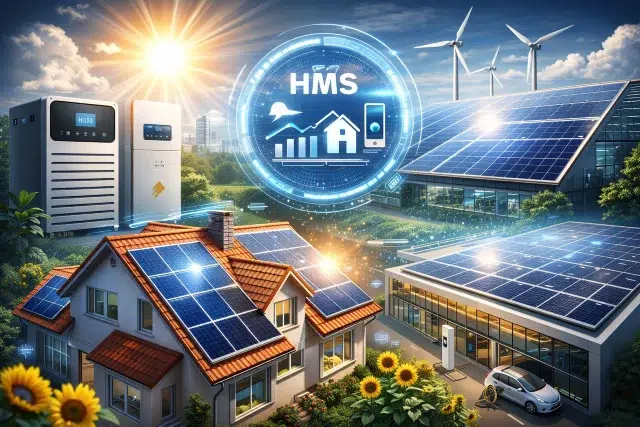
When evaluating HMS Photovoltaik systems, visual context helps. Most HMS-style systems follow a microinverter-per-panel or microinverter-per-2–4 panels architecture, meaning each module becomes a “smart unit” with its own performance tracking and optimization. Think of it like upgrading from one shared engine to multiple independent engines — more resilient, more trackable, and often more efficient in real-world conditions.
What Is HMS Photovoltaik?
HMS Photovoltaik refers to a modern solar system approach that emphasizes high-efficiency photovoltaic conversion, typically powered by microinverters and smart monitoring platforms.
In practical terms, HMS Photovoltaik systems are commonly associated with microinverter families like the Hoymiles HMS series, where:
- A microinverter can connect to up to 4 panels
- Each panel has independent MPPT (maximum power point tracking)
- The system provides module-level performance data
- It supports modern electrical standards like rapid shutdown for safety compliance
Why Solar Technology Is Shifting Toward “Smarter” Systems
Two major trends are accelerating the adoption of microinverters and MLPE:
1) Solar is now economically mainstream
The cost of solar electricity keeps falling globally. IRENA reports the global weighted average LCOE of utility-scale solar PV reached about $0.044/kWh in 2023, down 12% year-on-year, and dramatically lower than a decade ago.
2) People want control, monitoring, and resilience
Consumers increasingly demand:
- Monitoring apps
- Energy independence
- Fault detection
- Safer systems
That’s where HMS Photovoltaik (microinverter + monitoring) becomes a strong contender.
HMS Photovoltaik Technology: How It Works
Traditional solar systems often use a string inverter, meaning:
- Panels connect in series (a “string”)
- One inverter converts DC → AC for the entire system
- If one panel underperforms, the whole string suffers
HMS Photovoltaik microinverter systems change the equation:
Each panel (or small group) has its own inverter
Each panel runs its own MPPT
Shading affects only the shaded panel — not the entire system
You can track each panel’s performance individually
This architecture is part of what the solar industry calls MLPE (module-level power electronics) — a major growth segment in solar markets.
Key Features of HMS Photovoltaik Microinverter Systems
Independent MPPT per panel
Each module operates at its optimal voltage/current point, increasing harvest in real-world conditions (shading, mismatched panel angles, dust).
Hoymiles HMS-series microinverters are designed with independent MPPT and module-level monitoring, maximizing output.
Module-level monitoring
If panel #7 is performing 30% below the others, you know immediately.
That means:
- Faster troubleshooting
- Reduced downtime
- Better long-term system health
Rapid shutdown & safety improvements
Modern electrical codes require rapid shutdown in many jurisdictions, especially for rooftops. HMS microinverters are built to support NEC rapid shutdown requirements, which improves firefighter and maintenance safety.
Scalability (easy expansion)
Want to add 2 more panels next year? With microinverters, expansion is typically easier — less risk of inverter sizing mismatch.
Benefits of HMS Photovoltaik for Homes
Residential solar is where microinverters shine.
1) Better performance on complex roofs
Many homes have:
- Chimney shading
- Trees
- Multiple roof angles
- Partial-day shadows
Microinverters reduce the penalty of these issues.
2) Higher yield under shading
NREL research indicates that MLPE systems can recover meaningful losses from shading conditions — sometimes 20%–35% energy loss recovery depending on scenario.
(Note: performance varies by roof layout and shading type.)
3) Long-term transparency
With per-panel monitoring, homeowners can:
- Verify solar production
- Catch failures early
- Ensure expected ROI
Benefits of HMS Photovoltaik for Businesses
For commercial users, the value proposition expands beyond “saving money.”
1) Reduced maintenance cost over time
Commercial sites often have:
- Large rooftops
- More panels
- Higher service costs
- Business-critical uptime needs
Module-level monitoring reduces time spent diagnosing issues.
2) Better tolerance for panel mismatch
Commercial roofs can have:
- Mixed tilt angles
- Different roof zones
- Variable shading from HVAC units
Microinverter systems handle mismatch well.
3) Safety & compliance confidence
Businesses benefit from strong compliance and shutdown features, especially for rooftop installations meeting evolving electrical codes.
HMS Photovoltaik vs String Inverters: Comparison Table
| Feature | HMS Photovoltaik (Microinverter/MLPE) | String Inverter |
|---|---|---|
| Shading impact | Low (only shaded panel affected) | High (can reduce entire string) |
| Monitoring | Module-level (per panel) | Usually system/string-level |
| Safety | Strong rapid shutdown + low-voltage design | Higher DC voltage on roof |
| Maintenance | Easier fault detection | Diagnostics can take longer |
| Expansion | Easier to add panels | May require inverter resizing |
| Upfront cost | Typically higher | Usually lower |
| Best for | Complex roofs, premium monitoring | Simple roofs, budget installs |
Is HMS Photovoltaik “Best Solar Tech”? It Depends (Decision Framework)
Here’s a quick way to decide:
HMS Photovoltaik is usually best if you have:
- Partial shading (trees, chimneys, nearby buildings)
- Multiple roof angles
- Need for panel-level visibility
- High electricity rates
- Desire for safety-focused design
A standard string inverter may be better if:
- Your roof is perfectly unshaded
- Your system is simple and uniform
- Upfront budget is the #1 priority
- You don’t need module-level monitoring
Real-World Scenario Examples
Scenario 1: Home with afternoon shading
A homeowner has a tree shading 20% of the roof after 3 PM.
String inverter outcome:
The shaded panel drags down string performance.
HMS Photovoltaik outcome:
Only the shaded panel loses output, while the rest operate normally.
Better production consistency
Better ROI over time
Scenario 2: Business with rooftop HVAC shadows
A warehouse has rooftop HVAC structures casting shifting shadows.
HMS Photovoltaik advantage:
Independent MPPT prevents one shaded zone from impacting the rest, and monitoring helps pinpoint underperforming modules quickly.
Operational reliability
Reduced service diagnostics cost
Performance & Energy Yield: What Research Says
It’s important to be honest: microinverters don’t automatically increase energy yield in every case.
But in mixed or imperfect conditions, they can deliver measurable improvements.
NREL highlights MLPE as a fast-growing segment and notes the value in:
- capturing more energy
- improving design flexibility
- enabling better performance monitoring
Cost Considerations: Is HMS Photovoltaik Worth It?
Upfront cost
Microinverters often cost more due to:
- More electronics
- More installation components
- Monitoring gateway hardware
Long-term value
But they can save money by:
- Increasing yield in shaded conditions
- Reducing troubleshooting and labor
- Supporting safer, more reliable design
Best mindset: Think of HMS Photovoltaik as a performance + control upgrade, similar to paying more for a smarter appliance that reduces long-term waste.
Installation Tips (Actionable + Expert)
If you’re considering HMS Photovoltaik, these tips help ensure you get the full benefit:
1) Evaluate shading professionally
Request a shade analysis (drone or software modeling). Microinverters shine most in shading/mismatch environments.
2) Confirm compliance and warranty
Ask:
- What rapid shutdown standards are supported?
- What’s the warranty length?
- What’s the process if one microinverter fails?
Hoymiles HMS microinverters are designed to support modern rapid shutdown requirements under NEC/CEC guidelines.
3) Don’t overlook monitoring and connectivity
Monitoring is a major value driver. Ensure:
- Wi-Fi signal stability
- Gateway placement quality
- Installer support for monitoring setup
4) Right-size your panel-to-inverter match
With systems like Hoymiles HMS-2000 series, match panel wattage and number of modules correctly for optimal output.
Common Questions
Is HMS Photovoltaik the same as Hoymiles HMS?
HMS Photovoltaik is often used broadly to describe HMS-style smart solar systems. In many markets, it is strongly associated with Hoymiles HMS microinverters, which use independent MPPT and module-level monitoring.
Do microinverters really increase solar output?
They can — especially under shading, mismatch, or complex roof layouts. NREL research suggests MLPE can recover significant losses caused by shading and system mismatch, depending on the scenario.
Are microinverters safer than string inverters?
They’re often considered safer because they operate with lower DC voltage on the roof and support rapid shutdown standards, improving safety for firefighters and maintenance personnel.
Is HMS Photovoltaik good for businesses?
Yes — especially for businesses needing:
- large rooftop monitoring
- fast diagnostics
- resilience against shading
- safer compliance
What are the disadvantages of HMS Photovoltaik?
- Higher upfront cost
- More components (more points of potential failure)
- Slightly more complex installation design
HMS Photovoltaik in the Bigger Solar Market (Why It Matters)
Solar is growing rapidly worldwide. Fraunhofer ISE reports PV installations have shown a CAGR of about 27% between 2014 and 2024, reflecting massive adoption acceleration.
As solar scales, technologies that improve reliability and performance — like microinverters — gain momentum because they help reduce lifetime system losses and make solar easier to manage.
Final Verdict: Is HMS Photovoltaik the Best Solar Tech for Homes & Businesses?
HMS Photovoltaik can be one of the best solar technologies available — but only when it matches your real-world conditions.
Best for:
- Homes with shading and complex roofs
- Homeowners who want detailed monitoring
- Businesses that value uptime and diagnostics
- Installations where safety and rapid shutdown compliance are priorities
Might not be best for:
- Simple, unshaded, low-cost-focused systems
- Users who don’t need panel-level tracking
Bottom line: If you want a solar system that’s smarter, safer, and often more productive in imperfect conditions, HMS Photovoltaik is absolutely worth considering.
Want a Buyer’s Checklist? (Bonus)
Here’s a quick checklist you can copy-paste when shopping:
- Shade analysis completed
- Microinverter model matches panel wattage
- Warranty length confirmed
- Monitoring app demo provided
- Rapid shutdown compliance confirmed
- Expansion plan discussed
- Installer has microinverter experience