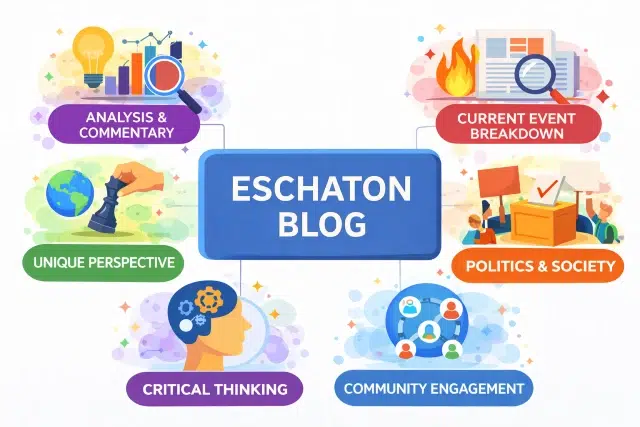
Why Eschaton Blog Still Gets Talked About
The internet has no shortage of political blogs. Most pop up, get attention for a while, then disappear into the digital void when the creator burns out or the algorithm changes.
But Eschaton Blog didn’t just survive. It became one of the most recognizable names in progressive political blogging — and in a world where millions of posts are published every day, that’s not a small thing. Estimates suggest around 7.5 million blog posts are published daily, which makes standing out genuinely hard.
So what makes Eschaton Blog different from every other blog?
It’s not just that it has been around a long time. It’s the style, consistency, voice, and community — and the fact that it often feels less like a “content site” and more like a real-time editorial brain reacting to the world.
Let’s break down what makes it unique — and why people still read it.
What Is Eschaton Blog?
Eschaton Blog is a long-running progressive political commentary site written primarily by Duncan Bowen Black, known online by the pseudonym Atrios. The blog is known for frequent short posts, sharp political critique, and a loyal reader community.
Unlike many blogs built today for SEO traffic or affiliate income, Eschaton is closer to an “online magazine” style — fast-moving, link-heavy, and unapologetically opinionated.
Eschaton Blog’s Origins: Built in the Classic Political Blogging Era
One reason Eschaton Blog feels different is because it comes from a totally different internet era.
Back in the early 2000s, blogging wasn’t a marketing tactic — it was closer to digital activism, independent commentary, and community-building. Eschaton grew during that time and became part of the early progressive blog ecosystem.
Atrios (Duncan Black) later became widely known as a blogger and political economist, contributing commentary beyond just his site.
That matters because the blog carries the DNA of “old web” writing:
- fewer gimmicks
- minimal packaging
- high trust with readers
- consistent voice over time
You can feel that difference immediately when you read it.
What Makes Eschaton Blog Different From Every Other Blog?
Let’s get specific. Because “it’s unique” is easy to say — but Eschaton Blog stands out for several very concrete reasons.
1. The Posting Style: Short, Fast, and Built for Momentum
Most modern blogs aim for one polished 2,000-word article every week.
Eschaton doesn’t play that game.
It posts frequently — often multiple times per day — and many entries are short bursts: commentary, links, quotes, context, and quick reactions.
This style makes the blog feel alive, more like a newswire mixed with editorial commentary than a traditional blog. Even older profiles note that posting frequency can be “on the order of ten every day,” which is wild by modern standards.
Why that matters for readers
Because when something happens in politics, people don’t always want a 2-day-later “ultimate guide.” They want:
- context
- perspective
- a smart reaction
- links to what matters
- a place to talk about it
That’s Eschaton’s sweet spot.
2. It’s Not Trying to Sound Neutral (And That’s the Point)
A lot of blogs pretend they’re neutral… while quietly steering you toward a conclusion.
Eschaton Blog doesn’t do that.
It’s opinionated. Sometimes blunt. Often sarcastic. And it doesn’t soften its edge for advertisers or “brand partnerships.”
That’s one of the biggest differences between Eschaton Blog and many modern political sites: it still feels like a person writing, not a committee.
And honestly? That authenticity is becoming more valuable.
Especially as public trust online drops because people increasingly suspect content is AI-generated or manipulated. A widely reported poll suggested many Americans believe only a portion of online content is accurate and human-written, reflecting growing skepticism around digital information.
So when a blog feels human, it stands out.
3. It Operates Like a Curated Feed — Not an Algorithm Trap
A lot of blogs today are built around one question:
“What will rank on Google?”
But Eschaton is built around a different one:
“What matters right now — and what are people missing?”
That’s why it’s full of:
- media critiques
- political hypocrisy callouts
- links to reporting worth reading
- short commentary on cultural moments
- ongoing themes that the author returns to over time
It’s not optimized for “search intent” so much as reader intent.
And ironically, that makes it more useful for a certain kind of person: someone who wants to stay informed without being spoon-fed a packaged narrative.
4. The Voice: You Can Spot an Atrios Post Instantly
Most blogs are interchangeable.
You could swap the author and barely notice.
Eschaton isn’t like that.
The voice is consistent, recognizable, and sharp. There’s humor, frustration, dry commentary, and a very particular way of cutting through nonsense.
That’s a big deal in a world where content often feels mass-produced.
Orbit Media’s annual blogging research notes that the average blog post length is around 1,333 words, and many bloggers now aim for data-driven structure. Eschaton ignores most of that… and still holds attention.
In other words: Eschaton stands out because it isn’t written like “blog content.”
5. The Community Isn’t an Afterthought
Many blogs have comments disabled. Or they have comments but ignore them.
Eschaton’s comment culture is part of the identity of the site.
It’s not just “a blog where people leave comments.” It’s more like a long-running community hub, where regulars return and discuss issues daily.
That creates a feedback loop:
- readers feel invested
- discussions evolve
- people return not only for posts but for interaction
It’s closer to the feel of early internet forums — but anchored by a central editorial voice.
6. It Has Longevity (And That’s Rarer Than People Think)
Plenty of blogs are popular for a year.
A handful last five.
Very few remain relevant across decades.
Eschaton Blog has remained part of political blogging culture for years, with archived content stretching back over a long period and regular posting continuing into the present.
That longevity creates:
- historical perspective
- an archive of political cycles
- continuity in worldview
- accountability over time
And that matters, because politics is nothing if not repetitive.
7. It Breaks “Modern Blog Rules” and Still Works
Modern blogging advice usually looks like:
- write long posts
- add keywords
- include CTAs
- optimize headers
- link to products
- build an email funnel
- publish on a schedule
But Eschaton Blog breaks most of those rules and succeeds anyway.
Why?
Because it was never primarily designed to be a marketing channel.
It’s designed to think out loud in public — and do it consistently.
That is rare.
Eschaton Blog vs. Typical Modern Blogs (Quick Comparison Table)
| Feature | Eschaton Blog | Typical Modern Blog |
|---|---|---|
| Writing style | Short, rapid commentary | Long-form SEO articles |
| Posting frequency | Multiple times daily | Weekly or bi-weekly |
| Primary goal | Perspective + curation | Traffic + conversion |
| Voice | Strong, personal, recognizable | Neutral or generic |
| Community | Active comment culture | Often limited/no comments |
| Monetization vibe | Minimal/low | Heavy ads, affiliate funnels |
Why People Still Read Eschaton Blog in 2026
Because it provides something hard to find now:
A real voice + real-time context
In an era where AI-generated summaries are reshaping how people consume content — and often reducing traffic to original creators — authentic independent publishing is under pressure. The Guardian has reported cases where AI summaries disrupt creator livelihoods by keeping readers from visiting original blogs.
Eschaton survives because it isn’t built on shallow SEO dependence alone. Its strength is relationship-based: readers return because they trust the voice and enjoy the ongoing conversation.
Common Questions People Ask About Eschaton Blog
What is Eschaton Blog known for?
Eschaton Blog is known for frequent short political commentary posts, progressive viewpoints, sharp media critique, and an active long-running reader community.
Who writes Eschaton Blog?
The blog is primarily written by Duncan Bowen Black, who writes under the name Atrios.
Is Eschaton Blog still active?
Yes. Eschaton Blog continues publishing regularly, with fresh posts appearing consistently, including recent entries in early 2026.
What makes Eschaton Blog different from other political blogs?
It stands out due to its high posting frequency, distinct voice, community-driven comment culture, and focus on fast curation and contextual commentary rather than SEO-driven long-form content.
What You Can Learn From Eschaton Blog (Actionable Blogging Tips)
Even if you’re not writing politics, Eschaton has lessons for anyone building an audience:
✅ 1. Consistency beats perfection
A steady flow of thoughtful commentary builds trust faster than occasional “perfect” posts.
✅ 2. Voice matters more than hacks
In a world flooded with content, readers remember how you sound, not just what you say.
✅ 3. Community is a moat
If people return for discussion and connection, you become harder to replace.
✅ 4. Curation is a form of value
You don’t need to create everything — filtering, linking, and contextualizing is its own skill.
Conclusion: Eschaton Blog Isn’t Just Different — It’s a Reminder of What Blogging Used to Be
At its core, Eschaton Blog is different because it still feels like what the internet promised in the first place:
- direct human voice
- rapid response to reality
- commentary without corporate polish
- a community of people thinking in public
- long-term accountability and perspective
In a time when millions of posts are published daily and trust online is shaky, a blog like Eschaton stands out because it doesn’t feel manufactured.
And that’s why Eschaton Blog remains one of the rare political blogs that still feels alive, relevant, and worth returning to.