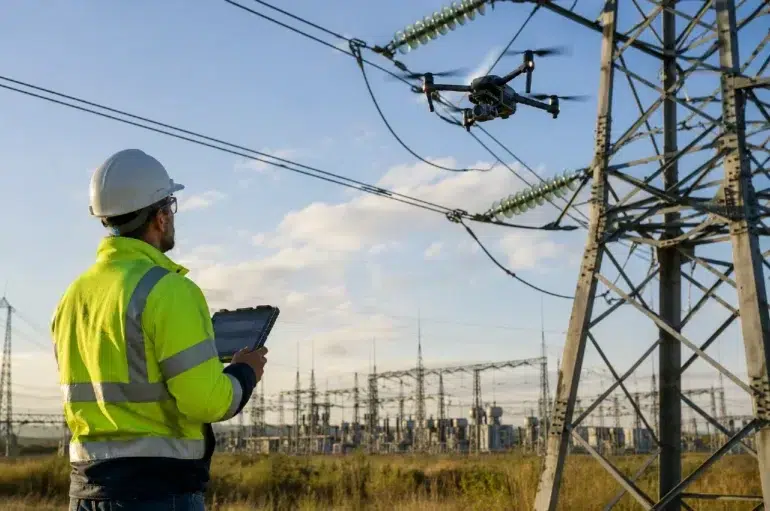
Power lines are the backbone of modern infrastructure. They deliver electricity to homes, businesses, industries, hospitals, and public services every day. Any fault, damage, or unexpected outage in transmission and distribution networks can lead to costly interruptions and serious operational challenges. For utility companies, maintaining reliable power systems has always been a top priority.
Traditional inspection methods for power lines often involve manual climbing, helicopters, or expensive ground patrols. These methods can be time-consuming, risky, and costly. As technology advances, businesses are now turning to smarter solutions that improve both safety and efficiency. One of the most effective innovations in recent years is drone power line inspection.
At Gulfnet, we understand the growing need for accurate, cost-effective, and reliable infrastructure monitoring. Drone technology is transforming how utilities inspect assets, detect issues early, and prevent outages before they happen. With high-resolution cameras, thermal imaging, AI-powered analytics, and rapid deployment capabilities, drones are becoming an essential part of modern power reliability strategies.
This article explores how drone power line inspection helps enhance reliability, reduce downtime, improve worker safety, and support the future of utility asset management.
What Is Drone Power Line Inspection?
Drone power line inspection refers to the use of unmanned aerial vehicles (UAVs) equipped with cameras, sensors, and imaging systems to inspect electrical transmission lines, substations, poles, towers, and related infrastructure.
Instead of relying only on human crews or helicopters, drones fly close to utility assets and capture detailed data. Operators can then review this data to identify problems such as:
- Damaged conductors
- Broken insulators
- Corrosion on towers
- Vegetation encroachment
- Loose hardware
- Thermal hotspots
- Structural wear and tear
- Storm damage
This advanced inspection method allows utility providers to detect problems quickly and take preventive action before failures occur.
Why Power Reliability Matters
Reliable electricity is essential for daily life and economic growth. Power interruptions can cause:
- Business downtime
- Equipment damage
- Data loss
- Reduced productivity
- Safety hazards
- Customer dissatisfaction
- Financial losses
For industries such as healthcare, manufacturing, telecom, and transport, even a short outage can have serious consequences.
That is why utility companies invest heavily in maintenance and inspection programs. By integrating drone power line inspection, they can improve system reliability while reducing operational risks.
Challenges of Traditional Power Line Inspections
Before drones became popular, inspections were mainly performed using manual or helicopter-based methods.
1. Manual Ground Inspections
Workers travel to remote locations, climb poles or towers, and visually inspect equipment.
Challenges:
- High safety risk
- Slow process
- Difficult terrain access
- Human error
- Limited visibility
2. Helicopter Inspections
Helicopters are used for aerial surveys over long distances.
Challenges:
- High fuel and operating cost
- Noise pollution
- Weather limitations
- Lower close-up detail compared to drones
- Safety concerns
3. Reactive Maintenance
Without frequent inspections, utilities often repair assets only after failures occur.
Challenges:
- Unexpected outages
- Emergency repair costs
- Customer complaints
- Longer downtime
This is why businesses increasingly prefer drone power line inspection as a proactive maintenance solution.
How Drone Power Line Inspection Enhances Reliability
1. Early Fault Detection
Drones capture detailed images and thermal data that help identify small issues before they become major failures.
Examples include:
- Hairline cracks in insulators
- Overheating connectors
- Rusted components
- Loose fittings
Early repairs prevent service interruptions and increase network reliability.
2. Faster Inspection Cycles
Traditional inspections may take weeks. Drones can inspect long stretches of power lines in a fraction of the time.
This means utilities can inspect assets more frequently and respond faster to developing issues.
3. Access to Remote Areas
Many power lines run through mountains, forests, deserts, or coastal areas. Reaching these places manually can be difficult and expensive.
Drones can easily access remote infrastructure without requiring crews to travel long distances.
4. Reduced Downtime
Because faults are detected earlier, maintenance teams can schedule repairs before breakdowns occur. This minimizes unplanned outages.
5. Better Data Accuracy
High-definition imagery, zoom cameras, LiDAR, and thermal sensors provide highly accurate information for maintenance planning.
Safety Benefits of Drone Power Line Inspection
Worker safety is one of the biggest advantages of drone technology.
Traditional inspections often expose workers to:
- Heights
- Live electrical equipment
- Rough terrain
- Traffic hazards
- Extreme weather
With drone power line inspection, many dangerous tasks can be completed remotely from the ground.
This reduces:
- Falls
- Electrical accidents
- Vehicle incidents
- Fatigue-related errors
At Gulfnet, safety-focused inspection strategies help organizations modernize operations while protecting their workforce.
Cost Savings for Utility Companies
Many businesses assume drone technology is expensive. In reality, it often reduces total inspection costs significantly.
Lower Labor Costs
Fewer field personnel are needed for each inspection mission.
Reduced Equipment Costs
Drones cost far less than helicopters and heavy access equipment.
Preventive Maintenance Savings
Fixing minor issues early costs much less than repairing major failures after outages.
Lower Downtime Costs
Reliable power means fewer interruptions, fewer complaints, and better customer satisfaction.
Better Asset Life
Regular monitoring helps extend the lifespan of towers, cables, and components.
Key Technologies Used in Drone Power Line Inspection
High-Resolution Cameras
Used to inspect visible structural issues such as cracks, corrosion, or missing components.
Thermal Imaging Cameras
Detect heat abnormalities in connectors, transformers, and conductors.
LiDAR Sensors
Create accurate 3D maps of power corridors and vegetation risks.
AI Analytics
Artificial intelligence can automatically identify defects and prioritize repairs.
GPS and Mapping Systems
Provide accurate asset location data for maintenance teams.
By combining these technologies, drone power line inspection becomes smarter, faster, and more effective.
Drone Power Line Inspection and Vegetation Management
Trees growing too close to power lines are a major cause of outages worldwide.
Drones help utility companies monitor vegetation encroachment through aerial surveys and LiDAR mapping. This allows teams to trim trees strategically before they create hazards.
Benefits include:
- Fewer weather-related outages
- Improved wildfire prevention
- Better maintenance planning
- Reduced manual patrol costs
Storm Damage Assessment
After storms, floods, or high winds, utilities need immediate information about damaged infrastructure.
Drones can be deployed quickly to inspect:
- Fallen poles
- Broken conductors
- Flooded substations
- Damaged towers
- Tree collisions
Instead of sending crews blindly into hazardous zones, drone data helps prioritize repairs and restore service faster.
Environmental Benefits
Using drones instead of helicopters and repeated vehicle patrols reduces environmental impact.
Lower Fuel Consumption
Battery-powered drones use far less energy than helicopters or trucks.
Reduced Emissions
Fewer vehicles on the road mean lower carbon emissions.
Less Disturbance
Drones create less noise and environmental disruption in sensitive areas.
For companies with sustainability goals, drone power line inspection supports greener operations.
Why Businesses Choose Gulfnet
Gulfnet delivers innovative solutions that help organizations modernize infrastructure management. Our approach focuses on safety, precision, and long-term reliability.
Expertise
We understand the operational challenges of utility and industrial networks.
Advanced Technology
We use modern drone systems, imaging tools, and analytics platforms.
Reliable Reporting
Actionable reports help maintenance teams make better decisions faster.
Customized Solutions
Every network is different. Gulfnet tailors inspection programs based on location, scale, and risk profile.
Focus on Performance
Our mission is to help clients improve uptime, reduce risk, and enhance operational efficiency.
Industries That Benefit from Drone Power Line Inspection
While utility companies are primary users, many sectors benefit from this service:
Energy Providers
Transmission and distribution networks.
Industrial Facilities
Private substations and internal power systems.
Oil and Gas Sites
Remote energy infrastructure requiring regular monitoring.
Renewable Energy Projects
Power connections for wind and solar farms.
Government Infrastructure
Public utilities and smart city networks.
The Future of Drone Power Line Inspection
Drone technology continues to evolve rapidly. Future advancements include:
Autonomous Flight Missions
Scheduled inspections with minimal manual control.
Real-Time AI Defect Detection
Immediate alerts during flight.
Digital Twins
3D models of utility networks updated continuously.
Predictive Maintenance
Using inspection data to forecast failures before they happen.
Swarm Drone Operations
Multiple drones inspecting large corridors simultaneously.
These innovations will make drone power line inspection even more valuable for reliability-focused organizations.
Best Practices for Successful Drone Inspection Programs
To maximize results, organizations should follow these best practices:
Plan Regular Inspection Schedules
Routine checks are more effective than emergency-only responses.
Use Qualified Operators
Certified professionals ensure safe and accurate missions.
Combine Visual and Thermal Data
Multiple data sources improve defect detection.
Integrate Findings with Maintenance Systems
Inspection results should connect directly to repair workflows.
Review Trends Over Time
Historical data helps predict aging infrastructure risks.
Common Issues Detected by Drone Inspections
Utilities frequently discover:
- Damaged insulators
- Rusted hardware
- Leaning poles
- Frayed conductors
- Bird nest hazards
- Tree contact risks
- Hot connectors
- Storm impact damage
- Missing bolts
- Tower foundation wear
Finding these issues early significantly improves reliability.
Why Reliability Is a Competitive Advantage
Reliable power supply creates trust and operational confidence.
Benefits include:
- Better customer satisfaction
- Stronger reputation
- Lower compensation claims
- Improved regulatory performance
- Higher efficiency
- Reduced emergency workload
Companies that invest in drone power line inspection gain a smarter path to consistent performance.
Conclusion
Power reliability is more important than ever in today’s connected world. Businesses, communities, hospitals, and industries all depend on uninterrupted electricity. Traditional inspection methods alone are no longer enough to meet growing reliability demands.
That is why drone power line inspection has become an essential solution for modern utility management. Drones help detect faults early, inspect remote assets quickly, improve worker safety, reduce costs, and prevent outages before they happen. With advanced imaging, thermal sensors, and intelligent analytics, drone inspections provide the visibility utility companies need to maintain stronger and more dependable networks.
At Gulfnet, we believe innovation drives performance. By adopting smart inspection strategies, organizations can modernize maintenance programs and protect critical infrastructure for the future through technologies such as construction drone mapping and aerial asset intelligence.
If your business is looking to improve uptime, reduce risks, and enhance asset reliability, drone power line inspection is the next step toward a smarter and more resilient power network.