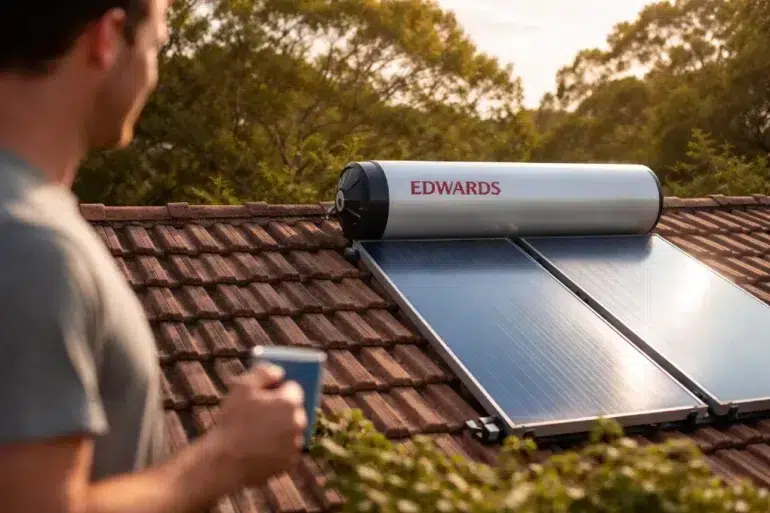
Hot water is one of those household essentials you barely think about until the energy bill lands or the system stops working on a cold morning. That is exactly why Edwards Solar Hot Water Systems attract so much attention from homeowners who want lower running costs, better energy efficiency, and a more future-ready home. Instead of relying entirely on grid electricity or gas, these systems use solar collectors and a storage tank to turn sunlight into usable hot water, while still offering backup heating when needed. Edwards positions its solar range for both domestic and commercial use, with a focus on energy efficiency and sustainability.
For many buyers, the real question is not whether solar hot water works. It is whether Edwards Solar Hot Water Systems deliver enough value to justify the upfront cost. The answer depends on your climate, household hot water demand, roof setup, local installation pricing, and the type of backup heating you pair with the system. The wider solar water heating category has a strong value proposition: the U.S. Department of Energy says solar water heaters can be a cost-effective option in any climate, and typical water heating bills can drop by 50% to 80% after installation.
That makes this topic especially relevant for homeowners comparing long-term savings rather than just sticker price. In practical terms, Edwards Solar Hot Water Systems are usually considered by people who want to cut energy use, reduce exposure to rising utility costs, and invest in a system designed for long service life. Edwards product materials and distributor literature consistently highlight stainless steel construction in key models, roof-mounted solar designs, and a reputation built around Australian design and manufacturing for at least part of the range.
What Are Edwards Solar Hot Water Systems?
At their core, Edwards Solar Hot Water Systems are solar thermal systems built to heat water rather than generate electricity. That distinction matters. A solar PV system makes electricity, while a solar hot water system captures solar heat and transfers it to water stored in a tank. According to the Department of Energy, solar water heating systems typically include solar collectors, storage tanks, and either active or passive circulation arrangements depending on the system design.
Edwards is known in the market for solar hot water products aimed at residential and commercial users. Product descriptions across official and distributor sources point to features such as stainless steel storage cylinders in certain ranges, evacuated tube or roof-mounted solar designs, and backup integration for reliability during cloudy weather or high-demand periods.
In simple terms, the system works like this:
- Solar collectors absorb heat from sunlight
- That heat warms water directly or indirectly through a transfer process
- Heated water is stored in an insulated tank
- A backup heat source supports supply when solar gain is not enough
This is why Edwards Solar Hot Water Systems appeal to homeowners who want dependable hot water without relying solely on conventional energy sources. Solar handles a meaningful share of the workload, while the backup element protects everyday convenience.
Why Homeowners Consider Edwards Solar Hot Water Systems
Most buyers are driven by a mix of financial and practical reasons. The first is energy savings. Water heating is a major energy load in many homes, so reducing that demand can have a noticeable effect on household bills. The Department of Energy states that solar water heaters can lower water heating bills by 50% to 80% on average, though actual results depend on climate, hot water use, system performance, and energy prices.
The second reason is reduced dependence on traditional fuels. With electricity and gas prices often fluctuating, systems that use free solar energy can make household operating costs more predictable over time. That benefit becomes even more attractive in homes with high daily hot water use, such as larger families or properties with multiple bathrooms.
The third factor is durability and lower maintenance expectations in certain configurations. Distributor technical literature for Edwards highlights stainless steel tanks as a major selling point, noting corrosion resistance and the absence of a sacrificial anode in some stainless steel roof-mounted systems. That is important because reduced corrosion risk can translate into less maintenance and a longer useful life, especially in demanding water conditions.
Key Benefits of Edwards Solar Hot Water Systems
1. Lower ongoing energy bills
This is the headline benefit most homeowners care about. A properly sized solar hot water setup can significantly reduce the amount of grid electricity or gas needed for daily water heating. Since water heating is a recurring load all year, even moderate efficiency gains add up over time. DOE guidance notes that solar water heating can be profitable over the long run despite higher installation costs.
2. Strong fit for sunny climates
Solar thermal systems naturally perform best where there is good solar exposure. Australia has long been one of the stronger solar thermal markets per capita, and global solar thermal reporting continues to track Australia among notable installed-capacity markets. That broader market presence supports the practical relevance of systems like Edwards Solar Hot Water Systems in suitable regions.
3. Energy efficiency with proven solar thermal technology
The solar thermal sector is not experimental. The International Energy Agency Solar Heating and Cooling Programme describes flat plate and evacuated tube collectors as proven technologies that remain dominant in the sector. That matters because buyers are not betting on an untested concept. They are investing in a mature category with decades of real-world deployment.
4. Backup support for reliability
One common misconception is that solar hot water means no hot water on cloudy days. In reality, solar water heating systems almost always include a backup arrangement. The Department of Energy makes this clear, and Edwards product descriptions similarly point to hybrid practicality rather than solar-only dependence.
5. Potential long-term value for the home
Energy-efficient upgrades often strengthen a home’s appeal to future buyers, especially when they lower expected utility costs. While resale value depends on the property market and installation quality, a well-maintained solar hot water system can still be seen as a meaningful upgrade rather than just another appliance. Distributor material for Edwards even markets the modern system design as a value-adding feature for the home.
How Edwards Solar Hot Water Systems Perform in Real Life
Performance is where the buying decision gets more nuanced. No solar hot water system performs at the same level in every home. The Department of Energy says energy savings depend on hot water usage, system performance, location, solar resource, incentives, and the cost of conventional fuels.
That means the real-world performance of Edwards Solar Hot Water Systems depends on factors like:
- Roof orientation and shading
- Household size
- Daily hot water usage patterns
- Local climate
- Type and efficiency of the backup heater
- Correct sizing and installation quality
In solar thermal terms, performance is often discussed using metrics such as Solar Energy Factor and solar fraction. DOE explains that common solar energy factor values for systems fall around 2 or 3, while typical solar fraction values range from 0.5 to 0.75. In plain language, that means solar can often cover a meaningful share of the annual hot water load, but not necessarily all of it.
For homeowners, the practical takeaway is simple. If your household uses a decent amount of hot water, your roof has good sun exposure, and the system is well matched to your demand, Edwards Solar Hot Water Systems can deliver very strong performance. If your roof is heavily shaded or your hot water demand is unusually low, the payback picture becomes less compelling.
Edwards Solar Hot Water Systems Cost Breakdown
Cost is usually the biggest barrier to purchase, and it is also the area where homeowners need the most realistic expectations. The Department of Energy notes that solar water heating systems cost more to purchase and install than conventional systems, but can save money over the long run.
Because pricing varies by region, installer, system size, roof complexity, and backup type, it is smarter to think in cost categories rather than chasing a single universal number.
Typical cost components
| Cost area | What it usually includes |
|---|---|
| Equipment | Solar collectors, storage tank, controller, valves, frame, fittings |
| Installation labor | Plumbing, roof work, system setup, commissioning |
| Backup integration | Gas or electric booster connection and configuration |
| Roof and site complexity | Extra labor for difficult access, steep roofs, or custom mounting |
| Permits and compliance | Local approvals, code compliance, inspection requirements |
| Maintenance over time | Periodic servicing, component checks, occasional replacement parts |
A homeowner comparing Edwards Solar Hot Water Systems with a standard electric tank should expect a higher upfront investment. The upside is the possibility of substantially lower operating costs over many years. In some markets, incentives, rebates, or financing can improve the economics further. DOE specifically notes that financing and incentives are part of the savings equation.
What affects the payback period?
Payback is not fixed. It changes based on:
- How much hot water your household uses
- Whether you are replacing expensive electric water heating
- Local utility rates
- Solar resource quality
- System size and efficiency
- Available rebates or credits
Homes that currently rely on higher-cost electric water heating often see a stronger economic case than homes using cheaper gas. Likewise, larger households often get better value because they can use more of the solar heat generated each day.
Are Edwards Solar Hot Water Systems Worth the Upfront Cost?
In many cases, yes, but only when the system matches the home. This is where buyers sometimes go wrong. They focus on the idea of “solar savings” without checking whether the roof, water usage, and household budget actually line up.
A good candidate for Edwards Solar Hot Water Systems usually looks like this:
- A household with medium to high hot water demand
- A roof with solid sunlight exposure
- An owner planning to stay in the property for several years
- A desire to reduce reliance on conventional energy
- Willingness to pay more upfront for lower running costs
A weaker candidate might be someone in a heavily shaded property, a household with very low water use, or a buyer planning to move soon and unwilling to invest in the longer-term payoff.
That is why the best buying decision is not based on brand alone. It is based on the total fit between the property and the system.
Installation Factors That Matter More Than Most Buyers Realize
Even a strong product can disappoint if the installation is poor. DOE guidance emphasizes that proper installation depends on solar resource, climate, building codes, and safety factors, and recommends using qualified solar thermal contractors.
For Edwards Solar Hot Water Systems, these installation details deserve close attention:
Roof suitability
Collectors need strong solar exposure. Shade from trees, neighboring buildings, or roof features can reduce solar gain.
Correct sizing
Oversizing and undersizing can both create problems. A system that is too small will rely too heavily on backup heating. One that is too large may not deliver the best value for the money spent.
Plumbing integration
The system should be integrated cleanly with household plumbing and the backup heater. This affects both efficiency and user experience.
Installer experience
Solar hot water is specialized work. An installer with proven experience in solar thermal systems is more likely to get performance, safety, and compliance right.
Maintenance and Lifespan Expectations
One of the quieter advantages often associated with Edwards Solar Hot Water Systems is the durability angle. Technical literature for certain Edwards stainless steel systems says they do not require a sacrificial anode and are virtually maintenance free compared with some mild steel alternatives that rely on vitreous glass lining and anodes. That does not mean zero maintenance forever, but it does suggest a lower-maintenance profile in the right setup.
At the category level, DOE says passive systems usually require less maintenance than active systems, and regular maintenance on simple solar water heating systems can be as infrequent as every 3 to 5 years. Systems with electrical components may need replacement parts after about 10 years.
Good maintenance habits include:
- Checking for leaks or visible wear
- Keeping collectors clear where practical
- Scheduling periodic professional inspections
- Monitoring backup heater performance
- Addressing circulation or controller issues early
A system that is installed correctly and serviced when needed is far more likely to deliver strong long-term returns.
Common Questions Buyers Ask
Do Edwards Solar Hot Water Systems work on cloudy days?
Yes. Solar output drops in cloudy weather, but solar hot water systems are generally built with backup heating so your home can still receive hot water when solar input is limited.
Are Edwards Solar Hot Water Systems better than a standard electric water heater?
For many homes, they can be far cheaper to run over time, especially where electricity is expensive and solar conditions are favorable. The tradeoff is a higher initial purchase and installation cost.
Is stainless steel important?
It can be. Stainless steel is commonly valued for corrosion resistance and lower maintenance requirements. Edwards distributor technical material specifically promotes stainless steel cylinders as a durability advantage in certain product lines.
Do they suit small households?
They can, but the value proposition is usually stronger where there is enough hot water use to take advantage of the solar heat produced. Very low-use households may see slower payback.
Final Verdict on Edwards Solar Hot Water Systems
For the right home, Edwards Solar Hot Water Systems make a lot of sense. They sit in a mature and proven solar thermal category, they can materially reduce water heating energy costs, and they are often marketed around practical strengths such as stainless steel construction, long service life, and reliable backup support. The strongest case tends to be for households with good roof exposure, steady hot water demand, and a long-term view of energy savings.
The biggest caution is the same one that applies to any solar water heating product. Do not buy based on brand reputation alone. Buy based on fit. A careful assessment of your roof, your daily usage, your local climate, and your installation quote matters more than marketing language. When those factors align, Edwards Solar Hot Water Systems can be a smart upgrade that lowers bills and improves household efficiency for years to come. If you want a simple way to think about it, this is a practical investment in solar thermal performance rather than a trendy home add-on.