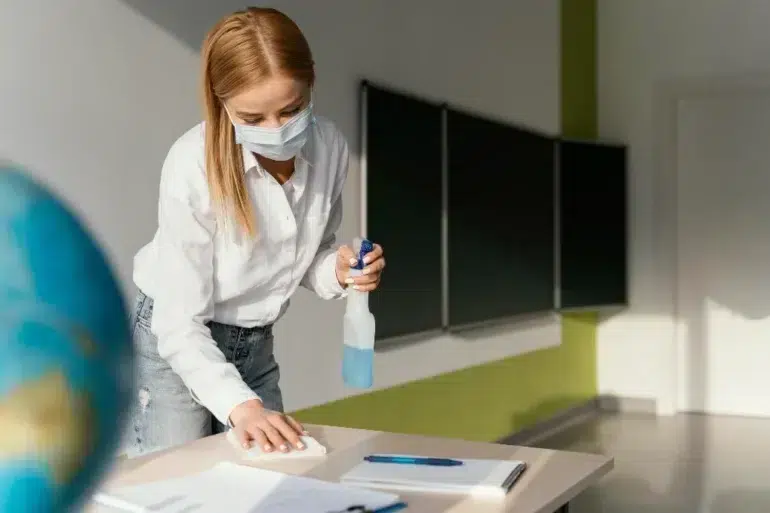
The cleaning products used in your workplace affect more than just how clean the surfaces look.
They affect the air your employees and visitors breathe, the health complaints your HR team receives, and the environmental footprint your business leaves behind every single day.
Therefore, choosing eco-friendly products for every business facility, including auto dealership cleaning services, is one of the most practical decisions a facility manager or business owner can make for a healthier workspace and a more responsible operation.
Why Traditional Cleaning Products Are a Problem
Most conventional cleaning products contain chemicals that were designed for effectiveness, not safety.
When sprayed or applied in enclosed office spaces, these products release volatile organic compounds, commonly called VOCs, into the air. VOCs linger long after the cleaning is done and contribute to headaches, eye irritation, respiratory problems, and fatigue in employees who spend hours breathing that air.
Over time, these exposures add up. Businesses with poor indoor air quality consistently report higher absenteeism and lower productivity, even when no one immediately connects it to the cleaning products being used.
Chemicals Businesses Should Avoid
Not all cleaning labels tell the full story. These are the ingredients facility managers should watch out for and actively avoid in commercial cleaning products.
Quaternary Ammonium Compounds (Quats)
Found in many disinfectant sprays and wipes, quats are effective at killing germs but are linked to skin irritation, respiratory sensitization, and long-term health effects with regular exposure.
They are also increasingly resistant to bacteria over time, which weakens their effectiveness the more they are used.
Harsh Solvents and Glycol Ethers
Common in heavy-duty degreasers and floor cleaners, these compounds are absorbed through the skin and inhaled easily in poorly ventilated spaces.
Regular exposure is linked to nervous system effects and reproductive health concerns, making them a poor choice for any occupied commercial building.
Synthetic Fragrances
A product that smells clean is not necessarily safe. Synthetic fragrances in cleaning products are blends of undisclosed chemicals, many of which are VOCs.
For employees with asthma, allergies, or chemical sensitivities, synthetic fragrance is one of the most common triggers for workplace health complaints.
How Eco-Friendly Cleaning Products Improve Workplace Health
Eco-friendly cleaning products are formulated with plant-based ingredients, biodegradable surfactants, and naturally derived compounds that clean effectively without releasing harmful fumes.
Switching to green products reduces VOC levels in the air, which directly improves indoor air quality and is important for daycare center cleaning services. Employees in buildings that use non-toxic cleaning products report fewer headaches, fewer allergy symptoms, and better concentration levels throughout the workday.
In office buildings where the HVAC system recirculates interior air, this difference is especially significant because chemical residue does not just stay in one room. It spreads throughout the entire building.
How to Identify Genuinely Eco-Friendly Products
Look for Recognized Certifications
Not every product labeled “green” or “natural” meets a meaningful standard. The most reliable certifications to look for are EPA Safer Choice, Green Seal, and EcoLogo.
These programs require independent testing and verify that a product meets strict criteria for both human safety and environmental impact. If a product carries one of these labels, you can trust the claim.
Read the Ingredient List
Responsible manufacturers list their ingredients clearly. Look for plant-based surfactants, citric acid, and naturally derived enzymes as active cleaning agents.
If the label lists fragrance without further detail, or includes long chemical names you cannot find in any safety database, that is a signal to look for an alternative.
Choose Concentrated Formulas
Concentrated cleaning products are diluted with water before use, which means one bottle replaces many single-use containers.
For businesses buying cleaning products in volume, concentrated formulas reduce plastic waste significantly and lower the overall cost per use compared to ready-to-use sprays.
Practical Steps to Transition Your Business to Green Cleaning
Switching to eco-friendly products does not need to happen overnight.
Start by auditing the products your cleaning team currently uses and identifying the highest risk items, typically heavy disinfectants, floor strippers, and bathroom cleaners. Replace those first with certified alternatives.
Train your cleaning staff on the new products, including dilution ratios for concentrates and proper application methods. Green products often work differently from chemical-heavy alternatives and require correct use to perform at their best.
Pair your product switch with reusable microfiber cloths and mop heads instead of disposable paper towels and single-use wipes. Microfiber captures more bacteria and dust per wipe and dramatically reduces waste and ongoing supply costs.
The Business Case for Going Green
Eco-friendly cleaning is not just better for health. It makes financial sense.
Concentrated products cost less per use. Reusable tools reduce weekly supply orders. Fewer employee sick days translate directly into productivity gains. And in 2026, clients and job candidates increasingly favor businesses that demonstrate visible environmental responsibility.
A green cleaning program is a practical operational improvement that pays for itself while building a healthier and more credible workplace.
Frequently Asked Questions
Are eco-friendly cleaning products as effective as traditional ones?
Yes. Modern eco-friendly cleaning products use plant based enzymes, biodegradable surfactants, and naturally derived acids that clean and disinfect as effectively as conventional products without releasing harmful fumes. Certified products from programs like EPA Safer Choice are tested for both safety and cleaning performance.
What chemicals should businesses avoid in cleaning products?
Businesses should avoid quaternary ammonium compounds, harsh glycol ether solvents, and products containing undisclosed synthetic fragrances. These ingredients are linked to respiratory irritation, allergic reactions, and long term health effects with regular workplace exposure.
How do I know if a cleaning product is truly eco-friendly?
Look for independent certifications such as EPA Safer Choice, Green Seal, or EcoLogo, which require verified testing rather than self reporting. Read the ingredient list and avoid any product that lists fragrance without disclosure or includes chemical names associated with known VOCs.
Do eco-friendly cleaning products cost more?
Some eco-friendly products have a higher upfront price, but concentrated formulas that are diluted before use typically cost less per use than ready to use conventional products. The reduction in employee sick days and supply waste further offsets any initial cost difference over time.
How can a business transition to green cleaning without disrupting operations?
Start by replacing the highest risk products first, such as heavy disinfectants and bathroom cleaners, with certified eco-friendly alternatives. Train cleaning staff on correct dilution and application, and introduce reusable microfiber tools alongside the new products to maximize both effectiveness and cost savings.