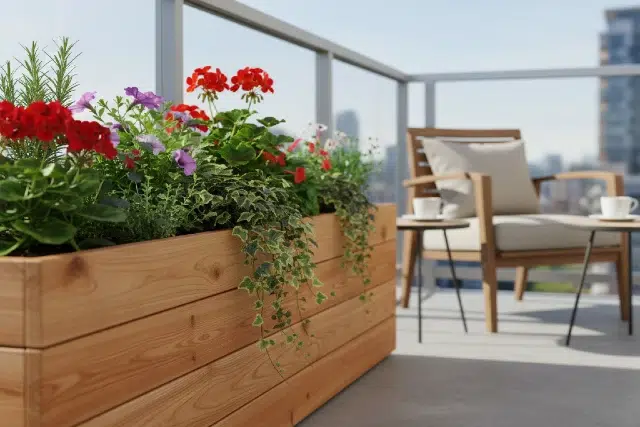
If you’ve got a small patio or balcony, you already know the struggle: you want greenery, color, maybe even fresh herbs, but you don’t have room for a full garden. That’s where a cedar planter box quietly becomes a game changer. It’s compact, tidy, easy to live with, and it instantly makes an outdoor corner feel “finished” instead of temporary.
The best part is that you don’t need a huge budget or a landscaping crew. With the right planter box, you can create privacy, add texture, and grow real plants in a space that’s mostly concrete and railings. It’s the kind of upgrade that looks like you tried harder than you did, which is honestly the best kind.
In this guide, we’ll walk through why cedar is such a smart material, how to choose a planter that actually works on small patios and balconies, what to grow, and how to keep your setup looking good season after season.
Why a cedar planter box works so well in small spaces
A small outdoor space needs furniture and decor that earns its keep. You can’t waste square footage. A cedar planter box does multiple jobs at once: it brings plants closer to eye level, defines the edge of a sitting area, and adds warmth that metal and plastic just don’t.
Here’s why it fits small patios and balconies so well:
- It creates instant structure. One long planter can “frame” your balcony and make it feel designed.
- It’s modular. You can add one now, then stack or line up more later without redoing everything.
- It’s beginner-friendly. You don’t need perfect soil or a perfect yard. You control the soil inside the box.
- It softens hard surfaces. Concrete and tile look nicer when there’s natural wood and greenery nearby.
- It can solve privacy problems. Tall plants in a long box can act like a green screen between you and neighbors.
And because Cedar planter Box gardening is made for urban life, it’s also practical. Cornell notes that container gardening can help people grow on surfaces that aren’t suited for in-ground planting, and it offers flexibility because containers can be moved when needed.
What makes cedar such a smart choice for planter boxes
Let’s keep this simple: outdoor planters get wet. Even if you’re careful, soil stays damp and water collects in corners. Many woods don’t love that for long.
Cedar is popular for outdoor projects because it’s naturally resistant to decay and performs well outdoors without heavy chemical treatment. The Western Red Cedar Lumber Association’s quick facts sheet explains that cedar’s decay resistance is tied to naturally occurring compounds in the wood, often referred to as thujaplicins.
Cedar also tends to be stable with changes in moisture, meaning it’s less likely to warp or twist compared to many other woods under the same conditions.
Cedar planter box benefits you’ll actually notice
- Better longevity outdoors because cedar is naturally durable.
- A comfortable, natural look that works with modern, rustic, or minimalist spaces.
- Lighter weight than many hardwoods, which matters on balconies.
- A pleasant scent when new, especially with western red cedar.
Cedar planter box vs other popular materials
If you’re choosing your first planter, it helps to compare materials the way you’d compare shoes: what’s your daily use, what’s the weather like, and how much maintenance can you realistically handle?
Here’s a practical comparison for small patios and balconies:
| Material | Pros | Cons | Best for |
|---|---|---|---|
| Cedar wood | Naturally decay-resistant, attractive, good outdoor performance | Can gray over time, may need sealing for color retention | Most small patios and balconies |
| Plastic/resin | Lightweight, inexpensive, low maintenance | Can look cheap, may degrade in sun over time | Budget setups, renters |
| Metal (steel/aluminum) | Modern look, durable structure | Can heat up fast in sun, may rust if not treated | Sleek designs, shade-friendly balconies |
| Terracotta/ceramic | Classic look, breathable | Heavy, breakable, not ideal for railings | Sheltered patios, low-wind areas |
| Pressure-treated wood | Durable | Some people prefer to avoid treated lumber near edible plants | Non-edible landscaping plants |
For most people, cedar hits the sweet spot: it looks good, lasts well, and suits the “small but intentional” vibe that patios and balconies need.
Choosing the right cedar planter box for a patio or balcony
This is where most people go wrong: they buy a planter that looks great online, then it either blocks the door, tips in wind, or dries out in a day.
Use these checkpoints before you buy.
1) Measure like you mean it
On a balcony, inches matter. Measure:
- The full length of the wall or railing you want to use
- The walking path you need to keep clear
- Door swing clearance if you have a patio door
A simple rule that keeps spaces comfortable: keep a clear walking lane of at least shoulder-width where you regularly pass through.
2) Pick a shape that matches the job
- Long rectangular boxes: best for railings and privacy plantings
- Square boxes: best for corners and single statement plants
- Tall planters: best for small footprints, but choose heavier bases if it’s windy
3) Don’t ignore weight (especially on balconies)
Balconies can have load limits, and soil gets heavy fast once watered. If you’re unsure about your building’s limits, keep setups modest and favor lighter soil mixes.
To reduce weight without sacrificing plant health:
- Use a well-aerated potting mix, not dense garden soil
- Consider adding a layer of lightweight drainage material only if your planter design needs it (many don’t)
- Choose plants that fit the planter size so you’re not overfilling “just because”
4) Make sure it has drainage, always
Drainage is not optional. Without it, roots sit in water and plants decline quickly.
Look for:
- Drain holes at the base
- A design that allows excess water to escape cleanly
- A drip tray only if you can empty it easily (standing water is a mosquito magnet)
5) Liner or no liner?
A liner can protect wood and keep soil from directly contacting the sides, but it also can trap moisture if installed poorly.
A good liner setup:
- Breathable landscape fabric or a planter liner that allows water flow
- Drain holes aligned with the planter’s drainage holes
- No fully sealed “bathtub” effect
The best plants for a cedar planter box in a small outdoor space
Your plant choices should match your light conditions first, and your style second.
If your balcony gets strong sun
These tend to do well in containers with consistent watering:
- Herbs: basil, rosemary, thyme (rosemary loves sun but hates soggy soil)
- Flowers: petunias, marigolds, geraniums
- Edibles: peppers, cherry tomatoes (use a trellis or cage)
If you get partial sun
- Herbs: mint (keep it contained), parsley, chives
- Flowers: begonias, impatiens (depending on heat), calendula
- Greens: lettuce, arugula, spinach (often happier with some shade)
If you mostly have shade
Shade balconies can still look lush:
- Ferns (if humidity is decent)
- Hostas (in cooler climates)
- Shade-friendly flowers like certain begonias
A simple “privacy planter” formula
If your goal is privacy, try this layered approach in one long cedar planter box:
- Back row (height): tall ornamental grasses or upright plants
- Middle (volume): bushier greens
- Front (spill): trailing plants like ivy or sweet potato vine
It looks full from day one, and it hides balcony railings nicely.
Soil and watering: the part nobody wants to talk about (but should)
Most patio and balcony plant problems are really soil and watering problems wearing a disguise.
Use potting mix, not garden dirt
Garden soil compacts in containers and messes with drainage. A quality potting mix stays lighter and more breathable.
For a balanced container setup, look for:
- Potting mix with good aeration
- Added compost for nutrients (not too much)
- Slow-release fertilizer if you want low-maintenance feeding
Watering tips that feel obvious after you learn them
- Check moisture with your finger, not by guessing. If the top inch is dry, it’s usually time.
- Water until it drains, then stop. Light surface watering trains shallow roots.
- Wind dries planters fast on upper floors. If you’re on a high balcony, expect more frequent watering.
A practical habit: water early in the day when possible so plants handle heat better.
How to style a cedar planter box so the space looks bigger
A small outdoor space feels bigger when it looks organized.
Use repetition
Two matching cedar planter boxes, or one long planter repeated on both sides of a door, creates symmetry. Symmetry makes tight spaces feel calmer.
Stick to a simple color plan
Choose:
- One primary flower color
- One accent color
- Lots of green
You’ll get a designer look without trying to force 12 different things into one box.
Layer heights
Even one planter can look “designed” if you use height variation:
- Tall plant (vertical line)
- Medium plant (fills body)
- Trailing plant (soft edge)
It’s the easiest visual upgrade you can do.
Maintenance: keeping your cedar planter box looking good for years
Cedar naturally weathers. If you like the silver-gray look, you can almost do nothing. If you want to keep the warm cedar color, you’ll need a little upkeep.
What to do monthly (simple version)
- Check drainage holes for clogs
- Trim dead growth to keep airflow
- Look for early pest issues (especially under leaves)
Seasonal care
Spring
- Refresh the top few inches of potting mix
- Add compost or slow-release fertilizer
- Check wood joints for loosening after winter
Summer
- Water consistently
- Mulch lightly to reduce evaporation
- Deadhead flowers for more blooms
Fall
- Remove spent annuals
- Plant cool-weather greens if your climate allows
- Clean out fallen leaves to prevent soggy corners
Winter
- If you freeze hard: consider moving the planter closer to a wall for shelter
- Avoid leaving water trays full
- If the planter is empty, store it under cover if possible
Common mistakes people make with a cedar planter box
This section is here so you don’t learn the hard way.
- Buying too small
Small planters dry out fast and restrict roots. Bigger is usually easier. - Skipping drainage
It’s the fastest route to root problems. - Overcrowding plants
Crowded planters look great for two weeks, then struggle as plants mature. - Using the wrong soil
Dense soil equals poor drainage, weak roots, and sad plants. - Ignoring sun exposure
“Full sun” on a balcony can be intense because heat reflects off walls and glass. Shade cloth can help in extreme heat.
FAQ: quick answers people actually search for
How long does a cedar planter box last outdoors?
A well-built cedar planter box can last for years outdoors because cedar is naturally decay-resistant. Lifespan depends on drainage, exposure, and whether you use a liner and protective finish.
Do I need to seal a cedar planter box?
You don’t have to seal it for it to function, but sealing can help preserve the original color and reduce surface weathering. If you like the natural graying, skip sealing and focus on good drainage.
Is cedar safe for growing herbs and vegetables?
Cedar is widely used for garden projects because it performs well outdoors without needing heavy chemical treatment, and its natural durability is linked to compounds in the wood.
What size cedar planter box is best for a balcony?
For most balconies, a long rectangular box that fits along a wall or railing works best. Choose a depth that supports root growth and reduces how quickly the soil dries out.
A real-world setup example: turning a “blank balcony” into a useful space
Picture a typical apartment balcony: a couple of chairs, a small table, and a lot of unused railing space.
A simple transformation looks like this:
- One long cedar planter box along the railing
- Taller plants spaced evenly for privacy
- Herbs and flowers mixed in the front
- A small watering can stored beside it so maintenance is easy
The result is a balcony that feels like an outdoor room, not a storage zone. And once plants grow in, the space feels more private and calmer without adding bulky screens.
Urban living is trending up globally, which makes small-space gardening more relevant than ever. The UN’s World Urbanization Prospects tracks ongoing growth in urban populations worldwide. That means more people trying to make the most of compact outdoor spaces, and a cedar planter box is one of the most practical ways to do it.
Conclusion: a cedar planter box is small-space gardening done right
When you don’t have much space, every upgrade has to matter. A cedar planter box adds warmth, structure, and real growing potential to patios and balconies without making the area feel cramped. It helps you control soil quality, manage drainage, and design a space that feels lived-in and welcoming.
If you want a simple outdoor upgrade that looks good, works hard, and makes a small space feel personal, start with one box and build from there. Once you see what a little wood and greenery can do, it’s hard to go back.
And if you ever find yourself curious about how different kinds of cedar wood are discussed and classified, it’s a fun rabbit hole to explore near the end of your planning process, once you already know what style and size you want.