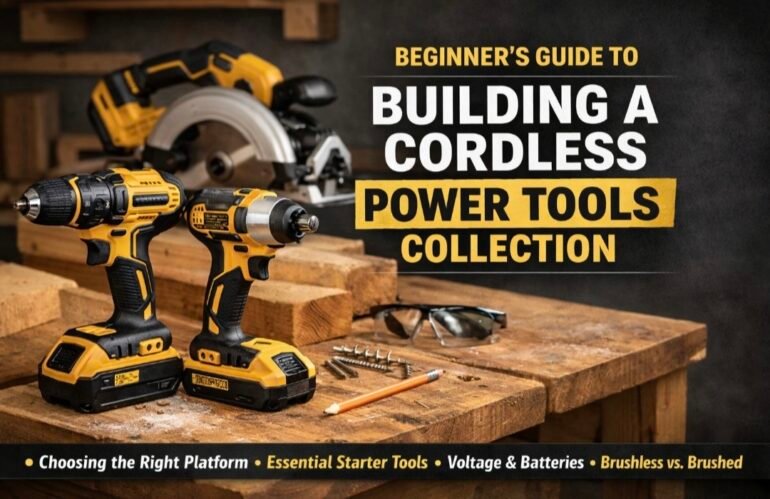
Walking into a home improvement store today is a vastly different experience than it was two decades ago. The “tool aisle” used to be a tangled web of extension cords and the smell of ozone from brushed motors. Today, that aisle is dominated by rows of sleek, battery-powered equipment. For a beginner, this transition is a double-edged sword. On one hand, you have more freedom than ever; on the other, the sheer variety of voltages, battery platforms, and motor types can be paralyzing.
Starting your journey with cordless power tools doesn’t have to be a high-stakes guessing game. The goal isn’t just to buy a drill; it’s to invest in a system that grows with your skills. Whether you’re looking to hang a few floating shelves or dive into full-scale furniture restoration, understanding how these ecosystems work is the first step toward a functional, frustration-free workshop.
The Strategy of the “Platform”
The most important thing to realize is that when you buy your first battery-powered tool, you are effectively “marrying” that brand. Because battery interfaces are proprietary, a battery from one manufacturer generally won’t work with another. This is why many experienced DIYers recommend picking a reputable ecosystem of cordless power tools that offers a wide range of compatible gear, from basic drills to specialized outdoor equipment.
By sticking to one platform, you save money in the long run. You can eventually start buying “bare tools”—units sold without a battery or charger which are significantly cheaper. It also reduces the clutter of having six different chargers taking up space on your workbench.
The Big Three: Essential Starter Tools
You don’t need a professional-grade sliding miter saw on day one. Most home projects can be conquered with three foundational pieces of equipment that handle 90% of common household tasks.
1. The Drill/Driver
This is the workhorse of every home. You’ll use it for everything from furniture assembly to drilling pilot holes in drywall. Look for a model with a 1/2-inch chuck (the part that holds the bit) rather than 3/8-inch, as it provides more versatility for larger masonry or wood bits.
2. The Impact Driver
Beginners often skip this, thinking it’s the same as a drill. It isn’t. An impact driver uses a rapid internal hammering action to drive long screws into tough wood without stripping the heads or kicking back. If you are building a deck or even a simple planter box, this tool will save your wrists and your sanity.
3. The Circular Saw
For cutting lumber down to size, a cordless circular saw is incredibly liberating. Older battery saws were often underpowered, but modern brushless versions can rip through pressure-treated 2x4s with ease. It allows you to break down plywood right in the driveway without hunting for an outlet.
Deciphering the Voltage Myth
One of the first questions beginners ask is, “Do I need 12V, 20V, or 80V?” Higher voltage generally translates to more torque and raw power, but it also means a heavier tool.
If you primarily do light indoor work, cabinet installation, or prefer a lightweight tool that won’t cause arm fatigue, 12-volt systems are surprisingly capable. For the average homeowner, 18-volt or 20-volt systems are the industry standard, offering the best balance of power and weight. The higher 60V or 80V systems are usually reserved for heavy-duty outdoor power equipment like chainsaws and mowers.
Brushed vs. Brushless Motors: Is it Worth the Extra Cost?
You will notice two versions of almost every tool: “Brushed” and “Brushless.” While the brushed versions are cheaper upfront, brushless motors are the gold standard for long-term value.
Brushless motors use magnets to generate power, which reduces friction and heat. This results in a tool that is more powerful, runs longer on a single charge, and lasts years longer than its brushed counterpart. If your budget allows, always opt for brushless for your most-used tools, like your primary drill and saw.
Buying Guide: Kit vs. Bare Tool
When you are starting from scratch, a combo kit is almost always the smartest financial move. These kits usually include a drill, an impact driver, two batteries, and a charger at a steep discount compared to buying them individually.
Once you have two or three batteries in your arsenal, you can switch to buying bare tools. This allows you to add specialized items like a reciprocating saw, a jigsaw, or an orbital sander—for a fraction of the price since you aren’t paying for another battery you don’t need.
Common Mistakes to Avoid
Even seasoned hobbyists make mistakes when expanding their collection. One major pitfall is buying for “one-time” use. Don’t buy a specialized tool for a single 10-minute task; instead, see if a versatile tool you already own can do the job with a different attachment.
Another mistake is ignoring Battery Amp-Hours (Ah). If voltage is the “speed” of the car, Amp-hours are the “size of the gas tank.” A small 2.0Ah battery is light and great for a drill, but it will die in minutes on a circular saw. For high-draw tools, you should aim for at least a 4.0Ah or 5.0Ah battery to ensure you aren’t constantly walking back to the charger.
Tips for Maintaining Your Collection
Your batteries are the most expensive part of your cordless setup. To ensure they last for years, keep them out of extreme heat. Never leave your batteries in a hot car or in direct sunlight, as heat is the number one killer of lithium-ion cells.
It is also a myth that you should run them until they are completely dead. Unlike old nickel-cadmium batteries, lithium-ion ones don’t have a “memory.” It’s actually better to charge them when they hit 20% rather than running them until the tool stops.
Choosing Between Corded and Cordless
While cordless is the future, some users still wonder if they should stick to a plug-in model. Corded tools offer constant, unfading power and are generally lighter because they lack a heavy battery pack. However, they lack portability and often lead to “cord fatigue”—the frustration of the cable snagging on a workpiece or being just six inches too short.
For most modern DIYers, the convenience of cordless far outweighs the unlimited runtime of corded tools. As charging speeds have improved and battery capacities have grown, the “power gap” has virtually disappeared for everything but the most industrial applications.
Safety Basics for Beginners
Power tools deserve respect, regardless of whether they have a cord. Always wear safety glasses—even for “quick” cuts. Small wood chips can fly at high speeds. Additionally, be mindful of your non-dominant hand. Most cordless tool accidents happen when a user gets too comfortable and accidentally places their hand in the path of a potential “kickback” or slip.
Conclusion: Building for the Future
Building a collection of cordless power tools is a marathon, not a sprint. Start with a solid drill and driver combo from a brand you trust, and let your projects dictate your next purchase. As you gain confidence, you’ll find that having the right tool doesn’t just make the work easier—it makes the process of creating and repairing something with your own hands incredibly rewarding.
Frequently Asked Questions
Can I use a 20V battery on an 18V tool?
In many cases, 18V and 20V are actually the same thing. “20V Max” refers to the battery voltage immediately after charging, while “18V” refers to the nominal voltage during use. However, you must stay within the same brand platform for the battery to physically fit and function safely.
How long do cordless tool batteries last before they need replacing?
With proper care, a modern lithium-ion battery should last between three to five years, or roughly 1,000 charge cycles. Keeping them out of extreme temperatures is the best way to extend their lifespan and maintain their capacity.
Is it okay to leave batteries on the charger overnight?
Most modern chargers are “smart” and will stop sending current once the battery is full to prevent overcharging. However, for long-term safety and energy efficiency, it is still a good practice to unplug the charger once the lights indicate a full charge.
Which tool should I buy first: a drill or an impact driver?
If you can only buy one, get the drill. It is more versatile because it can drill holes and drive screws. An impact driver is specifically engineered for driving screws and fasteners but cannot easily drill clean holes.
Would you like me to help you compare two specific battery platforms to see which one fits your home maintenance needs better?