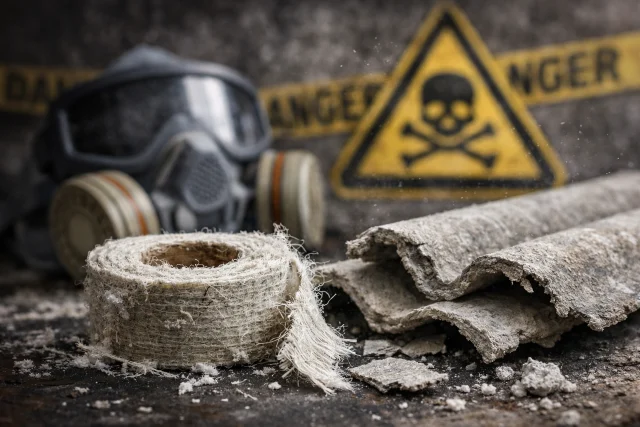
If you have ever opened an old utility closet, peeked behind a boiler, or looked around a basement ceiling and noticed a frayed, cloth-like wrap or dusty fibrous debris, you might have stumbled across something people casually call Asbestlint. The name shows up a lot online, especially in renovation conversations, and it usually points to one thing: asbestos in a tape, cloth, rope, or lint-like form that can shed dangerous fibers when disturbed.
Here’s the important part upfront: Asbestlint is risky mainly when it becomes airborne. Asbestos fibers are tiny. You cannot reliably identify them by sight, and you do not want to “test” them by pulling, brushing, vacuuming, or scraping. Health agencies have been clear for decades that asbestos exposure can cause serious disease, including cancers and long-term lung damage.
This guide breaks down what Asbestlint commonly refers to, where it tends to show up, what the real risks are, and what a smart, safe response looks like in the real world.
What is Asbestlint, exactly?
Asbestlint is not a formal scientific label you will see in most regulations. In practice, it is used online and in everyday speech to describe asbestos material that looks like:
- A woven tape or cloth wrap used for heat resistance
- A rope-like gasket or seal around hot equipment
- Lint-like, fuzzy, frayed, or dusty asbestos residue coming from aging insulation or wrapping
In plain English, when people say Asbestlint, they are usually talking about asbestos tape, asbestos cloth, asbestos rope, or deteriorated asbestos debris that can release fibers if it is damaged or disturbed.
That “disturbed” part matters more than most people realize.
Why Asbestlint was used so widely in older buildings
For much of the 20th century, asbestos was seen as a wonder material. It was used because it could handle:
- High heat
- Fire resistance
- Chemical resistance
- Durability under stress
So manufacturers worked it into all kinds of building and industrial products. When asbestos was woven into tape or cloth, it became especially useful for wrapping pipes, sealing joints, and insulating hot surfaces.
Many countries later restricted or banned many uses after the health risks became undeniable, but a lot of older buildings still contain asbestos-containing materials. The U.S. EPA maintains guidance and regulatory information because asbestos remains present in many existing structures and products.
The hidden risk: when Asbestlint turns from “quiet” to dangerous
Asbestos is most dangerous when fibers become airborne and are inhaled. That can happen when Asbestlint is:
- Cut, sanded, drilled, or scraped
- Brushed aggressively or pulled loose
- Broken during repairs or renovations
- Vacuumed with a normal household vacuum
- Removed without proper containment and protective equipment
Health authorities link asbestos exposure to diseases including lung cancer, mesothelioma, and asbestosis, and the risk can show up decades after exposure.
A key point that surprises people: you might not feel anything right away. That does not mean it is harmless. In many cases, symptoms and diagnoses appear years later, which is why prevention and safe handling are so strongly emphasized by public health agencies.
Where Asbestlint is commonly found
The most common places people run into Asbestlint are the places where heat, steam, or fire resistance mattered.
In homes and apartments (especially older properties)
- Around old boilers and furnaces
- Pipe elbows and joints in basements
- Water heater and flue connections
- Behind radiators, especially near valves
- Old HVAC duct seams or wrap areas
- Under older floor layers near heat sources
In commercial and industrial spaces
- Mechanical rooms
- Steam lines and valves
- Boiler rooms
- Older equipment housings
- Gaskets and packing materials
- Fire doors and fireproof panels in certain older facilities
One of the biggest homeowner mistakes is assuming they can identify asbestos by color or texture. Consumer safety guidance stresses you generally cannot confirm asbestos just by looking, and if you suspect it, treat it carefully and consider professional testing.
What Asbestlint looks like (and why looks are not enough)
People describe Asbestlint in a few recurring ways:
- White to gray woven tape wrapped around joints
- Cloth-like strips that feel brittle or dusty with age
- Rope-like seals that look like braided fiber
- Fuzzy “cobweb” debris near insulation or pipe coverings
The problem is that many safe materials can look similar: fiberglass, mineral wool, cotton wraps, even old adhesive residue. So the only safe mindset is this:
If you do not know what it is, do not disturb it.
Health risks: what the research-backed sources say
Multiple authoritative public health sources agree on the major hazards.
- The World Health Organization notes asbestos exposure causes cancers including lung cancer and mesothelioma, and also causes chronic lung disease such as asbestosis.
- The U.S. National Cancer Institute explains asbestos exposure increases risk for cancers and highlights that risk depends on exposure level and duration.
- ATSDR (CDC) details the link between asbestos exposure and cancers including lung cancer and mesothelioma, and emphasizes that smoking combined with asbestos exposure greatly increases lung cancer risk.
That last point is worth slowing down for: if someone is exposed to Asbestlint fibers over time and also smokes, the combined risk for lung cancer is significantly worse than either factor alone.
How exposure actually happens in real life
Most people are not exposed because they walked past an intact material once. The more common real-world scenarios look like this:
Scenario 1: The “quick DIY fix”
A small leak appears near a pipe joint. Someone removes the old wrap, cleans the area, and re-tapes it. The wrap crumbles, dust floats, and the person keeps working because “it’s just old insulation.”
Scenario 2: Renovation dust that spreads
A contractor opens a wall or ceiling in a pre-1980 building. Old insulation or tape is disturbed. Dust travels through the room, and cleanup happens with regular sweeping or a standard shop vacuum.
Scenario 3: Mechanical room maintenance
A maintenance worker replaces a gasket or accesses a boiler area. Old rope or tape is pulled out. Fibers release close to breathing level.
These are not rare situations. They are everyday building stories, which is why agencies keep repeating the same basic instruction: do not disturb suspect asbestos materials, and use trained professionals when removal is needed.
Is Asbestlint still legal or used today?
In many places, new use of asbestos is heavily restricted, but asbestos-containing materials can still exist in older buildings and legacy equipment. That means Asbestlint can still be encountered even if you are not installing it new.
Regulation varies by country and region, so the safest approach is to follow local rules and rely on licensed asbestos professionals for inspection, testing, and removal decisions. The U.S. EPA provides broad information on asbestos laws, regulations, and what to do if you suspect asbestos.
How professionals identify Asbestlint safely
Here is what typically happens in a responsible identification process:
- Visual assessment without disturbing material
The goal is to understand location, condition, and likelihood. - Controlled sampling (only when appropriate)
Small samples may be collected using proper containment and PPE. - Laboratory analysis
Accredited labs use established methods to determine asbestos content.
If you are a homeowner, the practical takeaway is simple: the “real” identification usually involves a professional and a lab, not a guess.
What to do if you suspect Asbestlint
You do not need to panic. You do need to be careful.
The safest immediate steps
- Stop work in that area
- Do not touch, tear, sand, drill, or scrape anything
- Keep kids and pets away
- Close doors to limit airflow
- If debris is present, do not sweep or vacuum it with a normal vacuum
Consumer guidance notes that sometimes the best approach for slightly damaged material is to limit access and avoid disturbing it, while more damaged material or planned renovation usually calls for professional repair or removal.
What not to do (common mistakes)
- Do not dry sweep
- Do not use a household vacuum
- Do not blow dust with fans or compressed air
- Do not bag and toss debris like regular trash without checking local rules
- Do not rely on a mask meant for painting or basic dust
This is one of those situations where “quick and cheap” can become expensive later.
A quick risk checklist homeowners can use
This is not a diagnosis tool. It is a practical reality check.
You are more likely dealing with Asbestlint risk if:
- The building is older and has original heating systems
- The material is on or near hot pipes, boilers, or furnaces
- The wrap is brittle, frayed, dusty, or falling apart
- Renovation or repairs are planned in the same area
- There is visible debris that looks fibrous rather than gritty
If multiple points fit, treat it as suspect and consider professional evaluation.
Common materials people confuse with Asbestlint
To avoid false alarms, here are a few look-alikes:
- Fiberglass tape or cloth wraps
- Mineral wool insulation fragments
- Cotton or fabric wraps around old plumbing
- Old adhesive-backed heat tape residue
- Dryer lint or normal household dust in utility areas
The trick is not trying to “win the guessing game.” The trick is acting safely when uncertainty exists.
Workplace reality: standards exist for a reason
Workplace exposure control is strict because the health risks are serious and measurable.
For example, OSHA’s asbestos standards include a permissible exposure limit of 0.1 fiber per cubic centimeter of air as an 8-hour time-weighted average, plus an excursion limit over 30 minutes.
Even if you are not running an industrial site, this tells you something important: regulators treat airborne asbestos fibers as a serious hazard that requires control and monitoring.
Safer alternatives that replaced Asbestlint
If you are replacing old insulation tape or gasket materials today, modern options often include:
- Fiberglass tape rated for high temperature
- Ceramic fiber tape (used in certain high-heat applications)
- Basalt fiber products
- High-temp silicone or non-asbestos gasket materials (application dependent)
Choosing an alternative is usually a job for a qualified contractor or engineer, especially where heat and pressure systems are involved. But from an owner’s perspective, it is reassuring: you can usually get the performance without keeping asbestos in the picture.
Frequently asked questions people have about Asbestlint
Can I remove Asbestlint myself?
In many places, removal rules depend on material type, amount, and location. Even where limited DIY removal is legal, safety agencies consistently warn that disturbing asbestos can release fibers and that professional handling is often the safest route, especially for damaged materials or renovation work.
Is it dangerous if it is sealed or painted?
Sealing can reduce fiber release if done correctly, but damaged or deteriorating material can still be a problem. Decisions about encapsulation vs removal depend on condition, location, and future disturbance risk, which is why building management guidance emphasizes proper operations and maintenance planning.
Does a single exposure mean I will get sick?
Risk depends on fiber concentration, duration, and personal factors, and asbestos-related diseases often take decades to develop. That said, no one can promise “safe” exposure after the fact, which is why prevention is the focus across health agencies.
What symptoms should I watch for?
Symptoms vary by condition, and many asbestos-related illnesses develop slowly. If someone has a known exposure history and develops persistent respiratory symptoms, it is worth discussing with a healthcare professional. Authoritative health sources describe the disease links and latency patterns, including how long it can take for issues to appear.
Conclusion: treat Asbestlint like a safety decision, not a guess
Asbestlint sits in an awkward space: it is a widely used word online, but it can refer to several real-world asbestos forms, especially tape, cloth, rope, or deteriorated fibrous residue. The exact product matters less than the practical risk: if it can release asbestos fibers into the air, it deserves serious respect.
If you suspect Asbestlint, the safest mindset is calm and methodical: stop work, avoid disturbing it, limit access, and use qualified help for testing or removal. Public health agencies have spent decades documenting the consequences of asbestos exposure, and the core lesson is consistent: prevention beats cleanup every time.
In the last stretch of any renovation, it helps to remember that old building materials do not announce themselves. Learning the basics about asbestos minerals can help you understand why even a small-looking strip of Asbestlint should be handled with care.