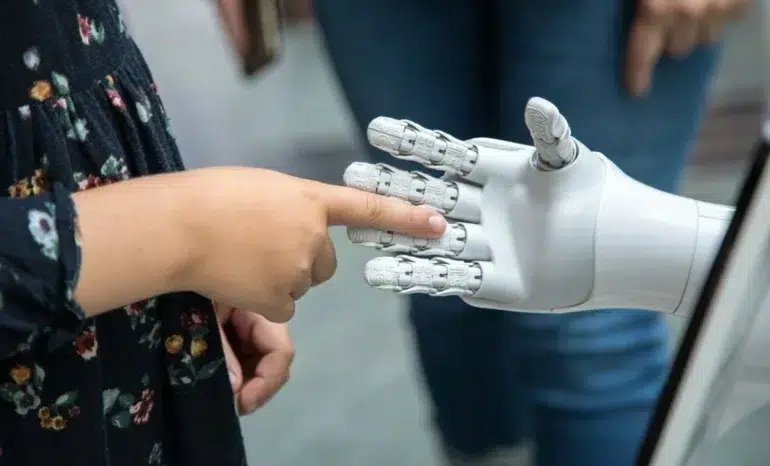
Artificial intelligence in 2026 is no longer framed as breakthrough research technology. Instead, it has moved into the role of invisible infrastructure supporting how people work, communicate, learn, and entertain themselves.
Public fascination with AI has matured. Early discussions often revolved around capability demonstrations and future speculation. Today, users are more interested in reliability, usability, and practical value.
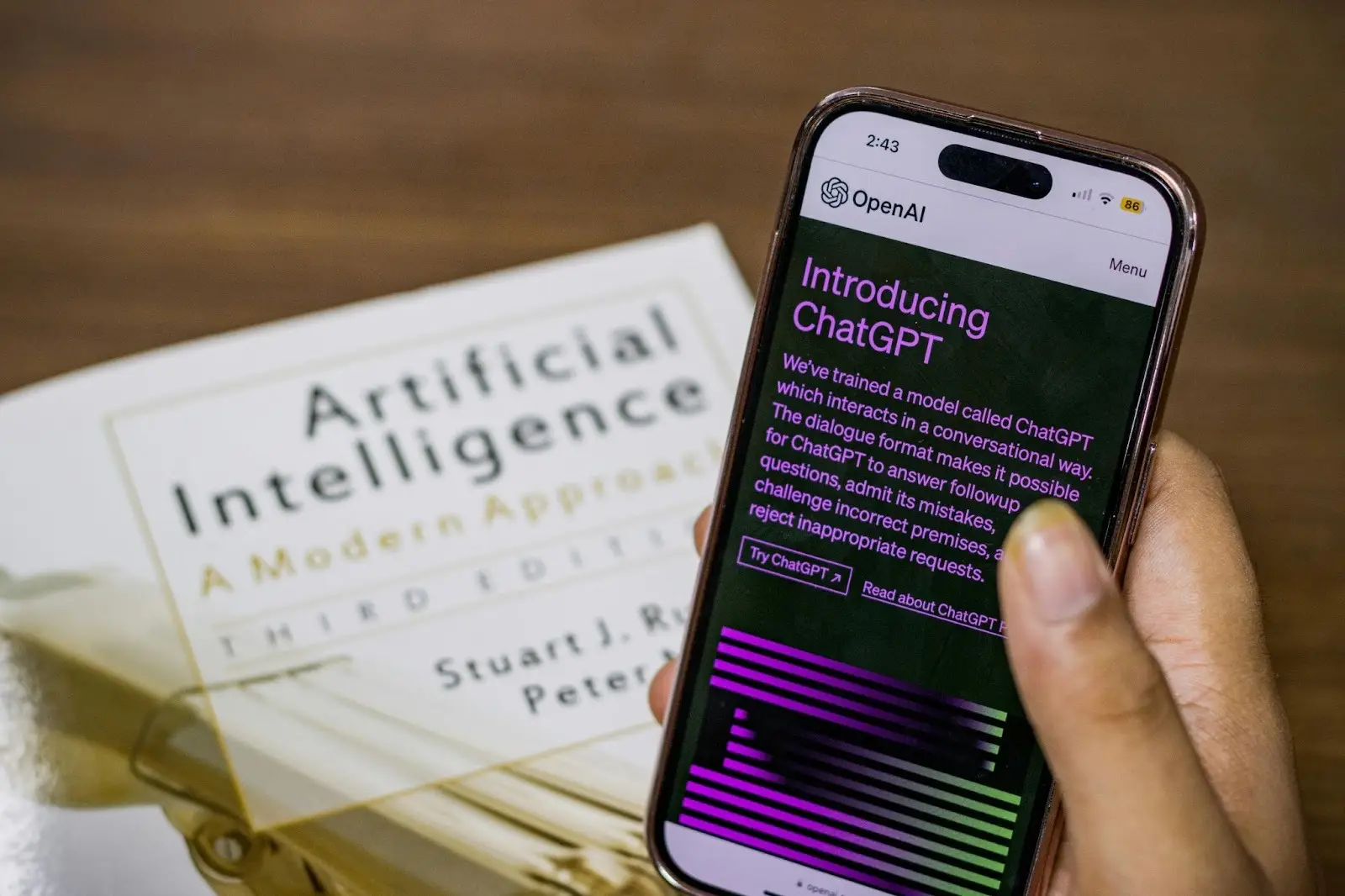
Research organizations such as OpenAI have helped accelerate the transition of generative models and conversational systems from experimental environments into mainstream applications.
The most important characteristic of AI in 2026 is subtlety. People are interacting with AI daily without necessarily thinking about it as a separate technology.
Much like electricity or mobile internet, AI is becoming something people simply expect to work in the background.
1. From Software Tools to Intent-Driven Assistance
Earlier software required users to follow strict operational steps. Modern AI systems are moving toward intent-based computing, where users describe desired outcomes rather than executing technical commands.
This is especially valuable in productivity environments. Professionals are using AI copilots to summarize meetings, organize research materials, draft initial documents, and analyze numerical patterns.
Students are also benefiting from similar systems when reviewing learning materials or translating complex information into simpler formats.
Platforms like Board Infinity help learners build practical skills in areas such as coding, technical writing, and career-focused professional development, making it easier to adapt to AI-driven workplaces.
The shift is reducing the cognitive friction involved in digital work. Instead of navigating menus and configurations, users focus on what they want to achieve.
Interestingly, many people no longer treat AI as a separate tool. It is increasingly embedded inside familiar software platforms, functioning as an intelligent extension rather than an independent application.
Some companies are exploring adaptive interfaces where the system rearranges controls or displays based on predicted user intent. This approach aims to make technology feel more natural and less technical.
2. Personalization Is Becoming the Default Experience
Digital services are evolving toward adaptive behavior. Recommendation engines are now analyzing long-term interaction signals rather than simple click metrics.
Streaming platforms, e-commerce systems, and educational services continuously refine suggestions using behavioral patterns. The goal is to reduce search effort and improve relevance.
However, personalization introduces interesting social and technical considerations. When algorithms filter information, digital environments can begin to reflect individual behavioral tendencies.
This has led to increasing discussions about transparency and user control. Some platforms are experimenting with adjustable recommendation settings so users can influence how aggressively AI personalizes their content streams.
The technology itself is not trying to replace human choice. Rather, it is attempting to assist decision-making by presenting more contextually relevant options.
3. Communication Technology Is Becoming Multimodal
Human-computer interaction is shifting beyond text-only input.
Modern systems support voice, image recognition, and hybrid interaction models. Users can speak naturally, upload visual references, or combine multiple forms of input within a single request.
This is particularly helpful for non-technical users who may feel intimidated by traditional software interfaces.
Virtual assistants are improving conversational memory and context awareness. Instead of treating each query as isolated, systems are learning to maintain continuity across interactions.
The long-term objective is not to create artificial companions but to reduce the friction between human intention and digital execution.
The workplace is also benefiting from this shift. Customer service systems, internal knowledge platforms, and collaborative software are increasingly powered by conversational AI interfaces.
4. Security and Trust Systems Are Becoming Smarter
As digital dependence grows, security architecture is evolving from static authentication toward behavioral intelligence.
Modern platforms are layering multiple protection signals to reduce fraud risk.
Common approaches include biometric verification, device identity mapping, and real-time behavioral anomaly detection.
Some financial and enterprise systems monitor interaction speed, typing pattern consistency, and login environment characteristics.
It’s technology like this that online casinos, where security is of utmost priority, benefit the most from, being able to provide services like airtight security, fun promos, and even GameZone rebate rewards.
The interesting aspect of behavioral security is that protection becomes continuous rather than one-time.
Instead of only verifying identity during login, systems can monitor session behavior and trigger additional checks when unusual patterns appear.
The challenge for developers is balancing protection strength with user convenience. Too many security barriers can discourage legitimate usage, while weak protection increases vulnerability.
5. Workplace Productivity Is Undergoing Structural Change
AI is gradually shifting corporate work toward supervision and decision refinement rather than repetitive cognitive processing.
Organizations are adopting AI-assisted workflows in areas such as document generation, customer interaction triage, software coding support, and data visualization.
This does not necessarily imply mass job replacement.
Instead, many industries are seeing role transformation. Human workers are becoming managers of automated processes, focusing more on strategic judgment, creativity, and quality validation.
The most successful organizations are those that combine machine efficiency with human insight rather than treating AI as a complete substitute.
6. AI Is Becoming Invisible Infrastructure
The most profound change is that AI is becoming less visible.
People are using AI inside search engines, financial tools, entertainment platforms, and workplace software without always recognizing the technology behind it.
This mirrors previous technological transitions. Cloud computing and mobile internet also started as revolutionary ideas before becoming standard utilities.
The long-term direction of AI development is not toward dramatic external spectacle but toward seamless internal integration.
Overall Trend
AI in 2026 is characterized by maturity rather than novelty.
The technology is becoming:
- More helpful but less intrusive
- More complex internally but simpler externally
- More reliable for operational tasks
- More integrated into economic and social systems
The story of AI today is not about machines becoming extraordinary.
It is about machines becoming ordinary parts of human digital experience.
People are using AI more than they talk about it, and that quiet adoption is often the strongest sign that a technology has entered its mature phase.