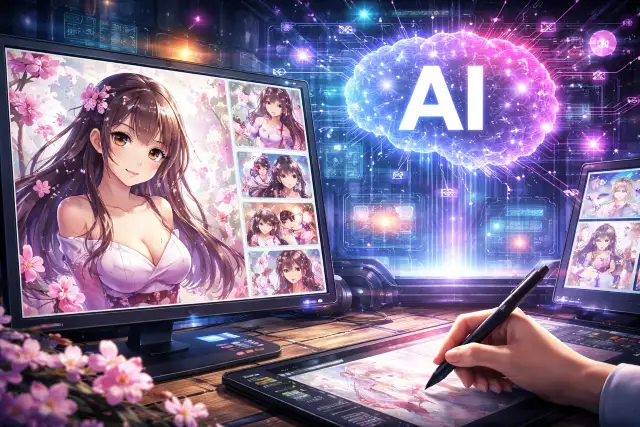
If you have been seeing the phrase AI 画像 生成 more and more lately, you are not alone. It has quietly moved from a niche “tech hobby” into something people use for real work: thumbnails, product mockups, manga-style character concepts, marketing visuals, and even quick storyboards. In Japan, AI 画像 生成 is not just a trend. It is becoming part of everyday creative and business workflows, especially because the tools are getting easier to use, more mobile-friendly, and better at the styles Japanese audiences actually like.
What makes Japan’s approach interesting is not only the technology. It is the culture around visual communication, the scale of anime and manga influence, and the way large consumer platforms are integrating AI 画像 生成 into apps people already open daily. That combination is changing who can create visuals, how fast they can ship ideas, and what “good enough” looks like when speed matters.
What does “AI 画像 生成” mean in plain English?
AI 画像 生成 literally refers to AI-generated image creation. In practice, it usually means text-to-image generation (you type a prompt and get an image), image-to-image editing (you transform a reference image), and variations like inpainting (fixing or replacing parts of an image). The common thread is that the system learns patterns from huge datasets and can synthesize new visuals that match your request.
The tech behind most modern AI 画像 生成 tools is usually based on diffusion or latent diffusion approaches, which can generate high-quality images while keeping computing manageable. A key foundation is the research behind latent diffusion models, which made high-resolution synthesis far more practical than earlier pixel-space approaches.
Why Japan is moving fast on AI image generation
Japan has always been visually driven: packaging, posters, character design, mascots, UI design, and illustration are woven into daily life and commerce. When AI 画像 生成 became reliable enough to produce clean, appealing art styles, Japan was already primed to adopt it.
Here are a few reasons adoption is accelerating:
1) High awareness and rising adoption of generative AI
A 2025 study on generative AI in Japan reported strong awareness and a sizable adoption rate among respondents, which is a useful signal that these tools are becoming mainstream rather than experimental.
2) Visual culture meets mobile-first behavior
Japan’s digital life is heavily app-centered. When AI 画像 生成 shows up inside tools people already use, experimentation becomes frictionless. You do not need to “be an AI person.” You just try it.
3) Practical business pressure: speed and volume
Marketing teams, ecommerce sellers, bloggers, and small businesses constantly need fresh visuals. Photoshoots and illustration commissions are great, but they are not always fast. AI 画像 生成 fills the gap for drafts, variations, and concept exploration.
4) Governance and “safe use” guidance is being formalized
Japan has been actively working on governance and risk-aware usage through published guidelines aimed at businesses and organizations. These documents matter because they normalize the idea that AI can be used responsibly in real operations, not only in labs.
The Japanese AI image tool ecosystem: what feels different
When people think about AI image generation, they often jump straight to global tools. Japan, however, has a very specific demand profile: anime aesthetics, clean linework, stylized characters, cute mascots, and “illustration-friendly” compositions for social and product contexts.
That demand has shaped the local ecosystem of AI 画像 生成 tools in a few noticeable ways.
Built for anime and character-centric creation
Tools that specialize in anime-style outputs are popular because they align with what many users actually want to create. For example, platforms like PixAI focus heavily on anime-oriented generation features and workflows that feel natural for character creation, variations, and style experimentation.
Integrated into communication platforms and everyday apps
One big shift is that AI 画像 生成 is moving closer to where conversations happen, not only where “design work” happens. Japan’s major messaging ecosystems have explored generative AI features, which reflects a wider industry trend of embedding creation tools into daily communication flows.
Better alignment with local tastes and language
Prompts written in Japanese, on Japanese cultural references, often produce better outcomes in tools tuned for that audience. Even when the underlying model is global, the product experience can be localized in a way that makes AI 画像 生成 feel more natural.
How these tools are changing creative work in Japan
This is where things get real. AI 画像 生成 is not simply “making art faster.” It is changing what work happens first, what gets iterated, and what gets handed off to humans.
1) Concepting becomes cheaper and more playful
Before AI, a lot of people would hesitate to explore ten directions because it costs time or money. Now a creator can generate multiple mood options quickly, then choose one to refine manually. That does not remove the need for taste. It increases the need for it, because you will have more options than ever.
2) Iteration cycles shrink from days to minutes
In creative teams, the time between “idea” and “something you can react to” is everything. AI 画像 生成 makes it easy to show a draft visual early, get feedback, and adjust quickly.
3) More people can participate in visual communication
A product manager, a small shop owner, a blogger, or a teacher may not be a designer. Yet they often need visuals. With AI 画像 生成, they can produce drafts that communicate an idea clearly enough to move forward.
4) Style exploration becomes a skill
Prompt writing is not magic, but it is a real craft. People who learn how to describe composition, lighting, mood, and constraints tend to get better outcomes. In Japan, where style consistency matters (especially for character-driven branding), the ability to “steer” AI 画像 生成 outputs is becoming valuable.
Real-world scenarios: where AI image generation is already useful
Below are practical, everyday use cases where AI 画像 生成 can change the workflow without pretending it solves everything.
For bloggers and publishers
Bloggers often need:
- Featured images that match the post topic
- Visual explainers and simple concept graphics
- Social preview images in consistent style
With AI 画像 生成, you can generate multiple featured-image candidates, pick one, then polish it (crop, typography, brand elements) in your usual editor.
For ecommerce and small business marketing
A small shop might use AI 画像 生成 to:
- Create seasonal campaign visuals
- Generate lifestyle-style backgrounds for product photos
- Produce ad variations quickly for A/B testing
The key is to treat outputs as marketing assets that still need a human check for brand accuracy and claims.
For anime and manga adjacent creation
Japan’s creator communities experiment with AI 画像 生成 for:
- Character concept art
- Costume variations
- Color palette exploration
- Background drafts and atmosphere studies
The best results usually come when AI is used for exploration, then refined with human illustration skill.
For education and training materials
Teachers and trainers can use AI 画像 生成 to create:
- Simple scenario images for slides
- Visual metaphors for abstract concepts
- Historical or cultural mood images (with clear labeling that they are generated)
A simple comparison table: what users typically look for
Here is a practical way to think about tool choice, without turning this into brand hype. Different AI 画像 生成 tools shine in different situations.
| What you need | Why it matters | Typical best-fit tool traits |
|---|---|---|
| Anime-style characters | Style consistency and clean linework | Anime-focused models, character workflows, variation controls |
| Marketing creatives fast | Speed, variety, easy resizing | Templates, batch generation, simple editing tools |
| Product mockups | Realism, lighting, detail control | Strong photoreal models, inpainting, background replacement |
| Social content | Mobile workflow, quick share | App integration, fast generation, easy export |
| Professional design pipeline | Repeatability and governance | Team controls, usage policies, asset management |
PixAI’s support documentation gives a sense of how anime-oriented platforms structure generation features around the needs of stylized creators.
The “human” part: what AI still cannot replace
It is tempting to treat AI 画像 生成 like a vending machine: insert prompt, receive masterpiece. Reality is messier, especially when the image needs to do a job.
Humans still lead in:
- Brand taste and consistency
- Ethical judgment and context
- Messaging clarity (what the image should communicate)
- Final polish: typography, layout, compositing, product accuracy
- Story and intent: why this image exists
In other words, AI 画像 生成 is powerful, but it is not a substitute for creative direction. It is closer to a fast visual brainstorming partner.
A prompt framework that works well for Japanese-style outputs
If you want better results from AI 画像 生成, it helps to think like a director. Instead of only describing the subject, describe the whole shot.
A useful structure:
- Subject: who or what is in the image
- Style: anime, watercolor, retro poster, minimal flat illustration
- Composition: close-up portrait, full body, three-quarter view, wide scene
- Mood: cheerful, cinematic, cozy, dramatic
- Lighting: soft daylight, neon city glow, studio lighting
- Background: clean white, city street, classroom, shrine, gradient
- Constraints: no text, no watermark-like artifacts, clean hands, consistent face
This approach makes AI 画像 生成 outputs more predictable because the model gets more clear signals about what matters.
Quality control checklist before publishing generated images
For blogs and business use, quality control is the difference between “wow” and “why does this look strange?”
Before you publish AI 画像 生成 outputs, check:
- Hands and fingers (common failure area)
- Text inside the image (often garbled)
- Logos and brand marks (avoid fake or distorted logos)
- Product accuracy (does it represent what you actually sell?)
- Faces and identity similarity (avoid unintentional resemblance)
- Cultural symbols and context (avoid mismatched or sensitive imagery)
- Resolution and cropping for mobile layouts
This is not about fear. It is about professional hygiene.
Legal and policy reality in Japan: what to know at a high level
Japan’s legal discussion around generative AI has been active, and official materials emphasize interpretation and careful thinking rather than simplistic yes/no answers.
The Agency for Cultural Affairs has published an overview document on AI and copyright understanding in Japan, clarifying that it reflects views on interpretation and is not legally binding, while still providing helpful direction for thinking about development and use.
If you are using AI 画像 生成 for a website or business, the practical takeaway is simple: treat AI outputs like any other asset with risk. Track sources, avoid using outputs that imitate specific living artists or copyrighted characters, and be transparent in your workflow when required.
How adoption and investment trends influence AI image tools
Even if you only care about images, broader adoption trends matter because they drive funding, competition, and product quality.
The Stanford AI Index reports track corporate adoption, investment, and generative AI as a major category within the broader AI economy. That matters because when adoption rises, tools improve rapidly: better interfaces, faster generation, more safety controls, and more specialized models.
In Japan specifically, surveys showing meaningful awareness and adoption help explain why AI 画像 生成 capabilities are being packaged for mainstream users rather than only advanced creators.
Common questions people ask about AI 画像 生成
Is AI 画像 生成 only for artists?
No. Artists use AI 画像 生成 for concepting and exploration, but non-designers use it for communication: visuals for posts, ads, slides, and product ideas. The skill is less “drawing” and more “directing.”
Will AI 画像 生成 replace illustrators in Japan?
It will change workflows more than it replaces talent. Many teams use AI 画像 生成 to speed early-stage ideation, while human illustrators handle final composition, consistency, storytelling, and brand fit. In high-quality manga and animation contexts, human craft remains central.
Why do Japanese-focused tools often look better for anime styles?
Because style tuning matters. Anime-style outputs benefit from models and interfaces that prioritize clean lines, facial structure, and character consistency. That is why specialized platforms and features exist.
What is the biggest mistake beginners make?
They treat the prompt like a single sentence and hope for magic. Better results usually come from giving structure: subject, style, composition, lighting, background, and constraints. That makes AI 画像 生成 much more controllable.
Can I use AI-generated images on my blog monetized with ads?
Many people do, but you still need to follow platform rules, your local laws, and basic content integrity. For Japan-specific policy context, the official “General Understanding on AI and Copyright in Japan” overview is a helpful starting point.
Conclusion: what this shift really means
The biggest change is not that AI 画像 生成 can produce pretty images. The change is that visual creation is becoming conversational, fast, and accessible. In Japan, where visual language is deeply embedded in entertainment, commerce, and daily communication, AI image tools are naturally sliding into place.
For creators, AI 画像 生成 shortens the distance between imagination and a usable draft. For businesses, it increases content velocity and makes experimentation cheaper. For audiences, it means they will see more stylized visuals, more variations, and more rapid creative cycles than ever before.
At the same time, the “human layer” grows in importance: taste, context, brand discipline, and responsible use. Japan’s movement toward business guidelines and clearer thinking around rights and governance signals that the goal is not reckless automation. It is practical, safe adoption of tools that boost productivity and creative exploration.
And if you want a simple mental model, think of these systems as advanced idea-to-image engines powered by modern diffusion models that help people iterate faster, not a replacement for human intent and judgment.