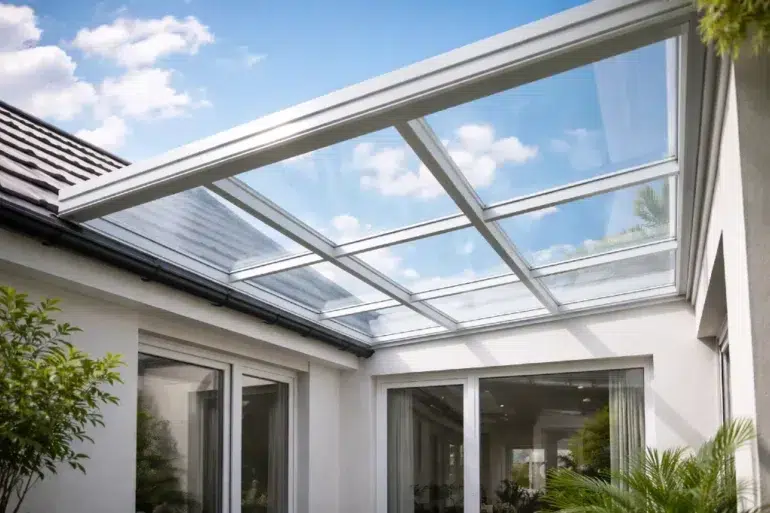
If you have ever stood under a dull patio roof and wished it felt brighter, lighter, and more “open,” you’re already thinking in the right direction. Acryldach is one of those upgrades that quietly changes the mood of an outdoor space. It helps daylight flow in, keeps a clean modern look, and can make patios, pergolas, carports, and entry canopies feel less like add-ons and more like designed architecture.
This article walks through what Acryldach is, why it has become so popular, how it performs in real weather, what installation details actually matter, and how to keep it looking clear and classy for years. If you want a roof that protects your space while still letting it breathe visually, you’ll see why Acryldach keeps showing up in modern builds and renovations.
What is Acryldach?
At its core, Acryldach refers to roofing made with acrylic sheets, typically PMMA (polymethyl methacrylate). Acrylic is used widely in architectural glazing because it’s lightweight, bright, and known for excellent optical clarity and outdoor light resistance. Technical data sheets for PMMA commonly highlight its transparency and light resistance, plus its predictable thermal expansion behavior that installers must account for.
In plain language: Acryldach is a “let the light in” roof system that still gives you coverage from rain and the elements. It works especially well for semi-outdoor areas where you want shelter without turning the space into a cave.
Where Acryldach is commonly used
- Patios and terrace covers
- Pergolas and garden seating areas
- Carports and driveway canopies
- Walkway shelters and entry awnings
- Skylight-like roof panels for bright corridors
Why Acryldach boosts light (and why that changes how a space feels)
The signature feature of Acryldach is light. Clear acrylic sheet is known for very high visible light transmission. For example, ACRYLITE technical documentation notes overall light transmission around 92% for colorless acrylic sheet under typical conditions.
That brightness does more than “look nice.” It changes how you use the space. A covered patio that still feels like daylight is a patio you actually sit under more often. And if your covered area connects to indoor rooms, better daylight can reduce the need for artificial lighting during daytime hours.
Lighting is a major electricity load in buildings. Lawrence Berkeley National Laboratory notes that lighting accounts for about 20% of total electrical energy consumption in the United States, and daylighting is a cost-effective way to reduce it. The U.S. Department of Energy also explains daylighting as using windows and skylights to bring sunlight in and reduce artificial lighting during daylight hours without necessarily causing heating or cooling problems when designed properly.
Acryldach is not a full daylighting strategy on its own, but it fits the same goal: bring in usable daylight while maintaining comfort.
Acryldach styles that look modern instead of “temporary”
A roof cover can either blend with your home or scream “afterthought.” The difference usually comes down to finish choices and structural alignment.
1) Clear and minimalist
Clear Acryldach is the “floating roof” look. It keeps the view of sky and trees, and it plays nicely with modern black or charcoal aluminum frames.
Best for:
- Small patios that feel cramped under opaque sheets
- Courtyards where you want brightness
- Entry canopies where you want a clean, premium look
2) Opal (diffused) for softer light
If you like brightness but not harsh sun patches, opal or frosted acrylic diffuses light. It keeps the area bright while softening shadows.
Best for:
- Seating areas where glare gets annoying
- Outdoor dining zones
- Work-from-home balcony corners
3) Tinted panels for heat and privacy balance
Smoked or bronze-tinted acrylic can cut glare and add a sleek aesthetic. Color affects light transmission significantly across acrylic ranges, so tint choice should match how bright you want the space to feel.
Best for:
- West-facing patios that get intense afternoon sun
- Carports where you want less visibility
- Neighbor-facing terraces where you want more privacy
Acryldach vs polycarbonate vs glass
People often cross-shop these three. Here’s a practical comparison using widely cited material characteristics.
| Feature | Acryldach (Acrylic / PMMA) | Polycarbonate (PC) | Glass |
|---|---|---|---|
| Light transmission (clear) | About 92% | Often around 88% | High, varies by type/coatings |
| Impact strength | Around 17x stronger than glass (not “unbreakable”) | Can be around 250x stronger than glass | Can shatter, safety glass helps |
| Scratch resistance | Typically better surface hardness than PC | Scratches easier unless coated | Good surface hardness |
| UV / clarity outdoors | Generally strong long-term clarity compared to standard PC | Often needs UV-stabilized grades for outdoor clarity | Depends on glazing type |
| Weight | Lighter than glass | Lighter than glass | Heavier |
| Best fit | Bright, stylish, clean look | High-impact zones (hail risk, sports areas) | Premium architectural glazing |
The quick takeaway: Acryldach leans into clarity, style, and a cleaner look, while polycarbonate leans into impact protection. Glass can be beautiful, but weight, structure, and safety requirements often make it a different project category.
Real-world performance: UV, weather, and the “will it stay clear?” question
UV resistance and long-term clarity
Acrylic is widely recognized for strong UV stability in outdoor glazing-type uses, which is one reason it’s used for signage and architectural applications. Some suppliers and guides emphasize that UV-resistant acrylic maintains optical clarity for many years outdoors.
This matters because roof panels that yellow or haze quickly ruin the entire point of Acryldach. With quality acrylic and correct installation, clarity retention is one of its biggest wins.
Rain, heat, and temperature swings
Acrylic expands and contracts with temperature changes. PMMA material data lists a coefficient of linear thermal expansion in the range of roughly 90 to 110 × 10⁻⁶/K, meaning movement is real and needs to be designed into mounting holes and edge spacing.
That’s why some roofs crack: not because acrylic is “bad,” but because the panel was trapped. Acryldach works best when the frame allows the sheet to move without stress.
Impact and hail considerations
Acrylic is tougher than glass, but it is not the champion in impact. Engineering comparisons often cite acrylic at about 17 times the impact resistance of glass, while polycarbonate can be around 250 times, depending on grade and conditions.
So if your area regularly gets harsh hailstorms, Acryldach can still work, but panel thickness, support spacing, and protective design details matter more.
Choosing the right Acryldach panel: thickness, finish, and structure
There isn’t one universal “best thickness.” Thickness depends on span, wind load, support spacing, and whether the roof will ever see debris impact. What matters is matching the sheet to the frame geometry and expected conditions.
Practical selection checklist
- Panel thickness matches span and support spacing
- UV filtering option if the covered area gets strong sun exposure (some acrylic sheets are designed to filter more UV)
- Finish choice: clear, opal, tinted, textured
- Proper slope so rainwater runs off, not pools
- Compatible fasteners and gaskets to prevent leaks without over-tightening
Clear vs opal vs tinted: comfort trade-offs
- Clear: maximum daylight, strongest “open sky” feel
- Opal: softer light, less glare, more consistent brightness
- Tinted: glare control, privacy, can reduce the “hot spotlight” effect
The best-looking Acryldach roofs usually pick one visual direction and commit. Mixing finishes randomly tends to look patchy.
Installation details that make or break Acryldach
Acryldach isn’t difficult, but it is unforgiving when installed like metal roofing. Acrylic needs breathing room.
Key installation rules that prevent cracks and leaks
- Allow for thermal expansion
Oversized holes, correct edge clearances, and non-binding fasteners are essential because PMMA expands with temperature. - Don’t over-tighten screws
Over-tightening creates stress points. Use washers and gaskets designed for glazing-style installs. - Use the right support spacing
Too wide a span causes flexing and noise, and increases stress around fasteners. - Build a clean slope and drainage path
Water pooling stains panels, increases algae risk, and makes the roof look older faster. - Seal smart, not heavy
The goal is a weather-tight system that still allows movement. Over-sealing can trap the panel.
A simple scenario that shows why movement matters
Imagine a clear Acryldach roof over a carport. Summer sun heats the sheet, it expands, and if the sheet is tightly screwed into fixed holes, stress builds around the screw points. Over time, you see spider cracks radiating from the fasteners. The panel didn’t “fail.” The install did.
That’s why the best Acryldach installs look almost calm. Everything is aligned, spacing is consistent, and the sheet can move quietly without fighting the frame.
Keeping Acryldach looking new: cleaning and maintenance that actually works
Acrylic stays attractive when it’s cleaned like acrylic, not like glass.
Cleaning steps
- Rinse dust first to avoid rubbing grit into the surface
- Use mild soap with lukewarm water and a soft microfiber cloth
- Rinse well and blot dry to reduce water spotting
- Avoid abrasive pads and harsh solvents
Acrylic is generally more scratch-resistant than polycarbonate, but scratches can still happen with the wrong cleaning habits.
Seasonal checkups (quick but useful)
- Check fasteners and gaskets for wear
- Confirm drainage is clear
- Inspect for small cracks near mounting points
- Remove leaves and debris before they stain the surface
This kind of maintenance takes minutes, but it’s what keeps a bright roof from turning into a cloudy one.
Cost and value: what you’re paying for with Acryldach
Costs vary by thickness, UV features, finish, brand, and framing system. Instead of chasing a single number, it helps to think in cost drivers.
What typically increases Acryldach cost
- Thicker panels and premium UV filtering options
- Better framing systems (aluminum, powder-coated finishes)
- Professional installation that accounts for movement and sealing
- Custom shapes, trims, and integrated drainage
Where the value shows up
- Brighter outdoor living areas that get used more often
- Clean modern aesthetics that match contemporary exteriors
- Reduced “covered space darkness” compared to opaque roofing
- Better long-term clarity versus lower-grade plastics in many cases
If the goal is a covered area that still feels like daylight, that’s the exact lane Acryldach is built for.
Common questions people ask before choosing Acryldach
Is Acryldach the same as polycarbonate roofing?
No. Both are clear plastic sheet roofing options, but acrylic (PMMA) typically offers higher clarity and scratch resistance, while polycarbonate is usually stronger for impact.
Will Acryldach turn yellow?
Quality outdoor-grade acrylic is known for strong UV stability and long-term light resistance, especially compared to non-UV-stabilized plastics.
Does Acryldach handle heat well?
Acrylic can handle outdoor heat, but it expands with temperature changes. Good installation must allow movement, using appropriate clearances and mounting methods.
Is Acryldach good for patios in sunny climates?
Yes, especially when using finishes that manage glare and heat perception such as opal or tinted panels. UV-filtering acrylic sheet options also exist for better UV management.
Conclusion: why Acryldach fits modern outdoor living
A roof doesn’t have to block light to provide shelter. Acryldach works because it treats a covered area like part of your living space, not like a dark add-on. It keeps daylight present, supports modern design lines, and can deliver a bright, airy feel that changes how a patio, pergola, or carport is used day to day.
The best results come from pairing the right panel finish with a clean frame, allowing for thermal movement, and keeping maintenance simple and gentle. Do that, and Acryldach becomes the kind of upgrade that looks intentional for years, not just installed.
In the last step, it helps to remember what the material really is: acrylic glass built into a roof system that balances protection with brightness and style.