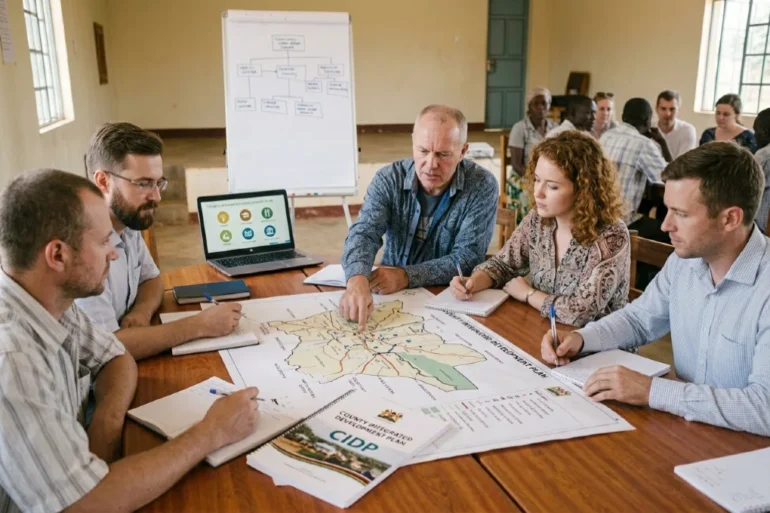
If you have ever asked What Is County Integrated Development Plan, the simple answer is this: it is the main five year planning document a county government uses to decide its priorities, allocate resources, and coordinate development projects. In Kenya, the County Integrated Development Plan, usually called the CIDP, sits at the center of county planning and links local needs to budgeting, implementation, monitoring, and public participation. It is not just a policy paper for shelves. It is supposed to guide what a county builds, funds, and measures over a full planning cycle.
For residents, businesses, civil society groups, and investors, the CIDP matters because it shows where the county wants to go and how it plans to get there. For county leaders, it provides a roadmap that helps align departments, avoid duplication, and turn promises into structured programs. When done well, a CIDP becomes a practical bridge between community priorities and actual service delivery.
What is a County Integrated Development Plan?
A County Integrated Development Plan is a long term county planning document that lays out development priorities, goals, projects, implementation frameworks, and resource expectations over a five year period. In Kenya, county governments prepare CIDPs as part of the devolved governance system created under the Constitution and operationalized through the County Governments Act. The plan is meant to integrate social, economic, environmental, legal, and spatial considerations so development does not happen in isolated fragments.
In plain language, a CIDP answers questions such as:
- What are the county’s biggest development problems?
- Which sectors need attention first?
- Which projects should be funded over the next five years?
- How will progress be tracked?
- How will the public participate in planning and oversight?
That is why the CIDP is often described as the county’s master planning document. It gives direction to other county documents, including annual development plans, sector plans, and budget-related papers. The National Treasury’s Bajeti Yetu portal groups CIDPs among core county budget and planning documents, showing how closely planning and public finance are linked.
Why the County Integrated Development Plan matters
A county can have good intentions and still struggle if it lacks a clear planning framework. The CIDP matters because it creates order. Instead of funding projects based only on short term pressure or politics, county governments are expected to use the plan to identify priorities in agriculture, health, roads, water, education, trade, housing, and governance.
It also matters for accountability. Once a county publishes a CIDP, citizens can compare campaign promises and budget allocations against the actual plan. Development partners can see where support is needed. Investors can identify sectors that the county wants to grow. Civil society can monitor whether implementation matches stated targets. In other words, the CIDP is not only a planning tool. It is also a transparency tool.
Kenya has 47 counties, and each one is expected to plan within its own local context. That matters because development challenges are not identical across the country. Counties differ in population, geography, infrastructure, natural resources, urbanization, and poverty levels. The Kenya National Bureau of Statistics highlights county level data such as Gross County Product and broader national statistical reporting, which helps explain why evidence-based county planning is essential.
Legal basis of the CIDP in Kenya
To understand What Is County Integrated Development Plan, it helps to look at the legal foundation. Kenya’s devolved system is anchored in the Constitution, while the County Governments Act provides the operational framework for county planning. The Act sets out county planning responsibilities and treats planning as a mandatory part of county governance, not an optional exercise.
This legal basis is important for two reasons. First, it gives the CIDP authority. County departments are not supposed to act outside an agreed development planning framework. Second, it promotes continuity. Leaders may change, but county planning must still follow a structured cycle tied to law, public participation, and fiscal planning.
In practice, that means a county should not simply jump from one project idea to another. It should move from diagnosis to planning, from planning to budgeting, and from budgeting to implementation and evaluation. That sequence is what makes the CIDP more than a wish list.
Key components of a County Integrated Development Plan
A strong County Integrated Development Plan usually contains several core sections. While the exact format varies from county to county, official county CIDPs show recurring components that make the document functional and measurable. For example, county plans such as Marsabit’s 2023 to 2027 CIDP include county overview data, performance reviews, spatial development frameworks, sector priorities, flagship projects, implementation arrangements, and monitoring frameworks.
1. County profile and baseline data
This section explains where the county stands before new planning begins. It may include population trends, economic activities, poverty indicators, land use patterns, infrastructure gaps, health status, education levels, and environmental conditions. Baseline data matters because counties cannot plan effectively without understanding current realities.
2. Review of the previous plan period
A serious CIDP looks backward before it looks forward. It checks what worked, what stalled, what remained unfunded, and what lessons emerged. This prevents counties from repeating mistakes or abandoning unfinished but valuable projects. Several county CIDPs explicitly include performance review chapters for this reason.
3. Development priorities and sector strategies
Here the county identifies what it wants to achieve in sectors such as health, agriculture, water, roads, trade, urban development, education, and social protection. The best plans avoid vague promises and instead define priorities, strategies, outputs, and target outcomes.
4. Flagship projects and programs
This is usually the most practical part for readers. It identifies major interventions the county intends to implement during the plan period. Examples may include irrigation schemes, market construction, road upgrades, healthcare facility expansion, water supply systems, youth skills centers, or digital service delivery improvements.
5. Implementation framework
A CIDP is only useful if someone can act on it. That is why counties include implementation arrangements showing which departments are responsible, how programs will be sequenced, and what coordination structures will be used.
6. Financing and resource framework
Development requires money. Counties therefore connect the plan to likely funding sources such as equitable share transfers, own source revenue, grants, and partner support. The planning to budgeting link is one reason the CIDP is closely tied to other county fiscal documents available through public budget portals.
7. Monitoring and evaluation
Without tracking, planning stays theoretical. Good CIDPs include indicators, targets, timelines, and reporting mechanisms. This helps county governments and the public measure whether projects were completed, delayed, or underperforming.
How a CIDP is different from a county budget
People often confuse a County Integrated Development Plan with the county budget, but they are not the same thing.
| Document | Main Purpose | Time Frame |
|---|---|---|
| County Integrated Development Plan | Sets county development priorities and long term direction | 5 years |
| Annual Development Plan | Breaks down yearly priorities from the CIDP | 1 year |
| County Budget documents | Allocate money to programs and projects | Annual cycle |
The easiest way to think about it is this: the CIDP says what the county wants to achieve, while the budget says what the county will fund in a given year. If the two are disconnected, implementation becomes inconsistent. That is why good public finance practice expects county budgets to reflect county planning priorities.
The role of public participation in county planning
One of the most important features of county planning in Kenya is public participation. County governments are expected to involve residents and stakeholders in identifying needs and validating priorities. In real terms, this may happen through ward meetings, public forums, sector consultations, memoranda submissions, and stakeholder workshops.
This matters because a county plan should reflect local realities, not just the views of technical officers. A farming community may prioritize irrigation and feeder roads. An urban center may push for drainage, waste management, and business infrastructure. A pastoral area may focus on water, livestock health, and climate resilience. Public participation helps reveal those differences and gives the plan social legitimacy.
Still, participation is only meaningful when feedback influences final decisions. If meetings happen only as a procedural formality, the CIDP may satisfy legal requirements while failing community expectations. That is one reason citizens, local media, and community groups should review draft plans carefully.
Real world example of what a CIDP includes
Looking at actual county plans makes the concept easier to grasp. For instance, the Marsabit CIDP 2023 to 2027 describes itself as a roadmap to coordinate county government, national government, and development partners while linking economic, social, environmental, legal, and spatial aspects of development. Its table of contents includes demographics, poverty, revenue analysis, budget expenditure analysis, sector program performance, spatial development, flagship projects, implementation framework, and monitoring details. That structure shows how broad and operational a CIDP is supposed to be.
Other county plans, including Nairobi and Uasin Gishu examples indexed on government platforms, show similar planning logic: assess the county context, identify priorities, define sector interventions, and connect them to implementation. This consistency across counties reinforces the CIDP’s role as a standard planning instrument within Kenya’s devolved system.
Common challenges counties face with CIDPs
Even though the CIDP is a strong planning tool on paper, implementation often faces practical barriers. Common challenges include:
- Limited funding relative to planned projects
- Weak own source revenue collection
- Incomplete or outdated local data
- Political pressure that shifts priorities mid cycle
- Poor coordination across departments
- Delays in procurement and project execution
- Low quality public participation
- Weak monitoring and reporting systems
These problems are not unique to one county. They are recurring public sector planning challenges, which is why data quality, fiscal discipline, and institutional coordination matter so much. The Commission on Revenue Allocation, the National Treasury budget portal, and KNBS all reflect how county planning depends on credible revenue, expenditure, and statistical information.
Why businesses, NGOs, and citizens should read the CIDP
Most people assume the CIDP is only for government officials. That is a mistake. It can be useful for:
- Businesses looking for growth sectors, infrastructure plans, and public investment signals
- NGOs and development partners aligning programs with county priorities
- Researchers and students studying devolution, governance, and local development
- Citizens tracking whether leaders are delivering promised services
- Investors evaluating county opportunities in agriculture, tourism, housing, energy, or trade
If a county says it will expand industrial parks, improve road access, modernize markets, or invest in health facilities, that gives outside stakeholders a clearer picture of where opportunities and risks may lie. Public plans reduce guesswork and improve coordination.
How to evaluate whether a CIDP is good or weak
If you are reading a County Integrated Development Plan, use this simple checklist:
A good CIDP should:
- Use recent and credible data
- Show clear sector priorities
- Include measurable targets
- Link projects to available resources
- Reflect public participation
- Explain implementation responsibilities
- Include monitoring and evaluation indicators
- Align annual planning and budgeting with five year goals
A weak CIDP usually:
- Contains vague promises without numbers
- Lists too many projects without realistic financing
- Uses copied text with little county-specific analysis
- Ignores past performance lessons
- Lacks clear indicators and timelines
- Treats public participation as a box-ticking exercise
This kind of practical review is useful whether you are a citizen, journalist, student, consultant, or county stakeholder. It turns the plan from a bureaucratic document into something you can actually interrogate.
Frequently asked questions about County Integrated Development Plans
Is a County Integrated Development Plan the same in every county?
No. The overall framework is similar, but each county tailors the document to its own needs, geography, economy, and service gaps. A pastoral county, an agricultural county, and an urban county will not have identical priorities.
How often is a CIDP prepared?
Generally, it covers a five year cycle. Counties update and replace CIDPs at the start of a new planning period. That is why you see versions such as 2018 to 2022 and 2023 to 2027.
Who prepares the CIDP?
County governments prepare it, usually through planning and finance teams working with sector departments, leadership offices, and the public. Stakeholder consultations are an important part of the process.
Can the public access a CIDP?
Yes. Many county CIDPs are publicly available through government and public budget portals, which is part of promoting accountability and transparency.
Final thoughts
So, What Is County Integrated Development Plan in practical terms? It is the county’s main five year blueprint for development. It identifies priorities, organizes projects, links planning to budgeting, and gives citizens a benchmark for accountability. In Kenya’s devolved system, the CIDP is one of the most important documents for understanding where a county is headed and whether public resources are being directed toward real community needs.
For anyone trying to understand local governance, county budgeting, devolved planning, or service delivery, the CIDP is worth reading. It reveals not just what county leaders say they want to do, but also how they intend to do it, what evidence they rely on, and how success should be measured. In the final analysis, a strong CIDP does not guarantee development on its own, but it gives development a structure, a timeline, and a public record. That is exactly why it remains central to county government planning and accountability in Kenya.