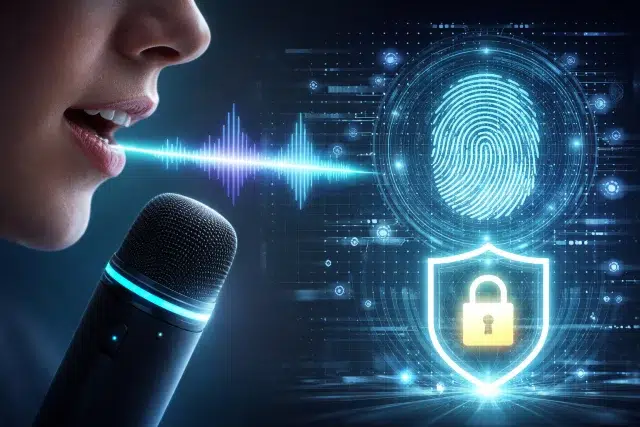
If you work in customer experience, banking, fintech, telecom, healthcare, or basically any industry that talks to customers over the phone, you’ve felt it already. Fraud is no longer a handful of suspicious calls. It’s organized, automated, and increasingly powered by AI.
At the same time, identity is getting messy. People want frictionless logins, regulators want stronger assurance, and security teams want fewer account takeovers. That’s where Agentic AI Pindrop Anonybit comes into the conversation: a practical way to think about how “agentic” automation is colliding with voice authentication and privacy-preserving digital identity.
In this article, we’ll compare what Agentic AI Pindrop Anonybit means in real life, how voice authentication differs from broader digital identity approaches, and how to decide which toolset fits your risk profile. We’ll keep this grounded in how organizations actually deploy these technologies, especially in contact centers where voice is still the front door for many high-value transactions.
What “Agentic AI” changes in identity and fraud prevention
Agentic AI is showing up everywhere: AI agents that can take actions, chain tasks, talk to systems, and operate with a degree of autonomy. In customer experience, it can mean automated resolution. In security and payments, it can mean agents that initiate transactions, verify users, or flag risk.
Here’s the catch: as soon as you give an AI agent the ability to do things, identity becomes the choke point. If the system can’t reliably confirm “who” is acting (human or agent) and “who” is being represented (customer identity), then automation becomes a risk amplifier.
That’s why Agentic AI Pindrop Anonybit is a useful comparison. Pindrop has strong positioning in voice security and fraud detection for phone channels. Anonybit is positioned around privacy-first, decentralized biometrics and identity-enabling infrastructure. Together, they represent two different angles on the same problem: verifying trust in a world where voices, faces, and credentials can be faked.
Why voice is the new fraud battleground
Voice used to feel “human enough” to trust. Now, voice can be cloned.
Pindrop’s own reporting and announcements have highlighted a sharp rise in deepfake-related fraud signals. In its 2025 Voice Intelligence and Security messaging, Pindrop points to a major surge in deepfake fraud and growing pressure on contact centers to harden voice channels.
This lines up with a broader pattern: deepfake impersonation is becoming cheaper, easier to scale, and more convincing. Recent reporting describes deepfake fraud as occurring on an “industrial scale,” fueled by accessible AI tooling and real-world losses across regions and organizations.
That context matters because Agentic AI Pindrop Anonybit is not just a tech comparison. It’s a strategy conversation: what is your primary threat model, and how do you block it without destroying customer experience?
Voice authentication vs digital identity: the simple difference
Before we compare platforms, let’s separate two terms people often mix up.
Voice authentication (what it tries to prove)
Voice authentication focuses on answering: “Is this caller who they claim to be?” It usually relies on voice biometrics, call audio signals, behavioral patterns, and sometimes call metadata. In contact centers, it can reduce friction compared to security questions and help detect suspicious calls earlier. Pindrop describes using voice analysis alongside other signals to authenticate callers and detect threats.
Digital identity (what it tries to manage)
Digital identity is broader: enrollment, identity proofing, credential lifecycle, authentication strength, and federation across systems. NIST’s Digital Identity Guidelines frame identity proofing and authentication as part of a risk-based assurance model.
So when you see Agentic AI Pindrop Anonybit, think:
- Pindrop: voice channel trust and fraud defense
- Anonybit: privacy-preserving biometric identity foundations across channels
Agentic AI Pindrop Anonybit: what each platform is trying to solve
Pindrop in the real world
Pindrop positions its platform around voice security for enterprises, especially contact centers. The focus is typically:
- Detecting voice fraud attempts
- Spotting synthetic or manipulated audio patterns
- Authenticating callers with less friction
- Using voice plus metadata and AI-driven signals for risk decisions
A recent partnership expansion between NICE and Pindrop highlights how voice security is increasingly embedded directly into customer experience stacks rather than bolted on later. That’s a sign of where Agentic AI Pindrop Anonybit is headed: identity decisions happening in real time inside the workflow.
Anonybit in the real world
Anonybit positions itself around decentralized biometrics and privacy-focused identity. Its messaging emphasizes protecting biometric data while still enabling verification, across multiple modalities (including voice as one of them in broader claims).
Anonybit has also publicly discussed “identity-bound AI agents,” which is directly relevant to agentic automation, where you want an agent’s actions to be securely linked to permissions, identity controls, and privacy rules.
So in Agentic AI Pindrop Anonybit, you’re comparing two different approaches:
- One anchored in the phone channel threat surface
- One anchored in privacy and identity infrastructure across channels
Comparison table: Agentic AI Pindrop Anonybit side by side
| Dimension | Pindrop (voice security emphasis) | Anonybit (privacy-first identity emphasis) |
|---|---|---|
| Primary problem | Voice fraud detection and caller authentication in voice channels | Privacy-preserving biometric identity and secure enrollment/verification |
| Typical deployment zone | Contact center, IVR, voice interactions | Cross-channel identity layers, biometric enrollment and verification workflows |
| Core signals | Voice analysis, call audio, metadata, behavioral indicators | Decentralized biometrics concepts, multi-modal support positioning |
| Best fit | High call volume + high fraud risk environments | Organizations prioritizing privacy, consent, biometric protection, and identity portability |
| Agentic AI angle | Real-time risk scoring that can guide automated actions in CX workflows | Identity-bound agent workflows and privacy-preserving controls |
This table is not about “who wins.” It’s about aligning the tool to the job.
Where Agentic AI Pindrop Anonybit fits in a modern security architecture
Most mature organizations don’t choose “voice authentication or digital identity.” They layer them.
A practical architecture often looks like this:
Layer 1: Identity proofing and enrollment
This is where you establish a user’s identity and bind authenticators. The NIST model is helpful here because it forces a risk-based discussion around assurance levels and lifecycle management.
Layer 2: Authentication and step-up controls
This is where you authenticate regularly, and step up when risk increases. Step-up could mean:
- stronger authentication factors
- additional verification checks
- human review
- or transaction limits until confidence rises
Layer 3: Channel-specific fraud defenses
This is where Pindrop-like voice defenses shine, because the phone channel has unique risks: social engineering, synthetic voice, call spoofing, and fast-moving scam scripts.
Layer 4: Agentic automation guardrails
This is the new part. With agentic AI, the system might act on behalf of a user or agent. If your workflows now include AI agents that can move money, unlock accounts, change account details, or approve actions, you need:
- auditable identity binding
- permissions and policy controls
- strong verification before sensitive actions
This is exactly why Agentic AI Pindrop Anonybit is becoming a real comparison instead of a theoretical one.
Common scenarios and which approach fits better
Scenario A: Contact center account takeover attempts
A fraudster calls in, knows personal details, and tries to reset credentials. Your best leverage is early detection, before the agent is socially engineered.
Best fit:
- Agentic AI Pindrop Anonybit leaning Pindrop because voice channel protection and fraud detection are the front line in that moment.
Scenario B: Omnichannel identity with privacy requirements
You’re supporting web, mobile, in-person, and call center, and you’re concerned about biometric data storage risk and consent.
Best fit:
- Agentic AI Pindrop Anonybit leaning Anonybit if your program is driven by privacy, biometric protection, and cross-channel identity foundation goals.
Scenario C: AI agents handling sensitive workflows
You want AI agents to automate processes like dispute handling, order management, or payment workflows, but you need strong identity binding and verifiable accountability.
Best fit:
- Agentic AI Pindrop Anonybit leaning toward identity-bound agent controls and auditable identity mechanisms, which Anonybit has explicitly discussed in its public announcements.
Scenario D: You need both, and you need them fast
This is common. You have rising voice fraud today, and you also need modern digital identity tomorrow.
Best fit:
- Use voice security controls in the contact center while planning a longer-term identity foundation based on risk-based guidelines and privacy requirements.
Agentic AI Pindrop Anonybit: what to look for when evaluating tools
If you’re comparing options in this space, here’s what actually matters.
1) Your threat model, not your wishlist
Ask:
- Is most fraud happening through voice calls, or through account logins?
- Are you seeing synthetic audio attempts or mostly social engineering?
- Which transactions are highest value and highest abuse rate?
Voice-specific defenses shine when the phone channel is your pain point. Identity foundations shine when your problem is fragmented authentication across channels.
2) Enrollment quality and recovery workflows
Voice authentication can reduce friction, but enrollment and recovery are where security programs break. If a fraudster can enroll as a victim or abuse account recovery, your fancy authentication won’t save you.
Anchor these decisions in a risk-based framework like NIST’s guidance on identity proofing and authentication assurance.
3) Privacy posture and biometric data handling
Biometric security is not only “accuracy.” It’s also:
- how biometric data is stored
- whether it can be reconstructed
- what happens if it leaks
- how consent and retention are handled
That’s why decentralized or privacy-enhancing approaches are getting attention in identity discussions.
4) Integration into real workflows
The best fraud detection in the world fails if it’s not used at decision time. Look for:
- real-time scoring
- agent-facing guidance (what to do next)
- friction controls (when to step up)
- integrations with CX systems
Partnership announcements like NICE and Pindrop point to a growing trend of embedding voice security into customer experience platforms.
5) Agentic AI controls: permissions, auditability, and “who did what”
This is the big 2026 question: if AI agents can act, how do you make sure they act only within intended boundaries?
You want:
- identity binding (agent identity and user identity)
- scoped permissions
- strong authentication for sensitive operations
- detailed audit trails
This is where Agentic AI Pindrop Anonybit becomes more than marketing. It becomes governance.
Actionable best practices you can implement immediately
Even if you’re not ready to deploy new platforms tomorrow, you can raise the floor quickly.
Reduce voice fraud risk in the next 30 days
- Tighten high-risk call flows: password resets, SIM swaps, account detail changes
- Add step-up verification for suspicious calls
- Train agents with short, practical scripts: what fraud sounds like, and what “safe next steps” look like
- Introduce friction only when risk is high, not for every caller
Make digital identity stronger without killing UX
- Map your transactions by risk level and required assurance level (don’t treat all actions equally)
- Standardize recovery paths (recovery is where attackers live)
- Log identity decisions so you can learn which checks work and which are bypassed
Prepare for agentic automation safely
- Start with low-risk actions first, then expand
- Require strong verification for “irreversible” actions (money movement, credential changes)
- Set policy limits for agents (spend limits, change limits, time-based limits)
- Audit agent actions like you would audit an admin user
This is the practical middle ground where Agentic AI Pindrop Anonybit can be applied as a framework, even before you pick vendors.
Frequently asked questions
Is voice authentication still reliable with deepfakes?
It can be, but only if it’s treated as part of a layered defense. Deepfake fraud signals are rising, and voice channels need controls that detect suspicious patterns and synthetic indicators rather than trusting voice alone.
What’s the difference between voice biometrics and digital identity?
Voice biometrics helps verify a person based on voice signals during interactions. Digital identity covers the full lifecycle: proofing, enrollment, authentication methods, assurance levels, and federation across services, as described in guidelines like NIST’s.
Do I need both Pindrop-style voice security and Anonybit-style identity?
If you have heavy call volumes and meaningful fraud exposure, voice security often delivers fast impact. If you also operate across mobile, web, and in-person channels, an identity foundation helps unify assurance and privacy controls. Many organizations end up combining both approaches.
How does agentic AI change identity requirements?
It raises the stakes. When systems can take autonomous actions, identity binding, scoped permissions, and auditable logs become mandatory. Public discussions around identity-bound AI agents highlight how the market is moving toward secure agent governance.
Conclusion
The easiest mistake to make right now is treating identity like a checkbox and fraud like a one-time project. In reality, both are moving targets, and agentic automation accelerates everything.
A voice-first approach can be the fastest way to reduce fraud in contact centers, especially as deepfake and impersonation tactics grow. A privacy-first identity approach can help you build long-term resilience by protecting biometric data and strengthening cross-channel verification.
That’s the real lesson of Agentic AI Pindrop Anonybit. It’s not a popularity contest. It’s a map. Use voice security where the phone channel is bleeding. Use privacy-preserving identity foundations where trust, compliance, and biometric protection matter most. And if you’re building agentic automation, treat identity binding and governance as the first feature, not the last.
In the final stretch of implementation, remember this: customers don’t care which platform you chose. They care that access is smooth, fraud is blocked, and their personal data stays protected. If you can deliver that, you’re already ahead.
If you want a quick mental anchor, think in terms of voice biometrics and identity assurance working together, not competing. In that combined approach, Agentic AI Pindrop Anonybit becomes a practical playbook for modern trust.