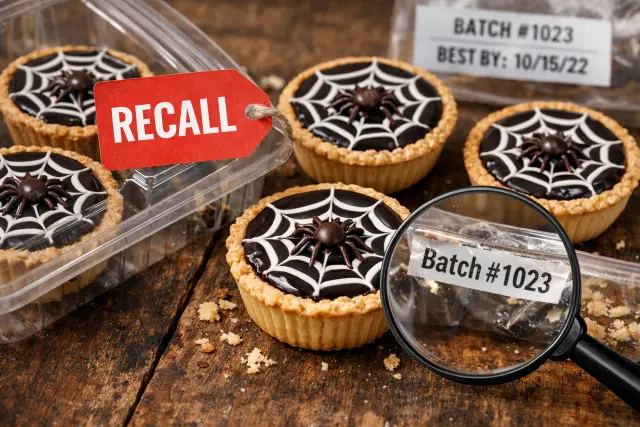
If you bought a spooky seasonal dessert at a Mid Atlantic farmers market in October, this update is for you. The Atwater’s Spider Web Tarts Recall was issued because some Spider Web Tarts were sold in packaging that did not disclose a major allergen: almonds (via almond flour). For anyone with a tree nut allergy, that is not a small oversight, it can turn dessert into an emergency.
In this guide, I’ll walk you through the practical stuff people actually need: the exact sale dates tied to the Atwater’s Spider Web Tarts Recall, what “affected batches” really means here, how to identify the product quickly (including the key date code), and what to do if it is sitting in your fridge or freezer right now.
Quick overview of the Atwater’s Spider Web Tarts Recall
Here is the plain language summary of the Atwater’s Spider Web Tarts Recall:
- Why it was recalled: Undeclared almond flour (a tree nut allergen)
- Where it was sold: Specific farmers markets in Maryland, Washington DC, and Virginia (not retail stores)
- When it was sold: October 19, 2024 and October 20, 2024
- How to identify it: Clear clamshell package, green Atwater’s “Spider Web Tart” label, and Julian date code 292 on the bottom
- What to do: Do not eat it if you have a tree nut allergy. Contact Atwater’s for return and refund instructions.
That’s the core of the Atwater’s Spider Web Tarts Recall. Now let’s get more specific, especially about the affected batches and how to confirm whether yours is included.
Affected batches and dates: what “affected” means in this recall
Some recalls involve nationwide distribution, lot numbers across multiple states, and long lists of UPC codes. The Atwater’s Spider Web Tarts Recall is narrower, and that’s helpful.
According to the FDA-posted company announcement, the recalled Spider Web Tarts were the clamshell packages sold on October 19, 2024 and October 20, 2024 at the listed farmers markets.
So, in practical terms, “affected batches” here are defined by:
- Sales window: 10/19/24 and 10/20/24
- Sales channel: Farmers markets only (none were sold in retail stores)
- Packaging identifier: Julian date 292 plus the Spider Web Tart label and clamshell packaging
That combination matters because people often ask, “I bought it around that time, but not exactly.” With the Atwater’s Spider Web Tarts Recall, the two-day sales window is the first big filter.
Why the dates matter so much
If you purchased a Spider Web Tart:
- Before October 19, 2024, it is not included in the recall announcement.
- After October 20, 2024, it is not included in the recall announcement.
- On October 19 or 20, 2024, keep reading and check the packaging details.
Those dates are explicitly stated in the FDA post.
Where the recalled tarts were sold
The Atwater’s Spider Web Tarts Recall applies to products sold at these farmers markets in the MD, DC, VA area:
- Arlington Courthouse
- Falls Church
- H Street
- Mount Pleasant
- Silver Spring
- Dupont Circle
- Greenbelt
- Westover
If you were at one of these markets on October 19 or 20, you’re in the highest-likelihood group affected by the Atwater’s Spider Web Tarts Recall.
A quick real-world example: imagine you picked up weekend groceries at Dupont Circle, got a couple of baked goods, and tossed them into the fridge. Weeks later, you see “Spider Web Tart” on the label and wonder if it is part of the recall. The fastest way to know is to flip the clamshell and look for the Julian code.
How to identify the recalled product in 30 seconds
This is the part most people care about: “Is the one I have the recalled one?”
The recalled product described in the Atwater’s Spider Web Tarts Recall matches all of the following:
- Packaged in a clear clamshell plastic container
- Has a green Atwater’s “Spider Web Tart” label on top
- Shows a Julian date of 292 on the bottom
Identification checklist
Use this quick checklist. If you can check all three boxes, treat it as part of the Atwater’s Spider Web Tarts Recall:
- Clear clamshell package
- Green Atwater’s “Spider Web Tart” label
- Bottom code includes Julian date 292
If you only match one detail (for example, it is in a clamshell but has a different product label), do not assume it’s included. The Atwater’s Spider Web Tarts Recall is specific about the label and date code.
What does “Julian date 292” mean?
Many food producers use Julian-style day-of-year codes for internal tracking. A code like 292 typically refers to the 292nd day of the year. That does not automatically tell you everything as a shopper, but it is useful for matching a recall notice.
For this situation, you do not need to convert the number into a calendar date. You simply need to match the code mentioned in the Atwater’s Spider Web Tarts Recall.
At a glance table: affected product details
Here’s a simple reference table you can screenshot and share with family.
| Detail | What the recall says |
|---|---|
| Recall name | Atwater’s Spider Web Tarts Recall |
| Hazard | Undeclared almond flour (tree nut allergen) |
| Sold on | October 19, 2024 and October 20, 2024 |
| Sold at | Arlington Courthouse, Falls Church, H Street, Mount Pleasant, Silver Spring, Dupont Circle, Greenbelt, Westover |
| Package | Clear clamshell, green “Spider Web Tart” label |
| Code on bottom | Julian date 292 |
| Illness reports (at posting) | None reported |
| What to do | Contact Atwater’s for return/refund |
Why undeclared almonds are treated as a serious risk
The reason the Atwater’s Spider Web Tarts Recall exists is simple: allergens are not like “extra sugar” where the risk is long-term. For someone with a tree nut allergy, an exposure can cause a rapid reaction that may become life-threatening.
The FDA’s own recall framework describes Class I as the most serious classification, used when there is a reasonable probability a product could cause serious health consequences or death.
A Newsweek report later described the Spider Web Tart recall as being classified by FDA as Class I, highlighting why allergen labeling failures get treated with urgency.
How common are food allergies?
It is easy to assume “this affects a tiny number of people,” but food allergies are not rare.
- CDC data from the National Health Interview Survey found that in 2021, 5.8% of U.S. children had a food allergy.
- A University of Nebraska Food Allergy Research & Resource Program resource notes an estimated nut allergy prevalence around 1.1% in the U.S., and also emphasizes that nut reactions can be severe.
So yes, the Atwater’s Spider Web Tarts Recall targets a specific product, but the underlying issue is relevant to a lot of households: allergen controls and correct labeling.
What caused the Atwater’s Spider Web Tarts Recall?
According to the FDA-posted announcement, the recall was initiated after it was discovered that the almond-containing product was distributed in packaging that did not reveal the presence of almonds. The company stated the issue was caused by a temporary breakdown in production and labeling processes.
That “temporary breakdown” wording matters. It suggests this was not a formula change (where the ingredient list was updated but older packaging remained) but a process lapse where the wrong packaging or label was used.
If you have ever seen a bakery moving fast during a busy weekend market, you can picture how this happens: products are prepped, packed, labeled in batches, and a small mismatch between what is inside and what is printed can slip through unless controls are tight.
What to do if you bought one
The steps below apply even if you are not sure yet. If you suspect your tart matches the description in the Atwater’s Spider Web Tarts Recall, handle it like a recalled item until confirmed.
Step 1: Do not eat it if you have a tree nut allergy
This sounds obvious, but it’s worth stating plainly. If you or anyone in your home has an almond or tree nut allergy, do not taste it “just to check.” The Atwater’s Spider Web Tarts Recall exists precisely because the allergen was not declared.
Step 2: Check the packaging and bottom code
Flip the container over and look for the Julian date. If you see 292 and the green “Spider Web Tart” label, you are likely looking at the recalled product.
Step 3: Contact Atwater’s for return and refund
The company instructed consumers who purchased the tarts on the listed dates at the listed markets to call or email Atwater’s to return the product and initiate a refund.
Practical tip: when you reach out, include:
- The market location (for example, Silver Spring or H Street)
- The purchase date (October 19 or 20)
- A photo of the top label and the bottom code
That usually speeds things up for both you and the company.
Step 4: If symptoms occur, treat it as urgent
The FDA post notes no illnesses had been reported at the time of posting. Still, allergic reactions can happen quickly and unpredictably.
If someone has eaten the product and develops symptoms consistent with an allergic reaction (hives, swelling, vomiting, wheezing, trouble breathing, dizziness), seek medical help immediately. This is not the moment to “wait it out.”
Atwater’s Spider Web Tarts Recall FAQ
What is being recalled exactly?
The Atwater’s Spider Web Tarts Recall covers clamshell packages of Spider Web Tarts sold on October 19 and October 20, 2024 at specific farmers markets, due to undeclared almond flour.
Were these sold in grocery stores or Atwater’s retail locations?
The company announcement states none were sold in retail stores. The distribution described is via farmers markets listed in the notice.
How can I identify the recalled tart if I threw away the receipt?
You do not need a receipt to perform the basic identification.
Look for:
- Clear clamshell packaging
- Green “Spider Web Tart” label
- Bottom code showing Julian date 292
If you have the tart but not the packaging, identification becomes harder. In that case, focus on where and when you bought it (one of the listed markets on October 19 or 20) and contact the company with whatever details you remember.
What is the allergen risk?
The issue is undeclared almonds (almond flour). People with tree nut allergies can face serious or life-threatening reactions from exposure.
Was this a “high risk” recall?
The FDA describes Class I recalls as the highest level of concern. A later report noted the Spider Web Tart recall was classified as Class I by FDA.
A simple “do I have it” decision guide
If you want the shortest path to a decision, use this:
- Did you buy an Atwater’s Spider Web Tart at one of the listed farmers markets?
- Was it on October 19 or October 20, 2024?
- Does the bottom of the clamshell show Julian date 292?
If the answer is “yes” to all three, treat it as included in the Atwater’s Spider Web Tarts Recall and follow the return and refund instructions.
What this recall tells us about labeling and compliance
The most frustrating part of the Atwater’s Spider Web Tarts Recall is that this kind of issue is avoidable with strict labeling controls. Many food businesses use layered checks:
- Ingredient verification before production
- Label reconciliation (matching label rolls to product runs)
- Line checks during packing
- Final quality checks before distribution
When even one layer slips, allergens are the area where consequences can be immediate.
It’s also not unusual for regulatory follow-up to dig into how labeling systems are managed. For context, the FDA issued a warning letter to One Roof, LLC (Atwater’s parent company referenced in the recall post) that discussed misbranding concerns involving several products, including “ATWATER’S SPIDER WEB TART,” in the broader context of labeling compliance.
To be clear, a warning letter is not the same thing as a recall notice, and it covers wider compliance topics. But it helps explain why allergen labeling gets so much regulatory attention: it is one of the most preventable causes of serious harm.
Practical tips for consumers: reducing recall risk at home
Even if you never bought this tart, the Atwater’s Spider Web Tarts Recall is a good reminder that smart habits at home make recalls easier to handle.
1) Keep packaging until you finish the product
This sounds small, but it is the difference between “I can check the code” and “I think it was that one?”
For foods from farmers markets, bakery counters, or pop-up vendors, the packaging often contains the only traceable info.
2) Take a quick photo of specialty items
If you buy seasonal goods (Halloween pastries, holiday cookies, limited runs), snap a photo of the label once. If a recall hits later, you can search your camera roll faster than your memory.
3) If your household has allergies, set a “label first” rule
Before anyone takes a bite, read the ingredient statement and allergen warnings together. That habit catches more problems than people expect, especially when a product has been re-packed or gifted.
Conclusion
The Atwater’s Spider Web Tarts Recall is specific, but the safety lesson behind it is universal. The affected products were Spider Web Tarts sold on October 19 and October 20, 2024 at a defined list of farmers markets, packaged in clear clamshell containers with a green label and a bottom code showing Julian date 292.
If you find a match, do not gamble with it. Treat it as part of the Atwater’s Spider Web Tarts Recall, keep it out of reach of anyone with allergies, and contact Atwater’s for return and refund steps as outlined in the official notice.
Finally, if you live with food allergies, this is a reminder to take labeling seriously. Good food labeling is not just paperwork, it is a safety system people depend on every day.