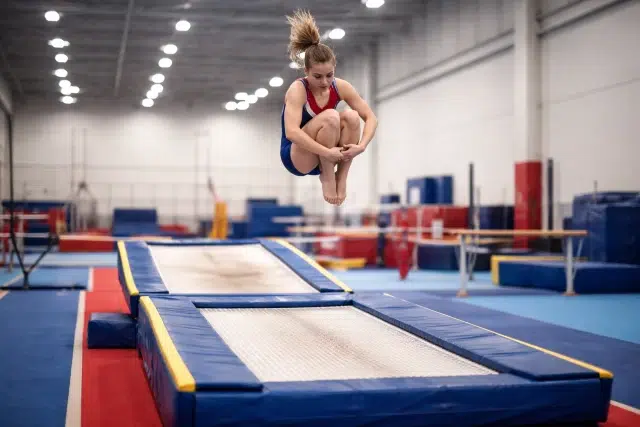
If you’ve ever watched trampoline gymnastics and thought, “Okay, that looks like trampoline… but faster and somehow more intense,” you’re probably looking at What is Double Mini Trampoline in action. It’s one of those sports that seems simple at first glance: a smaller trampoline, a short run, two big skills, stick the landing. Then you learn what’s actually happening in the air and you realize it’s basically acrobatics at sprint speed.
In this guide, I’m breaking down What is Double Mini Trampoline in a way that makes sense whether you’re a parent, a beginner athlete, a coach-in-training, or just someone who wants to understand what they’re watching. You’ll learn how the apparatus works, how routines are built, how scoring works, and what training looks like in real life. I’ll also cover safety and injury risk, because yes, this sport is thrilling, but it’s also one that rewards smart preparation.
What is Double Mini Trampoline, exactly?
What is Double Mini Trampoline (often shortened to DMT) is a discipline inside trampoline gymnastics where athletes perform a short routine made up of two elements: a mount (or spotter) and a dismount, finishing on a landing mat. Unlike a full-size competition trampoline where the athlete stays on the same bed for multiple skills, Double Mini is designed around two explosive takeoffs and a controlled finish.
In official rules, a Double Mini exercise is defined as two elements performed with control, form, and execution quality, featuring twisting and non-twisting skills.
What makes Double Mini stand out is the blend of:
- Speed (you approach with a run)
- Power (the bed is tight and responsive)
- Precision (you must hit the correct zones and then land clean)
- High difficulty (big rotations and twists in a short window)
If trampoline feels like “height + rhythm,” Double Mini feels like “burst + stick.”
The Double Mini Trampoline apparatus, explained like a human
The apparatus looks like a compact runway trampoline with zones marked on the bed. It includes a mounting end and a spotter/dismount area, and the rules define where each phase must happen. If an element is performed in the wrong area, the exercise can be invalid.
The FIG apparatus norms also specify bed markings and zones (including end markers and a center zone) that help judges and athletes identify correct placement.
Why it has “zones” (and why athletes care a lot)
In Double Mini, placement is not just style, it’s legality.
- The mount must take off from the mounting area and land in the spotter/dismount zone.
- The spotter element (if used) must take off and land in the spotter/dismount zone.
- The dismount must take off from the spotter/dismount zone and land in the landing area.
That’s why you’ll see athletes drilling approach speed and “bed feel” endlessly. It’s not only about flipping. It’s about flipping from the right place.
How a Double Mini routine works (mount, spotter, dismount)
A standard Double Mini routine is short, but it has a clear structure.
1) The approach
Athletes take a short run to build momentum. You’ll hear coaches talk about “controlled speed.” Too slow and you lose power. Too fast and you lose placement.
2) The first element: Mount or Spotter
Per the rules, the first element is either:
- a mounting element (often onto the angled/mounting end then into the bed), or
- a spotter element (performed in the spotter/dismount zone).
3) The second element: Dismount
The dismount takes off from the spotter/dismount zone and finishes on the landing area. This is the “stick it” moment judges and spectators fixate on.
What counts as “started” in competition?
A routine is considered started when the gymnast initiates the first element takeoff from the Double Mini, whether at the mount or spotter zone.
That detail matters because it affects restarts and judging decisions when something goes wrong.
What is Double Mini Trampoline scoring based on?
One reason people search What is Double Mini Trampoline is because the scoring can feel mysterious. The good news is: it’s not random, it’s structured.
In general, Double Mini scoring is built around:
- Execution (form, control, technique)
- Difficulty (how complex the skills are)
- Landing and stability (did you finish under control?)
The Code of Points includes strict expectations for finishing: after the dismount, the athlete must end under control with feet in the landing area, and they should hold an upright position for roughly three seconds or risk stability deductions.
The landing is not a “bonus.” It’s part of the skill.
A lot of new fans treat the landing like an afterthought. In Double Mini, the landing is a huge part of the reality.
If the athlete does not finish correctly in the landing area, the dismount may not be counted.
That’s why you’ll see elite athletes choose slightly “smaller” difficulty sometimes if it increases the odds of a clean, creditable dismount.
Double Mini vs trampoline vs tumbling (quick comparison)
People often mix these up, especially if they’re new to trampoline & tumbling as a sport. Here’s a clean comparison.
| Discipline | Surface | Routine length | What you’re judged on most |
|---|---|---|---|
| Double Mini Trampoline | Small bed with zones + landing mat | 2 elements | Difficulty + execution + correct zones + landing control |
| Individual Trampoline | Full-size trampoline bed | 10 elements | Consistency, form, height/rhythm, difficulty (event-specific) |
| Tumbling | Spring track | 8 elements (pass) | Speed, power, form, landing control |
If you’re learning What is Double Mini Trampoline, the key takeaway is this: it’s the only one where the whole routine is basically “two big moments” that must happen in the correct areas and end clean.
Why Double Mini is so popular with athletes
Double Mini attracts a specific type of athlete. If you like explosive skills, quick feedback, and measurable progress, it’s addictive.
Here are a few reasons athletes gravitate toward it:
- Short routines mean you can repeat passes and refine quickly.
- High difficulty potential means ambitious athletes can build impressive skill sets.
- Transferable skills help with tumbling, trampoline, and even some diving mechanics.
Coaches also like it because it teaches:
- approach mechanics (speed + posture)
- spatial awareness (twisting and flipping on command)
- landing discipline (finishing under control, every time)
Common skills you’ll see in Double Mini Trampoline
Even if you don’t know the names, you can learn to “read” what’s happening.
Typical categories include:
- Single somersaults (tuck, pike, straight)
- Double somersaults (often with twists)
- Barani-style actions (forward with twist)
- Fulls, double fulls, and beyond depending on level
The main pattern is:
- a controlled first element that sets height and placement
- a bigger, more committed dismount that must still land clean
At higher levels, athletes choose combinations that balance difficulty with landing reliability, because a wild landing can erase the value of a huge skill if it’s not credited properly.
What training for Double Mini actually looks like
A lot of people assume training is just “do flips until you get it.” Real Double Mini training is more like a system.
Phase 1: Mechanics and shapes
Athletes drill:
- straight jump control
- tuck/pike/straight body positions
- twisting mechanics (set, block, spot)
Phase 2: Approach and bed placement
This is where Double Mini becomes its own beast. Athletes work:
- run speed consistency
- takeoff angle
- landing on the correct zone
Because correct areas matter for validity, placement is trained like a skill, not a suggestion.
Phase 3: Landing and “stick” culture
Coaches will often set goals like:
- 10 clean landings in a row before increasing difficulty
- “no steps” standards
- hold drills (standing tall for stability)
That lines up with competition expectations about control and stability after landing.
Phase 4: Routine building
Instead of chasing the hardest skills immediately, good programs build routines like this:
- choose a safe, repeatable first element
- pair it with a dismount that scores well but lands reliably
- test under pressure (timers, mock meets, fatigue sets)
Safety, injury risk, and why coaching matters
It’s impossible to talk honestly about What is Double Mini Trampoline without discussing safety. The sport is designed for trained athletes using proper equipment, but trampoline-related injuries are common in recreational settings.
The American Academy of Orthopaedic Surgeons notes that trampoline injuries can be extensive, citing U.S. data including emergency department visits and emphasizing that most injuries occur in the home environment and largely affect children.
The American Academy of Pediatrics also discourages home trampoline use except in settings with professional coaching and specialized equipment.
What this means for Double Mini specifically
Double Mini training is typically done in structured gyms with:
- proper mats and landing areas
- coaches who understand progression
- spotters when appropriate
- rule-based skill development
That structured environment is the difference between “risky play” and a managed sport.
Practical safety habits used in real gyms
Without turning this into a lecture, here are the habits that serious programs treat as non-negotiable:
- Warm up ankles, knees, hips, and core before hard passes
- Progress difficulty only after consistent clean landings
- Use mats and landing surfaces designed for the discipline
- Avoid fatigue-based “one more huge pass” decisions
Who is Double Mini Trampoline for?
Double Mini works well for several groups:
Kids starting in trampoline & tumbling
They usually begin with basic jumps, shape control, and safe landings before adding rotations.
Tumblers who want more airtime
Tumbling athletes often love the height and twist potential.
Trampoline athletes who like quick routines
Some athletes prefer two high-quality elements over long sequences.
Adults returning to sport (with the right gym)
There are adult programs in many places, but the key is coaching and safe progression.
If you’re trying to understand What is Double Mini Trampoline for your own goals, the best question isn’t “Can I do it?” It’s “Do I have access to coaching that will build it correctly?”
Double Mini competitions and how meets run
In many systems, athletes compete different levels with defined routine requirements. For example, USA Gymnastics publishes Double Mini routine guidance and development materials for competition cycles.
Even if you’re not in the U.S., most competitive structures follow the same idea:
- start with simpler mounts/dismounts
- add twists and multiple rotations over time
- require clean landings and controlled finishes
FAQs about Double Mini Trampoline
What is Double Mini Trampoline in one sentence?
What is Double Mini Trampoline is a trampoline gymnastics discipline where athletes perform two high-skill elements (mount/spotter and dismount) on a smaller trampoline and land under control on a mat.
Is Double Mini Trampoline an Olympic event?
Double Mini is governed within trampoline gymnastics rules, but it is not currently part of the Olympic trampoline events list in the FIG Code of Points categories overview.
(Competition opportunities still exist at major events depending on the event structure and selection.)
Why do athletes sometimes “lose” a big skill even if they complete it?
Because the rules are strict about correct zones and controlled landing. If the dismount doesn’t end under control in the landing area, it may not be counted.
What’s the difference between a mount and a spotter?
A mount takes off from the mounting area and lands in the spotter/dismount zone, while a spotter element takes off and lands in the spotter/dismount zone.
Is Double Mini safer than a backyard trampoline?
It can be safer because it’s usually coached, progressed, and performed with specialized equipment, while medical organizations warn that home trampoline use carries meaningful injury risk.
Conclusion: So, what is Double Mini Trampoline and why does it matter?
By now, What is Double Mini Trampoline should feel a lot clearer. It’s not “just a smaller trampoline.” It’s a structured competitive discipline built around two powerful elements, strict zone requirements, and a controlled landing that can make or break the score.
It’s also a sport that rewards smart athletes: the ones who respect technique, repeatability, and progressions. If you’re watching as a fan, you’ll enjoy it more once you start noticing the little details: where the takeoff happens, how the athlete sets for twist, and whether they truly finish under control.
And if you’re exploring it as a sport, remember this: the difference between scary and spectacular is usually coaching, preparation, and the discipline to land well. In that sense, learning What is Double Mini Trampoline is really learning how elite athletes make big moments look effortless.
In the world of gymnastics discipline, Double Mini is the fast, technical cousin that deserves way more attention than it gets.