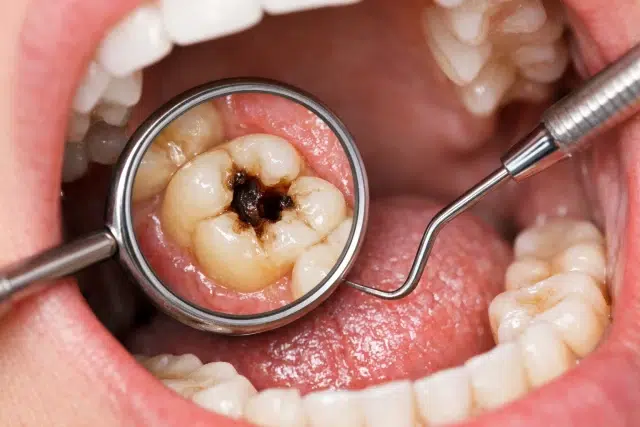
If you’ve ever stared into the mirror, spotted a weird mark on a tooth, and wondered What Does a Cavity Look Like, you’re not alone. A cavity doesn’t always announce itself with a dramatic hole or sharp pain. In fact, early decay can look so subtle that many people miss it until it’s bigger. That’s why it helps to know What Does a Cavity Look Like at different stages, what “normal” tooth variations look like, and which signs mean it’s time to take it seriously.
This guide breaks down What Does a Cavity Look Like in plain language, with real-world examples, a stage-by-stage table, and the common questions people ask when they’re trying to figure out what do cavities look like up close.
First things first: what a cavity actually is
A cavity is an area of tooth structure that’s been damaged by acids made when mouth bacteria feed on sugars and starches. Over time, the tooth loses minerals, weakens, and eventually breaks down into a tiny opening or hole. Mayo Clinic describes cavities as damaged areas that can become openings or holes and lead to pain or infection if they progress.
Here’s the tricky part: What Does a Cavity Look Like depends heavily on the stage. At the beginning, it might look like a dull chalky spot. Later, it can turn brown, black, or visibly “caved in.”
What does a cavity look like in the earliest stage
When people ask What Does a Cavity Look Like, they often imagine a dark hole. But the earliest stage is usually the opposite: light, chalky, and easy to ignore.
Early warning sign: white spots (demineralization)
Early tooth decay often shows up as a white spot where minerals have been lost from enamel. The National Institute of Dental and Craniofacial Research explains that a white spot may appear where minerals have been lost and that decay can sometimes be stopped or reversed at this stage with fluoride and remineralization.
What Does a Cavity Look Like at this point?
- A matte, chalky white patch
- Often near the gumline
- Sometimes more noticeable when the tooth is dry
- May look “frosty” compared to the rest of the tooth
This stage is why “I brush and floss, I can’t have a cavity” isn’t always true. You can be doing a lot right and still develop weak points, especially around brackets, crowded teeth, or areas you don’t clean as thoroughly.
What do cavities look like as they start to break through enamel
As decay continues, the enamel loses more structure. The tooth surface can start looking rougher, darker, and less shiny.
Light brown or tan discoloration
A developing cavity may shift from white to light brown or tan. Cleveland Clinic describes stages where white spots may turn brownish as enamel breakdown progresses.
At this stage, What Does a Cavity Look Like can include:
- A brown dot or patch on the chewing surface
- A darker groove line on molars that doesn’t brush away
- A “shadow” under the enamel that makes the tooth look slightly grayish
One important detail: not every brown groove is a cavity. Molars naturally have pits and fissures that stain easily. A dentist checks whether the enamel is softening, breaking down, or catching an explorer tool.
What does a cavity look like when it becomes a visible hole
This is the stage most people picture when they ask What Does a Cavity Look Like.
A noticeable pit, crater, or hole
Once enamel collapses, you may actually see:
- A small pit that catches floss or food
- A crater-like opening on the chewing surface
- A notch near the gumline (common in some cavities)
- A dark hole between teeth (often harder to see without dental tools)
Mayo Clinic notes cavities become tiny openings or holes that can lead to toothache and infection if untreated.
At this stage, What Does a Cavity Look Like is often easier to recognize, but it can still hide between teeth or beneath the surface where only X-rays reveal it.
A quick visual guide: cavity appearance by stage
Here’s a practical way to think about What Does a Cavity Look Like as it progresses.
| Stage of decay | What it often looks like | What you might notice |
|---|---|---|
| Demineralization (early) | Chalky white spot, dull patch | Often no pain, maybe mild sensitivity |
| Enamel breakdown | White turning tan or light brown, rougher surface | Sensitivity to cold/sweets may start |
| Cavity forms (hole) | Visible pit, crater, dark spot that catches | Food traps, sharper sensitivity |
| Dentin involvement | Darker brown/black area, larger opening, tooth looks “hollow” | Stronger sensitivity, ache |
| Near the pulp / deep decay | Large hole, possible swelling, dark shadowing | Throbbing pain, bad taste, possible infection |
Where cavities show up changes what they look like
What Does a Cavity Look Like also depends on the location. A cavity on a front tooth won’t resemble one hidden between molars.
1) Chewing surface cavities (pits and fissures)
These often look like:
- Dark lines in the grooves
- A small hole in the center of a pit
- A “soft” spot where the groove seems to crumble
People ask what do cavities look like on molars because molars stain easily. A dentist looks for softness, breakdown, and shape changes rather than color alone.
2) Between-teeth cavities (interproximal)
These are the sneakiest because you usually can’t see them directly. What Does a Cavity Look Like here?
- Sometimes a faint dark triangle near the contact point
- Often nothing visible until it’s large
- X-rays are commonly needed to confirm
If floss consistently shreds in one specific spot, or you keep getting food stuck in the same gap, those are clues that can align with hidden decay.
3) Near-gumline cavities
These may look like:
- A notch at the gumline
- A brown or black band close to the gums
- A “dip” where the tooth meets the gum
They can be confused with abrasion (from aggressive brushing) or erosion (from acids). That’s why when you’re trying to figure out What Does a Cavity Look Like, context matters as much as appearance.
4) Root cavities (often with gum recession)
When gums recede, the root surface is exposed. Root surfaces don’t have enamel protection, so decay can progress differently. What Does a Cavity Look Like on a root?
- A soft, darker patch near the gum
- A scooped-out area that may look yellow-brown
- Sometimes a rough, sticky feel
Color guide: what different shades can mean
Color alone doesn’t confirm decay, but it’s a big reason people search What Does a Cavity Look Like.
White
Often early mineral loss. NIDCR points out white spots can be a sign of early decay and sometimes can be reversed with remineralization and fluoride.
Yellow
Can be normal dentin showing through thinner enamel, or staining, or wear. In some cases, it can also indicate a weakened area where enamel has thinned.
Light brown
Could be:
- A stained fissure
- Early cavity changes
- A spot where enamel has begun breaking down
Dark brown to black
This is the “classic” cavity color, but it’s complicated:
- Some old, arrested lesions can look dark yet be hard and stable
- Active cavities may look dark and also feel soft or sticky
- Dark pits in molars might be stain, not decay
So when someone asks what do cavities look like, the honest answer is: color helps, but texture and progression matter.
Texture: the clue people forget to check
When people focus only on color, they miss what dentists often care about: surface integrity.
What Does a Cavity Look Like if you judge by texture?
- Healthy enamel tends to be smooth and glossy
- Early decay can look matte and feel slightly rough
- Active cavities may feel soft, sticky, or “catchy”
- Advanced cavities feel like a hole or sharp edge
Even so, probing a tooth aggressively at home isn’t a good idea. The point is simply that cavities are as much about structure as they are about appearance.
Common “look-alikes” that mimic cavities
A big reason people keep Googling What Does a Cavity Look Like is because many things resemble cavities in the mirror.
Staining from coffee, tea, spices, or smoking
Stains:
- Follow grooves and pits
- Don’t usually create a hole
- Often look like surface color changes without roughness
Tartar (hardened plaque)
Tartar can look yellow or brown and sits near the gumline. It’s not a cavity, but it can contribute to gum problems and trap bacteria.
Fluorosis spots
Fluorosis can create white specks or streaks. These are usually symmetrical or widespread rather than a single patch that changes over time.
Enamel hypoplasia (developmental defects)
Some people naturally have pits or grooves from enamel formation issues. These can trap plaque and raise risk, but they’re not automatically cavities.
Chips and wear
A small chip might look like a “hole,” especially on the edge of a tooth. But wear patterns are often sharp and clean, not soft or discolored.
Symptoms that often show up alongside what you see
If you’re asking What Does a Cavity Look Like, you may also be feeling something. NIDCR notes early decay often has no symptoms, but later stages can cause sensitivity and toothache.
Common signs that match the visual changes include:
- Sensitivity to cold drinks
- Sensitivity to sweets
- A quick zing when breathing in cold air
- Food trapping in one spot
- Bad breath that keeps returning
- A dull ache when chewing
Not everyone feels pain early, which is why visual signs matter so much.
Why cavities are so common (and not just a “hygiene problem”)
It’s easy to assume cavities only happen to people who don’t brush. But the scale of the problem tells a different story.
- The CDC reports that about one in five adults ages 20 to 64 had at least one untreated cavity in permanent teeth.
- The WHO states that untreated dental caries in permanent teeth is the most common health condition, according to Global Burden of Disease 2021.
- NIDCR data indicates nearly 90% of adults ages 20 to 64 have had decay at some point.
That’s why knowing What Does a Cavity Look Like is genuinely practical. This is a common condition, not a rare one.
Real-world scenarios: what people often notice first
Sometimes the first “sign” isn’t a dramatic hole. It’s a small moment you replay later.
Scenario 1: The floss keeps shredding
You floss between two molars and the floss frays in the same spot every time. You don’t see much, but the contact area looks a bit darker. Between-teeth decay can hide until it’s larger, so this is a common pattern for people trying to figure out What Does a Cavity Look Like between teeth.
Scenario 2: A white spot near the gumline
You notice a chalky patch on a front tooth, especially after drying it. No pain. This fits early demineralization, which NIDCR describes as a possible reversible stage.
Scenario 3: “It looks like a black dot but it’s been there forever”
Old stains and arrested decay can look dark and unchanged. The key detail is whether it’s stable, hard, and not progressing. A dentist evaluates this with an exam and sometimes X-rays, rather than guessing by color.
What do cavities look like on kids’ teeth
Kids’ cavities can move faster, especially on baby teeth. The CDC notes that by age 9, about half of children have had cavities in primary or permanent teeth.
What Does a Cavity Look Like in children can include:
- White lines or spots near the gumline (early)
- Rapid shift from white to brown areas
- A visible hole on the chewing surface
- Teeth that look “chipped” but are actually decayed
Because children may not describe sensitivity clearly, visual checks and routine dental visits are especially important.
FAQs people ask when they’re trying to identify a cavity
What Does a Cavity Look Like compared to a stain?
A stain usually looks like a surface color change that stays within the grooves and doesn’t alter the tooth shape. A cavity often involves surface breakdown, roughness, a pit, or an area that changes over time.
What do cavities look like in the mirror?
In a mirror, early cavities might look like chalky white spots or faint brown patches. More advanced cavities can look like a dark pit or visible hole. Between-teeth cavities often aren’t visible without dental tools or X-rays.
Can a cavity look white instead of black?
Yes. Early decay commonly looks white and chalky due to mineral loss. NIDCR describes white spots as an early sign of decay.
What Does a Cavity Look Like under a filling or crown?
It often doesn’t look like anything you can see directly. Decay under restorations is usually detected by X-ray changes, edge breakdown, sensitivity, or a visible gap at the margin.
If it doesn’t hurt, can it still be a cavity?
Yes. Early cavities frequently have no symptoms. NIDCR notes that in early tooth decay, there are not usually symptoms, with pain and sensitivity appearing as it advances.
What do cavities look like on the front teeth?
Front-tooth cavities may show as white spots near the gumline, brown patches, or a small notch where plaque tends to sit. They’re often more noticeable than molar cavities because the surface is smoother and easier to see.
How dentists confirm what you’re seeing
When you’re asking What Does a Cavity Look Like, you’re doing a visual check. Dentists combine multiple tools:
- Visual exam under bright light
- Gentle probing to assess softness
- Bitewing X-rays (especially for between-teeth decay)
- Sometimes special light or imaging tools for early lesions
This matters because the look alone can mislead. Some dark areas are just stain, and some early cavities look almost invisible until the tooth is dried and examined closely.
Conclusion
So, What Does a Cavity Look Like in real life? Sometimes it’s a chalky white patch that blends in unless you know what you’re looking for. Sometimes it’s a brown line in a groove that seems harmless until it starts catching food. And sometimes it’s the obvious crater people picture when they think of decay. The most useful takeaway is that what do cavities look like changes by stage and location, and early decay can be subtle enough to hide in plain sight.
Because cavities are so widespread, from the CDC’s findings on untreated decay in adults to the WHO’s statement that untreated caries is the most common health condition globally, learning What Does a Cavity Look Like is a practical skill, not a niche curiosity.
In the final stretch, it helps to remember the basics: cavities are a structural change in tooth enamel and the layers beneath it. If a spot is changing, roughening, or starting to form an opening, that’s often when the question What Does a Cavity Look Like becomes less theoretical and more urgent.