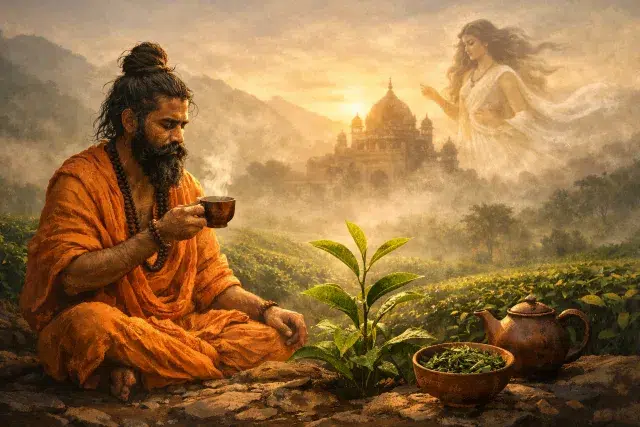
If you have ever paused mid sip of chai and wondered where the whole idea of tea began, you are asking the same question millions of curious readers type into search bars every year: What is the Indian Legend about Tea. The reason it keeps coming up is simple. Tea in India is not just a beverage. It is a habit, a welcome, a break between tasks, and sometimes a small anchor in a busy day.
The fun twist is that What is the Indian Legend about Tea is not only a history question. It is a story question. People want the myth, the meaning, and the moment where a leaf becomes something almost magical.
In Indian popular telling, the most repeated legend connects tea to an Indian monk named Bodhidharma and his fierce commitment to meditation. The story is dramatic, unforgettable, and built around one big theme: wakefulness.
What is the Indian Legend about Tea in one clear explanation
The best known answer to What is the Indian Legend about Tea is a legend recorded in many Zen and tea history retellings. Bodhidharma, traditionally described as an Indian monk who traveled to China, vows to meditate for years without sleep. At some point he dozes off, becomes furious with himself, and tears off his eyelids so he will never fall asleep again. Where they hit the ground, tea plants sprout. Tea then becomes a symbol of alertness and discipline, used by monks to stay awake during long hours of meditation.
Even serious reference sources note that Bodhidharma is wrapped in layers of legend, which is exactly why stories like this travel so well.
Why this story is called an Indian legend even though it spread across Asia
When people ask What is the Indian Legend about Tea, they often mean, why is an “Indian” monk part of a story told widely in China and Japan.
A practical way to understand it is this:
- The figure at the center of the story is traditionally Indian in origin, even if the legend flourished in East Asian Buddhist settings.
- Tea culture spread through monasteries, trade routes, and everyday life, so origin stories mixed and evolved across regions.
- Legends do not behave like timelines. They behave like memory, meaning, and symbolism.
So What is the Indian Legend about Tea is less about proving a single historical origin and more about understanding how people explained tea’s purpose before modern science and modern marketing.
What makes the legend feel believable to tea drinkers
One reason What is the Indian Legend about Tea stays popular is that it matches what tea actually does for many people.
Tea contains caffeine and other compounds that can make you feel more awake. The legend turns that everyday effect into a moral story: stay focused, stay disciplined, stay present.
It also reflects a real pattern in the history of food and drink. Many cultures build “origin myths” around things that shape daily routine. Bread, coffee, spices, and tea all attract stories because they sit at the center of social life.
The legend’s hidden message
Under the dramatic surface, What is the Indian Legend about Tea carries three quiet messages:
- Attention is valuable
- Wakefulness is power
- A simple plant can support a serious practice
That is why the story is often told in spiritual contexts, not just culinary ones.
The other side of the conversation: India’s tea reality is bigger than the legend
Here is where the topic gets more interesting and more honest.
If you only answer What is the Indian Legend about Tea with the Bodhidharma tale, you miss India’s deep, place based relationship with tea plants, especially in the Northeast. Several accounts highlight that indigenous communities in Assam, including the Singpho, used tea in their own ways long before tea became a massive colonial era industry.
That does not cancel the legend. It simply adds another layer.
Think of it like this:
- The legend explains tea’s meaning
- Indigenous practice explains tea’s presence
- Later industry explains tea’s scale
All three can be true in their own category.
A quick snapshot of Singpho tea memory
Stories about the Singpho often mention traditional processing methods and community knowledge that existed before large scale plantation expansion.
Whether you approach it as oral history, cultural memory, or regional tradition, it matters because it shifts What is the Indian Legend about Tea from a single monk story into a wider Indian story about landscape and community.
How tea became a national habit in India
A legend can explain why tea feels meaningful, but it does not explain how tea became so widespread.
Modern India’s tea culture is also tied to large scale cultivation, trade networks, and the everyday economics of food. Today, official and global reports show tea’s huge footprint in livelihoods and trade.
For example:
- A Tea Board of India press release reports that India exported 254.67 million kg of tea in calendar year 2024, with value realization of INR 7,111.43 crore, and India moved up to third position in world tea exports for that year.
- A global tea market report published by IISD discusses tea’s value chains and notes the large role of smallholders in global tea production, including significant smallholder shares in India.
When you see tea at this scale, it makes sense that people keep asking What is the Indian Legend about Tea. In a way, a national habit invites a national story.
The legend and the science agree on one point: alertness
It is worth noticing that What is the Indian Legend about Tea is basically an ancient explanation for something modern science also recognizes: tea can support alertness.
The Bodhidharma story dramatizes the need to stay awake. Real tea drinkers describe a similar effect in calmer terms: steady focus.
That overlap is why the legend keeps getting repeated. It feels “true” even when you treat it as symbolism rather than literal history.
What tea means in Indian daily life, beyond any origin story
Ask ten people in India what tea means and you will hear ten different answers. But certain themes repeat, and they echo the same emotional core behind What is the Indian Legend about Tea.
Tea is often:
- Hospitality: a first offer when someone visits
- Comfort: warmth when the weather turns cool or rainy
- Rhythm: the pause that divides the day into manageable parts
- Conversation: the excuse to sit and talk without rushing
That is also why chai is not just a recipe. It is a social tool.
A real world scenario that shows tea’s cultural role
Picture a small office where the day has been intense. Someone says, “Chai?” No long speech, no formal meeting. Just one word that means, let’s reset together.
In that moment, What is the Indian Legend about Tea feels less like a trivia question and more like a question about why tea has so much emotional weight.
Regional identity: India’s tea is not one flavor
A lot of readers ask What is the Indian Legend about Tea and then immediately ask, “Okay, but why does Indian tea taste so different depending on where it comes from?”
Because India’s tea identity is regional. Here is a simple table that helps keep it clear.
| Tea region | Common flavor traits | How it often shows up in daily cups |
|---|---|---|
| Assam | Bold, malty, strong body | Popular base for milk chai |
| Darjeeling | Floral, lighter body, complex aroma | Often brewed and sipped without milk |
| Nilgiri | Clean, bright, fragrant | Used in blends and refreshing hot cups |
| Dooars and Terai | Balanced strength, good body | Common in everyday blends |
This variety matters because it shows that What is the Indian Legend about Tea is not trying to explain every tea tradition in India. It is one symbolic story living alongside many real tea identities.
How myths like this shape how we talk about tea
There is a reason origin legends survive even when modern research becomes more detailed.
Legends do a few jobs that facts alone do not:
- They give a simple “beginning” people can remember
- They add emotion to an everyday habit
- They offer a moral theme, like discipline or hospitality
So when someone asks What is the Indian Legend about Tea, they are often asking for a story that makes tea feel bigger than a drink.
The most common questions people ask after hearing the legend
Is the Bodhidharma story historically proven?
No, it is best treated as a legend rather than verified history. Many accounts present it as a traditional story explaining tea’s stimulating role for meditation.
That said, the legend’s power is not in proof. It is in symbolism, and in how well it matches tea’s reputation for helping people stay awake.
Why does the legend focus on eyelids?
Because it is instantly visual. Anyone can picture it. Legends often use extreme images to make the lesson unforgettable. In this case, the lesson is: stay awake, stay committed.
That is why What is the Indian Legend about Tea is remembered even by people who do not usually care about food history.
Does India have tea traditions older than colonial plantations?
Many cultural accounts point to indigenous communities in Assam, including the Singpho, with tea related practices and knowledge predating the large plantation era story most people hear first.
This is an important addition because it gives What is the Indian Legend about Tea a second context: tea as a lived regional tradition, not only a traveling monk story.
How big is tea in India today?
Tea is economically significant and globally connected. For example, Tea Board of India reporting states India exported 254.67 million kg of tea in 2024 with value realization of INR 7,111.43 crore.
Global reports also highlight how many livelihoods depend on tea value chains, including a strong role for smallholders.
Why do people keep searching What is the Indian Legend about Tea?
Because it sits at the intersection of story and daily life.
People are not only asking about a monk. They are asking why tea feels comforting, why it creates connection, and why it seems to carry a sense of tradition in every cup. That is exactly what a legend is designed to explain.
What is the Indian Legend about Tea and why it still matters
So, What is the Indian Legend about Tea really?
It is the Bodhidharma origin tale that links tea to wakefulness, meditation, and discipline.
It is also a doorway into India’s larger tea identity, including indigenous relationships with tea in the Northeast that many modern readers are only now hearing about.
And it is a reminder that tea is never only chemistry and trade. Tea is also meaning.
When a story survives for centuries, it is usually because it keeps doing a job. This one helps explain why tea feels like more than a drink. It feels like focus in a cup, comfort in a cup, and company in a cup.
In the last stretch of any tea conversation, it helps to remember that history gives you dates, but legends give you reasons. The Bodhidharma story is best read in that spirit, as a cultural explanation tied to spiritual practice and the rise of tea culture across Asia. You can explore more background on the monk behind the tale in this Bodhidharma story.
Conclusion
If you have been asking What is the Indian Legend about Tea, the simplest answer is the Bodhidharma legend: a story where devotion to meditation leads to tea plants and a lasting symbol of alertness. But the richer answer is that legends and lived traditions often overlap. India’s tea story is also rooted in regions like Assam and in community memories that existed alongside, and sometimes long before, tea became a global commodity.
That blend of myth, place, and daily habit is exactly why What is the Indian Legend about Tea continues to feel relevant. It gives a human meaning to a daily cup, and it helps explain why chai can feel like a pause you can hold in your hands.