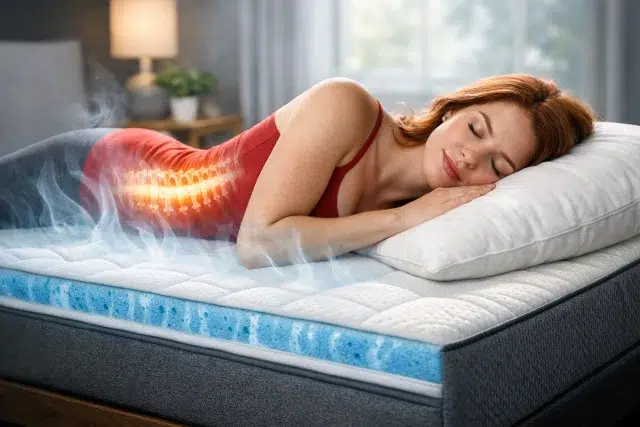
If you are looking at a Core Sleep Mattress, you are probably chasing two things at once: a cooler night and a better morning. Maybe you wake up sweaty. Maybe your lower back feels stiff the moment you sit up. Or maybe you are tired of buying “comfortable” beds that feel fine for a week, then slowly turn into a nightly fight with pressure points.
Here’s the honest truth: a Core Sleep Mattress can feel like a game changer for some people, and just “fine” for others. It depends on how your body holds heat, how you sleep (side, back, stomach, combination), and what kind of back pain you actually have. In this guide, we will break down what cooling really does, how support affects spinal alignment, and what to realistically expect for back pain.
Along the way, I’ll reference research and expert guidance so you are not stuck relying on marketing claims.
Quick takeaway: what most people can expect
A well-designed Core Sleep Mattress usually aims to do three jobs:
- Reduce heat buildup at the surface so you do not feel “trapped” in warmth
- Keep your spine neutral by balancing contouring and pushback
- Lower pressure on sensitive spots like shoulders, hips, and lower back
Research on mattress firmness and back pain is pretty consistent: medium-firm tends to beat very firm for chronic, non-specific low back pain in clinical outcomes.
Systematic reviews also point to medium-firm designs as a practical sweet spot for comfort, sleep quality, and alignment.
That does not mean one firmness works for everybody, but it explains why “hard as a rock” is not the magic solution people think it is.
What “cooling” means on a Core Sleep Mattress (and what it does not)
Cooling is one of the most misunderstood mattress features. A Core Sleep Mattress can help you feel cooler, but it cannot rewrite human biology. Your body still produces heat all night, and your bedding still matters a lot.
Here’s what cooling usually means in real life:
1) Better heat escape at the surface
Some mattresses trap warmth because the top layers hug you tightly and restrict airflow. Cooling-focused designs often use materials and construction that let heat move away from your skin.
Common cooling elements include:
- Breathable covers (often with moisture-wicking fibers)
- Open-cell foams designed to hold less heat
- Phase change materials (PCM) that absorb and release heat as temperatures shift
- Pocketed coils (in hybrids) that create airflow channels
Sleep researchers and sleep medicine sources also point out how temperature is tied to sleep quality, because the body naturally cools down to initiate and maintain sleep. That is why general sleep guidance usually recommends a cooler bedroom environment for most adults.
2) Less “sticky” foam feel
Even when foam is comfortable, some people hate the sensation of sinking and warming up. A Core Sleep Mattress marketed for cooling often tries to limit that deep, slow-melting sink.
What that feels like:
- easier to turn and reposition
- less heat pooling around your torso and hips
- fewer wakeups from feeling too warm (for some sleepers)
What cooling will NOT fix by itself
Cooling does not automatically mean:
- your back pain disappears
- your mattress becomes supportive
- you stop sweating completely
Night sweats can be hormonal, medication-related, stress-related, or tied to your room humidity. A mattress can help with the surface feel, but it is one piece of the puzzle.
Core Sleep Mattress support: why your back cares so much
Support is not just “firmness.” Two mattresses can feel equally firm but support your spine very differently.
When people say a mattress is supportive, they usually mean:
- your hips do not sink so far that your lower back arches
- your waist is not left hanging (especially if you sleep on your side)
- your shoulders and hips can settle in without twisting your spine
The spine-neutral goal
The best-case scenario for most sleepers is a neutral spine position that looks “straight-ish” from the neck through the tailbone, adjusted for your natural curves.
- Back sleepers need gentle contouring under the lumbar curve, without letting hips drop too far.
- Side sleepers need pressure relief at shoulder and hip, plus support under the waist so the spine does not bend.
- Stomach sleepers typically need firmer support to prevent the midsection from dipping and stressing the lower back.
What research says about mattress firmness and back pain
If you have chronic, non-specific low back pain, one of the most cited clinical trials compared firm vs medium-firm mattresses and found better pain and disability outcomes with medium-firm over the study period.
This lines up with later systematic review findings suggesting medium-firm designs tend to promote comfort, sleep quality, and spinal alignment.
What that means for choosing a Core Sleep Mattress:
- If it is extremely firm, it may increase pressure and make you feel “pushed up” rather than supported.
- If it is too soft, your hips can sink and your lower back can complain.
- A balanced medium-firm feel often works for the widest range of bodies, especially for mixed sleep positions.
Cooling + support together: where a Core Sleep Mattress can shine
Here is the part most people miss: cooling and support influence each other.
If you sleep hot, you often shift positions more. If you shift positions more, you need a surface that responds quickly and does not fight you. A Core Sleep Mattress that stays cooler at the surface and offers stable support can reduce those micro-wakeups that happen when you are uncomfortable.
There is also research interest in sleep surface temperature regulation and its relationship to sleep quality, with newer studies exploring controlled surface temperature interventions.
And at least one field-style study compared sleep on a mattress designed to help sleepers feel cool against participants’ prior mattresses, reflecting growing attention on cooling comfort as a sleep variable.
You do not need a lab to relate to the idea: when you are too warm, you wake up. When you wake up, pain feels louder the next day.
What to expect for back pain: realistic scenarios
Back pain is a huge category. A Core Sleep Mattress can help in some situations and be neutral in others. Here are common patterns.
Scenario A: Morning stiffness and “tight” lower back
This is one of the most common complaints. Often it is linked to poor alignment overnight, especially hips sinking or lumbar support missing.
What usually helps:
- medium-firm support with responsive comfort layers
- stable midsection support (sometimes called zoned support)
- a pillow that keeps your neck aligned with your sleep position
What to expect:
- Many people notice improvement in 1 to 3 weeks, once the body adapts to a new support feel.
- If pain is worse immediately and stays worse, firmness or pillow height may be wrong.
Scenario B: Side sleeper with hip and shoulder pain
If you are a side sleeper, pressure relief matters. If the top is too firm, you get pressure points. If it is too soft, your spine bends.
What usually helps:
- enough contouring in the top layers
- support under the waist so you do not “collapse” inward
- a medium to medium-firm build, depending on body weight
What to expect:
- Shoulder or hip tenderness often improves quickly if pressure relief is the missing piece.
- Lower back pain may take longer if it is tied to alignment issues.
Scenario C: Pain that radiates, numbness, or tingling
A mattress is not a medical treatment for nerve symptoms. If you have radiating pain, tingling, weakness, or numbness, that is worth professional evaluation.
What to expect:
- A Core Sleep Mattress may improve comfort, but it should not be your only plan.
Cooling expectations: what changes you may actually feel
People experience cooling benefits differently. Here is a grounded way to think about it.
You may notice:
- less heat buildup on your back and hips
- fewer wakeups because you feel too warm
- easier movement on the surface (less “stuck” feeling)
You may not notice:
- a dramatic temperature drop in the whole bed
- total elimination of sweating if the room is hot or humid
General sleep guidance often points to keeping the bedroom in a cooler range for better sleep, with many experts citing the mid-60s Fahrenheit as a common starting point, then adjusting based on personal comfort.
So yes, the Core Sleep Mattress matters, but so does your environment.
A practical checklist: is a Core Sleep Mattress likely to help you?
Use this quick checklist before you buy, especially if back pain is part of the decision.
You are a strong candidate if you:
- wake up hot or sweaty at least a few nights per week
- wake up with lower back stiffness that improves as you move
- sleep on your side or switch positions often
- currently sleep on a mattress that sags or feels uneven
You may need a different approach if you:
- have a very old injury with nerve symptoms (numbness, tingling)
- sleep exclusively on your stomach and prefer a very firm surface
- already sleep cool, but pain persists due to daytime posture or work setup
How to dial in comfort: firmness, body weight, and sleep position
This is where many mattress reviews get too vague. Here is a more practical guide for a Core Sleep Mattress.
General fit guide (not medical advice, just comfort logic)
- Under 150 lbs (68 kg): often do better with slightly softer comfort layers for pressure relief.
- 150 to 230 lbs (68 to 104 kg): medium or medium-firm usually balances support and cushioning.
- Over 230 lbs (104 kg): often need stronger core support to prevent excessive sinking, especially in the hips.
Sleep position adjustments
- Side sleepers: prioritize pressure relief plus waist support.
- Back sleepers: prioritize lumbar support plus stable hip support.
- Stomach sleepers: prioritize firm support and thin pillow height.
Common Core Sleep Mattress features and what they mean
Mattress terms can be confusing, so let’s decode the most common ones you may see.
“Zoned support”
Usually means the mattress is firmer under the hips and lower back, and slightly softer under shoulders and legs. The goal is alignment, not extra firmness everywhere.
“Cooling cover”
A cover can feel cool to the touch at first, especially if it uses certain fibers or PCM. Just remember: touch-cool is not the same as all-night cooling, but it can help reduce that initial heat spike when you first settle in.
“Hybrid airflow”
Hybrids use coils, which create internal space for air movement. Testing groups that rate temperature control often emphasize that materials and construction influence how much heat a mattress retains.
Table: Cooling vs support features and who benefits
| Feature on a Core Sleep Mattress | What it helps with | Who benefits most |
|---|---|---|
| Breathable or moisture-wicking cover | Reduced clammy feel | Hot sleepers, humid climates |
| PCM or cooling layer | Smoother temperature swings | People who wake up overheated |
| Zoned support | Better spinal alignment | Back sleepers, back pain sufferers |
| Pressure-relieving comfort layer | Less shoulder/hip pain | Side sleepers |
| Responsive surface (less sink) | Easier movement at night | Combination sleepers, couples |
| Coil-based core (hybrid) | Airflow and support | Hot sleepers, heavier sleepers |
What about the break-in period?
Yes, it is real. A new Core Sleep Mattress can feel different after a couple of weeks because:
- your body adapts to a new alignment
- foams relax slightly with use
- you learn your best pillow height for the new surface
A reasonable expectation is to give it at least 2 weeks if discomfort is mild and improving. If pain is sharp, worsening, or clearly wrong from night one, do not force it.
FAQs people ask before buying a Core Sleep Mattress
Is a Core Sleep Mattress good for back pain?
A Core Sleep Mattress can be a good match if it keeps your spine neutral and avoids extreme firmness or excessive sinking. Evidence from clinical research suggests medium-firm mattresses can improve pain and disability in chronic, non-specific low back pain compared with very firm surfaces.
Will a Core Sleep Mattress actually feel cooler?
Many people feel a difference, especially if their old mattress trapped heat. Cooling depends on the cover, foam design, airflow, and your bedroom environment. Bedroom temperature guidance from sleep experts commonly supports keeping the room on the cooler side for sleep quality.
How do I know if the support level is right?
The simplest test: when you wake up, does your lower back feel more neutral or more stressed? If you feel like your hips sink or your waist is unsupported, you probably need stronger core support. If you feel pressure points at shoulders or hips, you may need more cushioning.
Can a Core Sleep Mattress fix sciatica?
A mattress can improve comfort and alignment, but it does not treat nerve compression or the underlying cause of sciatica symptoms. If you have persistent radiating pain, numbness, or weakness, it is best to get medical guidance.
Small adjustments that make a big difference (especially for back pain)
A Core Sleep Mattress is the foundation, but these tweaks often decide whether you love it or tolerate it.
- Match the pillow to your sleep position: Too high or too low can strain your spine and make back pain feel worse.
- Try a simple knee pillow:
- Back sleepers: pillow under knees can reduce lumbar strain
- Side sleepers: pillow between knees can keep hips aligned
- Use breathable bedding: Cooling works better when your sheets and comforter do not trap heat.
- Keep the room cooler if possible: Many expert sources cite cool bedroom temperatures as supportive of sleep.
Conclusion: Cooling and support are a package deal
A Core Sleep Mattress is most likely to impress you when it does two things at the same time: helps your body shed heat more easily and supports your spine without forcing you onto a stiff, pressure-heavy surface. If your back pain is the “morning stiffness” kind, and you also sleep hot, this is exactly the pairing that can move the needle.
Still, the best results come from treating your bed like a system: mattress, pillow, bedding, and room setup. Nail those basics and your nightly comfort improves fast, which is the real foundation of better rest and better mornings. And if you are tightening up your overall sleep hygiene habits, a supportive, cooler-feeling Core Sleep Mattress can fit nicely into that routine.