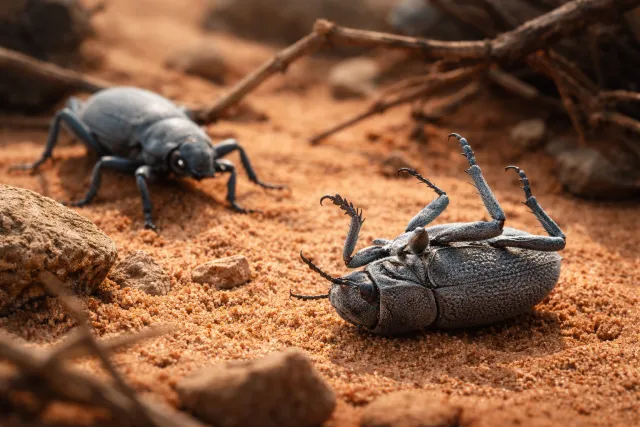
If you’ve ever seen a tiny beetle that looks like it rolled through blue chalk, stopped in the middle of the desert, and decided to “die” on cue, you’ve probably met the Blue Death Feigning Beetle. It’s one of those creatures that sounds made up until you watch it with your own eyes: it freezes, flips, stiffens, and commits to the bit so hard that predators often lose interest.
What makes the Blue Death Feigning Beetle even more interesting is that the “playing dead” trick is only one part of the survival toolkit. This beetle is built for heat, dryness, and long stretches without ideal conditions. It’s also become a favorite in the invertebrate hobby world because it’s hardy, calm, and surprisingly long lived when kept correctly. Arizona Highways highlights how it goes rigid and plays dead when threatened, and notes the waxy coating tied to dehydration and overheating protection.
In this article, we’ll dig into what it is, why it “acts” like a desert zombie, how its blue look actually works, and what people get wrong about keeping it as a pet.
What is a Blue Death Feigning Beetle?
The Blue Death Feigning Beetle (scientific name Asbolus verrucosus) is a darkling beetle in the family Tenebrionidae. BugGuide lists it under Tenebrionidae (darkling beetles) and confirms its common names, including “Blue Death-Feigning Beetle” and “Desert Ironclad Beetle.”
These beetles come from arid regions of the southwestern United States and parts of northwestern Mexico. In the wild, they’re typically found in dry, rocky or sandy desert habitats where temperatures and humidity swing hard between day and night. Museums and natural history resources often describe them as desert scavengers that thrive in harsh, low moisture environments.
Quick snapshot
- Common name: Blue Death Feigning Beetle
- Scientific name: Asbolus verrucosus
- Family: Tenebrionidae (darkling beetles)
- Claim to fame: dramatic death feigning (thanatosis), tough desert adaptations, powdery blue look
Why it’s called a “death feigning” beetle
Let’s talk about the headline behavior: the Blue Death Feigning Beetle plays dead. In biology, this is often called thanatosis, a defense strategy used by many animals. The beetle’s version is extra convincing because it can become rigid and unresponsive for long enough that a predator decides the meal is not worth it.
Arizona Highways describes the behavior in plain terms: when threatened, these beetles roll over and play dead, becoming extremely rigid, then recover once the danger passes.
How the “play dead” trick helps in the desert
In the desert, predators don’t waste energy unless they’re confident. Playing dead can mess with a predator’s instincts in a few ways:
- Predators prefer movement. Many hunters key in on motion. No motion often means no chase response.
- A “dead” insect can be risky. A predator may avoid potentially diseased or chemically defended prey.
- Time is a weapon. If the beetle can out wait the predator’s attention span, it wins without fighting.
And it’s not just adults with their acting skills. Research on immature stages has documented related defensive behavior too. A study in The Coleopterists Bulletin describes reflex bleeding associated with immobilization and notes how the released hemolymph can help debris stick and create camouflage in larvae.
That matters because it shows something bigger: this species leans into “don’t get noticed” and “don’t be worth it” as a survival theme, not just a party trick.
Blue Death Feigning Beetle vs. “blue feigning death beetle”: same bug, different phrasing
You’ll see the phrase blue feigning death beetle online a lot. In most cases, people are talking about the exact same species, just using a shorter version of the name. If you’re researching care, habitat, or behavior, treat those terms as interchangeable unless a source is clearly describing another tenebrionid species.
To keep things clear in this article, I’ll mainly use Blue Death Feigning Beetle (the primary keyword), and I’ll sprinkle in blue feigning death beetle naturally where it fits.
The powdery blue “armor”: what that color really is
One of the most misunderstood things about the Blue Death Feigning Beetle is its color. People assume it’s pigment, like a butterfly wing or a dyed shell.
It’s not.
Arizona Highways notes that the color comes from a wax the beetle secretes, linked to protecting itself from dehydration and overheating.
Think of it like this: the beetle is basically wearing a desert jacket. The waxy coating can help with:
- Reducing water loss by limiting evaporation from the body surface
- Handling heat stress by giving the exterior a different interaction with sunlight and air
- Staying functional in low humidity, when insects can dry out fast
This “cuticle matters” idea is consistent with broader research on desert darkling beetles. Classic experimental work on desert tenebrionid beetles has examined how water loss occurs through the cuticle and spiracles, and how this influences survival in hot, dry conditions.
A small but important handling tip
That powdery wax can rub off. If you constantly handle a Blue Death Feigning Beetle, it can lose some of that dusty look, and it may take time to rebuild the coating. For owners, this is why gentle, minimal handling is more than a “pet preference.” It’s respect for the beetle’s built in desert system.
Where the Blue Death Feigning Beetle lives and what it eats in the wild
A Blue Death Feigning Beetle is not a leaf munching garden pest. It’s more like a desert cleanup crew.
In the wild, these beetles are generally scavengers and opportunistic feeders. Natural history resources frequently describe them eating bits of decaying plant matter and animal matter, including dead insects.
What “desert scavenger” looks like day to day
Imagine a beetle that finds:
- a dried piece of fruit dropped by an animal
- a dead insect carcass
- bits of plant litter or dried organic debris
It doesn’t need a perfect salad bar. It needs calories and nutrients wherever the desert offers them.
That scavenger lifestyle is part of what makes the Blue Death Feigning Beetle so forgiving in captivity, as long as you avoid the big mistakes (mainly moisture and mold).
Why they’re so tough: the science behind desert survival
Desert insects don’t get to be fragile. A Blue Death Feigning Beetle survives because its body is tuned for a place that punishes weakness.
Here are the big survival challenges it’s built to handle:
1) Water loss is the real enemy
In deserts, dehydration can kill faster than hunger. Research on desert tenebrionid beetles shows water loss isn’t one simple leak; it’s a combination of cuticular transpiration, spiracular loss, and water associated with waste, plus defensive secretions in some species.
The takeaway for a non scientist is simple: the outside of the beetle, and how it breathes, matter a lot.
2) The exoskeleton is not just “a shell”
Beetle cuticle is a complex structure designed for protection, and scientific reviews discuss how beetle cuticle and elytra serve as armor and barrier systems.
When you combine a robust cuticle with a desert friendly surface layer, you get a beetle that can handle rough substrates, dry air, and a climate that does not care about your comfort.
3) Playing dead is safer than fighting
A fight burns energy and risks injury. Thanatosis often costs less. The Blue Death Feigning Beetle basically invests in a low energy defense, then uses time as its escape route. Arizona Highways captures the behavior clearly for general readers.
Life cycle and lifespan: why people keep them for years
One reason the Blue Death Feigning Beetle is popular is longevity. Invertebrates often feel “temporary” to beginners. This one breaks that expectation.
A major public milestone came when the Cincinnati Zoo announced it successfully raised this species from egg to adult, describing how significant that achievement was for their insect team. That matters because it hints at the complexity of development and why captive breeding is not always straightforward.
Also, a peer reviewed genome focused article in The Coleopterists Bulletin frames this beetle as notable for “extreme death feigning” and longevity, which is one reason it’s become such a recognizable demonstration insect and pet species.
Why breeding is harder than keeping adults
Keeping adult Blue Death Feigning Beetle individuals healthy is usually the easy part. Breeding and raising larvae is where many attempts fail, often because the requirements for immature stages can be different from the adults. The Cincinnati Zoo story is a good example of how much trial and adjustment can be needed.
How to care for a Blue Death Feigning Beetle (without overcomplicating it)
If you’re reading this because you want one as a pet, here’s the good news: the Blue Death Feigning Beetle is a low drama invertebrate, as long as you respect that it’s a desert animal.
Below is a practical setup approach that mirrors what museums and experienced keepers tend to do, while keeping the guidance grounded in the beetle’s natural needs.
Habitat basics
Aim for a simple, dry, desert style enclosure:
- Enclosure: a small tank or plastic tub with excellent ventilation
- Substrate: dry sand or a sand soil mix that stays dry
- Hides: cork bark, rocks, or half logs so the beetle can tuck away
- Clutter: a little leaf litter or dry decor is fine, but avoid anything that holds moisture
Temperature and humidity: the biggest beginner mistake
The most common problem is treating them like tropical bugs.
- Humidity: keep it low
- Moisture pockets: avoid wet corners, damp moss, and condensation
- Ventilation: always better than sealed, stagnant air
If you create a humid environment, you increase the chance of mold, stress, and a slow decline. Remember, the Blue Death Feigning Beetle is built for dryness, and its waxy coating is part of that water management system.
Feeding: keep it varied, keep it clean
In the wild, the Blue Death Feigning Beetle is an opportunistic scavenger. In captivity, variety helps.
Good options include:
- small pieces of vegetable (carrot, squash)
- tiny fruit pieces as an occasional treat
- dry fish food pellets or quality dry protein treats in moderation
- dried leaf litter and natural grazing items in a clean enclosure
Remove uneaten fresh food before it molds. Desert bugs are fine with less frequent feeding, but they are not fine with fungus farms.
Water: do not add a water dish like you would for other pets
A shallow water dish can raise enclosure humidity and create accidents. Most keepers rely on moisture from small food items rather than open water, and keep the setup dry overall.
Featured snippet friendly quick table: care checklist
| Care Element | What Works Best | What to Avoid |
|---|---|---|
| Humidity | Low, dry airflow | Damp substrate, sealed tanks |
| Substrate | Dry sand or sand soil mix | Wet coco fiber, moss layers |
| Hides | Cork, rocks, dry shelters | Anything that stays damp |
| Feeding | Small, varied, removed quickly | Leaving fruit to rot |
| Handling | Minimal, gentle | Frequent handling that rubs wax |
Behavior you’ll actually see at home
A Blue Death Feigning Beetle is not a hyperactive pet. It’s a slow explorer.
Common behaviors include:
- wandering at dusk or in dim light
- climbing over rough decor (they’re not great on smooth vertical surfaces)
- tucking under hides for long stretches
- freezing or playing dead when startled
That last one is the signature. If your Blue Death Feigning Beetle suddenly goes stiff and motionless, don’t panic. It’s doing exactly what it evolved to do.
Common questions people ask (FAQ)
Is the Blue Death Feigning Beetle dangerous?
No. The Blue Death Feigning Beetle is not aggressive, not venomous, and it does not have a painful bite the way some larger beetles can. The main “defense” is its death feigning behavior, plus a tough body and desert adapted chemistry.
How long does a Blue Death Feigning Beetle play dead?
It varies. Some individuals recover quickly, while others commit for a long time. This is part of why people find the behavior so convincing.
Why did my Blue Death Feigning Beetle lose its blue color?
The blue look is tied to a surface coating, not permanent pigment. Rubbing, frequent handling, or changes in environmental conditions can affect the powdery appearance. Arizona Highways connects the coloration to a waxy secretion, which is consistent with the idea that surface layers matter for desert survival.
Do Blue Death Feigning Beetles need heat lamps?
Usually not if your room stays in a reasonable warm range, but stable warmth and dryness matter more than intense spot heating. Overheating a small enclosure is easier than people think, so moderate temperatures and good ventilation are safer.
Can you keep Blue Death Feigning Beetles together?
Yes, they’re commonly kept in small groups because they’re not territorial in the way some insects are. Just make sure there’s enough space, multiple hides, and that food is not left to spoil.
A closer look at the “zombie” act: it’s more than playing dead
Calling it a desert zombie bug is fun, but the biology behind the act is even cooler.
The Blue Death Feigning Beetle uses a combination of:
- tonic immobility (staying rigid and still)
- timing (waiting out danger)
- toughness (hard to crush, hard to injure)
And in earlier life stages, additional defensive behaviors like reflex bleeding can support camouflage by making debris stick, according to research published in The Coleopterists Bulletin.
So if you ever wondered why this species is such a hit for educators, kids, and curious adults, that’s the reason. It’s a compact example of survival strategy you can actually observe.
Real world scenario: what to do when it “dies” in your hand
Let’s make this practical.
You pick up your Blue Death Feigning Beetle. It freezes. It flips. It goes stiff. Now you’re worried you hurt it.
Here’s what to do instead:
- Put it down gently on the substrate or a flat surface
- Dim the lights or step back
- Wait without poking it
- Check again in 10 to 20 minutes
Most of the time, it will right itself and walk off like nothing happened. The worst thing you can do is keep disturbing it to “see if it’s okay.” That just resets the defense response.
Why this beetle is having a moment
The Blue Death Feigning Beetle fits a very modern niche:
- it looks photogenic and unusual
- it has an obvious, watchable behavior
- it’s relatively low maintenance compared to many exotics
- it’s hardy when kept in dry, simple setups
Scientific interest has grown too. Researchers have published work that highlights extreme death feigning and longevity, and even explored genomic angles to better understand what’s going on under the hood.
It’s not “just a weird bug.” It’s an animal with a clear survival story and a design that makes sense once you understand the desert.
Conclusion: a tiny desert survivor worth understanding
The Blue Death Feigning Beetle is the kind of creature that reminds you nature does not need flashiness to be brilliant. It survives with strategy, patience, and a body built for dehydration resistance. It doesn’t run fast. It doesn’t fight loud. It simply refuses to be an easy target.
If you’re keeping a Blue Death Feigning Beetle at home, the best care is also the simplest: keep it dry, keep it clean, feed lightly, and let it live at its own slow pace. Once you do that, you’ll start noticing how much personality a “quiet” beetle can have.
For a deeper background on this exact species, you can also check this species profile in the last minutes of your reading, then come back and compare it with what you observe in real life.