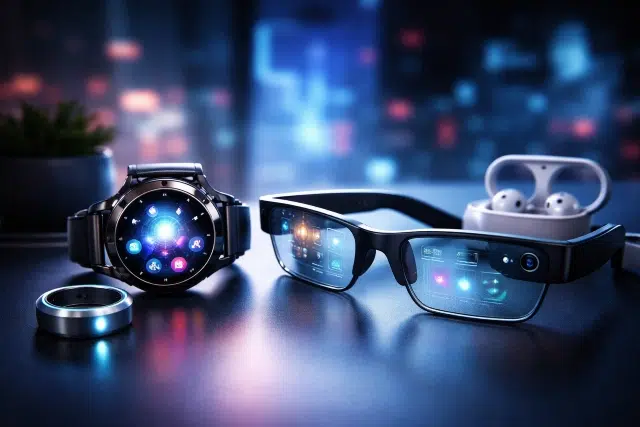
The phrase tech giants envision future beyond smartphones used to sound like sci-fi. Now it sounds like a boardroom agenda. Between smarter on-device AI, better batteries, smaller sensors, and a growing appetite for hands-free experiences, the “what’s next” conversation is getting louder. And it’s not just hype. Big names are actively pushing wearables, smart glasses, and spatial computing as the next layer of personal tech, with the smartphone slowly shifting from “main character” to “supporting role.”
In this article, we’ll break down why this shift is happening, what AI wearables actually mean in everyday life, the real challenges ahead (privacy is a big one), and what you should realistically expect over the next few years.
Why tech giants want a world beyond smartphones
Smartphones are not disappearing tomorrow. But they have hit a familiar stage: mature markets, slower upgrade cycles, and fewer jaw-dropping innovations year to year. When a product category becomes “good enough,” growth gets harder. So tech companies do what they always do: they look for the next platform.
There’s also a behavior shift. People still live on their phones, but they’re tired of constant screen time. Notifications, doomscrolling, and attention overload are pushing a new demand: technology that helps without constantly demanding focus.
That’s where AI wearables come in. The pitch is simple: instead of you going to the phone, the phone’s intelligence comes to you, in your ear, on your wrist, or in your glasses.
What does “AI wearables” actually mean?
AI wearables are devices you can wear that use AI to interpret context and assist you with tasks, often through voice, vision (cameras), sensors, and on-device processing.
Instead of tapping apps, you get things like:
- Voice-first commands (“summarize my last meeting notes”)
- Visual assistance (your glasses recognize what you’re looking at)
- Real-time translation or transcription
- Proactive reminders based on location and routine
- Health insights that go beyond step counting
Some of this exists today in early forms. The difference now is that AI models are getting more capable and chips are getting better at running AI closer to the device, not just in the cloud. Industry leaders have been openly talking about AI moving beyond the cloud and into devices, including wearables and smart glasses.
The big shift: from “apps” to “assistants”
Smartphone life is app life. Need food? Open an app. Need a cab? Another app. Need to pay? Another app. That model works, but it’s friction-heavy.
The next model tech companies are chasing is assistant-first:
- You tell the assistant what you want
- It coordinates apps and services behind the scenes
- You get the result without babysitting a screen
Samsung, for example, has been emphasizing a more “blended into everyday life” AI strategy, focusing on AI as a background companion rather than a separate, flashy product.
This is what people often mean by “ambient computing” in casual terms: your tech fades into the background and surfaces only when it’s useful.
Why smart glasses are becoming the center of the conversation
If you ask tech leaders what can realistically reduce screen dependence, smart glasses come up fast. They sit in a sweet spot:
- You already wear them (for millions of people)
- They keep your hands free
- They can “see” what you see (with cameras)
- They can deliver audio quietly (open-ear or bone conduction)
- Future versions can add lightweight displays
Meta’s Ray-Ban smart glasses are a big signal here. Meta disclosed that it sold over 1 million units in 2024, and it has discussed ambitious growth targets for the category.
That matters because it shows demand is not purely experimental anymore. People will buy and wear these devices if they feel normal, look good, and do useful things without being annoying.
A real-world scenario: how glasses beat phones
Imagine you’re walking in a busy street in Karachi, London, or New York:
- You need directions
- A message comes in
- You want to translate a sign
- You want to capture a quick moment
On a phone, you stop, pull it out, unlock it, open an app, then do the task.
On smart glasses, the goal is:
- Get the info in your ear
- See a tiny overlay when needed
- Capture hands-free
- Keep walking safely
It’s not about replacing phones overnight. It’s about shifting the most frequent micro-tasks away from a screen.
Spatial computing: the “big screen” you wear
Not everyone wants glasses first. Some companies are also betting on headsets and spatial computing as a stepping stone to lighter AR glasses later.
Apple’s Vision Pro is one of the most visible examples. Apple positions it as “spatial computing,” and the company has highlighted enterprise use cases and device management, showing it’s not just a toy concept.
Even if headsets stay niche for now, they help build:
- Developer tools
- Interface standards (eye tracking, hand gestures)
- Content ecosystems
- Consumer familiarity with “screens in space”
Think of it like the early days of tablets. Not everyone used them at first, but they trained people for new ways to consume and create.
AI pins and “screenless” devices: bold idea, messy reality
If you followed tech news, you probably saw the rise and fall of Humane’s AI Pin. It was one of the loudest attempts at “a future beyond the smartphone,” but it struggled in the real world.
Humane announced the AI Pin shutdown and an asset sale to HP, with devices losing core functionality after a server cutoff date in February 2025.
This matters because it teaches a crucial lesson:
- The concept can be exciting
- The execution has to be flawless
- If your device relies on servers, customers need long-term trust
Screenless does not automatically mean better. A phone screen is still the most reliable interface for many tasks. Any wearable that tries to replace it must be faster, simpler, and more dependable than the thing it’s replacing. That’s a high bar.
Why tech giants envision future beyond smartphones now (not later)
This push is happening now because several technologies matured at the same time:
1) On-device AI is getting practical
Better chips mean more AI can run locally, which reduces:
- Latency (faster responses)
- Cloud costs (less data sent to servers)
- Privacy risk (less data leaving your device)
2) Sensors got smaller and cheaper
Cameras, microphones, motion sensors, and health sensors are easier to pack into tiny devices.
3) Consumer comfort with wearables is rising
Smartwatches are normal. Wireless earbuds are normal. Smart rings are catching on. Glasses are the next “normal” form factor for many people.
4) The business incentive is huge
The platform owner controls:
- The default assistant
- The “app store” equivalent
- Payments and subscriptions
- Data and personalization
- Hardware upgrade cycles
Phones made fortunes. Tech companies want the next fortune.
The benefits people actually want (not marketing slogans)
Here’s what makes AI wearables genuinely attractive when they’re done right:
- Less screen time without losing convenience
- Faster “micro-help” (quick answers, reminders, actions)
- Better accessibility (voice-first for people who struggle with small screens)
- Real-time translation and transcription for travel and work
- Context-aware assistance (your device knows what you’re doing and helps at the right moment)
And yes, entertainment will follow. If glasses become common, content formats will adapt just like they did for smartphones.
The risks and hard problems (this is where it gets real)
A future beyond smartphones sounds clean, but it comes with serious challenges.
1) Privacy: wearables collect “life data”
Phones already collect a lot. But wearables can collect even more:
- Always-on microphones
- Cameras that see what you see
- Biometric and health signals
- Location and environment context
This is why smart glasses trigger stronger privacy debates than watches. People worry about being recorded, and they worry about where those recordings go.
2) Social acceptance
A wearable has to pass the “not weird” test. The reason Ray-Ban style glasses are working is because they look like normal glasses.
3) Battery life and heat
AI processing costs energy. A wearable that needs charging twice a day is going to lose most people fast.
4) Trust in subscriptions and servers
The Humane situation showed what happens when hardware value depends on a cloud service that can be turned off.
5) UI challenges: when voice is not enough
Voice is great until:
- you’re in public
- you need silence
- you need precision
- you need to edit something complex
That’s why “phone replacement” is harder than “phone companion.”
What the next few years may look like (a realistic timeline)
Nobody has a perfect crystal ball, but based on what’s already happening, here’s the most realistic progression:
Phase 1: Wearables get smarter, phones remain central (now to 2027)
- AI features become common in earbuds, watches, and glasses
- Phones still handle heavy tasks and serve as the “hub”
- Smart glasses focus on capture, translation, and quick info
Apple is reportedly exploring new wearable concepts, including an AI wearable the size of an AirTag-like pin, but these are still early-stage rumors and would be years away if they ship.
Phase 2: Glasses gain lightweight displays (mid to late 2027 and beyond)
- Heads-up displays become more normal
- Navigation overlays become common
- More “assistant-first” interactions
Meta has discussed plans that include glasses with displays, and the direction across the industry is pointing there.
Phase 3: Phones become optional in some contexts (late 2020s)
This is when tech giants envision future beyond smartphones becomes visible in daily life:
- Many tasks handled by wearable + assistant
- Phones still exist, but used less often for routine actions
- The phone becomes more like a powerful backup and creation device
Best alternatives to “phone-first” living you can use today
You do not need futuristic hardware to start living more “post-phone.” Here are practical steps people are already using:
Use your watch and earbuds for quick actions
- Calls, quick replies, timers
- Voice notes
- Calendar reminders
- Navigation prompts
Cut your phone’s “attention tax”
- Disable non-essential notifications
- Use Focus modes
- Move addictive apps off your home screen
Try AI features that already exist in mainstream devices
Many smartphone ecosystems now include:
- Live transcription
- Call screening
- Summaries and smart replies
- On-device voice typing improvements
These features train you for assistant-first habits.
And if you’re wondering what to call this broader direction, it’s essentially a move toward ambient computing, where technology becomes more context-aware and less screen-dependent.
Frequently asked questions
Will AI wearables replace smartphones completely?
Not soon. The near-term reality is that AI wearables will reduce how often you use your phone, but phones remain the most flexible and reliable interface for complex tasks.
Why are tech giants pushing wearables now?
Because the smartphone market is mature, AI is becoming a platform, and wearables can become the next “default interface” layer. Leaders are openly discussing AI moving from cloud to devices, and smart glasses are already selling at meaningful scale.
Are smart glasses safe and private?
They can be, but it depends on the device, settings, and policies. Always-on sensors raise new privacy concerns, and social acceptance will hinge on visible indicators and strong user controls.
What failed attempts should we learn from?
Humane’s AI Pin is a key example. It shows that new categories need strong everyday utility and long-term service trust, especially if core features depend on cloud services.
Conclusion
The headline is true for a reason: tech giants envision future beyond smartphones, and they are building toward it in public. Smart glasses, earbuds, watches, and spatial devices are becoming the new front line, with AI doing more of the invisible work in the background.
Still, the “post-phone world” will likely arrive as a gradual shift, not a sudden replacement. The phone is not dying, it’s being repositioned. Over time, more everyday actions will happen through wearables and assistants, while phones remain the power tool you use when you need a bigger screen, deeper control, or serious work.