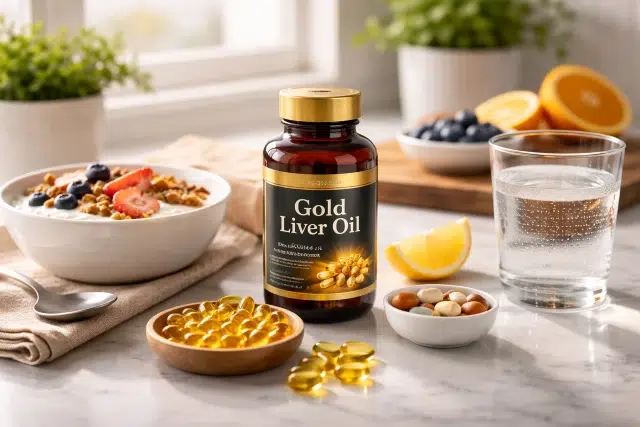
If you have been seeing Gold Liver Oil pop up in wellness conversations, you are not alone. People usually bring it up for the same reasons: it is a traditional supplement that combines omega-3 fats with fat-soluble vitamins, and it feels simple to add to daily life. But “simple” does not mean “one-size-fits-all.” Because liver oils can contain meaningful amounts of vitamin A and vitamin D, the most natural routine is also the most intentional one: small, consistent habits, clear label awareness, and a plan that fits your lifestyle.
This guide breaks down what Gold Liver Oil is, what to look for, how to take it in a way that feels easy (not forced), and how to avoid common mistakes that make people quit after a week.
What is Gold Liver Oil, and why do people use it?
Gold Liver Oil is commonly used as a wellness supplement that typically contains:
- Omega-3 fatty acids (EPA and DHA)
- Vitamin A (preformed vitamin A, also called retinol)
- Vitamin D
This nutrient mix is one reason cod liver oil is treated differently from “regular fish oil.” Omega-3s are often taken for general heart, brain, and inflammation-related wellness goals, while vitamins A and D are linked to immune function, vision, and bone health. The NIH Office of Dietary Supplements notes that cod liver oil provides vitamin A and vitamin D in addition to long-chain omega-3s.
Start with realistic expectations (so your routine actually sticks)
A natural wellness routine is not about expecting instant dramatic changes. Most people who enjoy taking liver oil long-term describe it as a “background habit” that supports the basics: nutrition consistency, seasonal support, and staying on track with overall wellness.
It helps to think of Gold Liver Oil like a routine enhancer, not a magic fix. Omega-3 research in general shows mixed results depending on the outcome being studied, the dose, and the population. For example, the American Heart Association has highlighted prescription omega-3 use for very high triglycerides, while evidence for broad prevention in healthy people is more mixed.
So the realistic goal is simple: build a steady habit that complements your diet, sleep, movement, and hydration.
Who may want to be extra careful before using Gold Liver Oil?
Because liver oils can contain vitamins that store in the body, a “casual” approach is not always smart. Be especially cautious if you are:
- Pregnant or trying to conceive
- Taking vitamin A or vitamin D supplements already
- Using a multivitamin that contains retinol (preformed vitamin A)
- Managing liver conditions or fat absorption issues
- Taking medications that can interact with fat-soluble vitamins (for example, certain weight-loss meds or diuretics)
In the UK, the NHS specifically advises avoiding supplements containing vitamin A (retinol) during pregnancy and also notes that liver and liver products, including fish liver oil, are high in vitamin A and should be avoided in pregnancy.
The “natural routine” approach: make it easy, not intense
When people say they want to add Gold Liver Oil naturally, what they usually mean is:
- No complicated schedule
- No harsh stomach feeling
- No “I forgot again” guilt
- No stacking too many supplements
Here is the easiest way to do that.
Step 1: Decide your goal for taking it (keep it simple)
Pick one main reason you are taking it, such as:
- General wellness consistency
- Seasonal support for your routine
- Supporting a balanced diet when fish intake is low
- Supporting overall nutrition habits
When your goal is clear, your buying choice and your “when to take it” routine becomes simpler.
Step 2: Pick the format you will actually take
Gold Liver Oil usually comes in two common forms:
Liquid
Best for people who:
- Prefer traditional use
- Want flexibility with dose
- Do not mind the taste, or can mask it
Typical barrier:
- Taste and aftertaste
Softgels or capsules
Best for people who:
- Want convenience and portability
- Have a sensitive stomach
- Prefer “set it and forget it”
Typical barrier:
- Some products are lower dose per capsule, so you may need multiple capsules depending on the label.
The best form is the one you will take consistently.
Step 3: Always take it with a meal (this is the routine game-changer)
Omega-3 supplements are often easier to tolerate when taken with food, and many people find this reduces reflux or “fish burps.” Taking it with a meal that includes some dietary fat is a common practical approach.
A natural schedule that works for many people:
- With breakfast if breakfast is consistent
- With lunch if mornings are chaotic
- With dinner if you prefer the calmest part of the day
The best time is usually the time you will remember.
Understanding labels: the 3 numbers that matter most
Most buyers focus only on “omega-3” and forget the vitamins. With Gold Liver Oil, those vitamin numbers matter.
1) EPA and DHA (your omega-3 core)
Look for how much EPA and DHA you get per serving. Different products vary a lot, and many labels list “fish oil” amounts without clearly stating EPA and DHA. The NIH ODS omega-3 fact sheet explains the importance of EPA and DHA as the key long-chain omega-3s commonly discussed for health effects.
2) Vitamin A (retinol)
Vitamin A is essential, but too much can be harmful, especially because it is fat-soluble and stored in the body.
The NIH ODS lists tolerable upper intake levels (ULs) for preformed vitamin A, and for adults (19+), the UL is 3,000 mcg per day of preformed vitamin A.
Natural routine rule:
If you already take a multivitamin with retinol, you should pay close attention to how much additional vitamin A your Gold Liver Oil provides.
3) Vitamin D
Vitamin D needs vary by age and individual factors. The NIH ODS vitamin D fact sheet lists adult RDAs at 600 IU (15 mcg) for ages 19–70, and 800 IU (20 mcg) for over 70.
It also lists the tolerable upper intake level (UL) for adults at 4,000 IU (100 mcg) per day.
Again, the routine point is not to chase high numbers. It is to avoid accidental stacking when you also take vitamin D separately.
How to add Gold Liver Oil to your routine in a way that feels effortless
Here are a few “real life” routines that work because they are built around habits you already do.
Routine A: The breakfast anchor
Best if you eat breakfast most days.
How it looks:
- Breakfast
- Gold Liver Oil
- Water
- Done
Make it automatic by storing it where you already reach in the morning, like near your breakfast essentials. If it is a liquid, store it properly according to the label (many require refrigeration after opening).
Routine B: The lunch reset
Best if mornings are unpredictable.
How it looks:
- Lunch
- Gold Liver Oil
- Short walk or stretch afterward
This routine works well for people who forget morning supplements but reliably stop to eat midday.
Routine C: The evening wind-down
Best if you want zero aftertaste interruption.
How it looks:
- Dinner
- Gold Liver Oil
- Evening tea or water
- Sleep routine
A lot of people prefer evenings because they have more time and less rush.
How to reduce fishy aftertaste naturally
If taste is your main obstacle, try these practical approaches:
- Take it mid-meal, not on an empty stomach
- Pair it with stronger flavors (yogurt, eggs, nut butter toast)
- Keep the bottle properly stored (oxidation can worsen taste)
- Choose capsules if taste ruins consistency
Also pay attention to “freshness” signals. Omega-3 oils can oxidize over time, which is one reason many people prefer products that clearly state quality testing and expiration details.
Choosing a high-quality product without overcomplicating it
A natural wellness routine works best when you trust what you are taking. Since supplement quality can vary, look for signals of good manufacturing and testing.
What helps:
- Clear labeling of EPA and DHA amounts
- Clear labeling of vitamin A and vitamin D amounts
- A brand that provides batch testing information or reputable certification
Many shoppers look for third-party verification seals (such as USP or NSF) to increase confidence in label accuracy and contaminant testing, though the exact meaning of seals varies by program.
When “more” becomes the problem (common stacking mistakes)
Gold Liver Oil is one of those supplements people accidentally overdo because it “feels natural.” The most common stacking mistakes are:
- Taking Gold Liver Oil plus a multivitamin high in retinol
- Taking Gold Liver Oil plus a separate vitamin D supplement without checking totals
- Taking multiple omega-3 products at the same time
- Taking it inconsistently, then doubling up later
If your routine becomes confusing, it stops being natural. The easiest fix is to simplify: one primary omega-3 source at a time, and awareness of your vitamin A and D totals.
FAQs people ask before making it a daily habit
Can I take Gold Liver Oil every day?
Many people do, but the key is matching the product’s vitamin A and vitamin D content to your overall intake and not stacking blindly. The vitamin A UL for adults (3,000 mcg/day preformed vitamin A) is a useful safety reference point when you evaluate labels.
Morning or night, which is better?
For most people, consistency matters more than the exact time. Taking it with a meal is the most practical way to reduce stomach upset and improve tolerance.
Is it the same as regular fish oil?
Not exactly. Cod liver oil is known for omega-3s plus vitamins A and D, while many regular fish oils focus primarily on omega-3 content without meaningful vitamin A and D.
Do I need to take it if I eat fish?
If you eat fatty fish regularly, you may already get omega-3s from food. The American Heart Association commonly emphasizes eating fish (often phrased as twice per week) as part of a heart-healthy diet, and supplement value can depend on your personal diet and health goals.
Conclusion: make Gold Liver Oil feel like a habit, not a project
Adding Gold Liver Oil naturally comes down to one thing: making it easy enough to repeat. Pick a time you already eat, take it with that meal, and choose a product with a label you actually understand. If you keep your routine simple and pay attention to vitamin A and vitamin D totals, you avoid the biggest frustration most beginners face: doing too much, too fast, then quitting.
The most “wellness” way to use it is honestly the least dramatic way. A small daily habit, paired with real food and a consistent lifestyle, tends to feel better than chasing quick results. If you want a quick background on what cod liver oil is and why it is traditionally used, that overview can add helpful context for readers who are new to the topic.