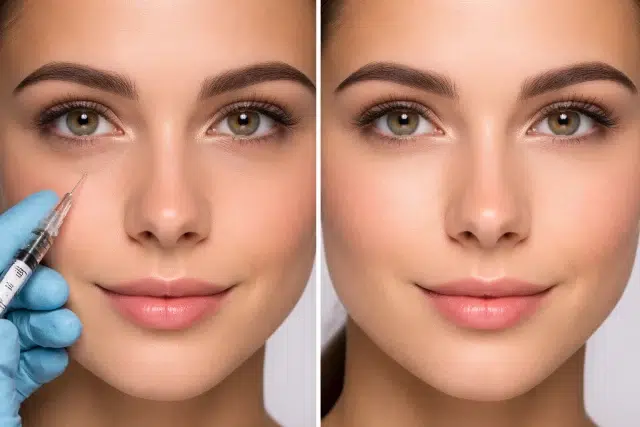
If your under-eyes look tired even after a full night’s sleep, you are not imagining it. The tear trough area (that hollow or shadow between the lower eyelid and upper cheek) can create a “permanently exhausted” look that concealer only partly masks. That is exactly why Tear Trough Filler has become one of the most talked about cosmetic treatments for under-eye rejuvenation.
But here is the honest truth: tear trough filler can look beautifully natural on the right person, and underwhelming or even puffy on the wrong one. The biggest difference between “wow, you look rested” and “why do my under-eyes look swollen?” usually comes down to expectations, anatomy, and technique.
This guide is all about realistic outcomes. You will learn what tear trough filler can and cannot do, what results tend to look like at different ages, how long improvements typically last, and which common myths cause disappointment.
What is a tear trough, and why does it become more noticeable?
The tear trough is the curved indentation that starts near the inner corner of the eye and runs outward under the lower lid. Some people are born with a visible tear trough, while others notice it more as they age.
A few common reasons it becomes more pronounced:
- Volume loss: The face naturally loses fat and structural support over time, especially in the midface.
- Skin thinning: Under-eye skin is already thin. As collagen decreases, shadows show more.
- Ligament and tissue changes: The under-eye and upper cheek transition can look sharper, creating a deeper groove.
- Fluid tendencies: Some people retain fluid easily around the eyes, which can make hollows look darker or create the illusion of “bags.”
- Genetics and bone structure: Some eye shapes and cheek structures show under-eye hollows earlier.
This matters because tear trough concerns are rarely just one thing. Two people can have “dark circles” for completely different reasons, and filler only helps certain causes.
What is Tear Trough Filler, really?
Tear trough filler is a cosmetic injectable treatment, most often using hyaluronic acid (HA) dermal filler, placed in very small amounts in the under-eye hollow to soften the groove and reduce shadowing. HA fillers are popular here because they can be adjusted and, if necessary, dissolved.
The goal is not to “inflate” the under-eye. It is to create a smoother transition from lower eyelid to cheek so light reflects more evenly and shadows look less intense.
Tear trough filler is usually subtle, and that is a good thing
If you are expecting a dramatic transformation like a full facelift effect, you may be disappointed. When done well, tear trough filler tends to deliver a rested, fresher look that is often hard for others to pinpoint.
Tear Trough Filler realistic expectations: what it can improve
Here is what tear trough filler does best, in real-world terms:
1) Softening hollows and under-eye shadows
When hollowness is the main issue, filler can reduce that “dip” so the area looks less shadowed.
2) Improving the tired look
People often describe the change as looking more awake, less stressed, or more refreshed.
3) Enhancing the lid-cheek transition
A smoother transition between under-eye and upper cheek can make the face look more balanced in photos, especially in overhead lighting.
4) Creating a more even surface for makeup
Many people find concealer creases less or looks less gray once the hollow is reduced.
What Tear Trough Filler cannot fix (and why that matters)
Most disappointment comes from expecting filler to solve problems it is not designed to solve. Here are the big ones.
1) True pigment based dark circles
If your dark circles are largely due to melanin or visible blood vessels through very thin skin, filler may not change the color much. It can reduce the shadow component, but pigment is a different issue.
2) Significant under-eye bags caused by fat prolapse
If “bags” are prominent and firm, adding volume below them can sometimes make the area look heavier. In these cases, surgical options may be more appropriate than filler.
3) Loose, crepey skin
Filler is not a skin-tightening treatment. It may slightly improve the look by smoothing the hollow, but it will not replace collagen or tighten lax skin.
4) Puffy under-eyes from fluid retention
If you already swell easily, tear trough filler can sometimes make puffiness more noticeable, especially with certain filler types or placement.
The under-eye is a high skill zone: why results vary so much
Tear trough treatment is often considered one of the most technically demanding filler areas because:
- The skin is thin and reveals texture easily
- The anatomy is complex with important vessels
- Even small product amounts can show
- Swelling can linger longer than in other facial areas
This is also why the same product can look amazing in one person and off in another. Tiny differences in placement depth, product choice, or volume can change everything.
Who tends to be a good candidate?
While only a qualified professional can assess you, people who often do well with tear trough filler tend to have:
- A true hollow that creates shadowing
- Good skin quality (not overly thin or crepey)
- Minimal fluid retention in the under-eye area
- Mild to moderate volume loss rather than severe “bags”
A common “best case” scenario is someone with a visible groove but not a lot of puffiness, where the main goal is to soften the shadow.
Who should be cautious or may need alternatives?
You may want to be extra cautious if you have:
- Pronounced under-eye bags
- Chronic under-eye puffiness or morning swelling
- Very thin skin where filler edges might show
- A history of reactions or persistent swelling after fillers
- Significant laxity that would be better addressed surgically
There are also documented patterns of persistent or recurrent eyelid edema after HA filler in some patients, which is one reason careful patient selection matters.
What results usually look like, step by step
One of the most helpful ways to set realistic expectations is to understand the typical timeline.
Immediately after treatment
You might see an instant improvement in the hollow, but you may also notice:
- Mild swelling
- Small bumps that settle as product integrates
- Bruising, especially if you bruise easily
Immediate results are not final results.
1 to 2 weeks
This is when most people get a clearer idea of the outcome. Swelling usually calms down, the product “settles,” and the area looks more natural.
4 to 6 weeks
If you are prone to fluid retention, this is often the point when you can truly judge whether the under-eye looks smooth or slightly puffy.
How long does Tear Trough Filler last?
Longevity varies based on product, metabolism, placement, and your anatomy. In the literature, duration is often described around the 8 to 12 month range, with averages reported around roughly 10 to 11 months in some discussions of tear trough HA filler outcomes.
That said, “lasting” is not the same as “looking perfect the whole time.” Many people experience:
- A strong improvement early on
- A stable middle period
- A gradual fade as the filler breaks down
Also, the under-eye area can behave differently from lips or smile lines. Some people feel results last longer than expected, while others notice fading sooner.
“How much filler will I need?” The honest answer
Under-eye filler is typically measured in tiny increments. More is not better here.
A realistic expectation for many first-timers is that the amount used per side may be small, sometimes far less than a full syringe total, depending on the injector’s approach and your anatomy.
If you are hoping one appointment will completely erase all under-eye concerns forever, that expectation tends to lead to overfilling and disappointment. The best results usually come from conservative correction.
A reality check: expectations vs outcomes table
| What people hope for | What is more realistic |
|---|---|
| Completely erased dark circles | Reduced shadowing if hollowness is the cause |
| Zero under-eye texture | Smoother contour, but skin texture may remain |
| Dramatic makeover | Subtle, rested appearance |
| No swelling at all | Mild swelling or bruising can happen |
| Permanent results | Maintenance as product gradually breaks down |
| Fixing big eye bags | May need surgery or other treatments instead |
Common side effects vs rare serious risks
It is normal to hear “it is safe,” and for many people it is, especially in experienced hands. Still, the under-eye area deserves respect.
Common and expected (usually temporary)
- Swelling
- Bruising
- Tenderness
- Mild asymmetry during healing
Issues that can happen and may need treatment
- Persistent puffiness
- Visible lumpiness
- Tyndall effect (a bluish tint if product is too superficial)
- Nodules or inflammatory reactions
Rare but serious complications
All dermal fillers carry a rare risk of vascular occlusion, which can lead to skin injury and, in extremely rare cases, vision-threatening complications. Multiple professional groups have published safety recommendations and reviews of adverse events, emphasizing the importance of anatomy knowledge, safe technique, and rapid management when complications occur.
Realistic expectation: serious complications are uncommon, but they are not “mythical,” which is why provider choice is not the place to cut corners.
The biggest myths that cause disappointment
Myth 1: “Tear trough filler is just for dark circles”
Dark circles are a broad category. If your dark circles are mostly pigment, filler might not change much. If they are mostly shadow from hollows, filler can help a lot.
Myth 2: “If it looks puffy, you just need more filler to smooth it”
This is a common trap. Puffiness can get worse with more product. Sometimes the solution is different placement, a different plan, or no filler at all.
Myth 3: “It will look perfect in every light”
Even great results can look different in different lighting. Harsh overhead lighting can still create shadows, and camera angles matter.
Myth 4: “If I do it once, I will never have to think about it again”
Maintenance is part of cosmetic treatments. Even if results last longer than expected, aging continues, and goals can change.
Real-world scenarios: what realistic results look like
Scenario A: Genetic hollowness in a younger adult
You have had a visible groove since your late teens or early twenties, but your skin is firm and you do not have big bags. Realistic expectation: filler can soften the hollow and make you look more rested without changing your facial expression.
Scenario B: Midlife volume loss with mild shadowing
Your under-eyes used to look smooth, but now the lid-cheek junction looks sharper. Realistic expectation: a conservative filler plan can restore a smoother transition, but it will not fully erase fine lines or tighten skin.
Scenario C: Prominent bags and fluid retention
Your under-eyes look puffy in the morning, and the “bag” is more prominent than the hollow. Realistic expectation: filler may not be the best solution and can sometimes make the area look heavier.
These scenarios are not about “good” or “bad.” They are about matching the tool to the problem.
How to judge a “good” result without overanalyzing
A natural tear trough filler result often shows up as:
- Less shadowing and fewer harsh lines under the eye
- A smoother blend from eyelid to cheek
- No obvious lumps or visible product edges
- Your face still looks like your face
A useful mindset is: you want improvement, not perfection.
Questions people ask before getting Tear Trough Filler
Does tear trough filler hurt?
Most treatments use topical numbing and sometimes filler that contains a numbing agent. People describe it as pressure more than pain, but sensitivity varies.
Will I look overfilled?
A skilled injector aims to avoid that. Overfilling is more likely when too much product is used, placement is too superficial, or the patient is not a good candidate.
What if I do not like it?
One reason HA fillers are commonly used in this area is reversibility. In many cases, HA filler can be dissolved. This is part of why realistic expectations should include having a plan for follow-up and adjustments if needed.
Can it fix my dark circles completely?
Sometimes it improves them noticeably, sometimes it barely changes the color. A realistic expectation is that it can reduce the hollow-shadow effect, but it is not a guaranteed “dark circle eraser.”
How to set yourself up for a realistic outcome
The best outcomes usually happen when people:
- Know whether their main issue is hollow, pigment, puffiness, or skin texture
- Understand that subtle improvement is often the goal
- Choose an experienced injector who regularly treats the under-eye area
- Accept that follow-up, fine-tuning, or alternative treatments may be better in some cases
In other words, realistic expectations are not about lowering standards. They are about choosing the right plan for your face.
Conclusion: Tear Trough Filler works best when the goal is “rested,” not “rewritten”
Tear Trough Filler can be a smart option for under-eye rejuvenation when hollowness and shadowing are the main concern, and when it is done conservatively by a highly trained professional. The most satisfying results are usually the ones that look like you just had better sleep, not like you had “work done.”
If you go into it expecting a subtle contour improvement, a smoother lid-cheek transition, and a fresher look that still moves naturally, you are far more likely to love the outcome. And if your under-eye concerns are driven more by puffiness, laxity, or pigmentation, it is worth knowing that filler may not be the hero for your specific problem.
One last helpful detail: most tear trough fillers are based on hyaluronic acid, a substance naturally found in the body, which is why it is commonly used for facial volume and hydration. That said, “natural” does not mean “risk-free,” and the under-eye area is exactly where careful planning and realistic expectations matter most.